Last updated: August 10, 2026
Creators and small business owners looking beyond Zazzle have more options than ever, from platforms with better pricing to those offering stronger quality control and a wider product range. Knowing which of the best T-shirt printing companies actually deliver on their promises saves time and prevents costly mistakes. The right platform depends on what matters most: bulk discounts, print quality, turnaround speed, or product variety.
For teams and businesses that need branded apparel without overspending, affordable bulk printing can have an immediate impact on brand perception. ooShirts is a strong option for anyone who wants quality results at scale, offering cheap custom T-shirts that hold up without stretching the budget.
Table of Contents
- What is Zazzle and What Does It Offer?
- Why Are People Looking for Zazzle Alternatives?
- What Features Should You Look for in a Print-on-Demand Company?
- 11 Zazzle Alternatives for Businesses and Creators in 2026
- How to Choose the Right Zazzle Alternative for Your Needs
- Why ooShirts Is a Smart Alternative to Zazzle
- Start Designing Your Custom Shirts Today
Summary
- Group and bulk custom apparel buyers consistently run into the same problem: marketplace platforms built for individual browsing charge hidden fees that inflate final costs by 30 to 50 percent over the initial quote. Setup fees, platform charges, and shipping costs add up to base prices in ways that make budgeting unreliable until checkout. For schools, nonprofits, and small businesses planning around a fixed number, that gap between quoted and actual cost creates real problems after an order is already committed.
- Print-on-demand platforms like Zazzle operate on an on-demand production model, meaning products are manufactured only after an order is placed. This keeps catalog flexibility high while introducing meaningful lead-time constraints. Groups needing consistent, branded gear before a deadline face fulfillment timelines designed for individual gift orders, not for coordinated bulk runs with fixed event dates.
- Quality consistency is a persistent gap in marketplace-based printing. Buyers ordering for weddings, school events, or branded merchandise face real uncertainty about whether the mockup will match the delivered product. Zazzle’s D- rating from the Better Business Bureau reflects a pattern of unresolved complaints, not isolated incidents, and customers who receive a faded or misaligned print on a first order rarely place a second one.
- The global print-on-demand market is projected to reach $39.40 billion by 2031, according to Coastal Reign’s 2025 report, and over 60 percent of consumers already prefer personalized products. The sellers positioned to capture that growth are the ones building recognizable brands through consistent quality and fulfillment, not the ones relying on marketplace traffic to do the work for them.
- Platform control is a structural ceiling that pricing and design quality cannot overcome. Sellers on Zazzle cannot own customer data, build a standalone storefront, or create a brand experience outside the marketplace. With Zazzle taking a 15 percent transaction fee and royalty rates defaulting to 10 percent for most sellers, designers generating real traffic often find their earnings don’t reflect the creative work behind their catalogs.
- Responsive support and pre-production design review are two features buyers routinely overlook until something goes wrong. A misprinted batch the week of a school fundraiser is not an inconvenience; it is a crisis that requires a real person with authority to act quickly. Services that include an expert design review before printing begins catch problems a first-time designer might not notice until the shirts arrive.
- Cheap custom T-shirts from ooShirts address the core gap left by marketplace platforms by combining all-inclusive pricing with free shipping, free setup, no minimums, and a price-match guarantee, all built specifically for groups that prioritize reliability over novelty.
What is Zazzle and What Does It Offer?
Zazzle is an online print-on-demand marketplace where customers personalize products and independent creators sell designs without managing inventory. It serves shoppers looking for unique items and designers pursuing passive income — all without the overhead of traditional retail.
“Zazzle connects independent designers with millions of shoppers through a fully managed print-on-demand model — meaning creators earn revenue without ever touching inventory, shipping, or fulfillment.” — Zazzle Platform Model
| Who It Serves | What They Get |
|---|---|
| 🛍️ Shoppers | Unique, personalized products on demand |
| 🎨 Independent Designers | Passive income with zero inventory management |
| 🏢 Businesses | Custom branded merchandise at scale |
💡 Tip: If you’re a designer, Zazzle’s model means you upload once and earn repeatedly — no warehousing, no shipping, no hassle.
🎯 Key Point: Zazzle sits at the intersection of creativity and commerce — making it one of the most accessible print-on-demand platforms for both buyers and sellers alike.
A catalog built for almost every occasion
Zazzle offers over 1,000 product types, including clothing, home goods, stationery, accessories, and event supplies. This selection lets you design matching invitations, tote bags, and t-shirts from a single storefront for weddings, corporate events, or creative projects, eliminating the need to coordinate with multiple vendors.
What creators actually earn
Designers can set royalty rates from 5% to 99% on Zazzle, enabling them to earn from popular designs. However, this model suits patient creators who build a catalog over time rather than those seeking quick, predictable income.
Where Zazzle’s model fits, and where it doesn’t
Zazzle is built for individual expression and creative entrepreneurship, not for groups ordering matching shirts before a deadline. When a school club, nonprofit team, or small business needs 20 shirts with a consistent logo, browsing a marketplace of independent designs can be cumbersome. Groups typically end up customizing products one by one, only to discover that shipping timelines, per-unit costs, and setup fees accumulate quickly. Our cheap custom T-shirts from ooShirts differ: we offer all-inclusive pricing with free shipping and setup, no minimum order, and a price-match guarantee designed for groups prioritizing reliability over novelty.
The production model behind every order
Every Zazzle product is made after you place your order, which keeps the catalog flexible but adds wait time. On-demand production means your item doesn’t exist until you buy it—ideal for personalized gifts ordered weeks in advance, but problematic when you need 20 branded shirts by Friday. The platform handles fulfillment from start to finish, including printing, packaging, and shipping, so buyers never work with a separate printer. Understanding what this service can and cannot do matters before you decide to use it.
But once you understand what Zazzle is built for, a sharper question emerges.
Related Reading
- Best T-Shirt Printing Companies
- How to Print on T-shirts Professionally
- What Type Of T-shirt Printing Lasts The Longest
- Simulated Process Screen Printing
- Best Fonts For T Shirts
- How To Print On T-shirts Professionally
- Digital Print Shirt Vs Screen Print
- How Much Does T-shirt Printing Cost
Why Are People Looking for Zazzle Alternatives?
Zazzle is still one of the biggest names in custom products and print-on-demand. But people look for other options because they want more control, better chances to make money, fewer limits, and an easier experience. For creators, staying with Zazzle means missing out on sales, slower growth, and relying on a marketplace they don’t control.
“For creators, staying with Zazzle means missing out on sales, slower growth, and relying on a marketplace they don’t control.” — Key Insight
| Reason to Seek Alternatives | What Creators Want Instead |
|---|---|
| Limited control over the storefront | Full ownership of their brand |
| Lower earning potential | Better profit margins and royalties |
| Platform restrictions | Fewer limits on products and designs |
| Marketplace dependency | Direct access to their own audience |
💡 Tip: If you feel stuck on Zazzle, you’re not alone — thousands of creators are actively exploring platforms that offer greater flexibility and higher revenue potential.
⚠️ Warning: Relying on a single marketplace you don’t control is one of the biggest risks for any print-on-demand creator. Diversifying your platform presence is essential for long-term growth.
Restricted Branding and Storefront Control
Zazzle limits what sellers can do to customize their stores. Designers cannot fully own customer relationships or create a professional, standalone shopping experience that reflects their unique style, leaving them to compete in a crowded environment without tools to stand out or build direct customer loyalty.
Lower Profit Margins and Hidden Fees
Sellers watch their earnings shrink due to base costs, marketing royalties, and transaction fees. Without volume discounts or pricing power, even successful designs yield modest returns that don’t offset the time spent on creation. Entrepreneurs hit a growth ceiling where scaling yields diminishing returns, prompting a shift to platforms offering higher margins.
Inconsistent Product Quality and Print Results
Buyers and sellers encounter problems with inconsistent print quality, including misaligned designs, faded colors, poor trimming, and shipping damage. Preview images often fail to match final products, leading to returns, complaints, and reputational harm. This unreliability erodes trust, particularly for important events or branded merchandise where perfection is essential.
Slow or Unreliable Shipping and Fulfillment
Orders often arrive late, damaged, or incomplete, disrupting weddings, parties, and business timelines. Without reliable tracking or swift resolution, customers must rush at the last minute. These fulfillment problems drive away one-time buyers and damage sellers’ reputations for issues beyond their control.
Limited Design Tools and Scalability Challenges
The editor feels outdated for complex customizations and bulk uploads, slowing workflows for serious creators. As businesses grow, the platform lacks advanced features, integrations, and support for larger operations, creating bottlenecks. Ambitious designers outgrow it quickly and seek alternatives built for professional-scale production.
Customer Service and Complaint Resolution Issues
Zazzle has a D- rating from the Better Business Bureau, primarily because the company does not respond to many customer complaints. This reflects customer frustration with slow service responses, unresolved problems, and policies that fail to protect buyers and sellers.
What Features Should You Look for in a Print-on-Demand Company?
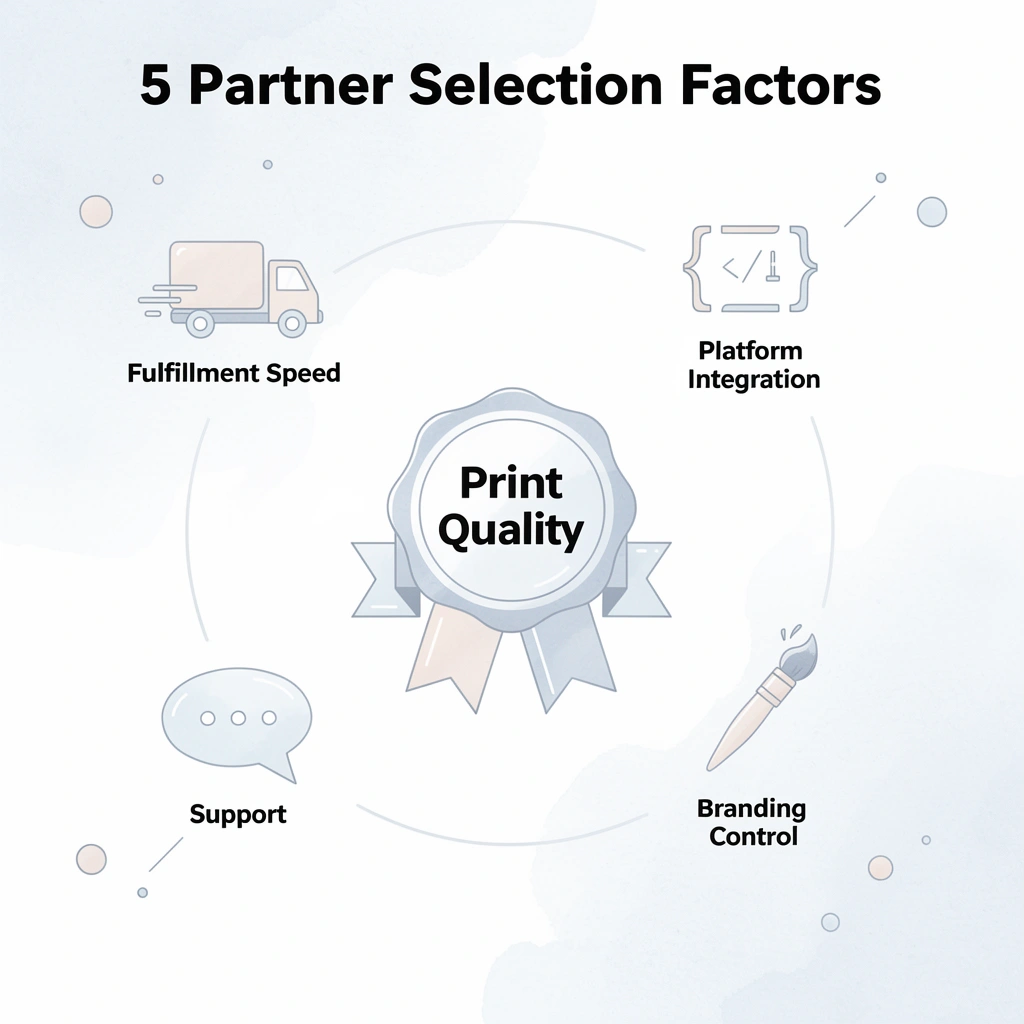
Pick a print-on-demand partner based on five critical factors: print quality, how fast they can fulfill orders, platform integration, branding control, and responsive support.
“The right print-on-demand partner isn’t just a vendor — they’re the backbone of your product quality, customer experience, and brand reputation.” — Industry Best Practice
| Factor | Why It Matters |
|---|---|
| Print Quality | Determines how professional your products look and feel |
| Fulfillment Speed | Impacts customer satisfaction and repeat purchases |
| Platform Integration | Enables seamless order automation with your storefront |
| Branding Control | Lets you deliver a consistent, on-brand unboxing experience |
| Responsive Support | Critical for resolving issues before they hurt your business |
🎯 Key Point: Every factor on this list directly affects your bottom line — skipping due diligence on even one can cost you customers.
💡 Tip: Before committing to a partner, test their fulfillment speed and print quality firsthand by ordering samples — it’s the most reliable way to evaluate real-world performance.
Print quality is non-negotiable
The failure point is usually not the design, but what happens after fifteen washes. Top-tier providers use direct-to-garment technology with premium blanks and multi-step inspection processes that catch color drift and edge bleed before shipping. According to Coastal Reign’s 2025 Print-on-Demand Statistics and Trends, over 60% of consumers prefer personalized products, raising the quality bar significantly. Customers who receive a faded graphic on their first order rarely return.
Fulfillment networks shape the customer experience
A beautiful product that arrives ten days late still generates a complaint. The best providers run distributed production hubs so that orders print and ship close to the customer, cutting transit time without inflating cost. What you want to see is transparent delivery estimates before purchase, multiple shipping tiers, and real-time tracking. Without these, you outsource your reputation to a logistics black box.
How do Zazzle alternatives handle group orders and shipping timelines?
Most groups ordering custom shirts collect sizes, submit a design file, and hope for the best. When production delays compound with unclear shipping timelines, coordinators receive anxious messages from thirty teammates the week before an event. Services like cheap custom T-shirts address this with all-inclusive pricing, free setup, and expert design review, so groups know exactly what they’re getting before committing funds.
Integration and branding tools multiply your leverage
Easy connections to Shopify, Etsy, and WooCommerce eliminate manual order entry—the difference between growing and stalling. Top providers offer branded packaging, custom labels, and inserts that transform shipments into shareable moments. The Coastal Reign 2025 report projects the global print-on-demand market will reach $39.40 billion by 2031, with growth captured by sellers who built recognizable brands, not storefronts.
Support separates partners from vendors
Quick help from real people across different time zones and through multiple contact channels is something most buyers overlook until they need it. A batch of items printed wrong during a school fundraiser week is a crisis, not a minor inconvenience. Providers offering seven-day-a-week support with clear reprint or refund policies take that urgency seriously. The basic expectation should be a real person answering when something goes wrong; analytics dashboards are a bonus.
Related Reading
- Business T-Shirt Design Ideas
- Types of T-shirt Printing
- T-shirt Design Size
- How To Print A Picture On A Shirt
- Best T Shirt Material for Printing
- Best Corporate Apparel Companies
- Best File Type For T-shirt Printing
- Family Reunion T-shirt Ideas
- T-shirt and Ink Color Combinations
- T-shirt Screen Printing Design Ideas
11 Zazzle Alternatives for Businesses and Creators in 2026
Creators and business owners look for Zazzle alternatives to get away from limited visibility, shrinking margins, and platforms that control how they work. They want better profits, stronger branding, reliable fulfillment, and the freedom to grow beyond crowded marketplaces.
💡 Tip: If your current platform is eating into your margins or restricting your brand identity, it’s not just an inconvenience — it’s a growth blocker you need to solve now.
“The right platform can mean the difference between shrinking margins and a scalable, profitable creative business.” — Industry Insight
| Pain Point | What Creators Need Instead |
|---|---|
| Limited visibility | Platforms with built-in or searchable audiences |
| Shrinking margins | Better profit splits and lower base costs |
| Platform control | Full branding freedom and custom storefronts |
| Unreliable fulfillment | Global print-on-demand with proven logistics |
The market now offers solutions for different needs: some focus on bulk apparel orders, others on global print-on-demand fulfillment, full branding control, or artist marketplaces with built-in audiences. The right alternative depends on which problems matter most to your business.
🎯 Key Point: There is no single best Zazzle alternative. The ideal platform solves your specific bottleneck, whether that’s fulfillment speed, profit margins, or brand ownership.
⚠️ Warning: Choosing a platform based on popularity alone can leave you facing the same limitations you were trying to escape. Match the platform to your business model first.
1. ooShirts
ooShirts delivers affordable, high-quality custom t-shirt and apparel printing with no minimum orders, free shipping and setup, guaranteed delivery dates, and expert support: solving frustrations with high prices, inconsistent quality, shipping delays, and poor service.
Businesses, creators, schools, nonprofits, teams, and individuals get reliable, durable prints at competitive prices that protect budgets, ensure on-time arrival, and deliver professional results without inventory risk or hidden fees.
Best For
Creators and small businesses testing designs or selling custom merch; schools and nonprofits organizing events; teams needing group apparel; and anyone seeking fast, budget-friendly custom t-shirts and hoodies with full design flexibility.
Key Features
- No minimum order quantities for digital printing, allowing orders as small as one shirt at consistently low per-unit prices.
- Free shipping and free setup on every order to the contiguous United States, eliminating surprise costs and simplifying budgeting.
- Low price guarantee with price matching—if you find a lower online price, ooShirts matches it.
- Guaranteed fast delivery dates with standard, rush, and super-rush options, plus refunds if delivery runs late.
- Powerful online design lab with clipart library, fonts, real-time previews, and expert design review on every order.
- Multiple printing methods, including screen printing for durability and DTG for vibrant full-color designs.
- 7-day-a-week customer support via phone, email, and live chat for design help and questions.
Pros
- Extremely competitive pricing that starts low and includes volume discounts, boosting profit margins for businesses and creators.
- Consistent high-quality prints using premium inks that last wash after wash, with a full redo guarantee for defects.
- Reliable and fast fulfillment that prevents missed deadlines and last-minute stress for events and orders.
- All-inclusive transparent pricing with no hidden fees builds trust and eases planning.
- Expert design support and review help achieve professional results even for beginners.
- Strong customer service available every day resolves issues quickly and supportively.
- Flexibility for any order size from one to thousands without forced bulk commitments.
Cons
- Primarily focused on apparel such as t-shirts and hoodies, with limited non-clothing products.
Accessibility
Completely free to start with no subscriptions or upfront fees. Visit ooShirts.com or go straight to the design app to begin creating immediately. Get instant quotes, expert reviews, and track orders online with full transparency.
2. Printful
Printful is a high-quality print-on-demand fulfillment partner that helps businesses and creators build fully branded online stores with products across apparel, accessories, home goods, and more. It removes branding restrictions and lets customers buy directly from you.
Key Features
- Over 300 products with white-label options and custom branding.
- Seamless integrations with Shopify, Etsy, Amazon, and other platforms.
- High-resolution printing with premium materials for consistent quality.
- Global fulfillment centers for faster shipping and lower costs.
- Advanced design tools and mockup generators.
- Detailed order tracking and automated fulfillment.
- Analytics and business tools for scaling operations.
Pros
- Complete brand control with custom packaging and labels.
- Reliable, high-quality prints that reduce returns and complaints.
- Multi-channel selling expands reach without platform dependency.
- No inventory risk with true on-demand production.
- Strong support and resources for growing businesses.
Cons
- Base costs higher than some budget options, requiring smart pricing.
- Learning curve for integrations if new to e-commerce.
- Shipping times vary by location and product.
3. Printify
Printify offers one of the largest catalogs and supplier networks in print-on-demand, giving creators and businesses maximum choice in pricing, products, and providers to overcome Zazzle’s margin and quality inconsistencies.
Key Features
- 1,300+ products from multiple vetted print providers.
- Competitive base prices with tools to compare suppliers.
- Easy integration with major e-commerce platforms.
- Bulk order discounts and premium provider options.
- Advanced mockup and design customization tools.
- Automated order routing for efficiency.
- Global shipping network.
Pros
- Higher profit potential through supplier competition.
- Vast product variety for diverse business needs.
- Flexible scaling for both small creators and large operations.
- Strong focus on cost optimization.
- User-friendly dashboard for managing multiple stores.
Cons
- Quality depends on the chosen provider, so research is required.
- More hands-on management than single-provider solutions.
- Occasional variability in production standards.
4. Gelato
Gelato delivers localized production across dozens of countries, ensuring fast shipping, reduced costs, and eco-friendly options that tackle Zazzle’s fulfillment delays and international shipping frustrations for global businesses and creators.
Key Features
- Local printing in over 30 countries for quick delivery.
- High-quality wall art, apparel, and home decor focus.
- Seamless e-commerce integrations.
- Sustainable printing practices.
- Robust API for advanced users.
- Professional mockups and design tools.
- Reliable global fulfillment network.
Pros
- Significantly faster shipping times worldwide.
- A lower carbon footprint appeals to conscious buyers.
- Competitive pricing with local production advantages.
- Excellent for international scaling.
- Strong quality consistency.
Cons
- Smaller catalog than some competitors in certain categories.
- Best suited for businesses with global reach.
- May require strategy adjustments for US-only operations.
5. Redbubble
Redbubble functions as a vibrant artist-focused marketplace, similar to Zazzle, but with a modern community emphasis on apparel, stickers, and home goods, providing passive income opportunities and built-in traffic that help creators bypass marketing and support challenges.
Key Features
- 70+ customizable products with artist royalty control.
- Large built-in audience for discovery.
- Easy upload and tagging system.
- Community-driven exposure.
- Multiple product types, including stickers and prints.
- Automatic fulfillment and shipping.
- Analytics for sales tracking.
Pros
- Hands-off selling with the platform handling everything.
- Strong visibility for new creators.
- Flexible royalty settings for better earnings control.
- Diverse creative community for inspiration.
- Low barrier to entry.
Cons
- Higher competition and less brand control.
- The platform takes a significant cut.
- Limited depth of customization compared to dedicated tools.
6. Spreadshirt
Spreadshirt equips businesses and creators with a flexible print-on-demand marketplace and fulfillment services that support full brand customization, higher royalties, and integrated storefront tools, directly addressing Zazzle’s branding limitations and profit squeezes while delivering consistent production of apparel and accessories. It empowers sellers to build independent shops or sell through its community with strong design freedom.
Key Features
- Wide selection of apparel, accessories, and home goods with custom options.
- Seller-controlled royalty rates for improved margins.
- Professional design tools and upload system.
- Dedicated storefront builder for brand ownership.
- Global production and shipping network.
- Bulk order capabilities with volume pricing.
- Marketing and promotion resources for creators.
Pros
- Stronger brand control than pure marketplaces.
- Reliable quality for apparel-focused businesses.
- Flexible selling models for both passive and active strategies.
- Better profit potential through royalty adjustments.
- Established platform with built-in traffic.
Cons
- Competition within the marketplace can challenge visibility.
- Fewer non-apparel products than in some broader catalogs.
- Learning curve for maximizing storefront features.
7. CafePress
CafePress offers a veteran marketplace platform packed with thousands of customizable products, enabling creators and small businesses to upload designs quickly and reach buyers seeking unique gifts and apparel, while overcoming Zazzle’s quality variability and support issues through straightforward fulfillment.
Key Features
- Extensive catalog of apparel, home decor, and novelty items.
- Simple design upload and customization interface.
- Built-in marketplace traffic for passive sales.
- Royalty-based earnings model.
- Option for custom storefronts.
- Promotional tools and campaigns.
- Reliable print-on-demand production.
Pros
- Easy entry for beginners and hobbyist creators.
- Diverse product range for various niches.
- Hands-off fulfillment reduces operational headaches.
- Long-standing reputation in custom merch.
- Opportunities for seasonal and event-driven sales.
Cons
- Limited advanced branding and white-label options.
- Platform fees impact overall profits.
- Quality can vary by item.
8. Society6
Society6 specializes in high-quality, art-focused print-on-demand for home decor, apparel, and wall art, giving creators full artistic control and professional production, resolving Zazzle’s inconsistent prints and limited scalability for visual artists and design businesses.
Key Features
- Premium printing on wall art, home goods, and fashion.
- Artist-controlled margins on sales.
- Large built-in art community audience.
- High-resolution upload and preview tools.
- Automatic fulfillment and global shipping.
- Detailed sales analytics dashboard.
- Focus on museum-quality reproduction.
Pros
- Exceptional quality for artistic and decorative products.
- Strong passive income potential for designers.
- Dedicated audience of art enthusiasts.
- No inventory or shipping management required.
- Elegant presentation of creative work.
Cons
- Heavier emphasis on home decor than apparel.
- Competitive environment for new artists.
- Less flexibility for bulk business orders.
9. Amazon Merch on Demand
Amazon Merch on Demand leverages Amazon’s massive customer base and logistics network, allowing approved creators and businesses to sell custom apparel with seamless fulfillment, solving Zazzle’s shipping delays and marketing challenges through unparalleled reach and reliability.
Key Features
- Access to Amazon’s vast shopper traffic.
- Tiered approval system with growing opportunities.
- Premium apparel printing standards.
- Royalty selection for each design.
- Automated order processing and Prime shipping.
- Built-in analytics and performance insights.
- Integration with Amazon ecosystem tools.
Pros
- Explosive sales potential from organic Amazon traffic.
- Hands-off fulfillment with fast delivery.
- Trusted Amazon brand builds buyer confidence.
- Scalable for successful designs.
- No upfront costs once approved.
Cons
- Strict invitation or approval process.
- Limited product types focused on apparel.
- Platform guidelines restrict design freedom.
10. Custom Ink
Custom Ink excels in high-volume custom printing for businesses, teams, and events, offering premium-quality apparel and promotional products and providing the reliability, bulk pricing, and design expertise that eliminate Zazzle’s quality complaints and deadline frustrations.
Key Features
- Extensive options for t-shirts, hoodies, and corporate gear.
- Expert design services and art review.
- Volume discounts for large orders.
- Rush production and delivery available.
- Custom packaging and branding elements.
- Dedicated account support for businesses.
- Satisfaction guarantee with proofing.
Pros
- Superior quality for professional and group orders.
- Strong support for event and business needs.
- Flexible ordering with no strict minimums on many items.
- Tools for team customization and uniformity.
- Proven track record in bulk fulfillment.
Cons
- Higher per-unit costs for small quantities.
- Less suited for unlimited passive marketplace sales.
- Focus primarily on apparel and promo items.
11. TeePublic
TeePublic delivers a streamlined, artist-friendly marketplace that connects creators and businesses with buyers through a vast selection of apparel, accessories, and home goods, offering higher earning potential, faster payouts, and strong community visibility that directly counters Zazzle’s profit squeezes, quality inconsistencies, and limited support. It focuses on trendy, pop-culture, and original designs with efficient fulfillment that reduces shipping headaches and builds reliable passive income streams.
Key Features
- Over 75 customizable products, including t-shirts, hoodies, stickers, mugs, and wall art.
- Artist-controlled pricing with competitive royalty structures for better margins.
- Quick upload process and bulk design management tools.
- Built-in marketplace traffic and daily promotions for increased exposure.
- Fast production and reliable shipping timelines.
- Detailed sales reporting and performance analytics.
- Strong focus on fan art, humor, and niche communities.
Pros
- Superior profit potential and frequent sales for popular designs.
- Hands-off model with the platform handling printing and shipping.
- Quick payouts that improve creators’ cash flow.
- Vibrant community that boosts discoverability.
- Consistent quality that minimizes returns and complaints.
- Easy scalability for businesses expanding design catalogs.
- Lower barriers for testing new ideas without heavy investment.
Cons
- Heavy competition in popular niches requires standout creativity.
- Less emphasis on deep personalization compared to some platforms.
- The platform takes a share that impacts very low-priced items.
How to Choose the Right Zazzle Alternative for Your Needs
The best Zazzle alternative depends on your goals, audience, budget, and business model. Understanding your priorities before switching helps you avoid costly mistakes and choose a platform that supports long-term success.
“The right print-on-demand platform isn’t the most popular one — it’s the one aligned with your specific goals, audience, and revenue model.” — POD Industry Insight
🎯 Key Point: There is no one-size-fits-all answer when choosing a Zazzle alternative. Your niche, profit margins, and target audience should drive every platform decision you make.
| Priority | What to Evaluate | Why It Matters |
|---|---|---|
| Goals | Brand building vs. passive income | What platform features do you need |
| Audience | Niche vs. mass market | Determines marketplace reach vs. custom storefront |
| Budget | Free plans vs. subscription fees | Impacts your upfront cost and profit margins |
| Business Model | Royalties vs. full pricing control | Affects long-term earning potential |
⚠️ Warning: Skipping the platform research phase is one of the most common and costly mistakes creators make — switching platforms after building an audience can mean lost SEO rankings, broken links, and wasted design assets.
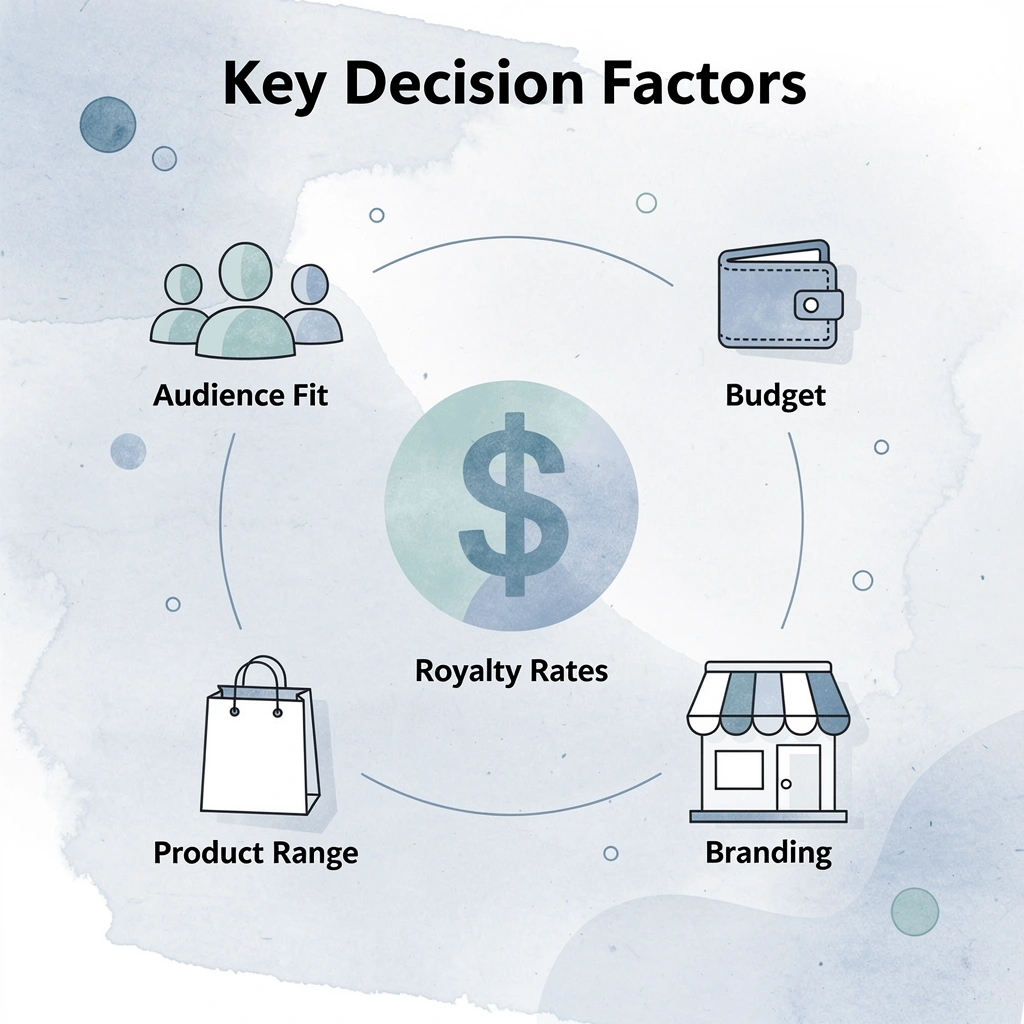
✅ Best Practice: Before committing to any platform, always audit your top three priorities — whether that’s higher royalty rates, global shipping, custom branding, or product variety — and match them directly to the platform’s core strengths.
Define Your Business Goals and Model
Determine whether you need a hands-off marketplace for passive sales or a flexible print-on-demand platform connected to your website. Marketplaces suit creators seeking quick uploads and built-in traffic. Independent POD solutions suit businesses wanting to own customer data, build loyalty, and maintain full control over branding. This choice prevents selecting a platform that limits growth or compromises control and profits.
Evaluate Product Range and Quality
Look at the catalog size and verify printing consistency across all materials. Choose providers that offer premium options, multiple printing methods, and sample ordering so you can test them in real situations before large runs. Quality printing prevents color fading and design misalignment, building customer trust for repeat business and positive reviews.
Assess Pricing, Margins, and Costs
Compare base prices, volume discounts, shipping fees, and overall profit potential to confirm the platform supports healthy earnings. Look for transparent structures, price matching, or supplier competition that keeps costs low while enabling competitive retail pricing. This analysis prevents margin erosion and supports strategic pricing for growth.
Review Branding and Customization Control
Look at each platform’s white-label options, custom packaging, storefront tools, and design freedom. Full branding capabilities let you create a professional customer experience that reflects your unique identity, strengthens your brand presence, and builds direct relationships with returning customers.
Check Shipping, Fulfillment, and Global Reach
Look into where products are made, delivery times, order tracking capabilities, and international options. This ensures orders arrive on time, undamaged, and cost-effectively. Platforms with printing centers in multiple locations reduce delays and lower carbon footprints for global customers.
Test Integrations and Ease of Use
Ensure your sales channels, such as Shopify, Etsy, and Amazon, work together seamlessly. Design tools, mockup generators, automation, and analytics save hours and support efficient growth as your catalog expands. User-friendly features remove technical barriers so you can focus on creativity and sales.
Investigate Customer Support and Reliability
Look for responsive, accessible support channels and a proven track record in resolving issues quickly. Platforms with strong guarantees, expert design review, and dedicated business assistance provide peace of mind during challenges.
Why ooShirts Is a Smart Alternative to Zazzle
You searched for a Zazzle alternative because something didn’t work: unexpected costs for a company event, slow delivery for a fundraiser, or a confusing ordering process. When deadlines, budgets, and customer expectations converge, the wrong platform becomes a serious business problem.
“When deadlines, budgets, and customer expectations collide, your printing platform isn’t just a vendor — it’s a critical business decision.” — Key Insight
⚠️ Warning: Choosing the wrong custom apparel platform risks missed deadlines, hidden fees, and disappointed customers — consequences no business or organization can afford to ignore.
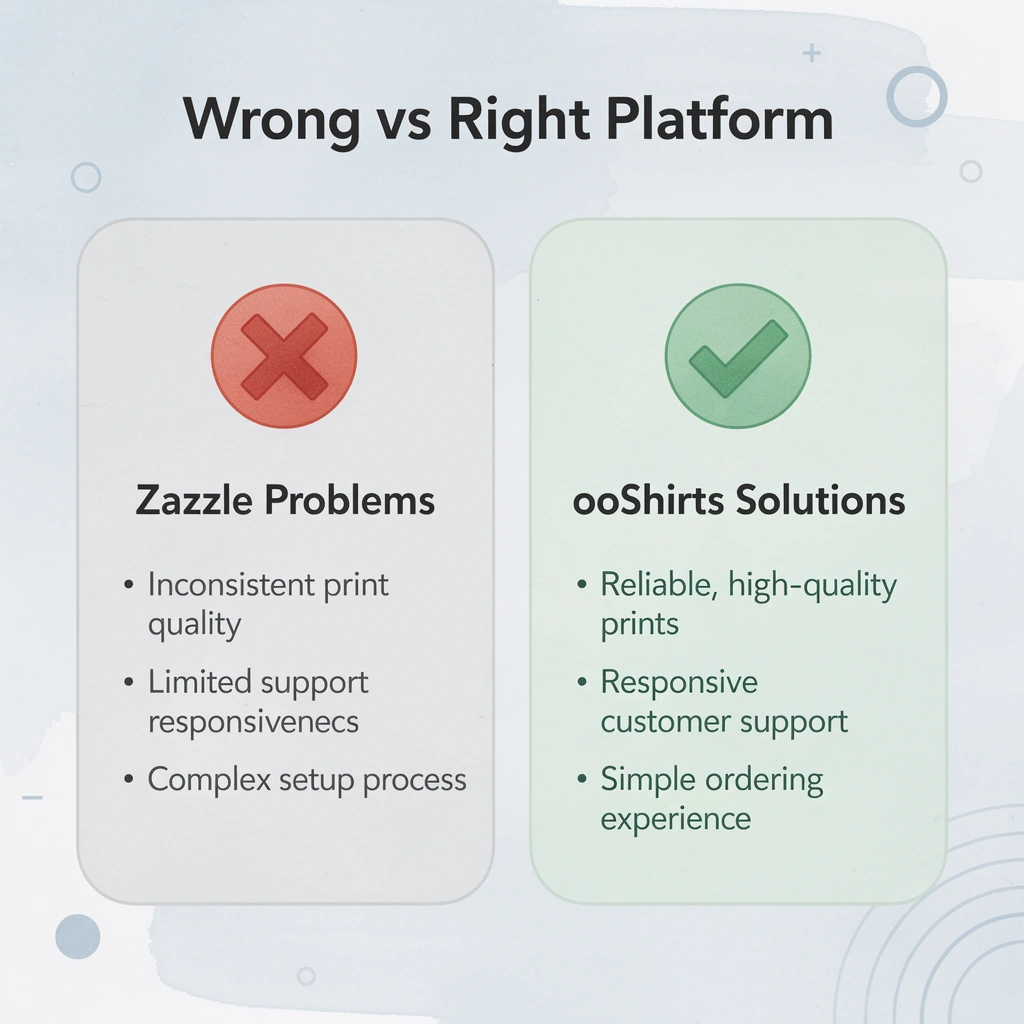
ooShirts solves these challenges directly. While Zazzle operates as a broad customization marketplace, ooShirts focuses on what businesses, organizations, and creators actually need: transparent pricing, fast turnaround options, quality guarantees, and simplified design tools.
| What You Need | Zazzle | ooShirts |
|---|---|---|
| Transparent Pricing | Variable, marketplace-driven | ✅ Clear, upfront costs |
| Fast Turnaround | Inconsistent | ✅ Dedicated fast options |
| Quality Guarantees | Seller-dependent | ✅ Platform-wide standard |
| Simplified Design Tools | Complex marketplace UI | ✅ Streamlined for bulk orders |
🎯 Key Point: ooShirts is purpose-built for bulk buyers and deadline-driven orders — not a general marketplace where quality and speed vary by seller.
💡 Tip: If your priority is predictable costs and reliable delivery, a focused platform like ooShirts will outperform a broad marketplace every time.
Superior Pricing and Profit Margins
Zazzle’s high base costs and fees cut into profits and limit your pricing flexibility. ooShirts counters with competitive pricing starting around $4.19 per shirt for basic styles, free shipping and setup on every order to the contiguous United States, and a price-match guarantee.
This all-inclusive structure boosts your profits dramatically. A small business might lose money on event shirts with Zazzle’s hidden fees; with ooShirts, the same order yields healthy profits, especially with volume discounts that reward growth.
Consistent High-Quality Prints
Zazzle often delivers inconsistent results with faded colors or poor durability that damage your reputation. ooShirts guarantees superior print quality using years of experience, top-notch inks, and premium garments. Our prints last wash after wash, and we remake any order with material defects or print issues.
Businesses see confident outcomes: a school group receives vibrant, long-lasting shirts that impress parents instead of complaints about quick wear, building lasting customer trust.
Reliable Fast Fulfillment and Delivery
Zazzle’s shipping delays and lack of guarantees create last-minute stress for events and orders. ooShirts provides guaranteed delivery dates with standard, rush, and super-rush options, plus refunds if delivery runs late. Free shipping to the contiguous US keeps timelines predictable.
Creators meet deadlines with on-time, high-quality apparel that arrives as promised, eliminating fulfillment frustrations and supporting global reach through dependable US-based production.
Powerful Design Tools and Expert Support
Zazzle’s tools feel limited, and its support responds slowly. ooShirts offers an easy-to-use online design lab with a clipart library, fonts, real-time previews, and full customization, including sleeve printing. Every order includes expert design review plus 7-day-a-week support through phone, email, and live chat.
A beginner creator uploads a rough idea and receives professional improvements before printing, transforming potential design problems into polished results.
Flexible Ordering with No Minimums
Zazzle’s marketplace model limits small orders and brand control. ooShirts offers no minimum order for digital printing, enabling orders from one shirt to thousands with consistently low per-unit pricing and full flexibility.
Small businesses and creators can test designs without risk or fulfill exact needs without excess inventory. This flexibility provides control that pure marketplaces don’t offer.
Start Designing Your Custom Shirts Today
Cheap custom T-shirts from ooShirts make it easy for schools, nonprofits, small businesses, and event organizers to get what they need. Our custom t-shirts offer unbeatable value: free setup, free shipping, no minimums, a price-match guarantee, and human support available seven days a week—so you’re never left guessing.
“From schools to small businesses, ooShirts delivers custom apparel with free setup, free shipping, and no minimums—making professional-quality shirts accessible to everyone.” — ooShirts
💡 Tip: Whether you’re outfitting a nonprofit team, planning a school event, or launching a small business brand, ooShirts has a plan that fits your budget without compromises.

Open the free Online Design Lab at ooShirts.com, upload your existing artwork or build a design from scratch, and your order ships without hidden fees. No design experience required, no guesswork, and absolutely no surprises at checkout. Our platform is built to deliver on time, and every shirt is made to hold up wash after wash.
✅ Best Practice: Use the Online Design Lab to preview your shirt before you commit — what you see is exactly what you get, with zero hidden costs added at the end.
🎯 Key Point: From first click to final delivery, ooShirts is designed for a seamless, stress-free experience — so you can focus on your event, your team, or your brand.
| Feature | ooShirts Advantage |
|---|---|
| Setup Fees | Free — always |
| Shipping | Free — no minimums |
| Order Minimums | None |
| Price Guarantee | Price-match guaranteed |
| Customer Support | Human support, 7 days a week |
| Design Experience Needed | None required |
Related Reading
- 4imprint Competitors
- Printify Alternatives
- Redbubble Alternatives
- Rush Order Tees Vs Custom Ink
- Vistaprint Vs Custom Ink
- Vistaprint Alternatives
- Redbubble Alternatives
- Bonfire Competitors
- 4imprint Vs Vistaprint
Leave a Reply