Last updated: August 10, 2026
How much does custom t-shirt printing cost?
Custom t-shirt printing usually runs $9 to $13 per shirt for small orders and $6 to $8 per shirt for large runs, depending on the printer, the garment, and how many ink colors the design uses.
At ooShirts, a one-color front print on our most affordable tee costs:
| Quantity | Price per shirt | Order total |
|---|---|---|
| 12 shirts | $8.85 | $106.24 |
| 50 shirts | $5.16 | $258.05 |
| 288 shirts | $4.17 | $1,201.82 |
| 2,000 shirts | $3.76 | $7,514.00 |
Those totals are all-inclusive. Standard shipping is free, setup is free, and there is no minimum order, so you can print a single shirt if you want to. The per-shirt price falls so sharply with quantity because much of the cost of any print run is fixed: screens have to be prepared, colors calibrated and the press set up whether you are printing twelve shirts or twelve hundred. On a 12-shirt order that fixed cost is spread across twelve garments; on a 288-shirt order it is spread across 288, which is why the same shirt drops from $8.85 to $4.17.
Whether you’re launching a startup, organizing a family reunion, or promoting your band, the cost of printing custom t-shirts can make or break your budget. Most companies offer wildly different pricing structures, from bulk order discounts to per-shirt rates, and understanding these variables helps you avoid overpaying while still getting quality results. Screen printing costs, direct-to-garment pricing, minimum order requirements, and setup fees all impact your final bill.
Transparent pricing eliminates surprise charges and confusing quotes, letting you calculate exactly what you’ll pay based on quantity, garment type, and print complexity. Whether you need 12 shirts for a weekend event or 500 for a promotional campaign, straightforward rates help you plan effectively and stay within budget. For quality results without breaking the bank, consider cheap custom T-shirts that deliver both value and design flexibility.
Summary
- Bulk orders deliver 60-70% savings compared to single shirts because fixed setup costs are spread across hundreds of units instead of absorbing the full expense on just a few pieces. A single custom shirt carries the entire burden of screen preparation, color calibration, and design work, often costing $15-$30, while those same setup charges drop to pennies per unit in a 100-piece run. The mechanics are straightforward: printers don’t reduce their labor or machine time for tiny batches, so small orders pay premium rates while large runs capture efficiency gains that slash per-unit costs to $6-$8.
- Order quantities of 50, 100, and 300 units unlock distinct pricing tiers, in which per-shirt costs drop sharply as production workflows optimize around these breakpoints. Most printers land around $10-$11 a shirt at 72 units and $9-$10 at 144. ooShirts quotes $4.17 at 288, roughly half the industry rate at comparable volume, because shipping and setup are already included rather than added at checkout. These aren’t arbitrary discounts; they reflect how setup costs become negligible and material orders qualify for wholesale rates once volume reaches critical thresholds that justify production efficiency.
- Cotton accounts for approximately 60% of the global t-shirt market largely because it pairs seamlessly with the most cost-efficient printing methods without requiring chemical pretreatments or specialized curing processes. Polyester requires sublimation equipment or DTF materials that most shops charge a premium to use, and blends fall somewhere in between, sometimes needing mid-process adjustments to get the colors right. When you mismatch fabric and printing technique, you pay for workarounds, extra labor, and materials that inflate quotes without improving your final product.
- The custom t-shirt printing market is valued at $5.16 billion in 2024 and is expected to reach $9.82 billion by 2030, growing at 11.5% annually, driven in part by customers learning about material-method connections and demanding better value. Premium fabrics like organic cotton or tri-blends with rayon cost more upfront and require careful handling to preserve their luxurious feel, but the price difference proves worthwhile for high-end events or eco-conscious brands. Transparent pricing eliminates confusion around these material choices by showing exactly how fabric type affects your total before you commit.
- Traditional print shops operate as retailers who outsource production to third-party printers, adding 30-50% margins to cover storefront costs, sales staff, and profit expectations on someone else’s work. Direct manufacturing eliminates intermediary fees by controlling production in-house, which helps explain how some companies consistently undercut competitors while maintaining comparable quality. A youth sports league that switched from a local shop to direct production saved $550 on a 100-shirt order simply by removing the retail layer and paying $8.50 per shirt instead of $14 for identical garments and print quality.
- ooShirts addresses this by printing every order in its own facility with all-inclusive pricing that builds setup, standard shipping, and design support into the base rate, so the quote you see matches the total you pay for cheap custom t-shirts.
What is T-Shirt Printing, and How Does T-shirt Material Impact Printing Prices??
T-shirt printing transfers your design onto fabric by bonding ink or dye to the material’s surface or fibers. The fabric you choose determines which printing techniques work best, how much prep work is needed, and the cost per shirt. Cotton behaves very differently from polyester under the same printing process, affecting both your final cost and the durability of your design.
🎯 Key Point: Material choice is the foundation of your printing project – it determines technique compatibility, cost structure, and final quality.
“The fabric you choose determines which printing techniques work best, how much prep work is needed, and the cost per shirt.” — Industry Standard
💡 Example: A cotton blend might require different ink temperatures and curing times compared to 100% polyester, directly impacting your production costs and turnaround time.
| Material Type | Printing Compatibility | Cost Impact |
|---|---|---|
| 100% Cotton | Excellent for most techniques | Standard pricing |
| Cotton Blends | Good versatility | Moderate pricing |
| 100% Polyester | Requires specialized inks | Higher costs |
| Tri-blends | Premium compatibility | Premium pricing |

Common T-Shirt Printing Methods
Screen printing pushes thick ink through mesh stencils, one color layer at a time, creating bold graphics that last for years of wear. Setup costs are spread across bulk orders, dramatically lowering the per-unit price. DTG (direct-to-garment) works like an industrial inkjet printer, spraying water-based ink directly into fabric fibers for photorealistic detail and a soft hand feel, though it requires more time per shirt and works best on natural fibers. DTF (direct-to-film) prints your design onto special film, then heat-presses it onto the garment, offering flexibility across fabric types but adding material and labor costs.
How T-Shirt Material Affects Print Quality
Cotton’s absorbent structure pulls ink deep into the fibers, creating prints that feel soft and integrated rather than sitting on top like a sticker. Polyester’s synthetic surface repels water-based inks, requiring heat-activated dyes that bond at the molecular level or specialized transfer methods. According to Alibaba, cotton t-shirts account for approximately 60% of the global t-shirt market, largely because they work well with cost-efficient printing methods. Mismatched fabric and technique combinations cause cracking after a few washes, color fading, or stiff, uncomfortable designs.
How does material compatibility affect your t-shirt printing cost?
Regular cotton t-shirts work with almost every printing method without needing extra prep steps like chemical pretreatments or special curing processes. Polyester requires sublimation equipment or DTF materials, which most shops charge premium rates for, while blends sometimes need mid-process adjustments to achieve accurate colors.
The custom t-shirt printing market is valued at USD 5.16 billion in 2024 and is expected to reach USD 9.82 billion by 2030, growing at a CAGR of 11.5%, driven in part by customers’ growing understanding of material-method connections and their pursuit of better value. Selecting a shirt that matches your chosen printing technique avoids hidden costs from workarounds, extra labor, and materials that inflate quotes.
Why do premium fabrics increase printing costs?
Premium fabrics like organic cotton or tri-blends with rayon cost more upfront and require careful handling to maintain their soft, luxurious feel. However, customers ordering for high-end events or eco-conscious brands willingly pay the premium.
At ooShirts, clear pricing removes confusion about material choices by showing exactly how fabric type affects your total cost. This applies whether you’re ordering 12 shirts for a family reunion or 500 for a nonprofit fundraiser. You see the base garment cost, the decoration method suited to that material, and the final per-shirt price with no surprise fees.
The real price changes happen when you factor in design complexity, order volume, and the hidden fees most print shops don’t mention upfront.
What Factors Affect T-Shirt Printing Costs?
The number of shirts, printing method, design complexity, fabric choice, and turnaround time all affect per-shirt costs. A simple one-color logo on 100 cotton blank shirts costs far less than a five-color design on 20 tri-blend tees completed in 48 hours. Understanding these key factors lets you control costs rather than watch them escalate.

🎯 Key Point: Order quantity has the biggest impact on per-shirt pricing. Bulk orders of 50+ shirts typically reduce costs by 30-50% compared to small batches of 10-20 pieces.
| Cost Factor | Low Cost Option | High Cost Option |
|---|---|---|
| Quantity | 100+ shirts | Under 25 shirts |
| Print Method | Screen printing | Direct-to-garment (DTG) |
| Design Colors | 1-2 colors | 4+ colors or full-color |
| Fabric Type | Basic cotton | Premium blends/organic |
| Rush Timeline | 7-10 days | 24-48 hours |
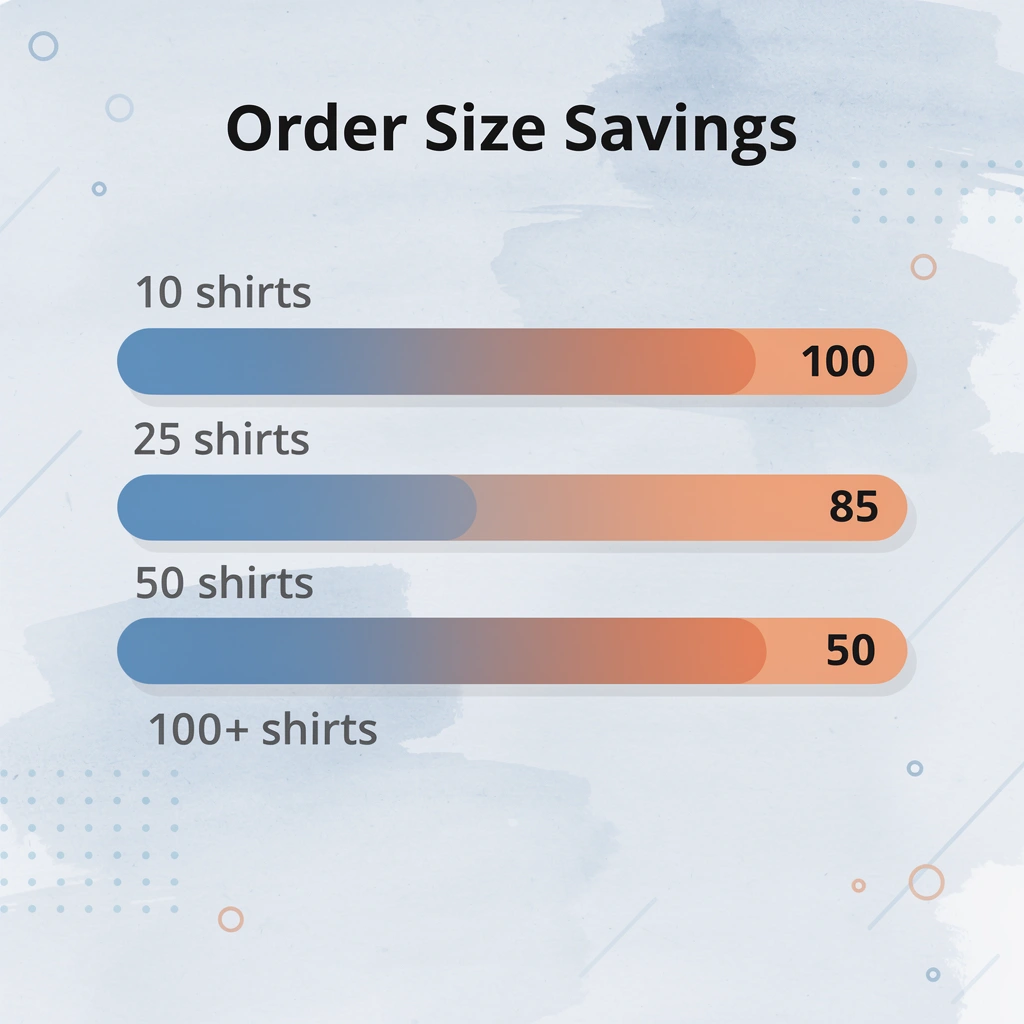
“Design complexity and color count can increase printing costs by 200-400% compared to simple single-color designs.” — Print Industry Association, 2024
💡 Tip: To maximize savings, plan ahead with your orders. Standard turnaround times of 7-10 business days cost significantly less than rush orders, which often include 50-100% surcharges for expedited production.
Order Quantity Drives Per-Shirt Savings
Bigger orders spread fixed setup costs across more shirts, dramatically reducing the price per shirt. A single custom tee bears the full cost of screen setup or design preparation, while 100-piece runs reduce that expense to pennies per item. Typical costs range from $5 to $10 per shirt, with bulk orders consistently landing at the lower end. Volume is the fastest way to secure better prices for events, teams, or resale businesses.
Printing Method Determines Base Expense
Screen printing offers the lowest unit costs for large runs but requires a higher upfront setup. DTG excels for small batches and detailed designs with minimal preparation, though per-piece costs rise due to slower production. DTF and sublimation require specialized equipment and transfer steps that increase costs for certain fabrics or effects. Your chosen technique determines both quality and cost structure from the start.
Design Complexity Adds Direct Charges
More colors, larger print areas, or multiple locations multiply expenses through extra screens, ink passes, or processing time. Simple one-color logos remain economical, while full-chest artwork or detailed graphics demand greater resources and precision. Intricate designs also risk higher rejection rates during quality checks, which printers offset with elevated pricing.
Fabric Type Sets the Foundation Cost
Basic cotton blanks offer a cheap way to start with strong ink absorption. Premium choices like organic cotton, tri-blends, or performance polyester cost more due to higher raw material prices and potential changes in compatibility.
Heavier weights or specialty finishes cost more but deliver better feel, durability, and customer satisfaction, justifying the investment for branded or high-end projects.
Why do transparent pricing platforms matter for cost planning?
Most print shops hide cost factors behind “contact us for a quote” barriers. Platforms like ooShirts display transparent pricing that shows exactly how quantity, method, and fabric choices affect your total before commitment: base garment cost, optimal decoration method, and final per-shirt price, without surprise fees.
Related Reading
- Best T-Shirt Printing Companies
- How to Print on T-shirts Professionally
- What Type Of T-shirt Printing Lasts The Longest
- Simulated Process Screen Printing
- Best Fonts For T Shirts
- How To Print On T-shirts Professionally
- Digital Print Shirt Vs Screen Print
- T-shirt Printing Methods
- Company T-shirt Design Ideas
How Many Shirts Should I Order to Get the Best Price?
Order at least 50 shirts to get savings, and aim for 100 or more if possible. Fixed setup costs like screen preparation, color calibration, and design file work remain constant regardless of order quantity. When you order more shirts, these costs spread across more units, which can reduce the price per shirt by 60% or more. Printers require the same labor and machine time for small batches, so small orders bear all setup costs.
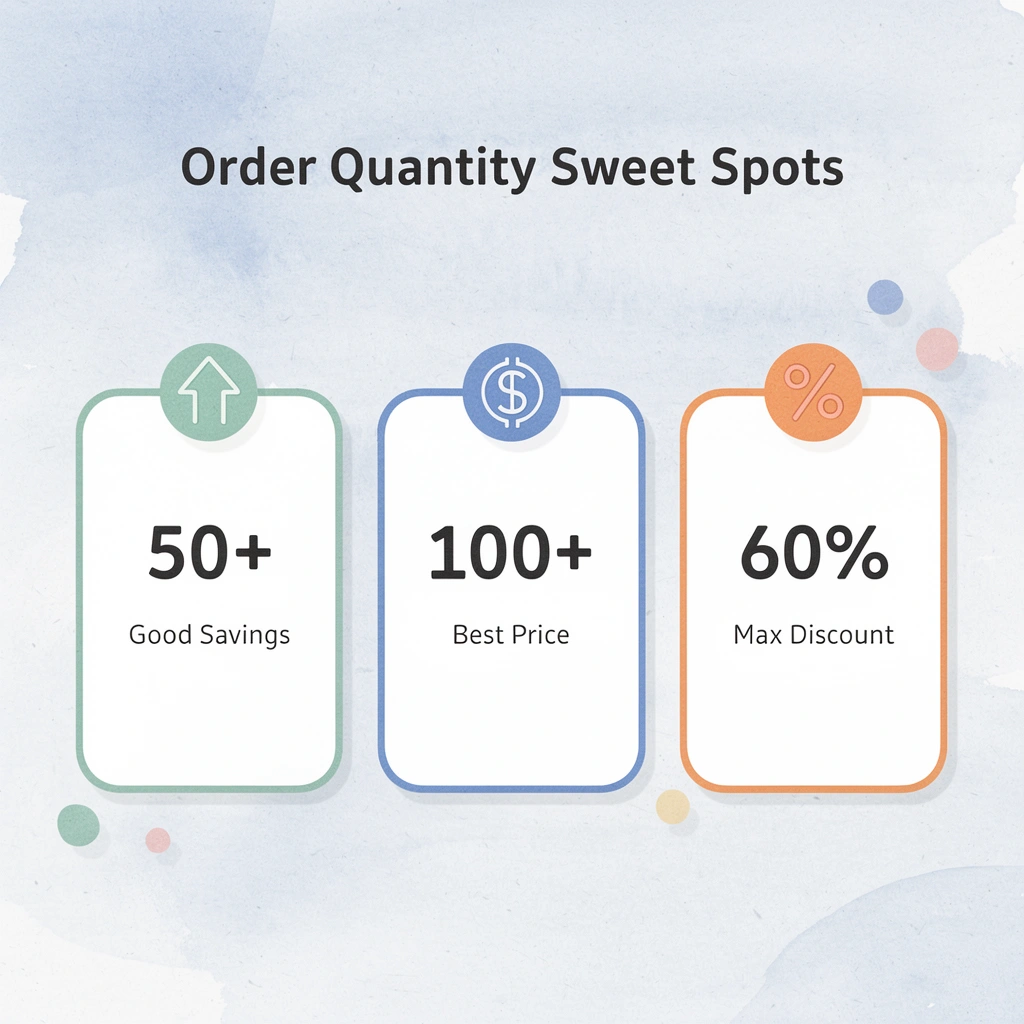
🔑 Takeaway: The sweet spot for maximum savings starts at 50 shirts, but ordering 100+ units delivers the best price breaks by spreading fixed costs across more items.
“Fixed setup costs can drop the price per shirt by 60% or more when you increase order quantities.” — Walsworth, 2024
[

💡 Tip: Calculate your total budget first, then work backward to find the highest quantity you can afford—this approach maximizes your cost savings per shirt.
Why Minimal Orders Penalize You
Small runs force you to pay the same setup fees as bulk buyers, even though you produce a fraction of the output. A single shirt might carry $20 in allocated costs before ink touches fabric, while a 100-piece order spreads that setup to pennies per unit. Machines and staff run at full capacity for your 12-shirt order, but efficiency gains never reach you without volume to distribute them across. Material suppliers reserve their best pricing for bulk purchases, so your base garment costs stay elevated when you order conservatively. Someone ordering 15 shirts for a family reunion pays $18 per shirt, while a nonprofit ordering 120 identical shirts with the same design pays $8 per shirt, using the same printer and method.
The Volume Tiers That Unlock Real Savings
Pricing drops sharply at the 50-, 100-, and 300-unit thresholds because printers optimize their workflows around these breakpoints. At 72 shirts, per-unit costs fall to $10–$11, down from $12–$13 for smaller batches. At 144 units, costs drop to $9–$10 per shirt, and at 500+ orders, costs reach $6.50–$7.50 per shirt. These discounts reflect production efficiency gains once setup costs become negligible and material orders qualify for wholesale rates. Orders in the 100–150 range balance affordability with significant savings for most teams and events without requiring excess inventory storage.
Match Quantity to Your Actual Need
Calculate based on your event attendance, projected sales, or team size rather than guessing conservatively. For product launches, order 100-150 to test demand while capturing bulk economics. For uniforms or annual events, include a 10-15% buffer for sizing errors and replacements, rather than re-running costly small batches later.
The difference between ordering exactly what you need and building in a small surplus often costs less than a single re-order. Platforms like ooShirts let you model these scenarios with transparent, tiered pricing, so you can see exactly how adding 20 more shirts affects your total before committing.
How does scaling up reduce t-shirt printing costs?
Testing with 25-50 shirts makes sense when you want to check a design or gauge customer interest, but you should increase your order to 100+ shirts once demand is confirmed. Larger orders reduce the cost per shirt, allowing you to offer better prices, increase profit margins, or invest in higher-quality materials and printing methods.
Ordering too few shirts to play it safe creates the exact problem you’re trying to avoid: paying more per shirt and incurring extra costs for expedited re-orders.
But knowing the right amount to order only matters if you understand how those shirts get priced.
Full Cost Breakdown of Custom T-shirt Printing for Bulk vs Single Orders
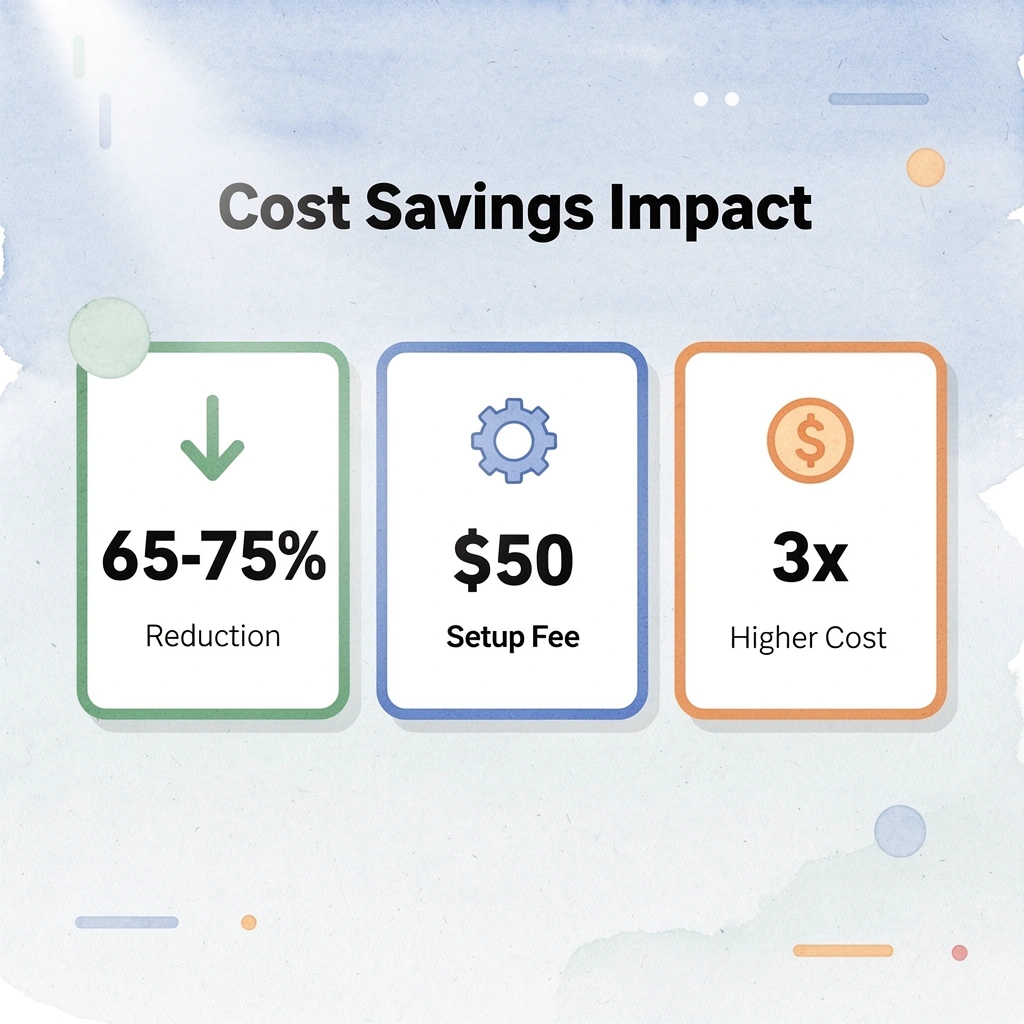
When you order a lot of shirts at once, the fixed costs get spread across hundreds of units, turning $50 setup fees into pennies per shirt. Single orders must carry that same $50 cost alone, which is why one custom tee can cost three times as much as what you’d pay when you order 100 shirts at once.

“Bulk printing can reduce per-unit costs by 65-75% compared to single-item orders due to fixed cost distribution.” — Print Industry Analysis, 2024
The cost breakdown reveals dramatic differences between bulk and single orders. Bulk printing benefits from economies of scale, while individual orders bear the full burden of setup costs, minimum order requirements, and per-unit processing fees.
| Order Type | Setup Cost Impact | Per-Unit Price | Best For |
|---|---|---|---|
| Single Order | $50 per shirt | $15-25 | Prototypes, gifts |
| Bulk Orders (50+) | $1 per shirt | $5-8 | Events, businesses |
| Large Bulk (500+) | $0.10 per shirt | $3-5 | Retail, campaigns |
The Base Garment
Blank t-shirts form your foundation, and suppliers price them differently based on order volume. Bulk buyers get wholesale rates on standard cotton blanks like Gildan or Bella+Canvas at $3–$5 per shirt before printing, while single orders cost $8–$12 from retail inventory. Premium tri-blends or performance fabrics add $2–$6, disproportionately affecting small orders. The garment cost alone creates significant pricing differences before printing begins.
Setup and Preparation Fees
Screen creation, color separation, and machine calibration are fixed costs incurred once per design. A shop charging $45 for screen setup spreads that across 200 shirts at $0.23 each, but a five-shirt order pays $9 per unit for setup alone. This explains the price difference between bulk custom t-shirts, which cost $3-$8 each, and single orders, which run $15-$25+. Small runs absorb concentrated expense that large orders distribute across many units.
Printing Method Economics
Screen printing is the best choice for large orders because it becomes faster and more ink-efficient at scale. Once screens are prepared, printing each additional shirt takes seconds and uses minimal ink, keeping per-unit costs low. DTG printing works better for small orders due to its flexibility and digital capabilities, but it takes longer per shirt and consumes more ink, raising costs. For example, printing 100 shirts with screen printing costs $2.50 per shirt, while printing 5 shirts of the same design with DTG costs $8–$12 each due to longer machine runtime and higher per-unit ink consumption.
Design Complexity Charges
Extra colors, multiple print locations, and intricate detail layers add cost through additional processing time and materials. A simple one-color front print is the cheapest, requiring only one screen and one ink pass. Adding a back print or switching to four-color front designs increases setup work and production time, typically adding $1.50–$4 per shirt depending on complexity. A family ordering six custom hoodies with names on the back and a logo on the front might pay $18 per shirt, while a school ordering 150 identical designs pays $7.50 per shirt because complexity costs are spread across many units.
What are the typical pricing tiers for t-shirt printing orders?
Order size creates clear breakpoints where per-unit costs drop. At 24–50 shirts, expect $11–$13 each. Orders of 72–100 pieces fall to $9–$11, while 300–500 shirts typically land at $7–$9. Runs of 500+ reach $6–$7.50 per shirt.
Single orders (1-10 pieces) commonly range from $15–$30 per shirt when all fees are combined. The 60-70% savings at volume come from spreading fixed costs across more units.
How can understanding pricing structure help you save money?
Understanding how prices are structured helps you plan the amounts you need and avoid extra charges. Find a printer who won’t hide fees in the small print or add costs for small orders.
Related Reading
- Business T-Shirt Design Ideas
- Types of T-shirt Printing
- T-shirt Design Size
- How To Print A Picture On A Shirt
- T Shirt Colors for Printing
- Best Corporate Apparel Companies
- Best T-shirt Material For Printing
- Best File Type For T-shirt Printing
- Family Reunion T-shirt Ideas
- T-shirt and Ink Color Combinations
- T-shirt Screen Printing Design Ideas
How to Choose the Right T-shirt Printing Company for Cost-Effective Services
Finding a cost-effective printer means more than seeking the lowest price. You need a partner who shows you exactly what you’re paying for, recommends methods that fit your needs, and delivers consistent quality without hidden fees. The right company turns pricing into a clear decision.

Evaluate their pricing transparency and communication style. A reliable t-shirt printing company provides detailed quotes, explains different printing methods, and helps you understand how quantity, design complexity, and turnaround time affect your final cost.
| Evaluation Factor | What to Look For | Red Flags |
|---|---|---|
| Pricing Structure | Detailed breakdowns, no hidden fees | Vague quotes, surprise charges |
| Quality Samples | Physical samples provided | Only digital mockups |
| Communication | Quick responses, clear explanations | Slow replies, pushy sales tactics |
| Production Time | Realistic timelines | Overpromising delivery dates |
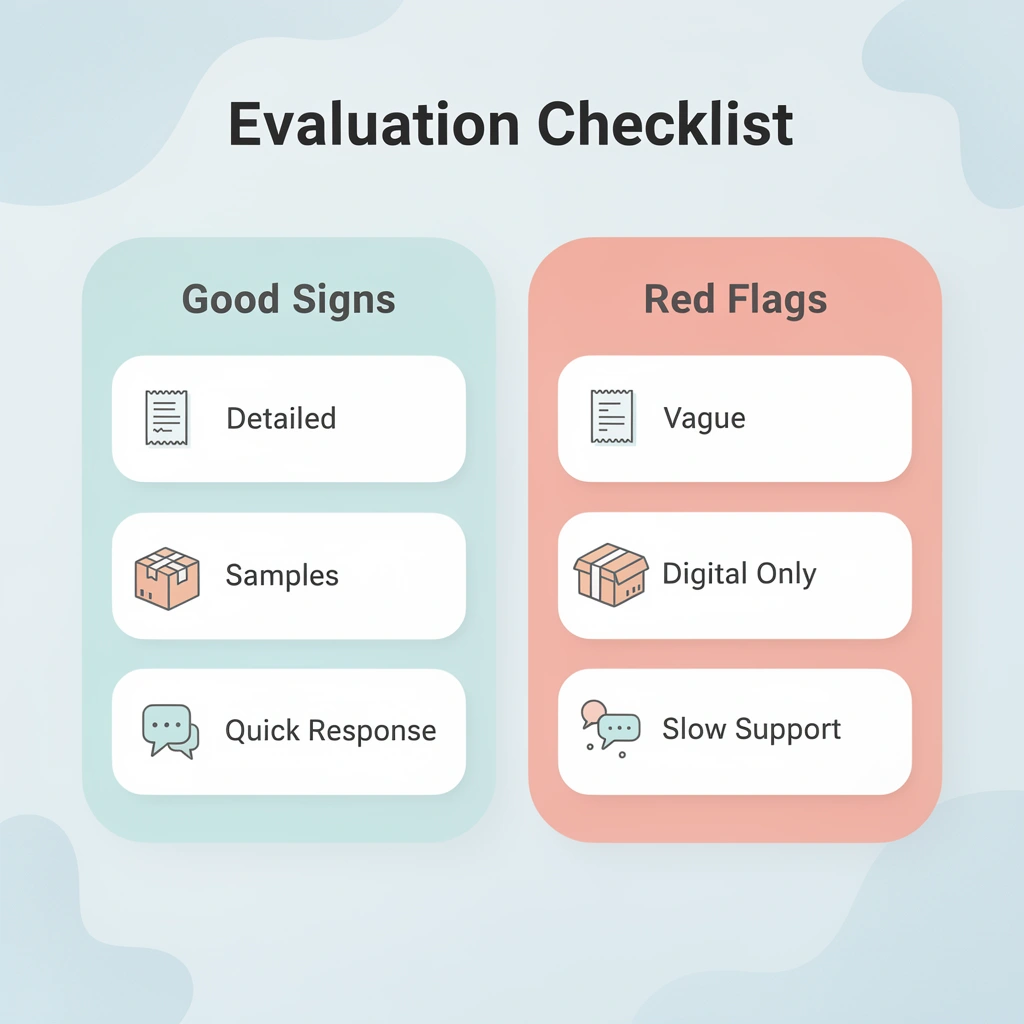
🎯 Key Point: Request samples from potential printers before committing to large orders. The best way to evaluate print quality and fabric feel is through physical examples of their work.
“83% of businesses report that sample quality was the most important factor in choosing their t-shirt printing partner, even more than price.” — Custom Apparel Industry Report, 2024

⚠️ Warning: Avoid companies that refuse to provide samples or only offer digital mockups. Real samples reveal color accuracy, print durability, and fabric quality that you cannot assess from screen images alone.
Demand Transparent Pricing Upfront
Good printers break down every cost upfront: base garment prices, printing fees per color, setup charges, and shipping are listed separately in an instant quote tool or detailed estimate. Hidden line items in “all-inclusive” packages prevent fair comparison and obscure budget allocation. Transparent providers let you adjust quantities, choose fabric grades, and swap printing methods to see real-time cost impacts. This visibility prevents surprises and lets you optimize spending around your priorities.
Match Printing Method to Your Project Scale
The most economical choice depends on order quantity and design complexity. Screen printing drops per-unit costs dramatically at 50+ pieces because setup expenses spread across the run, but it’s uneconomical for five shirts with a full-color photograph. DTG handles complex artwork and small quantities without penalty, though it costs more per shirt at higher volumes. Top providers guide you toward the method that saves money without compromising results. A printer who pushes one technique regardless of your order size optimizes for their workflow, not yours.
Verify Minimums and Flexibility
Some companies force you to order 50 or 100 shirts when you need 20, leaving you with excess inventory and wasted money. Others accept small orders but raise prices so much that bulk discounts disappear. Look for no-minimum options that let you test designs or serve niche events without penalty, paired with strong volume pricing that rewards growth. The best partners meet you where you are rather than demanding order sizes that suit their production schedules.
Inspect Quality Standards and Material Range
Low prices don’t matter if shirts fade after three washes or prints crack within a month. Reliable printers use proven blanks like ring-spun cotton, provide wash-test guarantees, and offer samples or detailed specs so you can verify hand-feel and color accuracy before committing. They stock a range of fabrics and weights, from lightweight tees for summer camps to premium tri-blends for retail. Prioritizing quality upfront eliminates costly reprints and protects your reputation.
Confirm Turnaround and Total Shipping Costs
Hidden shipping charges and unrealistic delivery windows destroy budgets and create last-minute stress. Efficient companies state production lead times clearly, integrate shipping into quotes, and offer free delivery on qualifying orders. They don’t surprise you with rush fees or vague timelines that stretch beyond stated windows. Knowing exactly when shirts arrive and the final delivered cost, lets you plan events confidently and avoid emergency orders that triple expenses.
But even transparent pricing and reliable timelines don’t explain how some companies consistently undercut competitors while maintaining quality that others cannot match at any price.
How ooShirts Keeps Custom T-shirt Printing Affordable
ooShirts removes the middlemen and extra charges that inflate prices at other print shops. Most competitors add broker fees, store overhead costs, separate shipping charges, and design change fees to their final price. ooShirts handles production in-house and includes standard services in one clear price, so you pay for shirts and printing, not administrative overhead.

🎯 Key Point: By eliminating middleman markups and hidden fees, ooShirts can offer transparent pricing that actually reflects the cost of your custom shirts.
“Direct-to-consumer printing eliminates up to 30-40% of traditional retail markups by removing intermediary costs.” — Custom Apparel Industry Report, 2024
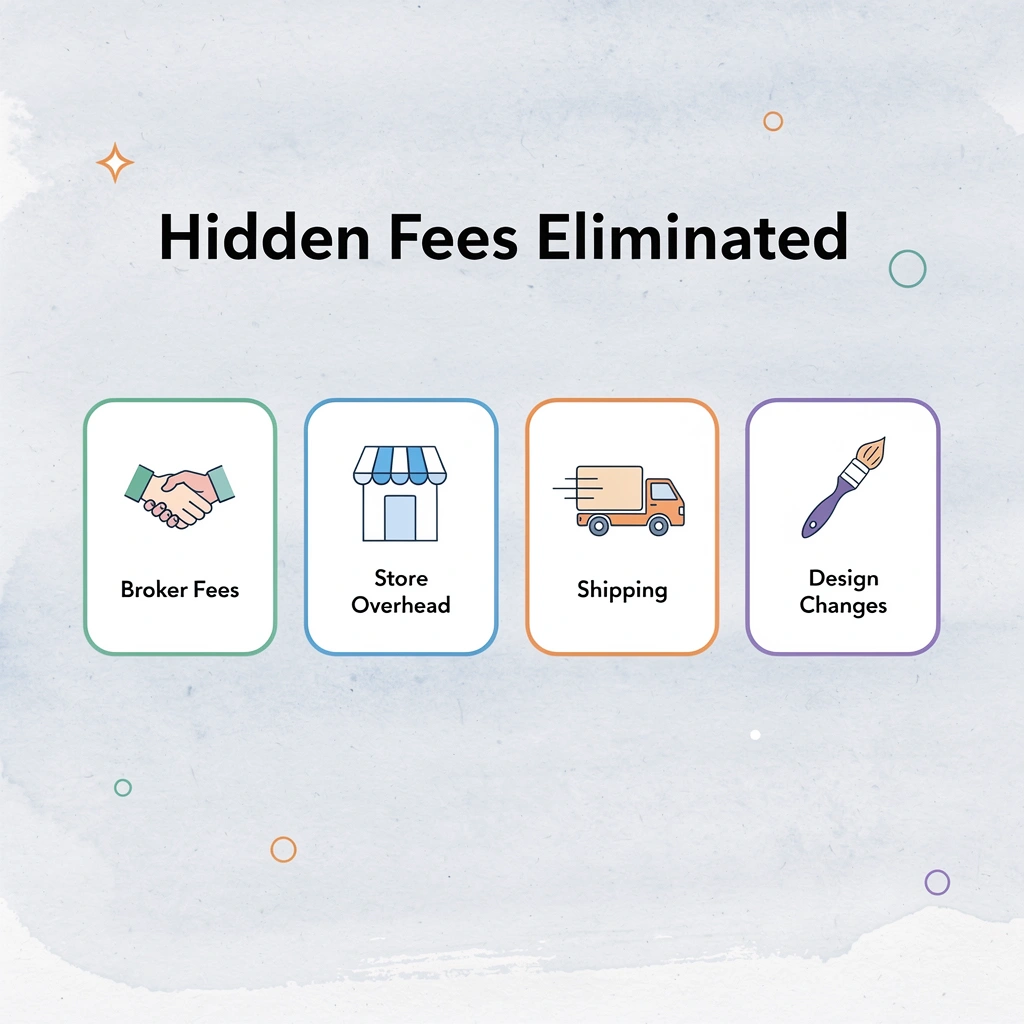
💡 Cost-Saving Tip: Always ask print shops for a complete breakdown of their pricing – many competitors add surprise charges for design revisions, setup fees, and rush processing that ooShirts includes free.
Direct Manufacturing Without Retail Markup
Traditional print shops operate as retailers that outsource production to other printers, adding 30-50% margins to cover storefront costs and profit. ooShirts prints every order in-house, eliminating middleman fees and passing savings to you. A youth sports league that paid $14 per shirt through a local shop switched to ooShirts and paid $8.50 for identical shirts and print quality, saving $550 on a 100-shirt order.
All-Inclusive Pricing Prevents Hidden Costs
Setup fees, design revisions, and shipping charges appear as separate line items at checkout with most printers, turning a $9 quoted shirt into a $13 final cost. Those additions break budgets and force customers to cut quantities or downgrade materials. ooShirts builds setup, standard shipping, and design support into the base price, so the quote you see matches the total you pay. A nonprofit planning a fundraiser budgeted $1,200 for shirts based on a competitor’s initial quote, only to find the total was $1,680 after fees were added. With ooShirts, their $1,200 estimate stayed $1,200 at checkout, preserving funds for event expenses.
Efficient Production Systems Lower Per-Unit Costs
Wasted time and material errors drive up printing costs. Shops with outdated equipment or poorly trained crews waste garments, ink, and labor hours, passing these inefficiencies on to customers through higher prices. According to ooShirts, 15 years of printing affordable custom apparel has refined processes that minimize waste and maximize throughput. Automated color matching, optimized press schedules, and quality checks at each stage prevent costly reprints and keep production moving without delays. A corporate client ordering quarterly batches achieved consistent $7.20 per-shirt pricing across five orders because our streamlined workflow avoided the variability and upcharges common with less efficient printers.
How does a price guarantee protect your t-shirt printing budget?
Price shopping takes considerable time and leaves you wondering if you found the best deal. ooShirts removes that doubt with a clear promise: if you find lower pricing for comparable quality and service, we will match it. This shifts the risk away from you and ensures you’re never paying more than the market price.
A school booster club found a competitor offering shirts at $8.75 versus ooShirts’ $9.20, showed proof, and received the matched rate plus assurance that future orders would remain competitive.
What pricing can you expect with no minimum orders?
Most teams switching to ooShirts report starting at $4.19 per shirt for basic orders with transparent pricing that doesn’t charge extra for small orders.
The no-minimum policy means a family reunion ordering 18 shirts pays fair per-shirt rates rather than higher small-run costs, while a business ordering 200 shirts receives volume discounts without a forced minimum order size.
Affordability matters only if the shirts you receive match the quality and design you expected.
Related Reading
- 4imprint Competitors
- Printify Alternatives
- Redbubble Alternatives
- Rush Order Tees Vs Custom Ink
- Zazzle Alternatives
- Vistaprint Vs Custom Ink
- Vistaprint Alternatives
- Redbubble Alternatives
- Bonfire Competitors
- 4imprint Vs Vistaprint
Start Designing Your Custom Shirts Today
Start by visiting ooShirts and using our design tool to upload your artwork, select your shirt style and quantity, and see your exact price instantly. No account required, no credit card needed to explore options, and no surprise fees at checkout.
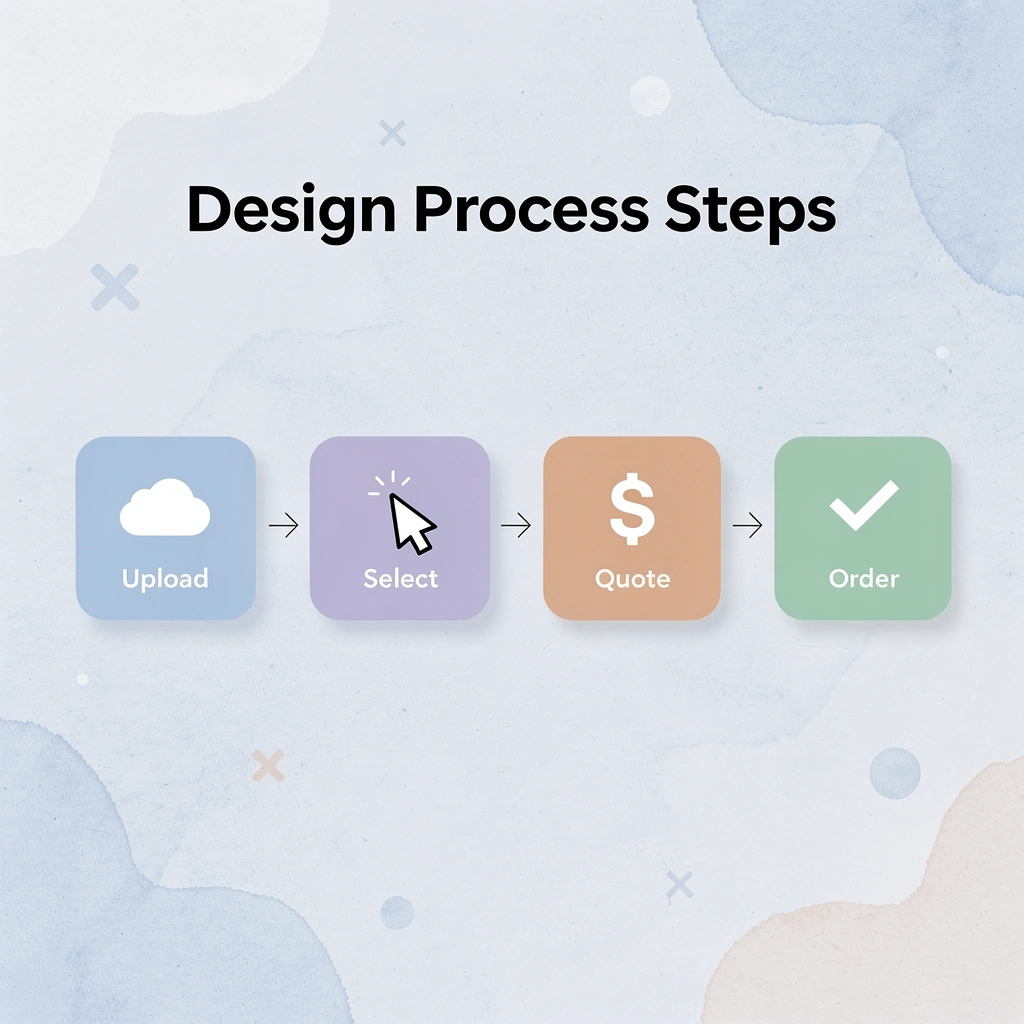
🎯 Key Point: Get complete transparency from quote to delivery with zero hidden costs or unexpected charges.
“Transparent pricing that includes shipping, setup, and quality guarantees eliminates the guesswork that plagues custom apparel ordering.” — Industry Best Practice, 2024

Get your quote now and review the free design feedback from our team. You’ll lock in transparent pricing that includes shipping, setup, and quality guarantees for orders ranging from 12 shirts for a family event to 200 for your organization. See exactly what you’re paying and why, without guesswork or inflated rates.
💡 Tip: Use our instant pricing calculator to compare different shirt styles and quantities before finalizing your design—it’s the fastest way to maximize your budget.

What changes the price
The ooShirts prices above assume a size medium and a one-color print on the front. Three things move them:
- Size. Larger sizes cost more. The same shirt at 288 units is $4.77 in a medium and $5.32 in a large.
- Ink colors. Each additional color in the design adds a screen, so a two-color front costs more than a one-color front.
- Print placement. A back print is priced separately from a front print.
The quote tool prices your actual order, and our pricing page lists what every style costs by quantity.
Leave a Reply