Last updated: August 9, 2026
Printify has gained popularity among print-on-demand entrepreneurs, but many sellers face shipping delays, inconsistent print quality, and tight profit margins. When searching for alternatives among the best t-shirt printing companies, business owners need solutions that offer better pricing structures, superior product quality, and reliable customer support. The right platform can transform a struggling print-on-demand operation into a profitable venture.
While most platforms rely on third-party fulfillment networks that limit control and slow operations, some companies offer direct ordering options that put entrepreneurs back in charge of their inventory and margins. This approach allows faster order processing and consistent quality standards that protect brand reputation. For those ready to explore alternatives that prioritize both affordability and quality, provides cheap custom t-shirts that deliver the control and value print-on-demand businesses need to thrive.
Table of Contents
- What is Printify and What Does It Offer?
- Why Are People Looking for Printify Alternatives?
- What Should You Look for in a Custom Printing Company?
- 13 Best Printify Alternatives for Print-on-Demand Sellers
- How to Choose the Right Printify Alternative for Your Needs
- Why ooShirts Is a Smart Alternative to Printify
- Start Designing Your Custom Shirts Today
Summary
- Print-on-demand platforms connect online stores to global networks of printing facilities, but this distributed model creates quality inconsistencies that damage sellers’ reputations. One customer receives vibrant, well-aligned prints while the next gets washed-out colors or crooked placement, even from identical design files. The multi-provider structure prioritizes operational flexibility over consistent output, forcing sellers to continually test providers and manage customer complaints rather than focusing on growth.
- The print-on-demand market will reach $15.19 billion by 2026 and $39.9 billion by 2031, according to industry projections, intensifying competition and raising customer expectations for quality and speed. Sellers who can’t deliver predictable results lose algorithmic visibility on platforms like Etsy, where performance metrics directly affect search rankings. Negative reviews from delayed shipments or poor print quality compound quickly, creating a downward spiral that no amount of new designs can reverse.
- Hidden fees destroy profit margins and customer trust simultaneously. Printing companies advertise attractive base prices, then add setup charges, color fees, rush costs, and shipping, which double the final invoices. Customers abandon carts when $20 shirts become $35 at checkout due to unexpected shipping from distant fulfillment centers. Approximately 24% of print-on-demand startups survive in the long term, largely because pricing opacity and quality variation make sustainable operations impossible for most new sellers.
- Generic packaging prevents premium positioning and limits differentiation in saturated markets. Sellers stuck with plain poly bags and no custom inserts compete purely on price, while competitors offering branded unboxing experiences command higher margins and better customer retention. The inability to control the entire customer experience creates a ceiling that keeps businesses trapped in a commodity status, racing to the bottom on pricing rather than building brand value through memorable presentation.
- Single-facility production eliminates the quality lottery that multi-provider networks create. When every order goes through the same equipment, inks, and quality checkpoints, the 200th shirt matches the first one. This consistency builds the kind of trust that generates repeat purchases and five-star reviews, while design review teams catch resolution and placement errors before production starts rather than after customers complain.
- For sellers who need control over quality and margins without print-on-demand variability, ooShirts offers cheap custom T-shirts through direct bulk ordering that lets you manage inventory and fulfillment on your own timeline.
What is Printify and What Does It Offer?
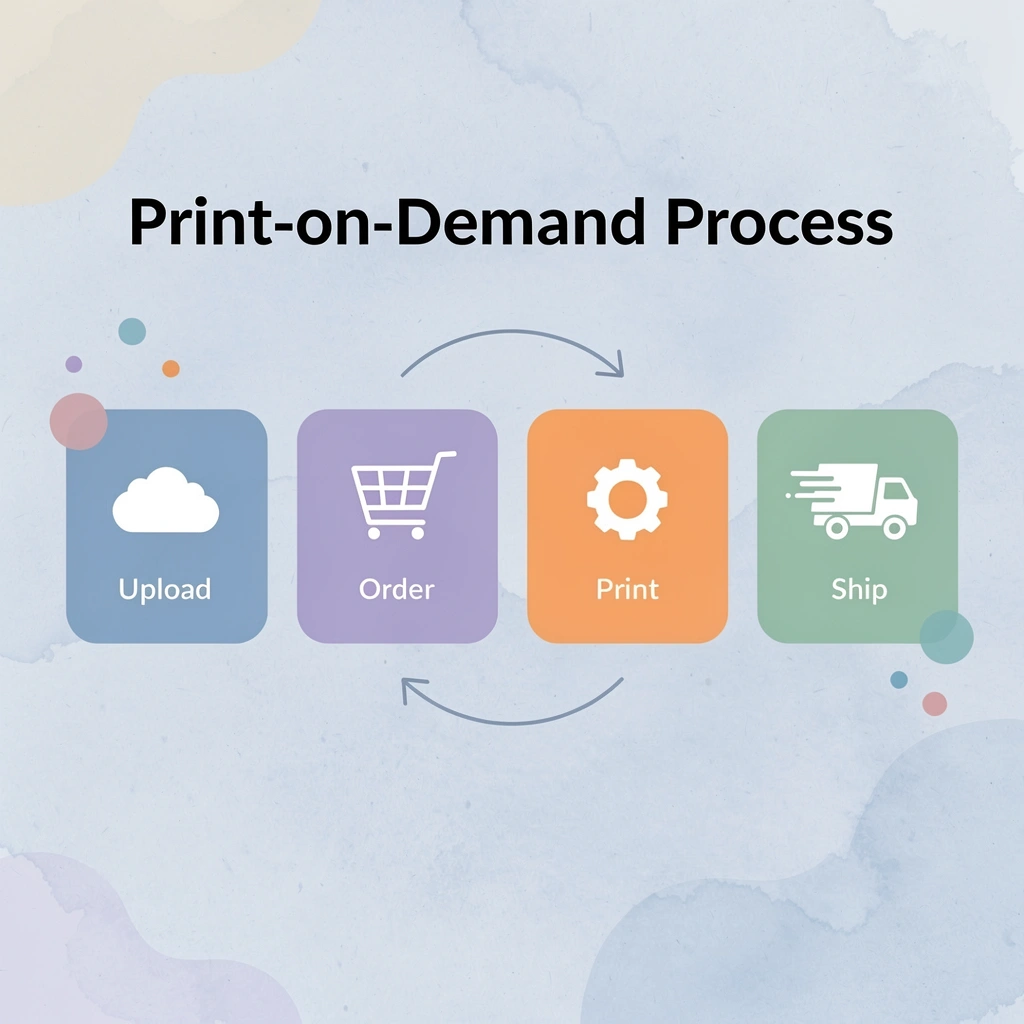
Printify is a print-on-demand platform that connects your online store to a worldwide network of printing facilities. You design products and set prices; Printify handles production and shipping after customers purchase, eliminating the need to buy inventory upfront or manage unsold stock.
🎯 Key Point: Print-on-demand eliminates the traditional risks of inventory management by only producing items after customers place orders.
“Print-on-demand allows entrepreneurs to start selling custom products without any upfront investment in inventory.” — E-commerce Industry Report, 2024
💡 Example: Instead of ordering 100 t-shirts and hoping they sell, you simply upload your design to Printify. When a customer orders one t-shirt, Printify automatically prints and ships that single item directly to your customer.
| Traditional Retail | Printify Model |
|---|---|
| High upfront costs | Zero inventory investment |
| Storage required | No storage needed |
| Unsold stock risk | No waste or leftover products |
| Manual fulfillment | Automated production & shipping |
Massive Product Selection
Printify’s catalog includes over 1,300 customizable items covering clothing, home goods, accessories, and special categories most competitors don’t offer. You can sell t-shirts alongside yoga mats, phone cases, wall art, pet bandanas, and kitchen towels without working with separate suppliers. This selection lets you test product ideas quickly and gauge audience preferences before committing to inventory, and make seasonal changes without renegotiating contracts or meeting minimum order quantities.
User-Friendly Design Tools
The platform provides a free Product Creator with drag-and-drop functionality, layer controls, and automated mockup generation. No Photoshop or Illustrator experience required. Upload your artwork once, apply it to dozens of products, and position it with precision guides that prevent off-center prints and cut-off designs. Mockups generate automatically, giving your storefront the appearance of professional product photography without hiring a photographer or ordering samples.
Seamless Store Integrations
Printify connects directly with Shopify, Etsy, WooCommerce, Amazon, and other major platforms. When a customer buys, the order appears in your Printify dashboard, gets routed to the best print provider based on location and product type, and ships without manual data entry or inventory management. This automation prevents errors and saves time as order volume increases.
Global Fulfillment Network
A network of over 140 printing facilities across North America, Europe, Australia, and beyond produces and ships to more than 200 countries. You select providers based on quality ratings, turnaround times, and proximity to target markets, optimizing for speed or cost according to your priorities. This distributed model reduces shipping times and costs compared to single-warehouse operations while providing backup capacity during peak seasons.
Flexible Pricing and Profit Control
You set retail prices on every product variant with full transparency into production costs, shipping fees, and resulting margins before publishing listings. The free plan supports unlimited designs across five stores, while the Premium plan unlocks discounts up to 20% on base product costs for higher-volume sellers. The built-in profit calculator shows exactly what you earn per sale, preventing margin erosion from unexpected costs.
Why do quality inconsistencies drive sellers to seek alternatives to Printify?
Printify’s network includes over 600 employees managing relationships with dozens of independent print providers, each with different quality standards and production workflows. The same designs often produce noticeably different results depending on which facility handles the order, requiring careful checking and sample testing before scaling. The platform’s breadth creates opportunity, but only if you treat provider selection as an active management task.
That inconsistency is why so many sellers hunt for alternatives.
Related Reading
- Best T-Shirt Printing Companies
- How to Print on T-shirts Professionally
- What Type Of T-shirt Printing Lasts The Longest
- Simulated Process Screen Printing
- Best Fonts For T Shirts
- How To Print On T-shirts Professionally
- Digital Print Shirt Vs Screen Print
- How Much Does T-shirt Printing Cost
Why Are People Looking for Printify Alternatives?
Looking for other options doesn’t mean the print-on-demand model let you down. It means the specific platform stopped meeting your business needs. When fulfillment problems cost you repeat customers or pricing structures reduce your profits, retaining customers becomes expensive.
🎯 Key Point: Platform switching is about finding better alignment with your business goals, not abandoning the POD model entirely.

The print-on-demand market is growing, intensifying competition and raising customer expectations. To stand out, you need reliability you can trust. When your current provider lacks consistency, switching makes sense.
⚠️ Warning: Staying with an unreliable provider can damage your brand reputation faster than switching platforms.
“The print-on-demand market continues to expand as businesses seek flexible fulfillment solutions without inventory risks.” — Industry Analysis, 2024
Why does quality vary so much with Printify alternatives?
The multi-provider network creates a quality lottery. One customer receives a shirt with bright colors and sharp lines; the next gets washed-out prints with misaligned placement, despite identical uploaded files. This variance destroys brand trust faster than any marketing campaign can rebuild it.
Sellers positioned as premium discover their reputation crumbling because fulfillment quality depends on which facility happens to receive the order.
How does inconsistent quality impact business growth?
You can’t grow a business while constantly apologizing. Testing samples helps identify better providers, but it requires more time and money than a supposedly simple process should demand.
Customers remember one bad experience more than ten good ones. Brands that win in crowded markets deliver consistent quality every time.
How do unpredictable shipping times affect customer satisfaction?
How fast orders get delivered depends on the seller’s location and destination. Domestic orders might arrive in five days, while international orders can take more than three weeks, despite similar promised delivery times.
Customers accustomed to Amazon’s fast shipping won’t tolerate delays: they leave one-star reviews and abandon the seller. Bad ratings accumulate quickly on platforms like Etsy, where seller visibility depends heavily on performance metrics.
Why do shipping cost surprises hurt sales among Printify alternatives?
Shipping cost surprises hurt worse. A $20 shirt suddenly costs $35 at checkout because the assigned provider sits farther from the customer than expected, spiking cart abandonment and killing sales you’ve already worked to generate.
Platforms like ooShirts eliminate this by building shipping costs into transparent, all-inclusive pricing from the start. When customers know the real price upfront, trust builds rather than erodes.
Limited Branding and Packaging Options
Generic packaging makes every order feel like a basic business deal. You can add custom labels to some products, but you cannot fully control your branding. You cannot use custom tissue paper, inserts, or unique packaging that creates memorable unboxing experiences. These options are either restricted or depend on your provider. Competitors who offer premium presentation convert better and charge higher prices, while your products arrive in plain poly bags that look “dropshipped.”
This inability to control the complete customer experience prevents you from positioning yourself as premium. You’re stuck competing on price when you need the ability to make customers feel something when they open the package.
What Should You Look for in a Custom Printing Company?
The difference between custom printing companies is whether they see your order as a sale or understand that every item you give out carries your reputation. At ooShirts, we know we’re extending your brand into the real world where quality matters more than any marketing claim.
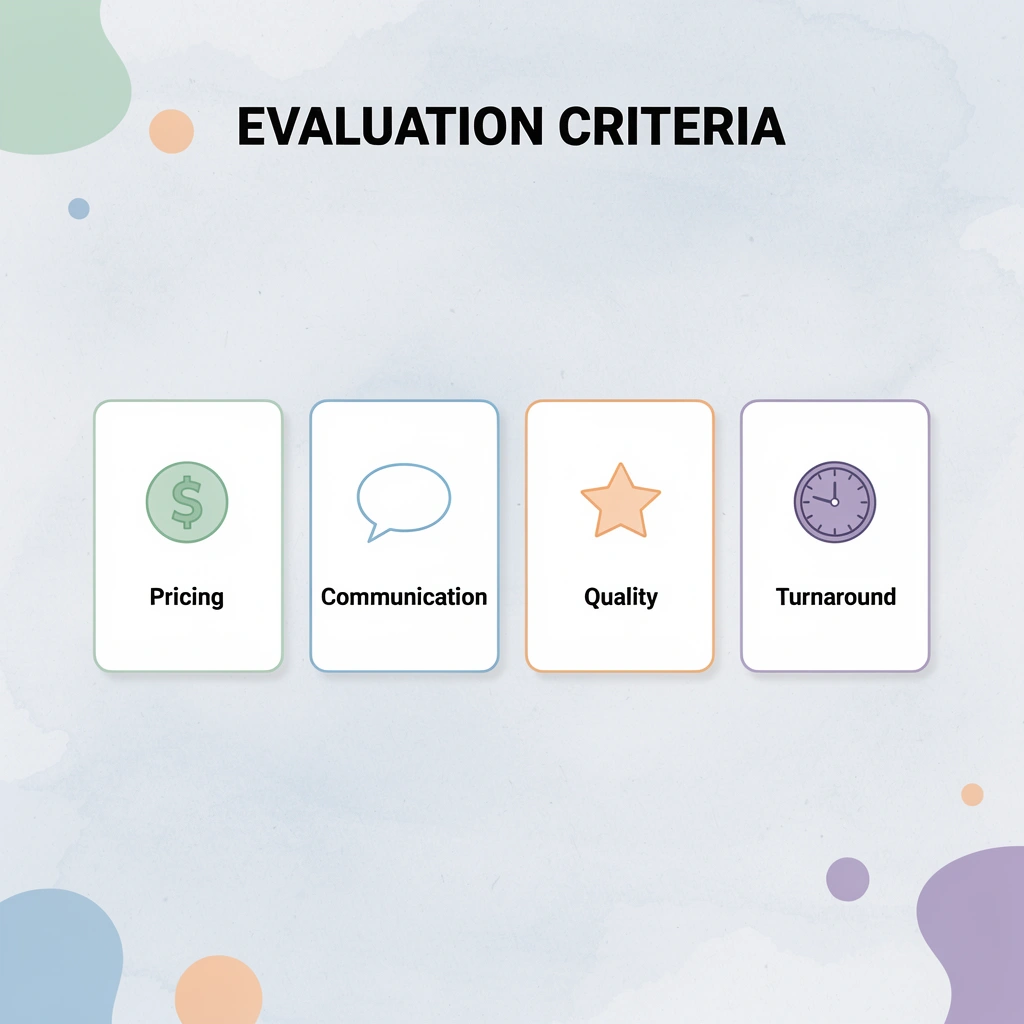
When evaluating custom printing partners, look beyond basic pricing to consider the complete experience. The right company will offer transparent communication, quality guarantees, and reliable turnaround times aligned with your business needs.
“Quality custom printing isn’t just about the final product—it’s about trust, reliability, and brand representation in every single piece.” — Industry Standards Report, 2024
🎯 Key Point: Your custom printing partner becomes an extension of your brand team—choose one that understands the responsibility that comes with representing your business.
⚠️ Warning: Low-cost providers often cut corners on material quality and customer service, which can damage your brand reputation when recipients receive subpar products.

Why do most printing companies hide their true costs?
Most printing companies advertise low base prices, then add setup fees, color charges, rush fees, and shipping costs that double your final invoice. You discover the real cost only after design approvals and sample reviews, creating pressure to proceed even when the numbers don’t work. This forces small organizations into impossible choices: absorb unexpected costs or cancel orders.
The mechanism traces to business models built on bait-and-switch economics: low advertised rates attract inquiries, while backend fees generate profit. Organizations ordering 24 shirts for a volunteer event or 50 hoodies for a school fundraiser face the same fee structures as corporate clients ordering thousands, making small batches financially impractical.
How do Printify alternatives solve pricing transparency issues?
Platforms like ooShirts eliminate this friction by showing all-inclusive pricing upfront with no minimums and free shipping. You see exactly what 30 custom tees cost before uploading a design file, removing the financial uncertainty that turns simple projects into budget battles.
Production Consistency Across Order Sizes
According to Kornit Digital, about 24% of POD startups survive long term, mostly because inconsistent quality destroys customer trust faster than any other failure mode. Variance occurs when companies outsource to multiple facilities without enforcing standards and prioritize speed and margin over reliability. This results in misaligned prints, incorrect colors, or fabric that differs from approved samples.
You need partners who maintain direct control over production equipment and quality checkpoints, ensuring that the 200th shirt matches the first. This consistency drives repeat satisfaction: recipients wear items rather than donate them, extending your brand visibility for months rather than days.
Real Support When Problems Emerge
Great printing companies provide knowledgeable staff who understand garment construction, color matching, and design optimization. When your logo appears unclear in the mockup or text placement seems off, they explain why and offer solutions before production starts. This prevents costly reprints, missed deadlines, and damaged relationships.
Automated ticket systems and offshore chat support provide generic responses about fabric weight, print durability, or size adjustments that don’t address your specific situation, forcing you to guess or settle for less-than-ideal choices.
Flexibility for Evolving Needs
Strong providers offer extensive product ranges and decoration methods that scale with your needs. You might start with basic tees for a single event, then require performance fabrics for athletic teams, tote bags for conferences, or embroidered polos for staff uniforms. Partners with diverse capabilities let you maintain consistent quality and relationships rather than fragmenting orders across multiple vendors with different processes and standards.
Your printing needs change as your organization grows, and switching providers mid-relationship means relearning systems, re-establishing trust, and risking a drop in quality during transitions.
Related Reading
- Business T-Shirt Design Ideas
- Types of T-shirt Printing
- T-shirt Design Size
- How To Print A Picture On A Shirt
- Best T Shirt Material for Printing
- Best Corporate Apparel Companies
- Best File Type For T-shirt Printing
- Family Reunion T-shirt Ideas
- T-shirt and Ink Color Combinations
- T-shirt Screen Printing Design Ideas
13 Best Printify Alternatives for Print-on-Demand Sellers
Choosing the wrong print-on-demand partner leads to late deliveries, inconsistent print quality, refund requests, negative reviews, and shrinking profit margins. Switching to a platform that aligns with your business needs prevents these problems.
🎯 Key Point: The right POD partner can make or break your business success and customer satisfaction rates.
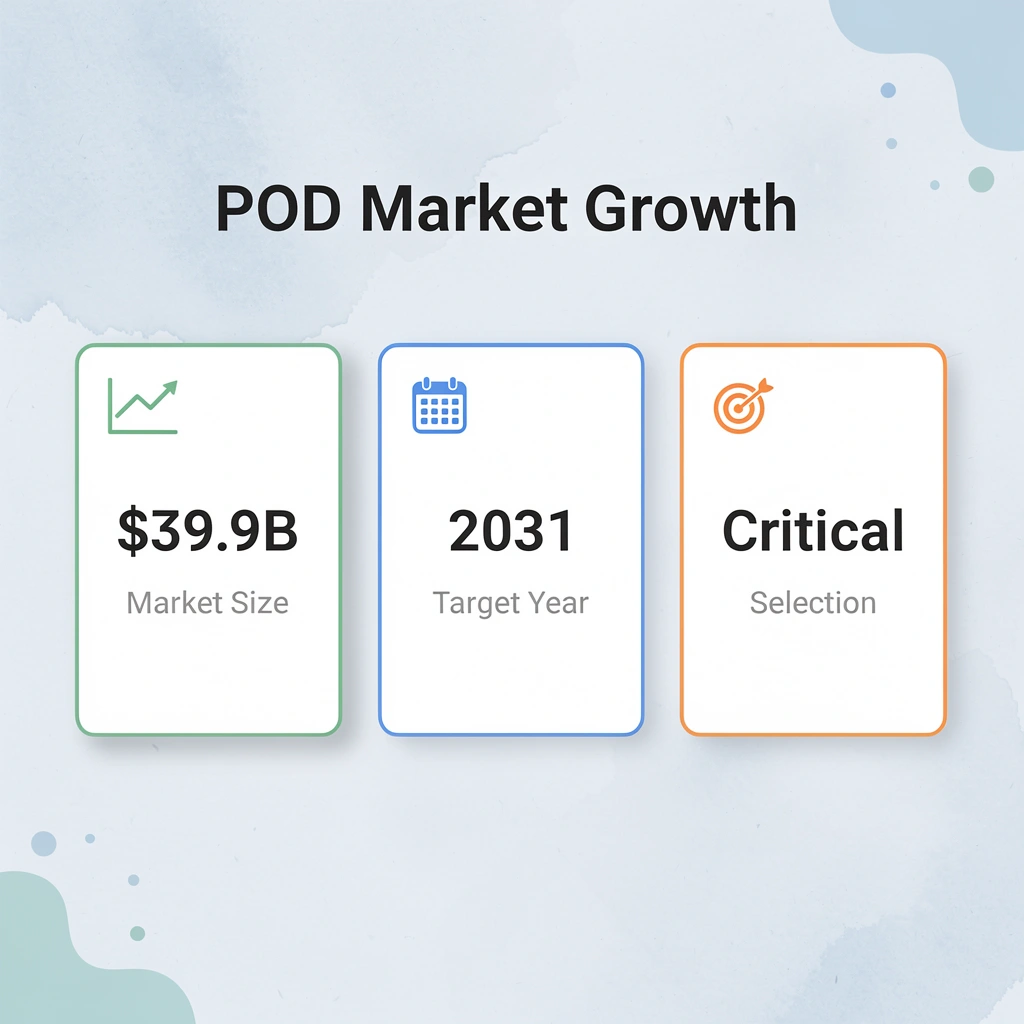
“The print-on-demand market is expected to reach $39.9 billion by 2031, making platform selection more critical than ever for seller success.” — Grand View Research, 2024
Printify isn’t your only option. Several POD companies offer stronger quality control, faster fulfillment, better branding capabilities, premium products, or more hands-on support. Below are the Printify alternatives worth considering.
⚠️ Warning: Don’t switch platforms without researching their product catalog, shipping times, and integration capabilities first.
1. ooShirts
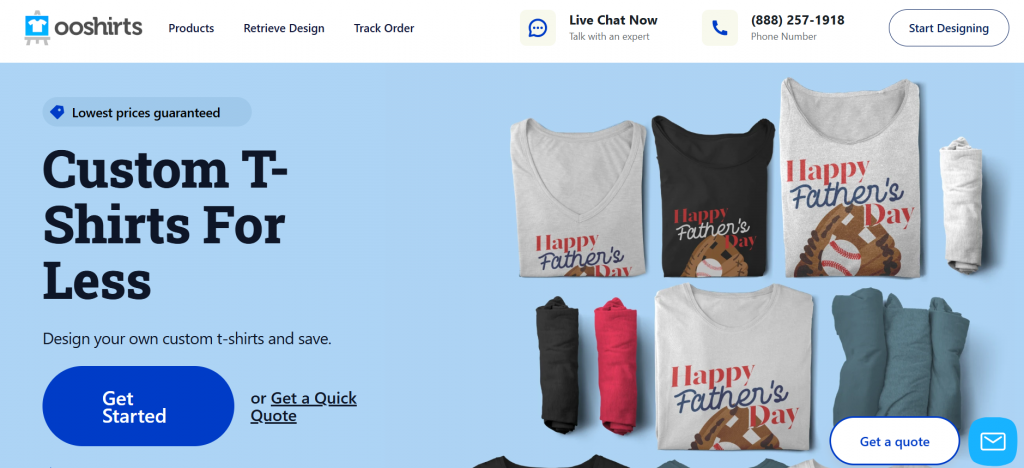
ooShirts stand out as a reliable Printify alternative that specializes in affordable, high-quality custom t-shirt printing with strong US-based fulfillment, delivering consistent results that directly solve the frustrations of faded prints, unpredictable shipping, and generic packaging. With over 10 million shirts printed since 2007, it combines screen printing for durability and digital (DTG) options for vibrant full-color designs, all with no minimum quantities on digital prints and all-inclusive pricing that includes free shipping and setup to the contiguous United States.
Key Features
- No minimum order quantity for digital printing, letting you order as few as one shirt at the same low per-unit price.
- Free shipping and free setup on every order to the contiguous US, eliminating surprise costs.
- Low price guarantee with price matching—if you find a lower online price, they match it.
- Guaranteed fast delivery dates with standard (10 business days), rush (5 days), and super-rush (3 days) options.
- Expert design review by professionals who check for visibility, contrast, and quality before production.
- High-quality printing that lasts wash after wash using top-notch inks and premium garments.
- Multiple print methods, including screen printing for bold, durable results and DTG for full-color detail.
- Built-in TeeChip POD storefront for launching your own branded online store with no inventory.
- 7-days-a-week support via phone, email, and live chat with real shirt specialists.
- Variety of t-shirt styles, colors, and options like names/numbers personalization and sleeve printing.
Best For
Apparel-focused sellers, small businesses, schools, teams, and creators who want reliable US production, predictable fast shipping, and strong margins without the variability of multi-provider networks or inventory risks. It excels for those tired of inconsistent quality and delayed international fulfillment.
Pros
- Consistent, durable print quality that reduces customer complaints about fading or misalignment.
- Transparent all-inclusive pricing and fast US delivery that builds trust and repeat business.
- Excellent support that resolves issues quickly, minimizing time spent on fulfillment problems.
- No minimums and low costs that protect profits and enable easy design testing.
- POD option through TeeChip for hands-off selling with professional branding.
Cons
- Primarily focused on apparel rather than a vast catalog of home goods or accessories.
Accessibility
Completely free to start with no subscriptions or monthly fees; pay only per order. Visit https://www.ooshirts.com/ and the design app at https://www.ooshirts.com/designapp/ to create and order instantly.
2. Printful
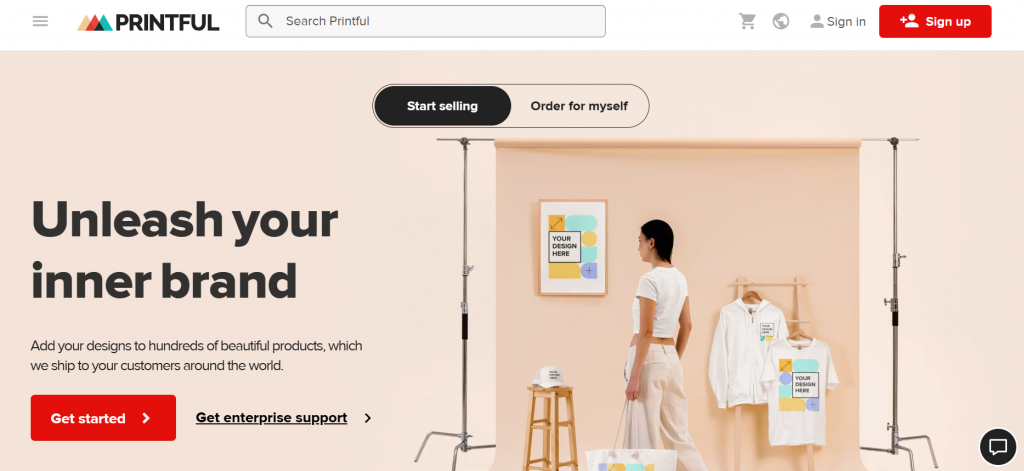
Printful provides in-house production control that ensures consistent high-quality prints and packaging, directly tackling Printify’s provider variability. Its global facilities and branding tools help sellers build premium experiences with reliable delivery and professional results.
Key Features
- Over 475 premium products across apparel, accessories, and home goods.
- In-house printing facilities for quality consistency.
- Advanced branding options, including custom labels and packaging.
- Seamless integrations with Shopify, Etsy, Amazon, and more.
- Detailed mockup generator and design tools.
- Global fulfillment centers in multiple countries.
- Sample ordering and quality assurance processes.
Pros
- Superior print quality and packaging that builds brand trust.
- Strong branding capabilities for premium unboxing.
- Reliable shipping with better control over fulfillment.
- Excellent customer support and resources for scaling.
- Professional results that reduce complaints and refunds.
Cons
- Higher base prices than network models.
- Smaller catalog than Printify in some niche categories.
- Shipping costs can add up for certain regions.
3. Gelato
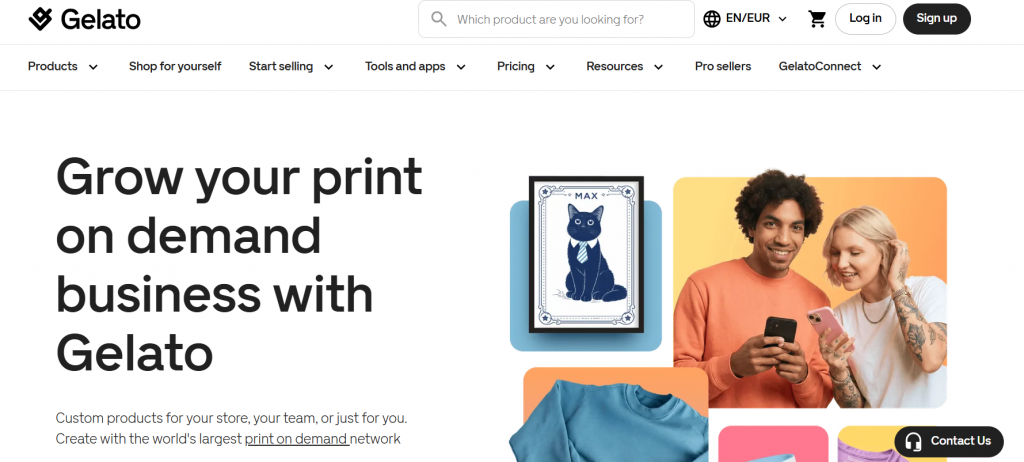
Gelato excels with its local production network across 32+ countries, delivering faster shipping and lower costs for international orders. This addresses Printify’s unpredictable global delivery times while maintaining eco-friendly practices and solid quality.
Key Features
- Local printing partners in 32 countries for fast delivery.
- 3-5-day average fulfillment in key markets.
- A wide range of wall art, apparel, and stationery products.
- Profit margin calculator and automation tools.
- Mobile app for order management.
- Eco-friendly production focus.
- Strong Shopify, Etsy, and WooCommerce integrations.
Pros
- Significantly faster international shipping and reduced costs.
- Consistent local quality control.
- User-friendly tools and global reach.
- No upfront inventory risk with scalable options.
- Excellent for sellers targeting multiple regions.
Cons
- Smaller overall product catalog than some competitors.
- Premium features may require paid plans.
- Less emphasis on ultra-premium apparel options.
4. Teelaunch
Teelaunch specializes in unique niche products such as drinkware, home goods, and accessories, offering competitive pricing and straightforward operations. It offers reliable fulfillment that helps sellers diversify beyond basic apparel while maintaining control and margins.
Key Features
- Focus on mugs, tumblers, and specialized home items.
- Competitive pricing with no subscription fees for basics.
- Direct integrations with major e-commerce platforms.
- Fast US production times.
- Custom product options for niche markets.
- Reliable order tracking and fulfillment.
- Tools for quick product listing creation.
Pros
- Strong for high-margin niche categories.
- Transparent and affordable pricing structure.
- Simplifies operations for focused sellers.
- Good quality consistency in core products.
- Easy to combine with other platforms.
Cons
- Narrower catalog than broad marketplaces.
- Limited advanced branding compared to leaders.
- Best suited for US-heavy audiences.
5. CustomCat
CustomCat offers in-house production for consistent quality and fast US turnaround, reducing variability while offering a solid range of apparel and accessories at competitive rates.
Key Features
- In-house manufacturing for quality control.
- Hundreds of products, including apparel and accessories.
- Fast 1-3 day production in many cases.
- Shopify, WooCommerce, and BigCommerce integrations.
- Competitive base pricing.
- Order management dashboard.
- Options for bulk and POD fulfillment.
Pros
- Predictable quality and faster domestic shipping.
- Cost-effective for scaling apparel lines.
- Streamlined workflow reduces errors.
- Reliable support for growing businesses.
- Good balance of price and performance.
Cons
- Primarily US-focused fulfillment.
- Smaller international network.
- Fewer ultra-premium branding tools.
6. Print Aura
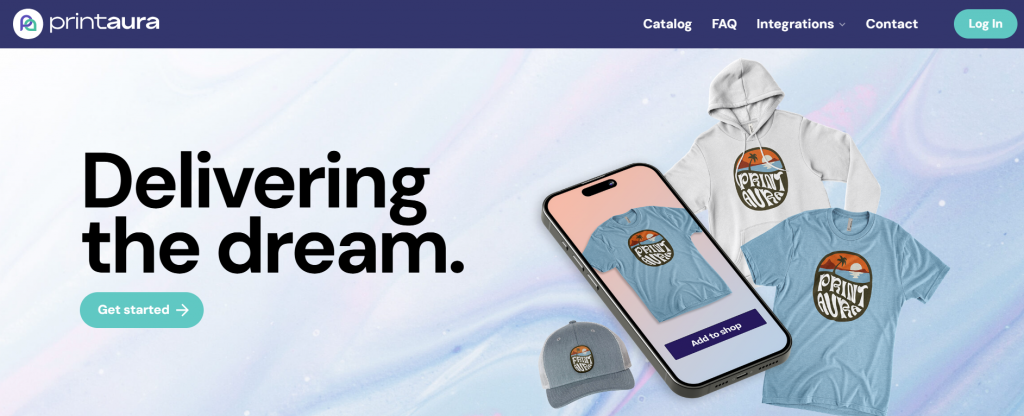
Print Aura delivers reliable in-house production focused on apparel and accessories, providing sellers with consistent quality and faster US turnaround times, eliminating the variability and mismatched results common with multi-provider networks. Its white-label options and straightforward fulfillment directly fix faded prints, generic packaging, and unpredictable shipping delays.
Key Features:
- In-house printing for strict quality control on apparel.
- Fast production times with rush options.
- Custom neck tags and basic branding elements.
- Integrations with Shopify and Etsy.
- No minimum order quantities.
- Competitive base pricing with volume discounts.
- Quality guarantee on printed products.
Pros
- Predictable quality that reduces customer complaints and refunds.
- Affordable pricing that protects healthy margins.
- Simple, reliable workflow for scaling apparel lines.
- Strong US fulfillment for faster domestic delivery.
- White-label features that support professional branding.
Cons
- Smaller overall product catalog than broad platforms.
- Limited international shipping options.
- The interface feels dated compared to modern tools.
7. Gooten
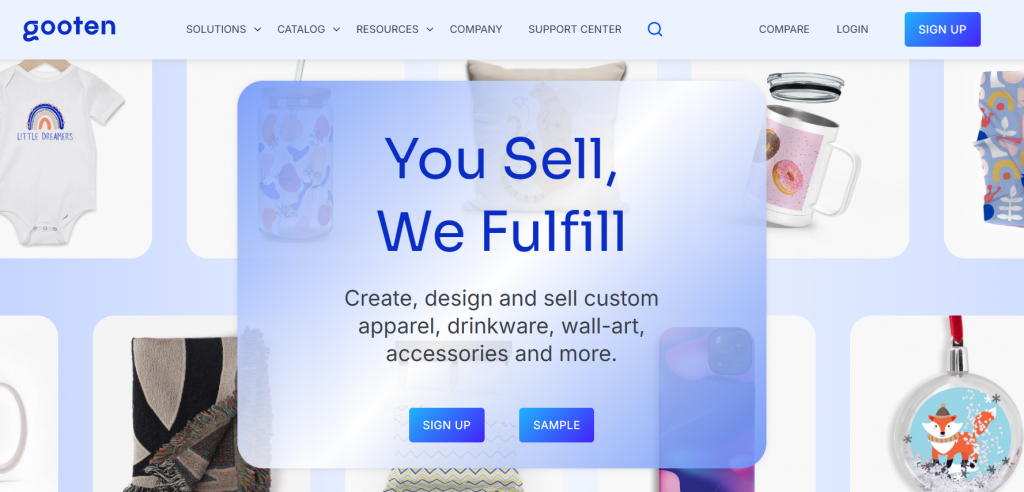
Gooten operates a vetted network of premium manufacturers, offering an extensive product variety and robust quality oversight to resolve inconsistent prints, while providing competitive pricing and reliable order management for growing stores.
Key Features
- Over 500 premium products, including unique home goods.
- Vetted global print partners with high accuracy rates.
- Automated order routing and fulfillment.
- Seamless integrations with major e-commerce platforms.
- Competitive volume-based pricing.
- Detailed product templates and mockups.
- Exceptional customer support for complex issues.
Pros
- Consistent high-quality output across diverse items.
- A broad catalog supports niche diversification without risk.
- Reliable shipping that meets customer expectations.
- Tools that streamline operations and reduce errors.
- Strong support that minimizes time spent on fulfillment problems.
Cons
- Pricing can vary by partner for certain items.
- Less emphasis on ultra-premium apparel branding.
- Learning curve for optimizing the full network.
8. Prodigi
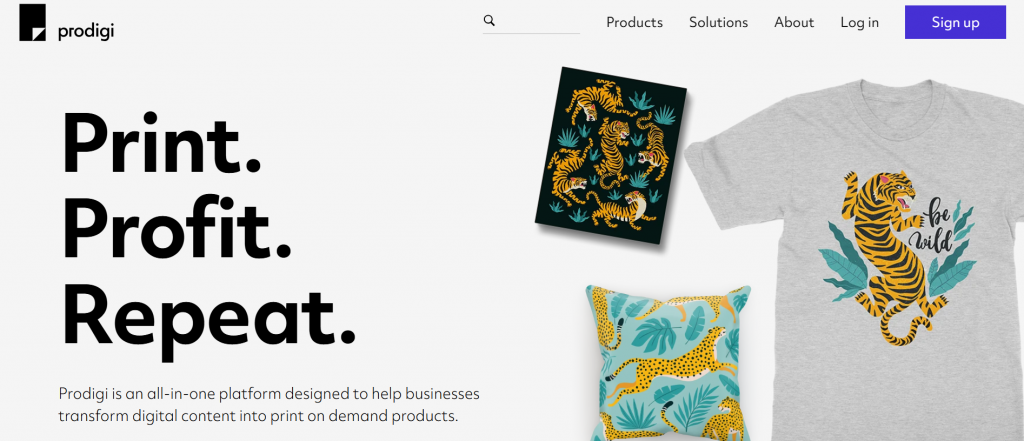
Prodigi specializes in high-quality art prints, wall decor, and photo products through a global network, delivering superior print fidelity and materials that outperform variable-provider results for creative items, while offering fast local fulfillment in key markets.
Key Features
- Extensive selection of fine art and wall products.
- Global print facilities for localized production.
- High-resolution printing on premium substrates.
- White-label shipping and packaging options.
- API and platform integrations.
- Automated order processing.
- Artist-focused tools and resources.
Pros
- Exceptional quality for art and decor that builds premium perception.
- Faster regional shipping reduces delays and complaints.
- Strong branding capabilities for professional presentation.
- Reliable results that support higher pricing and margins.
- Ideal for creators looking to expand beyond basic apparel.
Cons
- Smaller focus on everyday apparel items.
- Best suited for visual-heavy niches.
- Some advanced features require higher volumes.
9. Merchize
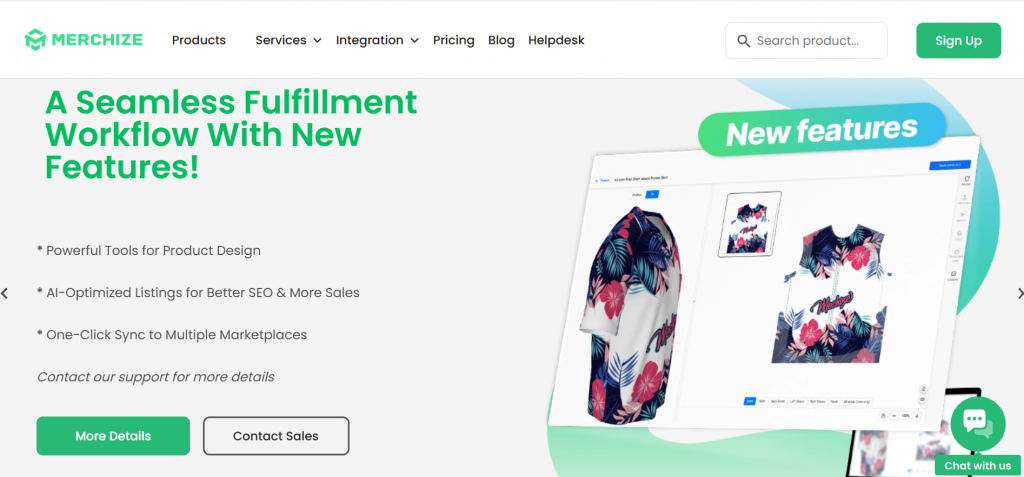
Merchize combines competitive pricing with in-house and partner production for balanced quality and cost efficiency, addressing high base costs and variability while providing solid support and niche product options that help maintain profits.
Key Features
- Affordable base prices across apparel and accessories.
- Reliable production with good quality consistency.
- Multi-channel e-commerce integrations.
- Mockup generator and design tools.
- Efficient order management dashboard.
- Options for embroidery and specialty prints.
- Responsive customer service.
Pros
- Lower costs that boost per-sale margins significantly.
- Consistent results that cut down on refunds.
- Streamlined operations for scaling without headaches.
- Good support that resolves issues quickly.
- Versatile for testing and growing diverse lines.
Cons
- Catalog depth varies by category.
- Branding options not as extensive as those of premium leaders.
- International fulfillment may still vary.
10. Fourthwall
Fourthwall offers premium, creator-oriented production with top-tier quality and professional branding tools, solving generic unboxing experiences and quality issues while providing all-in-one solutions for building loyal audiences and higher-end merch lines.
Key Features
- Highest-quality materials and printing standards.
- Advanced custom branding and packaging.
- Built-in storefront and audience tools.
- Reliable global fulfillment options.
- Detailed analytics and performance insights.
- Premium product range including apparel and merch.
- Dedicated support for creators and brands.
Pros
- Superior print and material quality that delights customers.
- Full branding stack for premium unboxing experiences.
- Tools that combine fulfillment with audience growth.
- Consistent results that protect reputation and ratings.
- Ideal for established sellers seeking differentiation.
Cons
- Higher pricing suited for premium positioning.
- Focused more on creator merch than mass-volume basics.
- Best for those with existing audiences.
11. SPOD
SPOD delivers fast, optimized production through Spreadshirt’s infrastructure, providing consistent-quality apparel and quick turnaround that eliminates faded prints and delivery surprises while supporting reliable scaling for apparel-focused sellers.
Key Features
- Ultra-fast production and fulfillment times.
- High-quality DTG printing on premium apparel.
- Seamless integration with major e-commerce platforms.
- No minimum order requirements.
- Competitive pricing with volume advantages.
- Reliable order tracking and automation.
- Strong focus on apparel consistency and durability.
Pros
- Rapid fulfillment that meets customer speed expectations and cuts complaints.
- Consistent print quality that builds trust and repeat purchases.
- Efficient workflow reduces support time and refunds.
- Optimized for high-volume apparel sellers.
- Backed by Spreadshirt’s established infrastructure.
Cons
- Primarily apparel-focused with fewer home goods options.
- Limited advanced branding compared to some platforms.
- Best performance for US and European markets.
12. AOP+
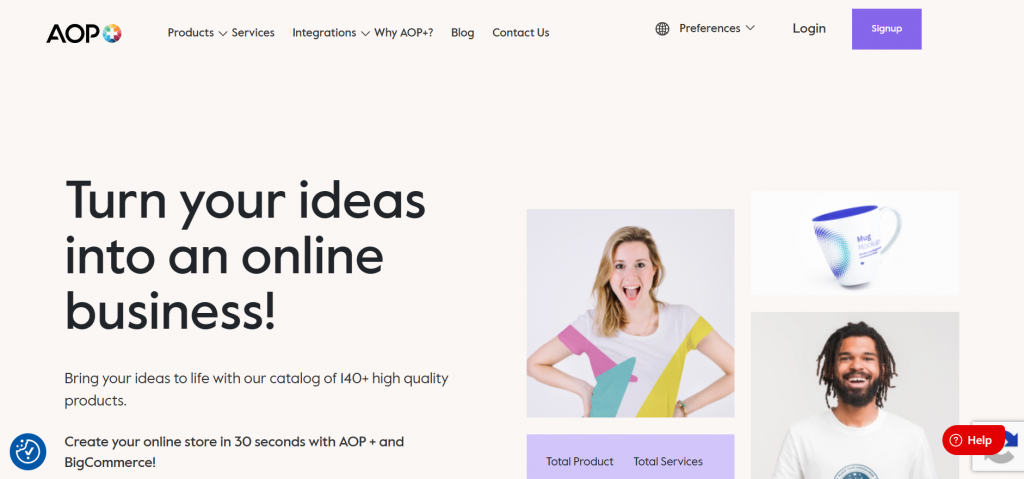
AOP+ specializes in all-over print and premium custom apparel, with in-house capabilities that guarantee superior color accuracy, durability, and professional results, directly addressing inconsistent quality and generic packaging issues to deliver standout brand experiences.
Key Features
- Expert all-over-print technology on apparel.
- Premium fabric selections and high-resolution printing.
- Custom branding and labeling options.
- UK and European production for faster regional delivery.
- Detailed design tools and mockup generator.
- Strong quality control processes.
- Competitive pricing for specialty prints.
Pros
- Exceptional print durability and vibrancy that delights customers.
- Advanced branding that creates premium unboxing moments.
- Faster shipping in key international markets.
- Reliable quality that protects store ratings.
- Ideal for unique, eye-catching apparel designs.
Cons
- A more specialized catalog focused on AOP apparel.
- Higher pricing for premium materials.
- Best suited for sellers emphasizing custom designs.
13. ShineOn
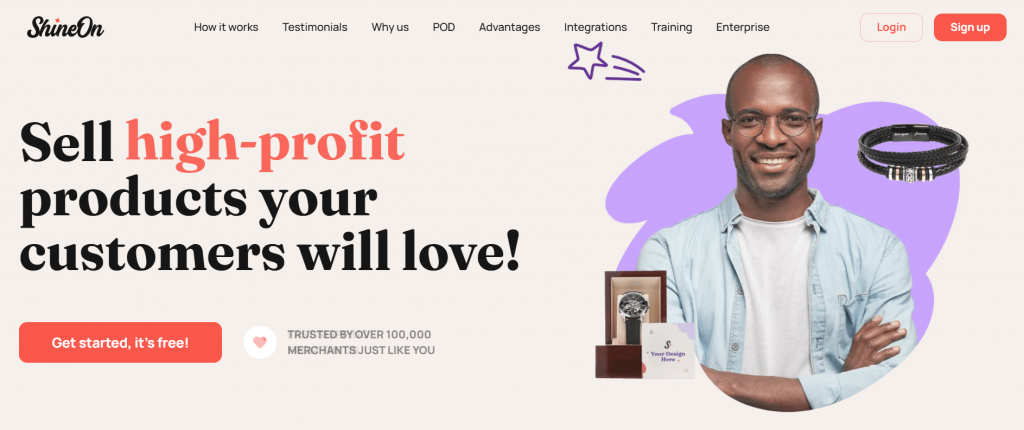
ShineOn focuses on high-margin jewelry and accessories with in-house US production, offering premium quality, fast domestic shipping, and elegant packaging that resolves variability, slow international delivery, and basic unboxing to help sellers command higher prices and build luxury perceptions.
Key Features
- Specialized jewelry and accessory catalog.
- In-house US manufacturing for consistency.
- Elegant custom packaging options.
- Fast production and shipping within the US.
- Seamless Shopify and e-commerce integrations.
- High-quality materials and finishing.
- Dedicated support for niche merch lines.
Pros
- Premium quality and presentation that support higher retail prices.
- Reliable, fast US fulfillment reduces delays and refunds.
- Strong branding tools for memorable customer experiences.
- High margins on popular accessory items.
- Focused operations that simplify scaling in profitable niches.
Cons
- Narrower product range centered on jewelry and gifts.
- Less ideal for broad apparel sellers.
- Primarily US-centric for optimal speed.
How to Choose the Right Printify Alternative for Your Needs
The right Printify alternative addresses the specific problems that prompted your search. Choose the provider that matches how you currently sell, who you serve, and where you want your business to go—not the most popular option. This supports long-term growth rather than creating another operational headache.

🎯 Key Point: Your ideal alternative should solve your current pain points while scaling with your business, not just offer flashy features you don’t need.
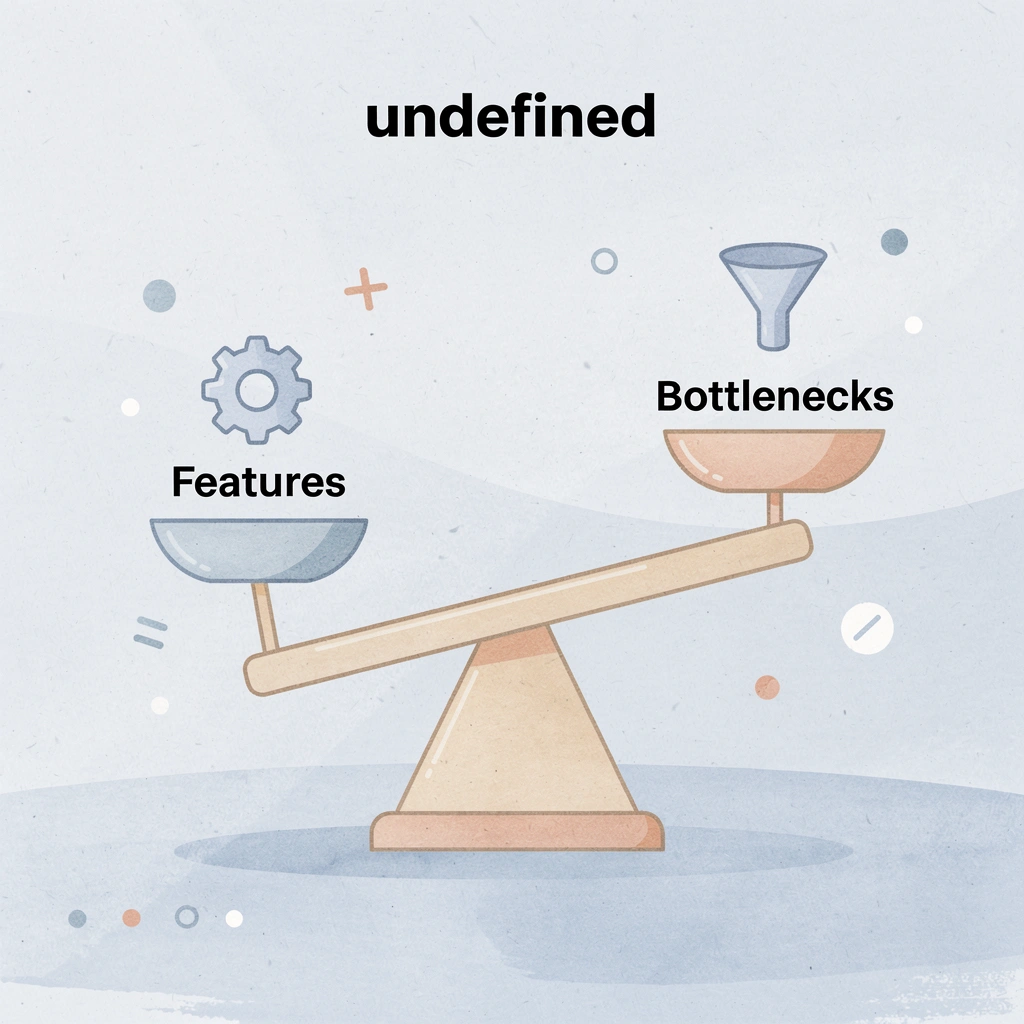
“The best print-on-demand platform isn’t the one with the most features—it’s the one that eliminates your biggest bottlenecks and supports your growth trajectory.” — E-commerce Strategy Report, 2024
⚠️ Warning: Don’t choose based on pricing alone—a cheaper platform that doesn’t integrate with your sales channels or lacks quality products will cost you more in lost sales and customer complaints.
Define Your Business Goals and Niche First
Clearly outline what you sell, who your customers are, and where you ship. Apparel sellers dealing with faded print complaints benefit from in-house production for consistency, while international-focused businesses prioritize local fulfillment networks to reduce delivery times and costs. Niche creators selling wall art or jewelry need platforms that are strong in those categories and offer premium materials. This clarity prevents the choice of a generalist platform that repeats past variability issues.
Evaluate Product Range and Quality Consistency
Look at what each platform offers and compare it to your best-selling items. Check their quality control measures. Centralized printing facilities ensure consistent quality across all orders, preventing mismatched colors and durability issues that damage customer trust. Order samples from your shortlisted platforms to test fabric quality, print brightness, and wash durability. This way, your brand can stand behind every item you sell.
Compare Pricing, Margins, and Fees
Figure out your real profits by examining base costs, shipping rates, subscription discounts, and volume pricing rather than headline numbers. Some alternatives offer lower per-unit costs, increasing profits on high-volume apparel, while others justify higher costs through premium materials and branding that support higher retail prices. Include hidden fees for custom packaging or rush production to ensure the platform maintains healthy profits as order volume grows.
Assess Shipping Speed and Global Reach
Focus on fulfillment locations closest to your main customers. This enables 3-7 day delivery, meeting customer expectations and reducing refund requests. In-house production or local networks minimizes delays from international shipping. Multiple-country facilities support growth without compromising reliability. Calculate production time plus shipping duration for your target regions. Test with sample orders to validate real-world performance.
Review Branding and Customization Options
Look for advanced features like custom labels, inserts, packaging, and hang tags that create memorable unboxing experiences and strengthen your brand identity. These capabilities justify higher prices, encourage repeat purchases, and eliminate the cheap feel that drives negative reviews.
Check Store Integrations and Ease of Use
Ensure your main sales channels, like Shopify, Etsy, or WooCommerce, connect seamlessly. Automate order syncing to eliminate manual work. User-friendly design tools, mockup generators, and clear dashboards help you launch products faster and reduce errors.
Analyze Customer Support and Reliability
Test their responsiveness and knowledge by asking specific questions about quality guarantees, order issues, or scaling needs before committing. Reliable platforms solve fulfillment problems quickly, protecting your store ratings and freeing your time for marketing and design.
Test with Samples and Start Small
Order physical samples from your top choices to check quality, fit, and presentation before committing. This confirms the platform solves your specific problems around consistency and delivery while revealing any hidden limitations. Begin with a limited product line, monitor customer feedback, and expand once results prove reliable.
Why ooShirts Is a Smart Alternative to Printify
ooShirts removes the frustrations of print-on-demand. You work with one team using consistent processes instead of juggling multiple providers. You get transparent pricing and guaranteed timelines instead of guessing at costs or delivery dates. When something goes wrong, you talk to shirt specialists who understand custom apparel instead of navigating automated support tickets. For sellers tired of explaining quality issues to customers, this shift from complexity to clarity makes the difference.

🎯 Key Point: ooShirts eliminates the common frustrations of print-on-demand by providing dedicated support, transparent pricing, and guaranteed delivery timelines — everything that traditional POD platforms struggle to deliver consistently.
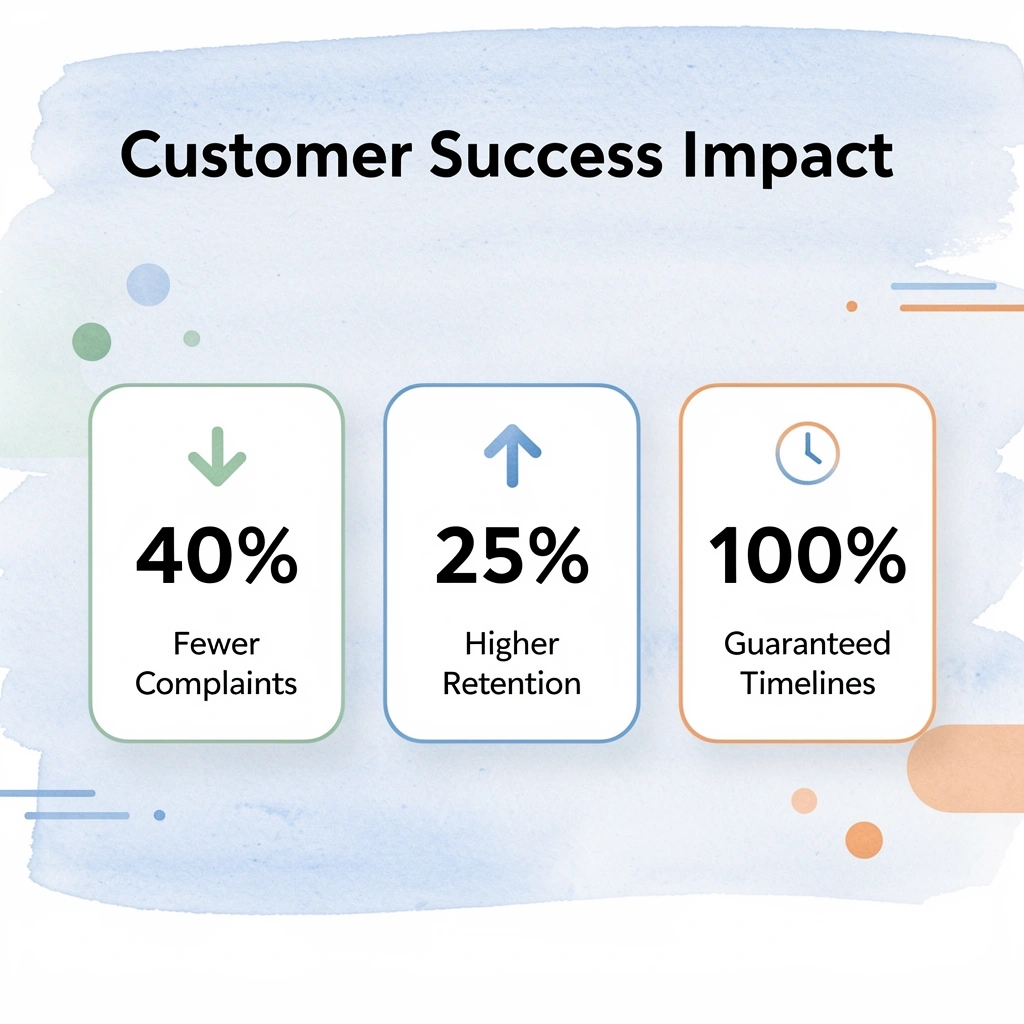
“Custom apparel businesses that switch to dedicated print partners report 40% fewer customer complaints and 25% higher repeat purchase rates compared to traditional print-on-demand platforms.” — Print Industry Report, 2024
💡 Pro Tip: The shift from automated systems to human specialists becomes especially valuable when handling rush orders, custom requests, or quality concerns that require immediate problem-solving rather than ticket escalation.
Consistent Quality Without the Lottery
Every order uses the same facility, equipment, inks, and quality standards. Our design review team catches contrast problems, resolution issues, or placement errors before production. Our prints withstand repeated washing without cracking or fading, backed by a material defect guarantee that covers remaking orders at no charge. A customer ordering your design in March receives the same vibrant result as someone ordering in October, building the trust that converts first-time buyers into repeat customers who leave five-star reviews.
Delivery Dates You Can Actually Promise
ooShirts guarantees delivery timelines for orders shipping to the contiguous United States: standard arrives in 10 business days with free shipping, rush in 5 days, and super-rush in 3 days. Production facilities on both coasts handle orders regionally, eliminating cross-country delays. You can answer “Will this arrive before my event?” with certainty, protecting your reputation and reducing support time spent on delayed shipments or apology refunds.
Pricing That Includes Everything
The price you see includes shipping, setup, and all production costs with no minimums on digital printing. Our low price guarantee matches any lower online price you find. Order one shirt or one hundred, and the cost per shirt remains competitive. Clear pricing lets you calculate profit per sale accurately, price competitively, and maintain healthy margins without surprise fees.
Support That Solves Problems, Not Tickets
Shirt specialists answer phone calls, emails, and live chat messages seven days a week. They review your designs in advance, suggest improvements before problems arise, and resolve order issues without generic automated responses. When customers complain, ooShirts handles replacements, investigates quality concerns, and keeps you informed, turning potential brand damage into resolved issues and freeing your time to design new products instead of managing crises.
But knowing what ooShirts offers matters only if you can start using it without friction or risk.
Start Designing Your Custom Shirts Today
You have explored thirteen alternatives: the same quality issues, margin erosion from hidden fees, and customer complaints about faded prints and delayed shipments. Staying with unreliable platforms means refunds mount, repeat purchases vanish, and your store ratings slide while competitors with reliable production pull ahead.

🎯 Key Point: ooShirts delivers consistent results through transparent pricing and expert oversight. Design review catches visibility and contrast issues before production starts. Premium inks and garments ensure prints survive repeated washing, backed by a full redo guarantee. Free shipping and setup to the contiguous US, plus guaranteed delivery dates across standard, rush, or super-rush options, eliminate surprises that damage customer trust. No minimum orders on digital printing let you test designs or fulfill single orders at the same low per-unit price, while the low price guarantee matches any better online offer you find.
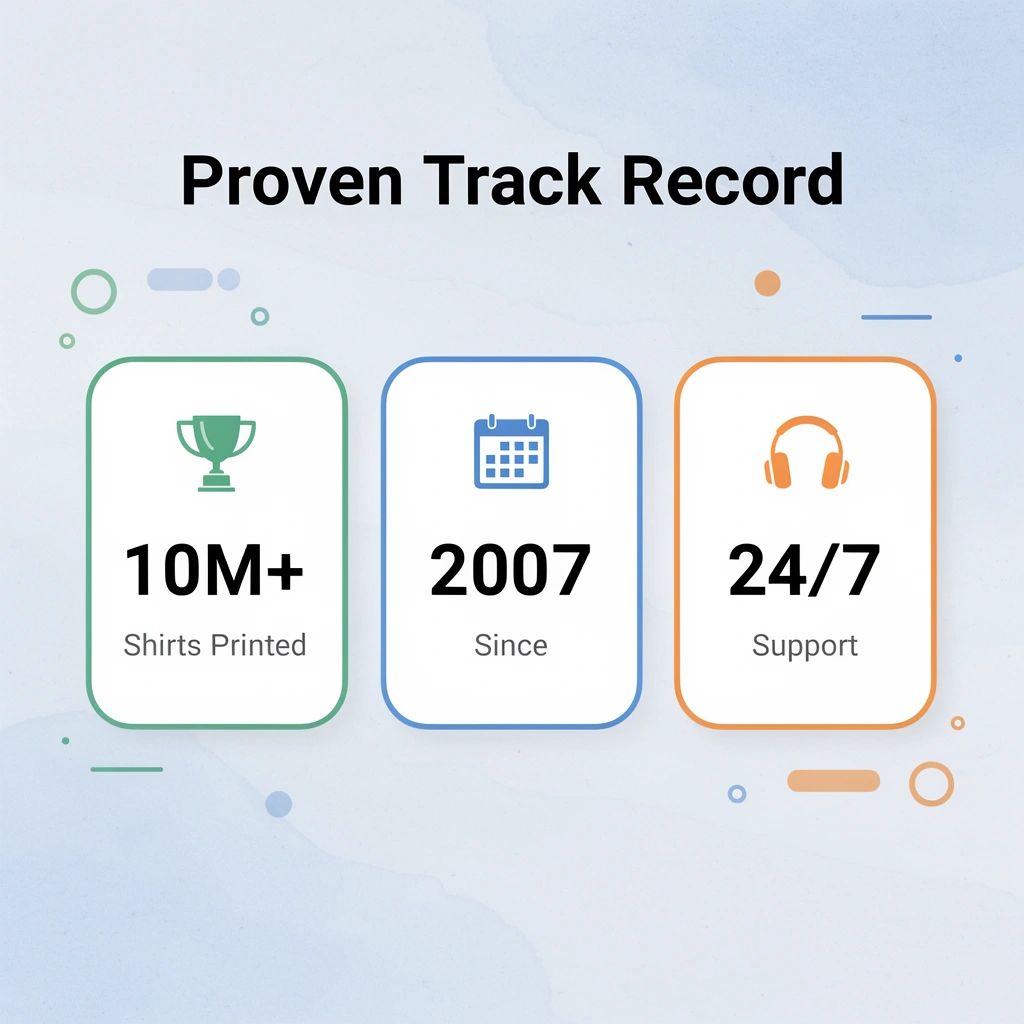
“Over 10 million shirts printed since 2007 prove the system works when quality and reliability replace guesswork.” — ooShirts Track Record
Seven-days-a-week support via phone, email, and live chat connects you with shirt specialists to resolve issues instantly. The built-in TeeChip print-on-demand storefront lets you launch your own branded store with automatic fulfillment, transforming variability into steady profits and glowing customer reviews.
💡 Tip: Head to the ooShirts design app, upload your artwork, and create your first product in minutes. No credit card or subscription required. Over 10 million shirts printed since 2007 prove the system works when quality and reliability replace guesswork.
Related Reading
- Redbubble Alternatives
- Rush Order Tees Vs Custom Ink
- Zazzle Alternatives
- Vistaprint Vs Custom Ink
- 4imprint Competitors
- Vistaprint Alternatives
- Redbubble Alternatives
- Bonfire Competitors
- 4imprint Vs Vistaprint
Leave a Reply