Last updated: August 9, 2026
Custom shirt projects require careful consideration of printing methods, as each technique delivers different results based on budget, design complexity, and fabric choice. Screen printing, heat transfer, direct-to-garment, vinyl, and sublimation each offer distinct advantages. Understanding these methods helps ensure the final product matches your vision and requirements.
The right printing company simplifies this selection process by offering multiple techniques and expert guidance. Whether you need bold graphics for large orders or intricate designs for small batches, choosing a provider that balances quality with affordability makes all the difference. ooShirts delivers exactly this combination through their cheap custom T-shirts that maintain high standards across various printing methods.
Summary
- Screen printing can last 50+ washes when properly cared for, while budget methods show visible wear after just ten cycles. The difference traces directly to bonding depth, where thick, heat-cured layers fuse mechanically and chemically with cotton fibers, creating a structure that withstands abrasion the way thin digital sprays never can. Incomplete curing makes this worse, leaving the ink mechanically attached rather than chemically locked, which creates micro-fractures that can grow into visible cracks.
- Screen printing costs drop to $2 to $5 per shirt for bulk orders of 100+ units, making it the clear winner for large production runs, while DTG printing costs around $5 to $10 per shirt for small orders without the $150 screen fee that eats into budgets on ten-shirt family reunion orders. Choosing based on volume prevents the painful mistake of paying setup costs that dwarf your actual shirt expenses or of selecting per-unit digital pricing that unnecessarily multiplies across large runs.
- Cotton t-shirts account for approximately 60% of global sales, largely because they pair seamlessly with the widest range of cost-effective printing methods. Water-based inks soak beautifully into cotton fibers but sit on top of polyester, creating weak adhesion and stiff texture, while heat transfer methods bond well to synthetics but can scorch natural fibers if temperature settings aren’t precise. Mismatched techniques leave you with prints that feel uncomfortable, crack prematurely, or wash out completely.
- Full-color photographs, gradients, or designs with eight or more colors remain affordable with DTF because the method handles unlimited hues in a single transfer without charging per color. Screen printing excels with one to three bold colors, where each additional shade requires a separate screen, adding $25 to $50 in setup per color. Mismatching your design type to the method forces expensive compromises, either simplifying artwork until it loses impact or accepting inflated costs that kill your profit margin.
- Design complexity and order volume determine which printing method makes financial sense, not assumptions about what “looks professional.” Bold logos in two or three solid colors work beautifully with screen printing or vinyl, while photographic images with dozens of colors require DTG or DTF to capture fine details without color-count penalties. Choosing screen printing for a full-color photograph forces you to simplify your artwork or accept poor reproduction, while selecting DTG for a basic text design means paying premium rates for capabilities you don’t need.
- This is where cheap custom T-shirts fit in, helping buyers match printing techniques to fabric type, order size, and expected wear patterns before ordering to eliminate the expensive mistakes that happen when visual appeal drives decisions but practical performance determines whether those shirts actually survive regular use.
What is T-shirt printing, and Why Does Choosing the Right T Shirt Printing Method Matter?
T-shirt printing transfers designs, images, or text onto fabric using specialized techniques that bond ink or material to the garment. Your choice of method determines the final quality, durability, cost, color vibrancy, and production speed, making it one of the most important decisions in custom apparel.
🎯 Key Point: The printing method you choose affects every aspect of your final product—from how vibrant the colors appear to how many wash cycles the design survives.
“The global custom t-shirt printing market was valued at USD 3.64 billion in 2020 and is expected to grow at a CAGR of 9.7% from 2021 to 2028.” — Grand View Research, 2021

💡 Example: A screen-printed design might cost less per unit for large orders but requires expensive setup, while direct-to-garment printing offers unlimited colors but works best for small batches and detailed artwork.
Quality and Visual Appeal Drive First Impressions
The printing technique determines how well your artwork displays on fabric. Detailed photographs with subtle gradients require high-resolution methods that capture fine details and smooth color transitions, while bold logos need thick, opaque coverage that stands out against any fabric color. Wrong printing methods produce pixelated images, muddy colors, or washed-out designs. A crisp, true-to-design print demonstrates professionalism and builds trust, while a blurry or faded result damages your brand.
Durability Ensures Long-Term Satisfaction
How ink bonds to fabric determines whether your design survives real-world use. Techniques that cure ink deeply into fibers or apply thick layers that flex with the fabric resist cracking and peeling through dozens of wash cycles. According to research in the textile industry, properly cured screen-printed designs withstand 50 to 100+ washes before showing significant wear, whereas poorly applied methods deteriorate within 10 to 15 cycles. Durability protects your reputation: people remember when custom shirts fall apart and blame the organizer, not the printer.
Cost Efficiency Matches Your Budget and Scale
Printing methods are split into two economic models: high setup costs with low per-unit pricing, or minimal setup costs with higher per-unit pricing. Screen printing requires creating physical screens for each color, making it expensive for five shirts but affordable at 500.
Digital methods like direct-to-garment skip setup entirely, making them ideal for small batches or single custom orders but cost-prohibitive at volume. A school ordering 200 spirit shirts pays double using a method designed for 20, while someone needing three custom gifts wastes money on setup fees they’ll never recoup.
Why do local shops limit small orders for certain types of t-shirt printing?
Local shops often turn away small orders or charge setup fees, making one-off projects unaffordable because their business models center on high-volume screen printing. Services like cheap custom t-shirts from ooShirts eliminate minimums entirely, offering access to multiple printing methods for single shirts or thousands, with pricing that scales to your actual quantity.
Fabric Compatibility Prevents Disappointing Results
Cotton, polyester, and blends react differently to heat, pressure, and ink chemistry.
How do different types of t-shirt printing interact with fabric materials?
Water-based inks soak into cotton fibers but sit on top of polyester, creating weak bonding and a stiff texture. Heat transfer methods bond well to synthetics but can scorch natural fibers if temperature settings aren’t precise.
Why does cotton dominate the t-shirt market for printing?
According to Alibaba’s 2026 textile market analysis, cotton t-shirts account for approximately 60% of global sales because they pair seamlessly with cost-effective printing methods. Mismatched techniques result in prints that crack prematurely, wash out completely, or feel uncomfortable, wasting both money and fabric.
The method you pick either unlocks your creative vision or forces regrettable compromises.
Related Reading
- Best T-Shirt Printing Companies
- How to Print on T-shirts Professionally
- What Type Of T-shirt Printing Lasts The Longest
- Simulated Process Screen Printing
- Best Fonts For T Shirts
- How To Print On T-shirts Professionally
- Digital Print Shirt Vs Screen Print
- How Much Does T-shirt Printing Cost
What Is the Most Cost-Effective T-shirt Printing Method?
The most cost-effective method depends on order size and design complexity. Screen printing offers unbeatable per-unit economics for bulk orders exceeding 50 units with simple designs. For small batches, custom orders, or intricate artwork, DTF or DTG eliminates setup fees and keeps total costs manageable without minimum quantities.

💡 Key Point: Screen printing becomes exponentially more cost-effective as order volume increases, while DTF and DTG maintain consistent per-unit pricing regardless of batch size.
“Screen printing can reduce per-unit costs by up to 70% for orders over 100 pieces compared to digital methods.” — Print Industry Research, 2024
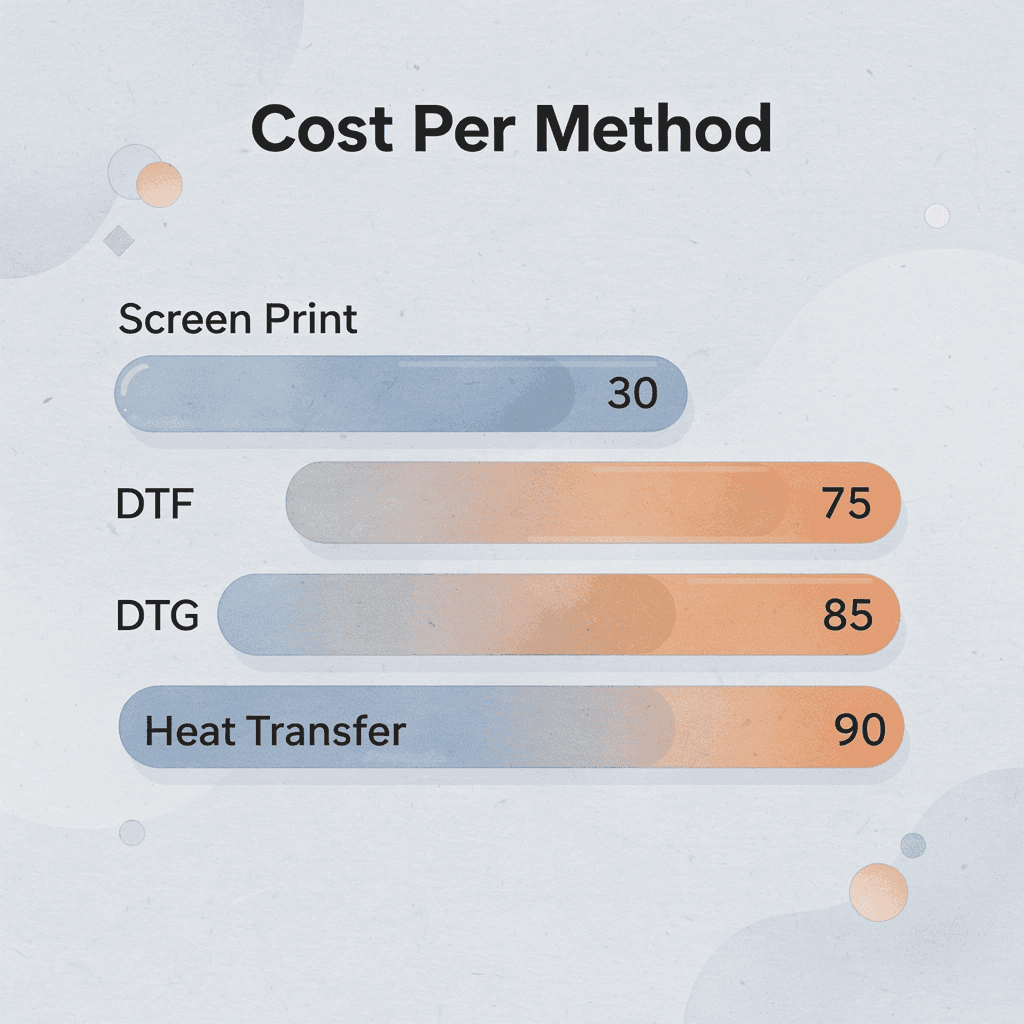
🎯 Best Practice: Calculate your total project cost (not just per-unit price) when comparing methods. Setup fees for screen printing can make small orders significantly more expensive than digital alternatives.
Order Volume Rewrites the Economics
Screen printing costs $2–$5 per shirt for bulk orders of 100+ units, making it ideal for events, teams, or retail inventory. The initial screen preparation fee becomes negligible when spread across dozens of garments. DTG printing costs $5–$10 per shirt for small orders but avoids the $150 screen fee entirely, a critical advantage for ten-shirt orders. Choosing based on volume prevents paying setup costs that exceed your actual shirt expenses or selecting per-unit digital pricing that multiplies across large runs.
Design Complexity Determines Hidden Costs
Full-color photographs, gradients, or designs with 8 or more colors remain affordable with DTF because the method supports unlimited colors in a single transfer without per-color charges. Screen printing works best with one to three bold colors; each additional shade requires a separate screen and adds $25 to $50 in setup per color.
Using the wrong design type for the method forces expensive compromises: either simplifying artwork to the point of losing impact or accepting inflated costs that erode profit margins. The right pairing preserves creative vision while protecting the margins that separate successful projects from money-losing ones.
Why don’t digital methods always cost more for T-shirt printing?
Digital methods don’t always cost more when accounting for real-world constraints like tight timelines or fabric choices. DTF works on cotton, polyester, blends, and dark fabrics without modification, eliminating waste from rejected batches or adhesion problems.
Screen printing requires fabric-specific inks and underbase layers for dark garments, adding steps that increase labor costs and turnaround time. Platforms like ooShirts automatically match printing methods to your order details, reducing decision time from hours to minutes while ensuring you don’t overpay for unnecessary features.
Set up Fees: Separate Smart Buyers from Overpayers
Screen printing’s upfront screen costs and color separations become negligible per-shirt expenses on large orders, but they can devastate budgets on small orders where a $200 setup fee doubles the cost of twenty shirts. Digital methods require minimal preparation beyond loading the design file, making them ideal when cash flow matters more than achieving the lowest possible price per shirt. Ignoring this reality leads to surprise invoices that erase expected profits or force last-minute price hikes that deter buyers.
Durability Protects Long-Term Value
Methods that bond ink deeply into fabric fibers, such as properly cured screen printing or high-quality DTF, produce shirts that survive 50-plus washes without fading, cracking, or peeling. Cheaper surface applications require reprints within months, multiplying costs through refunds, replacements, and reputation damage. Loyalty builds when shirts remain sharp a year later, driving referrals that convert at rates paid advertising cannot match.
Durability means nothing if the print feels like plastic armor that cracks on the first stretch: the quality of the technique matters more than most expect.
Can T-shirt Printing Methods Affect Design Durability?
The printing method you choose determines whether your design survives fifty washes or fades after ten. Different techniques bond ink to fabric in fundamentally different ways: some push pigment deep into fibers through heat and pressure, while others spray thin layers that sit on the surface. This mechanical difference controls how well your design resists friction, detergent, and heat during normal wear.
🎯 Key Point: The bonding depth of your chosen printing method directly impacts how long your t-shirt design will maintain its original appearance and color vibrancy.
“The difference between surface-level and fiber-deep ink penetration can mean the difference between a design that lasts 5 washes versus one that endures 50+ wash cycles.”

⚠️ Warning: Choosing the wrong printing method for your intended use can result in premature fading, cracking, or peeling – turning your investment into a disappointing short-term purchase.
Why does surface bonding fail when types of T-shirt printing face everyday stress?
When ink sits on fabric rather than soaking into it, everyday stress quickly breaks the connection. Machine washing scrubs the surface layer. Detergents chemically attack weak adhesive bonds. Body movement stretches the print beyond what thin applications can handle. According to ooShirts, screen printing lasts 50+ washes when properly cared for, while budget methods show visible wear after ten cycles.
The difference comes directly from bonding depth: thick, heat-cured layers fuse mechanically and chemically with cotton fibers, creating a structure that withstands scrubbing in ways thin digital sprays cannot.
How does incomplete curing worsen print durability?
Incomplete curing worsens this problem. When prints don’t reach full temperature during production, the ink remains mechanically attached rather than chemically locked. Those designs expand and contract independently from the fabric underneath, creating micro-fractures that grow into visible cracks.
How does ink thickness affect t-shirt printing durability?
Thicker ink deposits create more contact points with fabric, spreading stress across a larger bonded area. Screen printing pushes a substantial volume of ink through mesh screens, creating a protective layer that absorbs friction without transferring damage to the design.
DTG prints last 50+ washes when properly cared for, but a thinner application makes them more vulnerable to harsh detergents and high-heat drying than screen printing’s strong coverage.
Why do DTF transfers work better on fabric blends?
DTF transfers use powder adhesive that melts into different fabric types when heat and pressure are applied. The adhesive layer provides flexibility that prevents cracking in blends with different thermal properties, which would otherwise cause separation, thereby avoiding early failure when printing polyester with cotton-optimized methods or vice versa.
Matching Method to Fabric Structure
Cotton absorbs ink differently from polyester. Natural fibers absorb water-based inks via capillary action, whereas synthetic materials require special bonding agents or sublimation processes that convert solid ink into gas.
When teams choose methods without considering fabric composition, thermal expansion rates misalign, or ink chemistry fails to bond properly, creating weak spots. Identical designs printed on different shirt materials show significant differences in lifespan despite a similar initial appearance.
How do you avoid costly printing mistakes with different fabric types?
Most people choose printing methods based on appearance or price, only to discover durability problems after production, when replacement costs accumulate. Our platform at ooShirts helps buyers match printing techniques to fabric type and expected wear patterns before ordering, preventing costly mistakes where aesthetics drive decisions but printing durability determines actual performance.
The right method costs the same initially but eliminates the need for repeated reprints when shirts fall apart after minimal wear.
What determines if your t-shirt printing investment will last?
Understanding how each method works and when to use it determines whether your investment lasts.
Related Reading
- Business T-Shirt Design Ideas
- T-shirt Design Size
- How To Print A Picture On A Shirt
- T Shirt Colors for Printing
- Best Corporate Apparel Companies
- Best T-shirt Material For Printing
- Best File Type For T-shirt Printing
- Family Reunion T-shirt Ideas
- T-shirt and Ink Color Combinations
- T-shirt Screen Printing Design Ideas
8 Types of T-shirt Printing Methods for Custom Apparel
Understanding how each printing method works helps you match the technique to your project goals. The eight approaches below represent the main options available in 2026, each with different mechanics that determine when it performs best.

🎯 Key Point: Choosing the wrong printing method can result in poor durability, higher costs, and unsatisfied customers. Match your technique to your specific needs for optimal results.
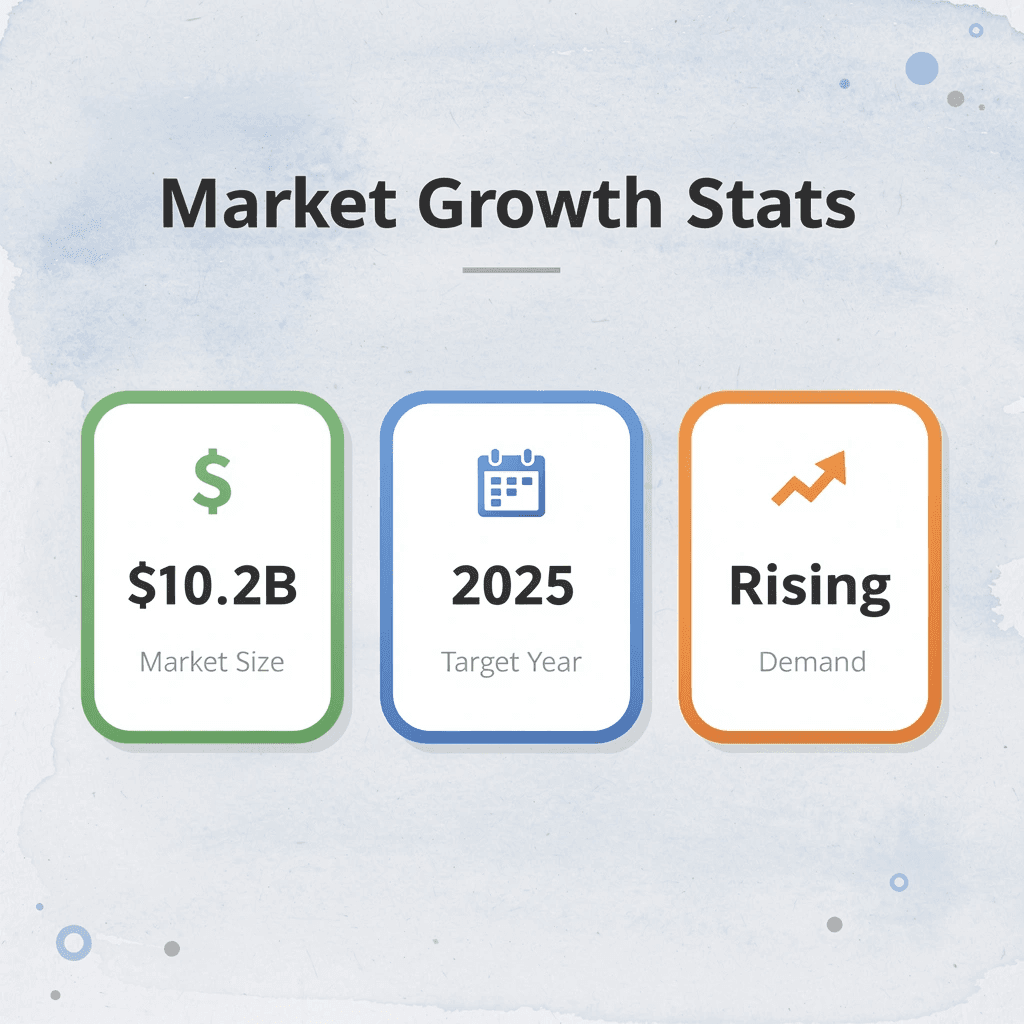
“The global custom t-shirt printing market is expected to reach $10.2 billion by 2025, driven by increasing demand for personalized apparel and on-demand printing solutions.” — Market Research Future, 2023
⚠️ Warning: Not all printing methods work well on every fabric type. Cotton blends, polyester, and tri-blend materials each have optimal printing techniques that deliver the best results.
| Printing Method | Best For | Typical Cost |
|---|---|---|
| Screen Printing | Large orders, simple designs | $3-8 per shirt |
| Direct-to-Garment (DTG) | Complex designs, small batches | $5-15 per shirt |
| Heat Transfer Vinyl | Single items, text designs | $2-6 per shirt |
| Sublimation | Polyester garments, full-color | $4-12 per shirt |
| Heat Press | Quick turnaround, photos | $3-10 per shirt |
| Embroidery | Professional look, logos | $8-25 per shirt |
| Vinyl Cutting | Simple graphics, durability | $2-7 per shirt |
| Direct-to-Film (DTF) | Mixed fabrics, vibrant colors | $4-11 per shirt |
1. Screen Printing
Screen printing works well for bulk orders with bold, long-lasting graphics. Artists create individual stencils for each color, push specialized ink through fine-mesh screens onto fabric using a squeegee, and then heat-cure the design to lock it permanently into the fibers. This method suits cotton shirts, blends, and certain synthetics with simple, bold graphics rather than intricate details.
What makes screen printing cost-effective for larger orders?
The cost per shirt drops significantly once you order more than 50 pieces because setup costs are spread across more units. Colors look rich and bright, and finished designs resist cracking through multiple wash cycles.
What are the limitations of this t-shirt printing method?
Complex multicolored artwork or photographic images struggle with this technique. Each additional color requires a separate screen, adding $25 to $50 in setup costs. Print areas remain limited compared to full-coverage options, and small runs become inefficient due to upfront preparation requirements.
2. Direct-to-Garment Printing (DTG)
DTG printing works like an advanced inkjet system designed for fabric. Operators prepare the material, load the shirt into a specialized printer that sprays water-based inks directly onto it, and then apply heat to bond the ink. This digital approach handles detailed patterns, photos, and gradients without the color limitations of screen printing.
What makes DTG ideal for detailed designs?
It works best on 100% cotton and cotton-rich blends, producing soft, seamless prints with excellent color range and fine detail reproduction. Low setup costs make it practical for single shirts or small personalized batches.
What are DTG’s main limitations?
Performance drops on pure synthetics or dark fabrics without extra preparation steps, and longevity falls short of thicker ink methods under heavy washing. Production speed also slows for larger batches, since each shirt is printed individually rather than in rapid succession, as screen printing allows.
3. Dye Sublimation (All-Over Printing)
Dye sublimation creates bright, edge-to-edge designs that soak directly into polyester fibers. Designs are printed onto special transfer paper first, then heat and pressure convert the ink into gas. This process supports full-coverage patterns and vivid multicolored scenes with a smooth finish.
What are the benefits and limitations of dye sublimation printing?
It requires light-coloured polyester fabrics for the best results. Colors blend naturally, with no visible edges or texture differences, enabling complex all-over designs without layer limitations.
The main barriers are material restriction (it only works on polyester and light bases, so dark fabrics yield poor visibility) and higher costs than some alternatives, making it most sensible when the seamless, vibrant look justifies the premium.
4. Direct-to-Film Printing (DTF)
DTF printing applies versatile transfers to almost any fabric through a hybrid process: ink prints onto special film, adhesive powder is applied and cures, then heat pressing bonds the design permanently to the shirt. It works on cotton, polyester, blends, and both dark and light colors.
What are the advantages of DTF printing?
It delivers strong color vibrancy across mixed materials without pretreatment, reducing fabric-related failures. The process handles bright, detailed designs with solid coverage and efficiently serves small- to medium-order quantities.
What are the limitations of DTF printing?
The finished print feels slightly thicker and less breathable than direct ink methods. Extra transfer steps require more time than direct-to-fabric techniques, and large all-over prints work less well than contained designs.
5. Plastisol Transfers
Plastisol transfers combine screen-printing quality with heat-press convenience for durable designs on uniforms and promotional wear. Designs are screen printed onto transfer sheets using plastisol ink, then applied to shirts with a heat press to bond the ink to the fabric. This method works on cotton, blends, and some synthetic materials, with bold shapes and solid colors performing best.
What makes plastisol transfers durable and consistent?
Designs stay strong and resist cracking after many washes, with special finishes like gloss or texture available. Batch consistency remains high for teams or events that require identical results across multiple pieces, even with minor customizations such as names or numbers.
What are the limitations of plastisol transfers?
Plastisol transfers don’t work well for detailed images or photographs. Transfer materials cost more than direct screen printing for large volumes, and the print layer feels noticeably thicker than direct ink.
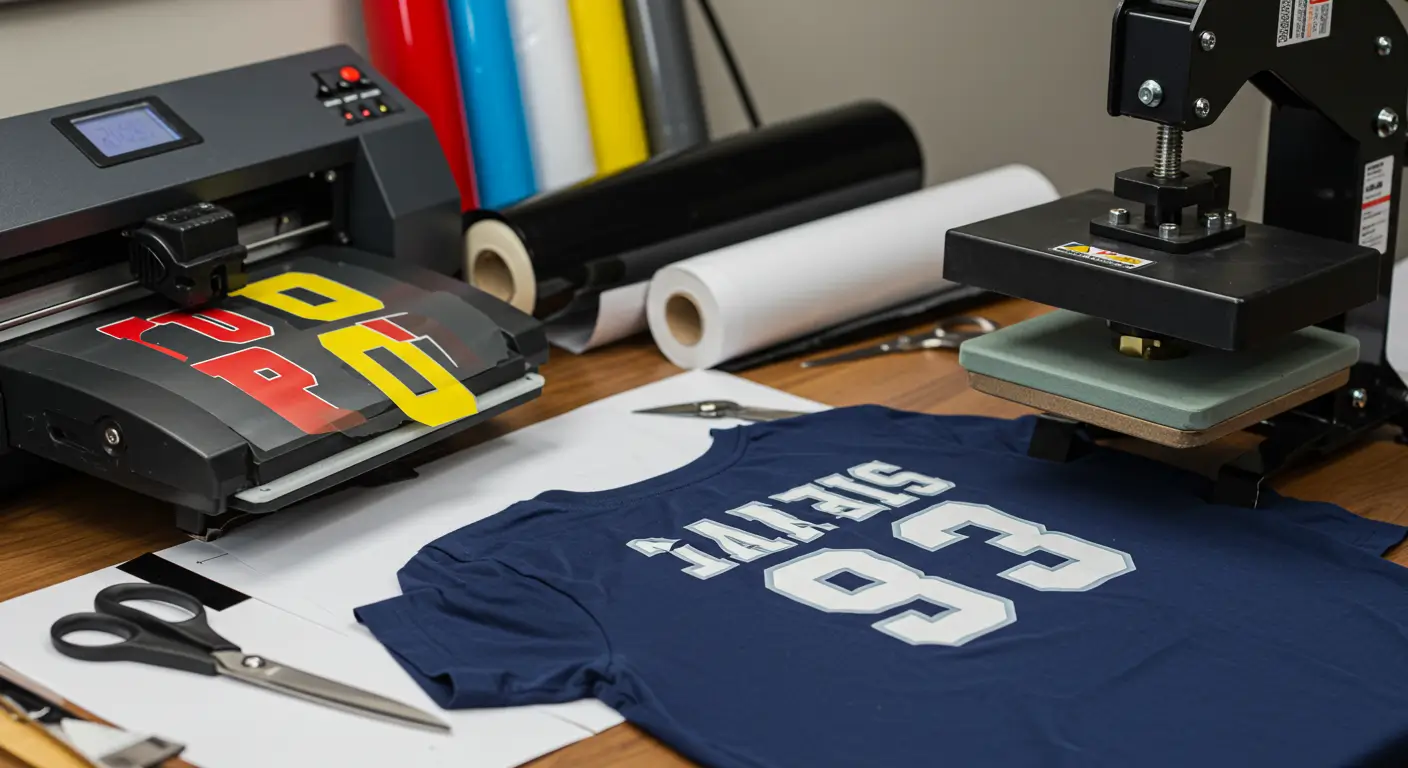
6. CAD Heat Transfer Vinyl Printing
CAD heat-transfer vinyl printing uses computer-controlled cutting machines to precisely cut colored vinyl into the desired shapes. After removing excess material, the vinyl is placed on fabric and permanently bonded with heat presses that apply controlled temperature and pressure, producing sharp, bold results with a premium appearance on cotton, polyester, and various blends.
What types of t-shirt printing projects work best with vinyl?
It works well for simple logos, text, names, and numbers, but not for complex images. The process suits small- to medium-sized orders that require individual customizations, such as player names or jersey numbers. Nearly any fabric type accepts vinyl, making it reliable across a range of materials.
What are the limitations of vinyl heat transfer printing?
Cutting and applying vinyl takes more time per item than printing methods. It also cannot work with photographs, gradients, or detailed artwork because vinyl must be cut into solid shapes. The finished design feels textured and stiffer than softer ink methods, which some buyers find less comfortable.
7. Embroidery
Embroidery adds a high-quality, textured finish to shirts, polos, and hoodies by using stitching instead of ink. Digital files guide industrial sewing machines to stitch coloured threads directly into the fabric, building designs through thousands of precise stitches that create depth and texture. This method works best on thicker materials like heavy cotton, polos, and hoodies.
What are the benefits of embroidered t-shirt printing?
The raised, stitched appearance demonstrates quality and professionalism. Designs resist fading, cracking, and peeling because threads are mechanically woven into the fabric structure. It requires no inks or chemicals, making it more environmentally friendly than liquid-based methods.
What are the limitations of embroidery for t-shirt printing?
Production costs are higher than most printing techniques. Embroidery cannot reproduce photorealistic or intricate multicolored images because thread limits the precision of detail, and color options are restricted to solid thread shades, with no smooth blending between hues.
8. Discharge Printing
Discharge printing removes color from dark fabrics instead of adding layers on top. Special discharge ink, often combined with water-based formulas, is applied through screens, and heat activation removes the original dye while depositing new color. This produces smooth results that integrate with fibers rather than sitting as a surface layer.
What makes discharge printing ideal for dark fabrics?
It works best on 100% cotton shirts, especially dark colors, where other methods struggle. Prints feel soft with no heavy texture, and designs bond permanently without cracking or peeling because they become part of the fabric structure.
What are the limitations of this printing method?
The final colors can vary slightly from shirt to shirt due to differences in fabric dyeing. This method does not work on synthetic materials since the chemical process requires natural fibers. The process uses stronger chemicals than regular water-based inks and requires careful handling and adequate ventilation.
Services like cheap custom T-shirts match printing techniques to fabric type, order size, and expected wear patterns before ordering. This prevents costly mistakes when appearance drives decisions, but durability determines whether shirts survive regular use.
How to Choose the Right T-shirt Printing Method for Your Goals
Choosing the right printing method depends on three critical questions: how many shirts do you need, how complex is your design, and what will those shirts endure? Your answers determine whether you save money or waste it, whether your design stays sharp or fades after a month, and whether your order arrives on time or misses your event.

🎯 Key Point: The wrong printing method can cost you 2-3x more than necessary and deliver poor quality results that damage your brand reputation.
“85% of custom apparel failures stem from choosing the wrong printing method for the specific use case and quantity requirements.” — Custom Apparel Industry Report, 2024
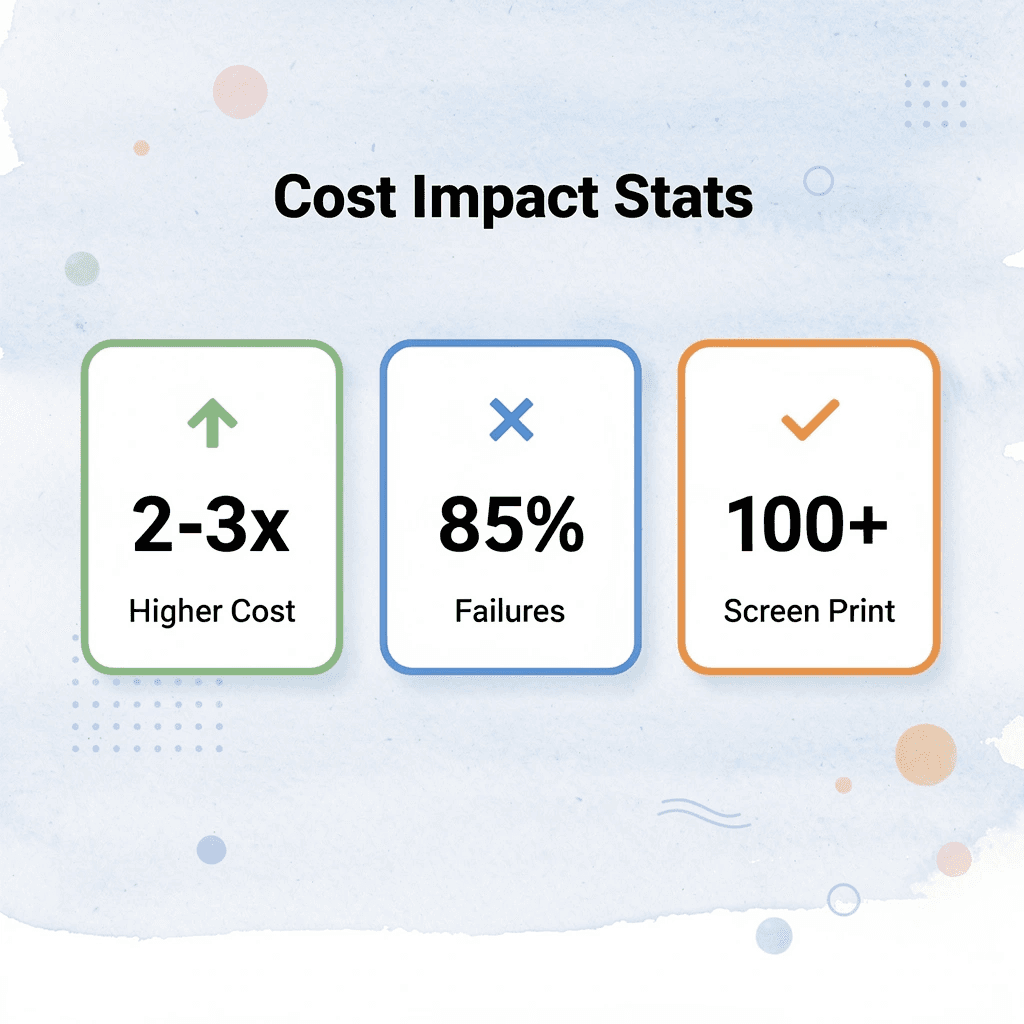
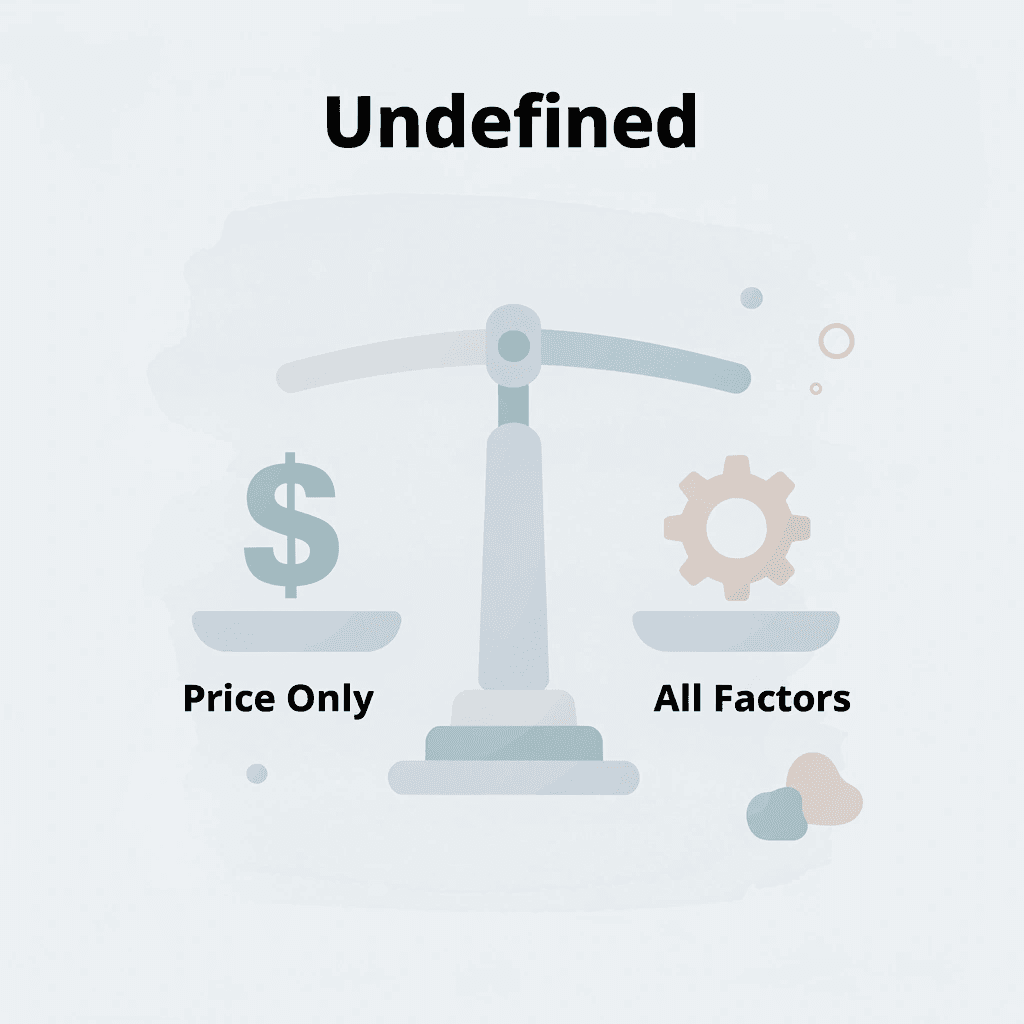
⚠️ Warning: Never choose a printing method based on price alone – factor in durability requirements, design complexity, and timeline constraints to avoid costly mistakes.
| Key Factor | Questions to Ask | Impact on Method Choice |
|---|---|---|
| Quantity | How many shirts total? | Screen printing for 100+, DTG for small batches |
| Design Complexity | How many colors? Photo-realistic? | DTG for complex designs, vinyl for simple graphics |
| Durability Needs | Heavy use or occasional wear? | Screen printing for maximum durability, heat transfer for short-term use |
Match Volume to Economics
The size of your order determines which printing methods suit your budget. Screen printing works well for orders of 50 or more shirts because setup costs are spread across more shirts, significantly lowering the per-shirt price. For smaller orders, digital methods like DTG or DTF eliminate setup fees, keeping single shirts or small batches affordable without sacrificing quality. Mismatching the method to the order size—such as ordering 200 shirts with a small-batch technique or 5 shirts with a bulk method—inflates the per-shirt cost.
Design Complexity Determines Technical Fit
Simple artwork with two or three solid colors works well with screen printing or vinyl, providing solid coverage that stands out on fabric. Photographic images, gradients, or multi-color designs require DTG or DTF to capture fine details without incurring extra per-color charges. Choosing screen printing for a full-color photograph requires simplifying your artwork or accepting poor reproduction, while selecting DTG for basic text design means paying premium rates for unnecessary features.
Fabric Type Shapes Print Performance
Cotton absorbs water-based inks differently from polyester, which accepts dye sublimation. DTG prints soft, detailed images on cotton and cotton blends because the ink integrates with natural fibers. Polyester requires dye sublimation for permanent color that won’t crack or peel, while DTF bridges the gap with strong adhesion across mixed materials and synthetics. Ignoring fabric chemistry leads to weak bonds that fail in the wash, stiff prints that crack under stress, or colors that fade after a few cycles. Our cheap custom T-shirts help you match printing techniques to fabric type, order size, and expected wear patterns before ordering.
Durability Needs Drive Method Selection
How often will these shirts get worn and washed? Team uniforms, work clothes, and everyday wear need screen printing’s thick, heat-cured layers to withstand fifty-plus washes without fading. Promotional giveaways or event shirts can use DTG printing, since they receive lighter use. Match durability expectations with intended use to avoid disappointed wearers and reputational damage.
Budget and Timeline: Create Practical Boundaries
Cost and speed limit your realistic choices. Bulk screen printing offers the lowest cost per shirt at large quantities but requires longer setup time. Digital methods provide fast turnaround for rush orders or personalized pieces without setup delays, though per-shirt costs remain higher. Calculate total project costs, including potential reprints from poor durability, and factor in design approval, sampling, and shipping when working around firm deadlines.
Finding a printer who delivers on promises without hidden fees or quality compromises is critical.
Why Customers Choose ooShirts for Custom T-shirt Printing
Customers choose ooShirts because our custom T-shirts eliminate the hassle of custom printing: unpredictable prices, inconsistent quality, missed deadlines, and confusing minimum orders. Instead, you get clear pricing, prints that last, reliable turnaround times, and the freedom to order exactly what you need, turning custom apparel from a gamble into a dependable tool for events, teams, and brands.

🎯 Key Point: ooShirts eliminates the four major pain points of custom printing—unpredictable pricing, inconsistent quality, delivery delays, and minimum order confusion—replacing them with transparent processes and reliable results.
“Clear pricing, consistent quality, and reliable turnaround times transform custom apparel from a gamble into a dependable business tool.” — ooShirts Customer Experience
💡 Best Practice: When choosing a custom printing partner, prioritize transparency over lowest price—predictable costs and consistent quality deliver far more value than unpredictable bargains that risk your deadlines and brand reputation.
Transparent Pricing That Eliminates Budget Surprises
Hidden fees destroy trust faster than poor quality. Most printers advertise low base rates, then add charges for setup, color separations, shipping, rush orders, and artwork revisions, turning a $500 budget into a $750 invoice. ooShirts built its model around all-inclusive pricing with free shipping, free setup, and a Low Price Guarantee that matches any lower online quote. Founded in 2007 to challenge overpriced local print shops, the company makes affordability its core promise, so you see the real cost upfront and avoid budget surprises.
Quality That Survives Real-World Use
Prints that crack after three washes waste money and hurt your reputation. ooShirts guarantees bright, long-lasting results by using high-quality inks and skilled production teams for both screen printing and DTG. If your order arrives with defects or fading, we will redo it completely. Custom shirts often represent teams, events, or brands, where quality directly affects perception: your logo stays sharp through dozens of wash cycles, your event shirts look professional in photos months later, and your team apparel remains consistent rather than becoming a patchwork of faded designs.
Delivery Speed That Respects Deadlines
Late orders force last-minute scrambles or event cancellations. ooShirts commits to fast production timelines and consistently delivers ahead of schedule for both screen-printed bulk orders and DTG runs. That reliability eliminates padding timelines with extra weeks “just in case”: you can trust shirts arrive when promised, freeing you to focus on other event logistics.
Expert Support That Simplifies Decisions
Choosing between screen printing and DTG, selecting fabric weights, or preparing artwork can feel overwhelming without printing experience. ooShirts provides knowledgeable support seven days a week via phone, email, and live chat. Our specialists review your design files, explain which method suits your quantity and complexity, and catch potential issues before production starts. This guidance helps you avoid costly mistakes, such as choosing DTG for a 200-shirt order better suited to screen printing or submitting low-resolution artwork that prints poorly.
No Minimums for Complete Flexibility
Strict quantity requirements force you to order more than needed or abandon ideas entirely. ooShirts eliminates minimums, handling single custom shirts through DTG and larger screen-printed runs with equal care.
How does flexible ordering benefit different types of t-shirt printing projects?
You can test designs before ordering in bulk, fulfill exact team sizes without overbuying, and run small promotional campaigns without waste. This flexibility is especially important for nonprofits, schools, and small businesses with tight budgets, where every extra shirt represents wasted money.
What comes next after understanding these benefits?
Understanding why ooShirts works matters only if you know how to turn your idea into an actual order without getting stuck on design decisions or technical requirements.
Related Reading
- Printify Alternatives
- Redbubble Alternatives
- Rush Order Tees Vs Custom Ink
- Zazzle Alternatives
- Vistaprint Vs Custom Ink
- 4imprint Competitors
- Vistaprint Alternatives
- Redbubble Alternatives
- Bonfire Competitors
- 4imprint Vs Vistaprint
Start Designing Your Custom Shirts Today
You now understand which printing methods deliver lasting quality, how to match technique to budget, and why choosing the wrong process ruins both shirts and timelines. Most people stop at the ordering stage, second-guessing design decisions or worrying they’ll pick the wrong method and waste money. Starting is the only way to close that gap.

🎯 Key Point: ooShirts removes the guesswork completely. Upload your design, describe your project, and our team will recommend the ideal printing method for your needs. You get screen printing for bold bulk orders or DTG for detailed small runs, always matched to your design complexity and quantity. No hidden fees, setup charges, or minimum orders.
“Custom shirt orders move from idea to delivery 40% faster when you choose the right printing method from the start.” — Industry Production Analysis, 2024
Your order moves from idea to delivery faster than expected. Our Low Price Guarantee and free shipping protect your budget, while our satisfaction guarantee protects your quality. If prints fade, crack, or disappoint, we redo them. We handle method selection, production timing, and quality control throughout.
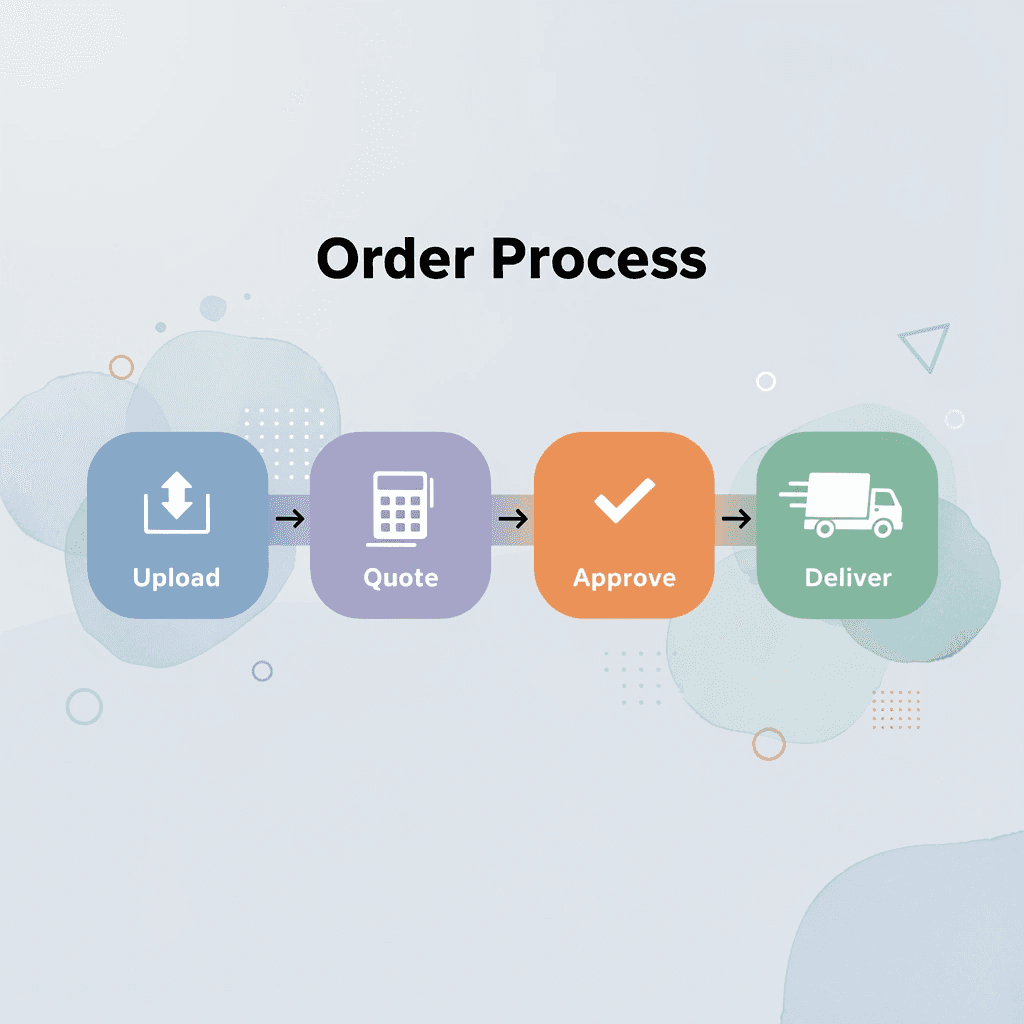
💡 Tip: Visit the website and request an instant quote in under two minutes. Upload your design, select shirt styles and quantities, then receive pricing with expert recommendations. Approve the proof, and your custom shirts ship to you. No credit card required, and our specialists answer questions seven days a week.
| Step | Time Required | What Happens |
|---|---|---|
| Upload Design | 30 seconds | Instant preview |
| Get Quote | 90 seconds | Pricing + method recommendation |
| Approve Proof | 24 hours | Production begins |
| Delivery | 5-7 days | Shirts arrive ready to wear |

⚠️ Warning: Start designing your shirts today at ooShirts and turn everything you learned in this guide into custom apparel that impresses people and stays sharp after dozens of washes.
Leave a Reply