Last updated: August 10, 2026
Choosing the right fabric determines whether custom printed shirts become customer favorites or end up forgotten in drawers. Cotton, polyester blends, tri-blends, and ring-spun fabrics each react differently to screen printing, direct-to-garment printing, and heat transfer methods. The material affects how well ink adheres, how colors appear, and how the shirt feels after multiple washes. Understanding these differences helps ensure printed designs look sharp and feel comfortable enough that people actually want to wear them.
Different fabrics require different printing approaches to achieve optimal results. Some materials hold ink brilliantly while others may cause colors to fade or crack over time. Weight, texture, and fiber composition all play crucial roles in the final product quality. When ready to test different materials and printing techniques, ooShirts provides cheap custom T-shirts that allow experimentation with various fabric options without exceeding budget constraints.
Summary
- Medium-weight fabrics between 4.5 and 5.5 ounces consistently outperform heavyweight options for print durability. When water-based inks hit 7-oz heavyweight cotton, they pool on the surface rather than bonding with the yarns, creating a stiff film that cracks along fold lines after a few washes. Mid-weight fabrics allow controlled ink absorption, creating flexible bonds that move with the fabric through 50+ wash cycles.
- Ring-spun cotton creates smoother printing surfaces than standard carded cotton because the spinning process aligns fibers tightly. This refined structure allows ink to sit evenly rather than pooling in gaps, producing sharper edges on detailed designs. The material works reliably across direct-to-garment printing, screen printing, and heat transfer methods without requiring any adjustments to specialized equipment.
- Fabric weight tells only part of the story without considering construction density. Two shirts can both weigh 5.3 oz yet perform completely differently under the same printing process because yarn count and knit tightness matter more than raw thickness. A 5.3 oz shirt made from 40-singles yarn with tight construction creates a smooth printing surface, while the same weight in 30-singles with loose knit absorbs ink unevenly.
- Cotton Incorporated’s 2023 study found that 63% of consumers noticed apparel fabrics becoming thinner, and 59% reported clothing lasting shorter periods. That perception links directly to how lightweight materials handle printing stress: fabrics under 4 oz often have open weaves that cause ink to bleed through the fiber gaps, creating fuzzy edges and uneven saturation that look amateurish.
- Testing sample fabrics before bulk orders reveals problems invisible in product specifications. Running samples through your actual printing process and then washing them three times using typical home laundry methods shows how colors hold up, whether prints crack or peel, and how the fabric feels after repeated wear. This testing prevents compatibility issues from being discovered only after spending money on full production runs.
- Cheap custom T-shirts from ooShirts address material selection barriers by eliminating minimum order requirements, allowing schools, nonprofits, and small businesses to test premium fabrics like ring-spun cotton or tri-blends at any quantity before committing to larger production runs.
What is T-Shirt Printing, and Why Does T-Shirt Material Matter for Print Quality?
T-shirt printing transfers ink or dye onto fabric using heat, pressure, or chemical bonding to create custom designs that survive washing, stretching, and daily wear. Your material choice controls how deeply ink soaks in, how bright colors appear, and whether your design cracks after three washes or remains sharp for three years. Print quality depends on how well the ink chemistry and fabric structure work together.

🎯 Key Point: The fabric type you select is just as important as the printing method itself—cotton blends absorb ink differently from polyester, affecting both durability and color vibrancy.
“The material choice can make the difference between a design that lasts 3 washes versus one that maintains quality for years of regular use.” — Textile Printing Industry Report, 2024
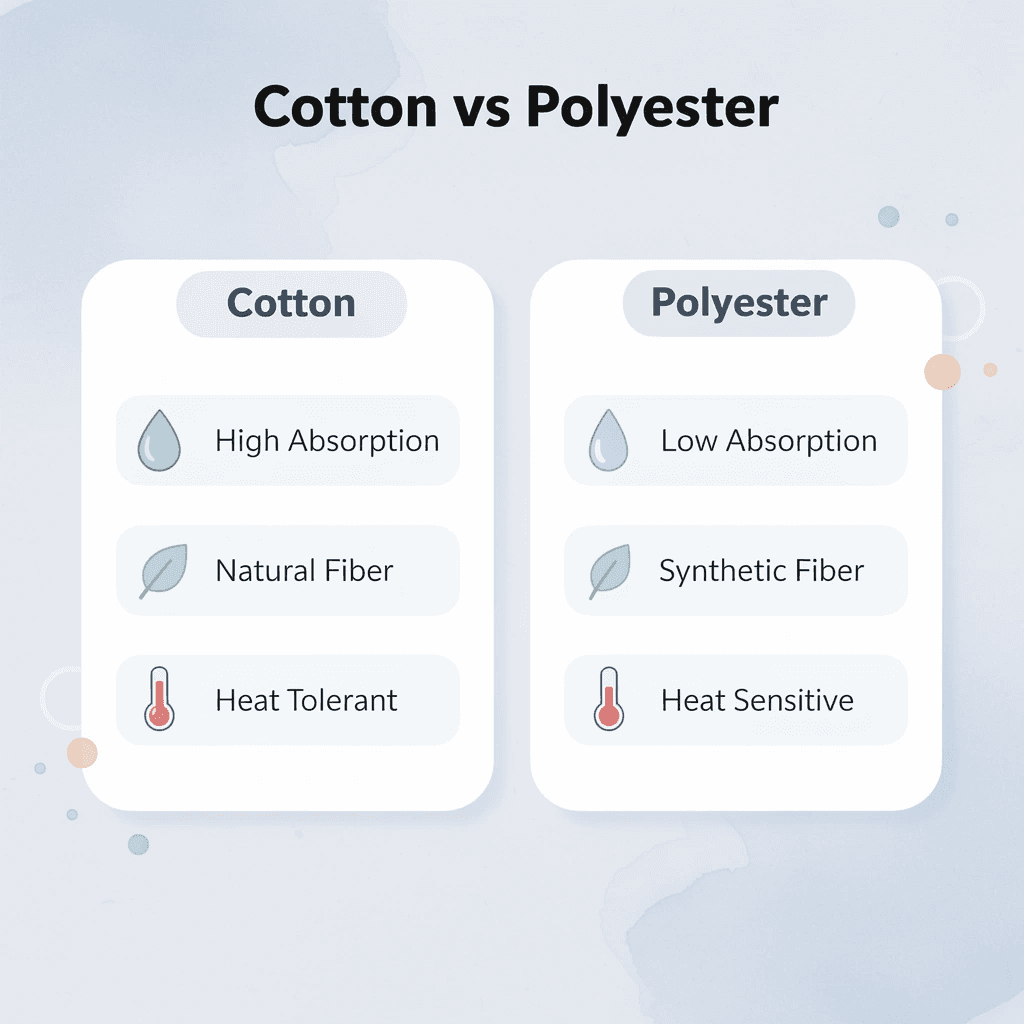
💡 Pro Tip: Always test your ink-fabric combination on a small sample first—what works perfectly on 100% cotton may completely fail on synthetic blends due to different absorption rates and heat tolerance.
Fabric Composition Determines Ink Bonding
Cotton fibers absorb water-based inks, pulling color deep into the weave where it stays in place. Polyester resists water and requires heat-activated dyes that bond at the molecular level. Using the wrong ink on the wrong fabric creates designs that peel or fade within weeks. According to Alibaba, cotton t-shirts make up about 60% of the global t-shirt market, largely because natural fibers absorb ink predictably, allowing newer printers to operate without special equipment. Matching ink chemistry to fiber type makes the design part of the shirt rather than a surface layer.
Weave Density Controls Print Sharpness
Tight weaves with high thread counts create smooth surfaces that capture fine details, crisp edges, and gradients without bleeding. Loose weaves let ink spread between fibers, blurring sharp lines. An 180-thread-count ringspun cotton holds detailed artwork far better than a 120-thread open-end weave, making denser fabrics essential for detail-heavy logos or photographic prints.
Material Stability Prevents Distortion Over Time
Fabrics that shrink, stretch, or warp under heat pull printed designs out of alignment, creating cracks along fold lines or puckering around graphics. Pre-shrunk, dimensionally stable materials maintain their shape through repeated wash cycles, preserving your design’s placement.
When testing different materials without bulk commitments, cheap custom T-shirts from ooShirts let you sample fabric options at any quantity. Most printers enforce minimum orders that make experimentation expensive, whereas our platform lets you order five shirts in ringspun cotton and five in a poly blend so you can learn how each material handles your specific design before scaling up.
Breathability Affects Wearability and Print Longevity
Fabrics that trap heat and moisture are worn less often, reducing the visibility of your design. Natural fibers like cotton allow air circulation, keeping wearers comfortable and encouraging repeat wear. Synthetic blends last longer, but if the shirt feels too hot and sticky, people won’t wear it, and print quality becomes irrelevant.
The fabric you choose determines whether people will wear the shirt and whether your print lasts long enough to matter.
What Makes a T-Shirt Material Good for Printing?
The best t-shirt materials for printing combine a smooth, consistent surface with strong ink bonding properties and dimensional stability that survives repeated washing. These fabrics deliver sharp details, vibrant colors, durability, and comfort. When any of these elements fails, your design suffers regardless of printer skill or equipment quality.
🎯 Key Point: The fabric foundation determines your print quality ceiling – even the most advanced printing equipment can’t overcome poor material choices.
“Fabric selection accounts for up to 70% of print quality issues in custom apparel production, making material choice the most critical decision in the printing process.” — Textile Printing Industry Report, 2023
| Material Quality Factor | Impact on Print Results |
|---|---|
| Surface Smoothness | Sharp detail reproduction |
| Ink Absorption | Color vibrancy and saturation |
| Dimensional Stability | Design integrity after washing |
| Fiber Consistency | Even ink distribution |

💡 Tip: Test your fabric choice with a small sample print before committing to large orders – this simple step can save you from costly reprints and customer complaints.
Smooth Surface Texture Ensures Crisp Print Definition
High-quality t-shirt materials have a tight, even weave or knit structure that provides a uniform base for ink application. This smoothness prevents ink from spreading irregularly or creating jagged edges in detailed graphics. Fabrics with finer yarns deliver cleaner lines and sharper images, ensuring every design element appears professional and refined rather than blurry or inconsistent.
Strong Ink Absorption Delivers Vibrant, Long-Lasting Colors
High-quality fabrics pull ink deep into their fiber structure instead of letting it sit on top, creating rich colors that resist cracking, peeling, and fading. 100% cotton is the most popular choice for custom printing because its natural fibers bond well with water-based inks, producing colors that stay bright through dozens of wash cycles.
Dimensional Stability Prevents Shrinkage and Print Distortion
Materials engineered for stability resist excessive shrinking or warping during washing and drying, keeping printed designs aligned and properly sized. Without this property, even perfect printing becomes useless as the garment itself ruins the design through stretching, wrinkles, and cracked ink.
Platforms like ooShirts eliminated minimum order quantities, offering premium fabric options for orders ranging from 5 to 500 shirts. Material quality now depends on informed choices rather than order volume.
Breathability Supports Comfort During Extended Wear
Good printing fabrics allow air to flow through them and move moisture away from the skin to keep wearers cool and dry. This breathability means people will wear custom shirts often without feeling uncomfortable from trapped heat or sweat, helping your design or message stay visible longer. A shirt that looks great but feels too tight and hot ends up forgotten in a drawer where print quality becomes irrelevant.
Even the best surface texture and ink absorption will fail if the fabric cannot withstand the physical demands of the printing process.
Related Reading
- Best T-Shirt Printing Companies
- How to Print on T-shirts Professionally
- What Type Of T-shirt Printing Lasts The Longest
- Simulated Process Screen Printing
- Best Fonts For T Shirts
- How To Print On T-shirts Professionally
- Digital Print Shirt Vs Screen Print
- How Much Does T-shirt Printing Cost
Does Fabric Weight Affect Printing Results?
Fabric weight affects printing results, but not the way most people think. A 5.3 oz mid-weight cotton often produces sharper, more durable prints than a 6.5 oz heavyweight because ink absorption and fabric flexibility matter more than thickness. The best choice is to match the weight to the printing method, fiber type, and the garment’s intended use.

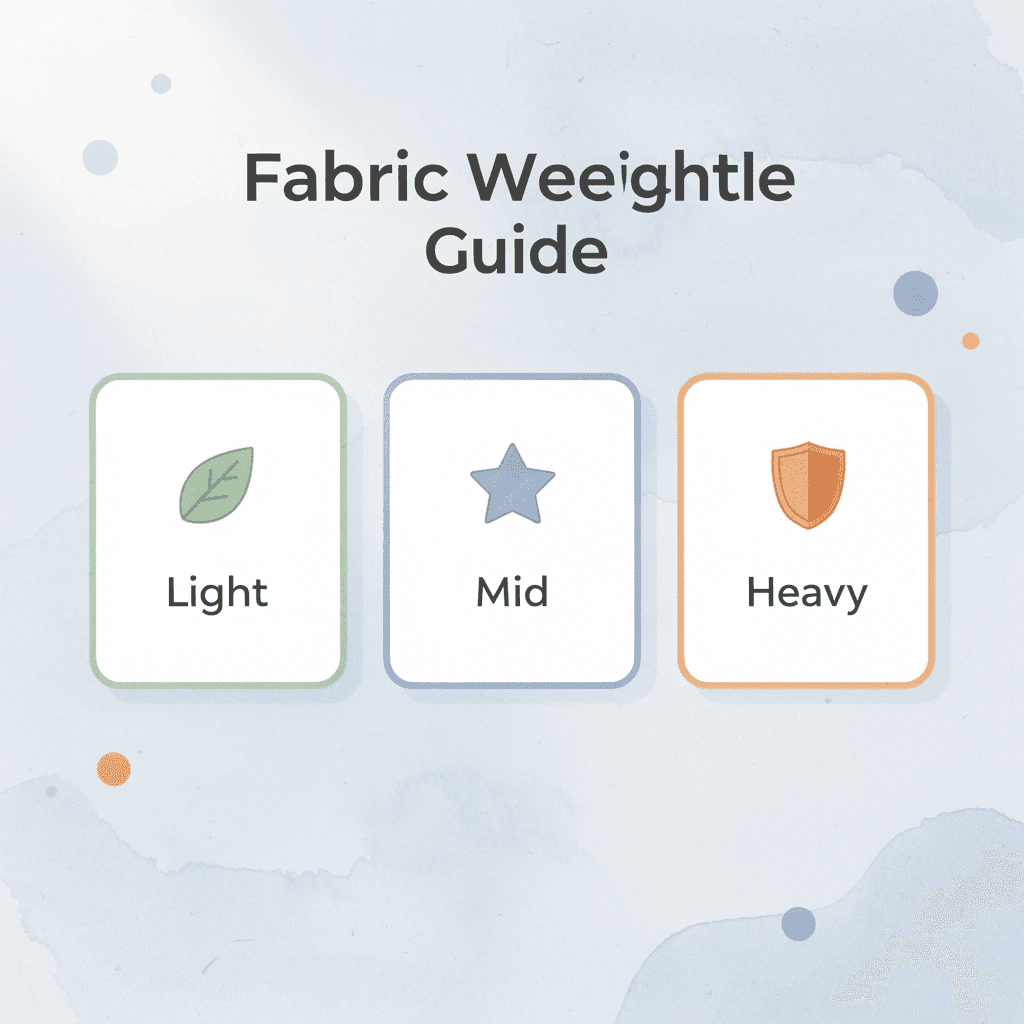
🎯 Key Point: Mid-weight fabrics between 4.5 and 5.5 oz often deliver the optimal balance of ink absorption and print durability across multiple printing methods.
“Fabric weight is just one factor – the fiber composition and weave structure have equal impact on print quality and longevity.” — Textile Printing Research, 2023
| Fabric Weight | Best For | Print Quality |
|---|---|---|
| 3.5-4.5 oz | Screen printing, detailed designs | Excellent ink penetration |
| 4.5-5.5 oz | All methods, general use | Optimal balance |
| 5.5+ oz | Embroidery, heavy-duty wear | Durable but limited detail |
⚠️ Warning: Heavyweight fabrics above 6 oz can cause ink pooling and cracking with certain printing methods, especially heat transfer vinyl and direct-to-garment printing.
Why does heavy fabric restrict ink penetration?
Heavy fabrics create a dense barrier that stops ink from soaking in. Water-based inks sit on top of 7 oz heavyweight cotton instead of bonding with individual yarns, creating a stiff film that cracks along fold lines after a few washes. School groups often order the thickest shirts available, only to see custom designs flake off after the first game day.
How does the weight of the best T-shirt material for printing affect durability?
Mid-weight fabrics between 4.5 and 5.5 oz allow controlled absorption, spreading ink into the yarn structure without bleeding through. A 5 oz ringspun cotton T-shirt maintains print clarity through 50 wash cycles, while a 6.5 oz option shows visible degradation by wash 20. The difference stems from how weight interacts with fiber spacing and knit tightness.
When Lightweight Fabrics Fail Print Tests
Fabrics under 4 oz present the opposite problem: the weave becomes so open that ink bleeds through gaps in the fibers, creating fuzzy edges and uneven saturation.
Why do fine details disappear on lightweight materials?
Fine details disappear as ink spreads beyond intended boundaries. A 3.5 oz tri-blend feels soft and breathable, but screen-printing a detailed logo results in blurred lines that look unprofessional. Heat transfer methods work slightly better, though the thin fabric shows every wrinkle and distortion, making the print appear cheap regardless of ink quality.
How does fabric integrity affect the best T-shirt material for printing?
Cotton Incorporated’s 2023 study found that 63% of consumers noticed apparel fabrics becoming thinner, and 59% reported clothing lasting shorter periods. Without structural integrity, even perfect ink application cannot compensate for a base that stretches, twists, and pills after normal wear.
Why does fabric weight alone mislead when choosing the best T-shirt material for printing?
Weight measured in ounces per square yard tells only part of the story. Two shirts can both weigh 5.3 oz yet perform completely differently under the same printing process. The critical factors are yarn count and knit tightness.
A 5.3 oz shirt made from 30-singles yarn with a loose knit absorbs ink unevenly, while the same weight in 40-singles with tight construction creates a smooth printing surface. Research on single jersey knits shows that fabric weight, combined with construction factors such as loop density, significantly influences bursting strength: optimized mid-range weights maintain greater integrity under stress than heavier but poorly structured alternatives.
How can understanding construction save money on custom orders?
This explains why cheap custom T-shirts focus on teaching customers about fabric details beyond weight. Most printing services push heavy options, assuming customers equate thickness with quality, but this approach leaves disappointed customers who ordered 50 shirts only to discover cracked prints or stiff fabric.
Understanding how weight affects construction lets you pick a 5 oz option that outperforms a 6.5 oz competitor at a lower cost per shirt.
How does printing method compatibility affect the best t-shirt material for printing selection?
Direct-to-garment printing works best on mid-weight cotton between 4.5 and 6 oz, as the technology requires controlled ink absorption without extra thickness that would block the print heads. Screen printing produces optimal results on 5 to 5.5 oz fabrics, where ink can cure properly without creating a plasticky surface layer.
Heat transfer vinyl requires stable, smooth surfaces that won’t pucker under pressure, making 5.3 oz ringspun cotton ideal, while heavyweight options often create adhesion problems.
What do consumer preferences reveal about optimal fabric weight?
A 2022 consumer preference study revealed that 68% of buyers preferred 160 GSM (approximately 4.7 oz) T-shirts for daily wear, citing superior comfort and durability over heavier options.
Customers want clothes that keep their shape, maintain print quality, and feel comfortable enough to wear many times. Weight matters only when it serves those goals.
7 Best T-Shirt Materials for Printing Custom Designs in 2026
The material you choose determines whether your design looks sharp after one wash or fifty. Each fabric brings specific characteristics that affect ink adhesion, color brightness, durability, and comfort. Understanding these differences helps you match the right material to your printing method and audience expectations.
🎯 Key Point: The fabric you select is the foundation of your custom t-shirt’s success – it impacts everything from print quality to customer satisfaction.
“The right fabric choice can make the difference between a design that fades after 3 washes versus one that maintains vibrant colors for years.” — Custom Printing Industry Report, 2024
💡 Tip: Always consider your target audience’s priorities – athletic customers need moisture-wicking properties, while fashion-focused buyers prioritize softness and drape.

1. Ring-Spun Cotton
Ring-spun cotton is a dependable base for custom clothing, offering a smooth, soft surface that feels comfortable to wear daily. It works well for lifestyle brands, event merchandise, and small businesses seeking broad appeal and strong print quality.
It performs well with a variety of techniques because the fibers absorb ink effectively, producing detailed, bright results. Ring-spun cotton works with direct-to-garment printing, screen printing, and direct-to-film transfers.
Features
- It creates a smoother finish than standard carded cotton.
- Combed versions add extra refinement and softness.
- Mid-weight options provide structure while lighter ones suit warmer seasons.
Pros
- Delivers exceptional softness and breathability for all-day comfort
- Produces sharp, detailed prints across common methods
- Positions itself easily as a quality everyday choice
- Supports sensitive skin without irritation
- Offers reliable vibrancy that holds through repeated wear
Cons
- Experiences some shrinkage if not pre-shrunk properly
- Develops wrinkles more readily than synthetics
- Takes longer to dry compared to polyester options
- Loses shape faster in heavy use without quality construction
How to Care for Ring-Spun Cotton Shirts
Wash in cold water on a gentle cycle, turn inside out, and use mild detergent. Skip bleach and high heat. Air-dry when possible, or tumble on low to preserve shape, color, and print integrity through many washes.
2. Organic Cotton
Sellers who care about sustainability choose organic cotton for its natural comfort and appeal to environmentally conscious buyers. It works well for eco-friendly brands, artist collections, and stores targeting environmentally aware customers.
The material absorbs inks deeply, creating high-quality results with direct-to-garment printing, screen printing, and embroidery. Certifications like GOTS strengthen its market position.
Features
- Standard organic for everyday softness.
- Blended with other naturals for added performance.
- Different weights for various design applications.
Pros
- Naturally soft and highly breathable for extended comfort
- Excellent for detailed DTG prints with rich color uptake
- Appeals strongly to eco-conscious shoppers
- Gentle on sensitive skin with minimal processing
- Builds brand trust through sustainable credentials
Cons
- Costs more than conventional cotton
- Shows wrinkles similar to other cotton types
- Requires careful washing to maintain certification benefits
- Dries slower than synthetic alternatives
How to Care for Organic Cotton Shirts?
Use cold water on a gentle cycle, turn garments inside out, and apply eco-friendly detergent. Avoid bleach entirely. Air-drying best preserves fabric integrity, print quality, and softness, though low-heat tumble drying works if needed.
3. Cotton-Polyester Blend
Many businesses select cotton-polyester blends for their balanced performance in custom work. This hybrid combines familiar comfort with enhanced strength for longer-lasting garments.
These blends serve team apparel, promotional items, and everyday retail lines that need durability without sacrificing feel. They provide a practical middle ground for high-volume orders.
The material handles various printing approaches effectively, especially screen printing and DTG on higher-cotton-ratio fabrics, while supporting sublimation on poly-dominant versions.
Features
- 50/50 or 60/40 ratios offer different strength-to-softness balances.
- Heather options add visual texture.
- Mid-weights deliver structure with flexibility.
Pros
- Combines softness with superior shape retention
- Resists shrinking and fading better than pure cotton
- Supports vibrant prints across multiple techniques
- Dries quickly and requires less ironing
- Provides cost-effective durability for frequent use
Cons
- Less breathable than 100% cotton in hot conditions
- Can pill over time with heavy abrasion
- May feel less premium to some natural-fiber fans
- Requires specific ink matching for best results
How to Care for Cotton-Polyester Blend Shirts
Wash in cold or warm water on a regular cycle, turn inside out, and use standard detergent. Tumble dry on medium or air dry. This maintains color, print adhesion, and overall structure wash after wash.
4. Polyester
Performance-driven brands frequently choose 100% polyester for its strength and vibrant print capabilities. It withstands demanding conditions while delivering bold, lasting designs.
Polyester t-shirt fabrics work well for sportswear, promotional items, and active lifestyle collections that require moisture management and durability. It serves as a dependable choice for high-use custom apparel.
The material excels with sublimation and heat-transfer methods, in which ink bonds permanently to the fibers for all-over or full-color designs. It also supports screen printing effectively.
Features
- Moisture-wicking finishes for athletic use.
- Textured or smooth surfaces depending on the weave.
- Different weights for various applications.
Pros
- Provides excellent color vibrancy and retention
- Resists shrinking and maintains shape through washes
- Dries quickly and requires minimal care
- Supports durable all-over prints via sublimation
- Offers strong performance in active or outdoor settings
Cons
- Feels less breathable than natural fibers in heat
- Can trap odors without antimicrobial treatments
- Prints sometimes sit more on the surface
- Less ideal for DTG without proper preparation
How to Care for Polyester Shirts
Wash in cold water on a regular cycle, turn inside out, and use mild detergent. Tumble dry on low or air dry to protect prints and fabric integrity. Avoid high heat and fabric softeners for best longevity.
5. Pima Cotton
Premium apparel makers select Pima cotton for superior softness and longevity in custom pieces. Its extra-long fibers create a luxurious feel that customers notice immediately.
Pima cotton fabrics suit high-end merch, fashion brands, and gift items where quality justifies a higher price point. It elevates custom designs with a refined, durable base.
The long-staple fibers absorb ink deeply, producing outstanding results with DTG printing, screen printing, and detailed embroidery.
Notable Features
Extra-long fibers for enhanced strength and smoothness.
Excellent drape and reduced pilling.
Available in various weights for versatility.
Pros
- Delivers ultra-soft hand feel with premium drape
- Holds prints with rich color depth and clarity
- Resists pilling and maintains its appearance longer
- Offers natural breathability and comfort
- Builds perceived value for your brand
Cons
- Commands a higher price than standard cotton
- Still subject to some shrinkage if not pre-treated
- Wrinkles more than synthetic options
- Requires gentle handling to maximize lifespan
How to Care for Pima Cotton Shirts
Wash in cold water on a gentle cycle, turn inside out, and use mild detergent. Avoid bleach. Air-drying is preferred, or use low-heat tumble drying to safeguard the fabric, color, and print quality.
6. Tri-Blend
Creative sellers often pick tri-blend fabrics for their unbeatable softness and modern drape in custom collections. This combination brings together the best traits of multiple fibers.
Tri-blend t-shirts fit contemporary streetwear, artist merch, and lifestyle brands targeting customers who prioritize exceptional comfort. They provide a distinctive, soft alternative to basic options.
The material performs well with DTG and screen printing, as the blend absorbs ink well while adding flexibility and potential for vintage wash.
Features
- Cotton, polyester, and rayon mixes for softness.
- Heather tones for added visual interest.
- Lightweight constructions for easy layering.
Pros
- Creates an incredibly soft and drapey hand feel
- Combines comfort with good shape retention
- Supports vibrant, detailed print results
- Offers a premium look at competitive pricing
- Feels lightweight yet durable for daily wear
Cons
- May pill slightly over-extended heavy use
- Less breathable than 100% cotton in humid conditions
- Requires precise printing adjustments
- It can lose its vibrancy faster if not cared for properly
How to Care for Tri-blend Shirts
Wash in cold water on a gentle cycle, turn inside out, and use mild detergent. Tumble dry on low or air dry. This approach preserves softness, print quality, and overall structure.
7. Linen Blends
Many brands choose linen blends for their distinctive texture and superior breathability in warm-weather custom designs. The natural crispness combined with improved durability creates standout pieces that feel fresh and unique.
Linen blend t-shirt fabrics perform best for summer collections, resort wear, fashion-forward merch, and eco-conscious lines that want lightweight comfort with character. They offer a premium, textured alternative for customers seeking something beyond standard cotton.
These blends support screen printing and certain DTG applications effectively when the linen ratio allows good ink absorption. The addition of synthetic or cotton fibers improves stability, resulting in cleaner print results compared to pure linen.
Features
- Linen-cotton blends for balanced softness and breathability.
- Linen-viscose mixes for smoother drape and print surfaces.
- Lightweight constructions ideal for hot climates and layering.
Pros
- Delivers exceptional breathability and cooling comfort
- Provides a premium textured look that stands out
- Resists odors naturally and feels fresh longer
- Supports eco-friendly branding with natural elements
- Creates lightweight shirts perfect for warm conditions
Cons
- Wrinkles more noticeably than other blends
- Requires careful printing adjustments for even results
- Can feel slightly rougher without proper finishing
- Higher cost than basic cotton options
How to Care for Linen Blend Shirts
Wash in cold water on a gentle cycle, turn inside out, and use mild detergent. Avoid bleach and high heat. Air dry flat or hang to minimize wrinkles, or tumble on low to maintain fabric texture, color, and print quality.
Choosing the right T-shirt material in 2026 transforms your custom designs from average to exceptional. Each option above delivers specific advantages depending on your audience, printing method, and brand goals. Match the fabric to your needs for the best possible results.
Related Reading
- Business T-Shirt Design Ideas
- Types of T-shirt Printing
- T-shirt Design Size
- How To Print A Picture On A Shirt
- Best Corporate Apparel Companies
- Best T-shirt Material For Printing
- Best File Type For T-shirt Printing
- Family Reunion T-shirt Ideas
- T-shirt and Ink Color Combinations
- T-shirt Screen Printing Design Ideas
How to Choose the Best T-Shirt Material for Your Printing Projects
Polyester blends can create barriers, but these costs reflect material performance differences that matter when print durability and comfort drive repeat orders. Balance technical requirements against budget, order size, and customer wear.
🎯 Key Point: The cheapest material isn’t always the most cost-effective choice when you factor in customer satisfaction and reorder potential.

“Material choice accounts for up to 60% of customer satisfaction with custom printed apparel, directly impacting repeat business and referral rates.” — Custom Apparel Industry Report, 2024
| Material Factor | Impact on Cost | Impact on Quality |
|---|---|---|
| Cotton % | Higher upfront cost | Superior comfort |
| Polyester blend | Lower material cost | Better durability |
| Fabric weight | 15-30% price variance | Affects print adhesion |
| Pre-shrunk treatment | 10% cost increase | Prevents size issues |
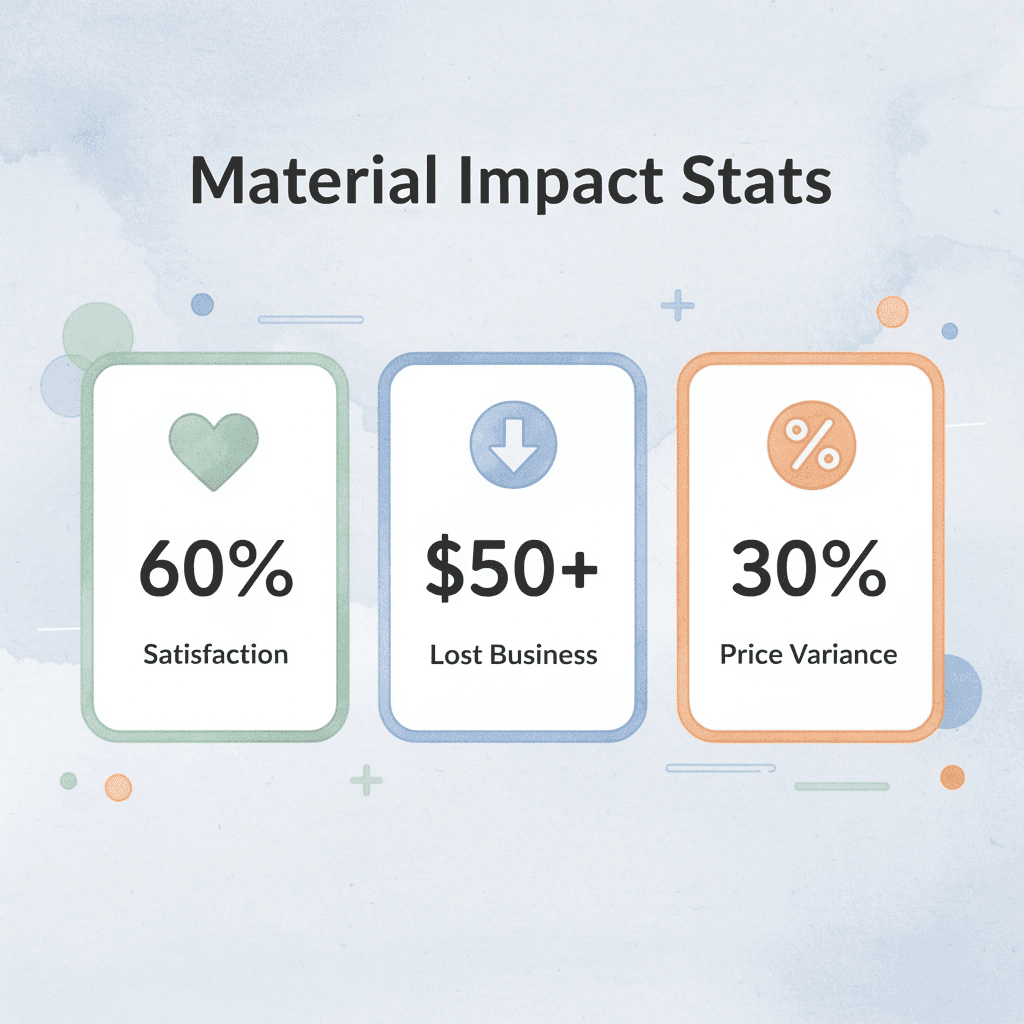
⚠️ Warning: Choosing low-grade materials to save $2-3 per shirt can cost you $50+ in lost repeat business when customers are dissatisfied with comfort or print longevity.
Start With How the Shirt Will Be Used
Athletic teams need fabric that wicks sweat away from skin during intense activity, while corporate event shirts prioritize looking professional and withstanding frequent washing. A nonprofit fundraiser shirt worn casually requires different fabrics than restaurant uniforms washed daily in commercial machines. How people use and care for shirts determines which material qualities matter most. Choosing shirts based solely on appearance leads to disappointed customers when they don’t hold up in real-world use.
Test Sample Fabrics Before Committing to Large Orders
Order sample shirts in your target materials and run them through your actual printing process before finalizing bulk orders. Print your design, wash the samples 3 times using typical home laundry methods, and evaluate how the colors hold, whether the prints crack or peel, and how the fabric feels after repeated wear. A fabric that looks perfect in catalog descriptions might produce disappointing results with your specific ink system or design complexity.
Balance Premium Materials Against Order Economics
Organic cotton or high-end tri-blends offer superior softness and sustainability, justifying higher prices for boutique retail lines or high-margin merchandise. Promotional giveaways and large team orders benefit from reliable cotton-polyester blends that reduce per-unit costs while maintaining acceptable quality. 100% cotton remains the standard baseline for most printing projects, balancing cost, printability, and customer expectations. Calculate total project costs, including printing fees, as some materials require specialized processes that increase overall expenses.
Consider How Material Choice Affects Your Brand Perception
The fabric you choose conveys quality before customers see your design. Premium materials demonstrate quality and attention to detail, while budget fabrics can undermine excellent graphics through poor feel or durability. Our cheap custom T-shirts eliminate minimum order requirements, letting you choose fabrics that meet your quality standards regardless of order size. Material selection becomes a brand choice rather than a constraint imposed by printing costs.
Match Fabric to Your Audience’s Actual Preferences
Younger audiences often prefer the super-soft vintage feel of tri-blends, while practical buyers prioritize durability and the easy wash-and-wear convenience of performance blends. Examine your target customers or study return patterns to determine which fabric features drive satisfaction. A school spirit shirt requires different qualities from a high-end streetwear piece, and the wrong materials can cause problems even when the design looks great.
Related Reading
- 4imprint Competitors
- Printify Alternatives
- Redbubble Alternatives
- Rush Order Tees Vs Custom Ink
- Zazzle Alternatives
- Vistaprint Vs Custom Ink
- Vistaprint Alternatives
- Redbubble Alternatives
- Bonfire Competitors
- 4imprint Vs Vistaprint
How ooShirts Help You Select the Best T-Shirt Material for Printing
Having access to fabric details isn’t enough—you need someone to explain those details and turn them into real results for your project. ooShirts removes that confusion by combining material selection with printing knowledge, so your fabric choice helps your design instead of hurting it.

🎯 Key Point: The right fabric isn’t just about comfort—it’s about ensuring your printing method works perfectly with your chosen material for optimal results.
“Material selection combined with printing expertise transforms good designs into exceptional custom apparel that lasts.” — ooShirts Design Team

💡 Expert Tip: ooShirts’ specialists don’t just recommend fabrics—they match your specific design requirements to the perfect fabric-and-printing combination to maximize durability, color vibrancy, and overall quality.
How do different printing methods affect the best T-shirt material for printing selection?
Different printing techniques require different fabric properties. Screen printing demands fabrics that withstand multiple ink layers and high heat, while direct-to-garment printing requires surfaces that absorb water-based inks.
Our custom T-shirts help you select compatible materials during the design process, explaining which garments work with your chosen method before you commit. According to ooShirts’ fabric guide, 100% cotton offers better ink absorption, creating bright, long-lasting prints across multiple printing methods, making it a reliable choice when uncertain.
Why does upfront fabric clarity prevent printing failures?
This upfront clarity prevents shirts with designs that crack after one wash or colors that fade because the fabric rejected the ink.
How do you translate project goals into fabric specifications?
Most people describe what they want in outcome terms (soft, durable, professional-looking), not technical specifications (ringspun versus open-end, 4.5 oz versus 6 oz). ooShirts’ support team, available seven days a week through phone, email, or live chat, asks the right questions about your audience, usage environment, and budget constraints, then recommends specific garments that deliver those outcomes.
For a school fundraiser requiring durability through dozens of washes, they’ll recommend preshrunk cotton blends. For premium brand merchandise, they’ll suggest softer ringspun options that feel high-quality.
Why does this translation service matter for choosing the best T-shirt material for printing?
This translation service matters because fabric names and weights mean nothing until you connect them to real-world performance. You stop choosing blindly and start choosing strategically.
How can you access quality materials without minimum-order requirements?
Traditional print shops limit premium fabrics to large orders, forcing small projects to use cheaper options that compromise quality. ooShirts removes minimum order requirements, giving you access to the same quality garments whether you’re ordering 12 shirts or 1,200.
Our Low Price Guarantee ensures competitive pricing across all order sizes, so premium material quality remains accessible regardless of budget. You can test a small batch on premium tri-blend fabric, see how your design performs, and then scale your order with confidence, rather than risking untested materials in bulk.
Why do material recommendations matter for the best T-shirt material for printing?
Most teams manage material selection by reviewing supplier catalogs alone, comparing spec sheets without understanding how different fabrics behave under heat presses or washing machines. Platforms like cheap custom T-shirts pair material recommendations with printing guarantees, ensuring your fabric choice supports long-lasting, professional results backed by quality assurance that remakes defective orders.
Start Designing Your Custom Shirts Today
Getting your custom apparel right from the start saves time and money. Choosing the right material paired with the right printing method creates something people want to wear. That outcome depends on knowing what you need before you place the order, not discovering mistakes after the shirts arrive.

🎯 Key Point: Starting with ooShirts means you don’t need to become a fabric expert. Our platform walks you through apparel options with clear descriptions of what each material does best, then connects those choices to printing methods that produce sharp, durable results. Our support team answers questions based on real experience with custom orders across different industries and use cases, providing guidance instead of guesswork.
“No minimum quantities means a school club ordering 15 shirts pays the same per-unit rate as a business ordering 150.” — ooShirts Quality Promise
The design process is simple: upload your artwork, choose your shirt style and color, review instant pricing, and place your order. No minimum quantities mean that a school club ordering 15 shirts pays the same per-unit rate as a business ordering 150 shirts. You see exactly what you’ll spend before committing, and our quality guarantee means any defective prints get redone at no charge.

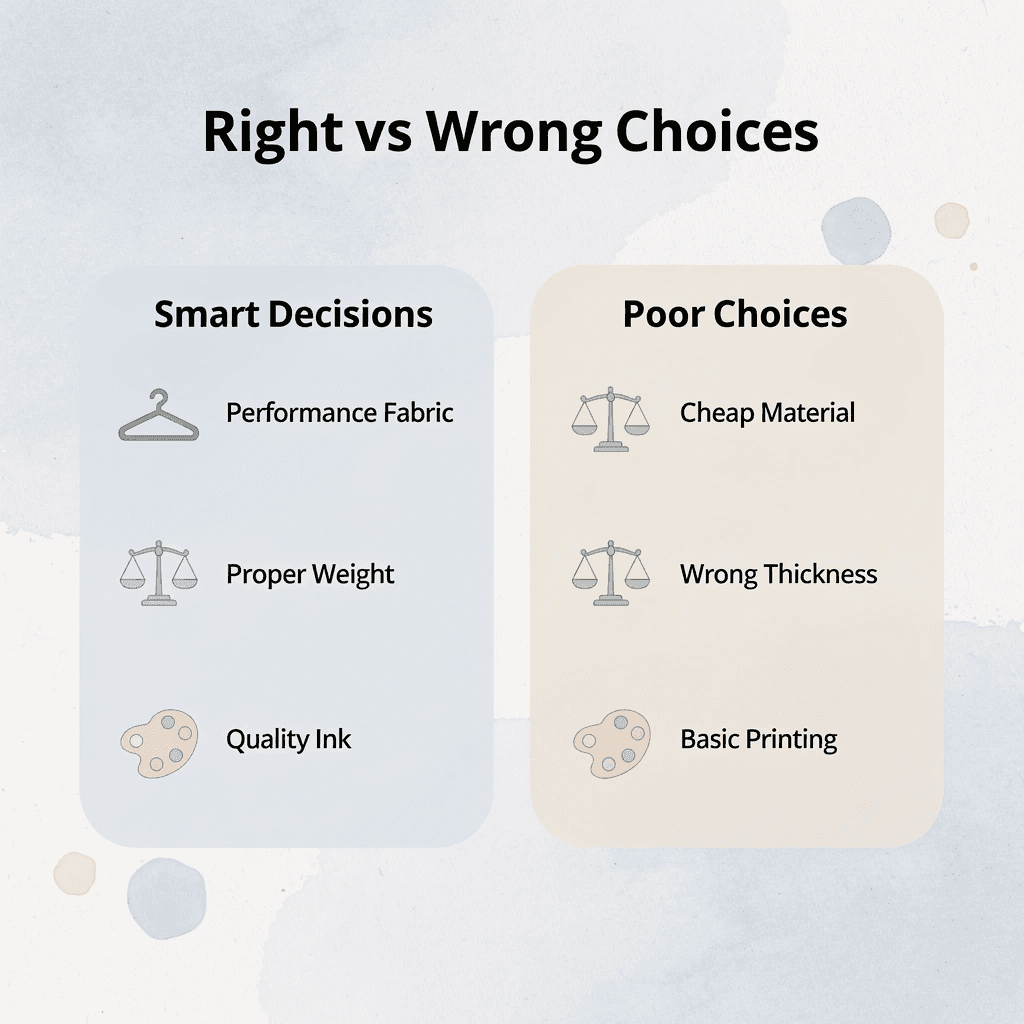
| Decision Factor | Impact on Results |
|---|---|
| Performance fabric for athletic teams | Professional durability vs amateur feel |
| Right weight selection | Year-round comfort vs seasonal limitation |
| Ink type matching | Sharp, lasting prints vs faded appearance |
What separates a successful custom apparel project from a disappointing one comes down to decisions made before printing starts. Choosing performance fabric for athletic teams, selecting the right weight for year-round wear, or matching ink type to fabric composition determines whether your finished shirts look professional or amateurish. These decisions become easier with access to product information and knowledgeable support.
💡 Tip: Visit ooShirts today, explore the available t-shirt options, and start building your order with confidence. Whether you’re creating shirts for a fundraiser, promotional event, team uniform, or product launch, you’ll find apparel choices that match your project requirements and printing services that deliver consistent, professional results.
Leave a Reply