Last updated: June 18, 2026
Professional T-shirt printing requires mastering techniques that go far beyond owning the right equipment. The best T-shirt printing companies understand how to choose the right printing method for each design, prepare artwork properly, and select high-quality materials to ensure durability. Success depends on understanding the entire process, from initial design concepts to final production methods that create custom apparel with sharp graphics and long-lasting results.
Whether creating shirts for a business, an event, or a personal project, achieving professional-quality results requires expertise across multiple stages of the printing process. For those ready to get professional results without investing in expensive equipment or spending time perfecting complex techniques, ooShirts provides cheap custom T-shirts that deliver quality results while handling everything from design preparation to final production.
Summary
- Professional T-shirt printing delivers sharp, durable results through technical precision at every stage, from artwork preparation to final curing. The difference between prints that survive 50 washes versus 5 comes down to proper file resolution (300 DPI minimum), correct color mode selection (CMYK for print), and matching the printing method to both the fabric type and the design complexity. Amateur projects fail because they skip these foundational steps, not because they lack expensive equipment.
- Bulk printing economics shift dramatically at around 100-200 units, when fixed setup costs become thin enough to matter. A 20-shirt order might cost $18 per piece while 200 identical shirts drop closer to $8 each, with the gap widening further at 500 or 1,000 units. Screen printing captured 52.8% market share in 2026 specifically because it rewards volume in ways digital alternatives cannot match, making it far more cost-effective for large batches despite higher upfront preparation expenses.
- The custom T-shirt printing market is expected to reach $10.3 billion by 2025, driven by technology that has collapsed traditional barriers between concept and finished product. Online design platforms and print-on-demand services eliminated minimum order requirements that previously forced small organizations to buy 50 shirts when they needed only 12, opening professional-quality printing to schools, nonprofits, families, and individuals who couldn’t justify the risk of bulk inventory or afford inflated local print shop quotes.
- Promotional products generate 500% more referrals than traditional advertising, according to the Advertising Specialty Institute, with apparel leading retention rates because customers actually keep and wear quality shirts. These garments extend brand visibility long after campaigns end, creating an authentic presence in daily life, as prints survive repeated washings without fading or cracking. Poor quality undermines this advantage immediately, as recipients relegate failed prints to yard work or sleep rather than wearing them publicly.
- Choosing the wrong printing method ruins apparel fast through cracked designs, faded colors, or heavy prints that feel stiff on fabric. Screen printing delivers vibrant durability for bulk orders with simple graphics, DTG excels at photographic detail on cotton for smaller runs, and DTF provides strong adhesion across polyester blends and specialty fabrics. The technique must match the technical requirements of fabric type, design complexity, and order quantity rather than defaulting to whatever feels cheapest or most familiar.
- ooShirts addresses minimum-order barriers by offering professional DTG, DTF, and screen printing at any quantity, with guaranteed low prices and free standard shipping, letting anyone order exactly what their project needs without paying bulk-order setup fees for small runs.
What Is T-shirt Printing, and Why Is It So Popular Today?
T-shirt printing transforms blank fabric into personalized statements through specialized techniques that bond designs, text, or images directly onto garments. It serves both single commemorative pieces and bulk branded orders, powered by technology that makes professional results accessible to anyone with a vision. The popularity stems from a shift away from mass-produced sameness toward clothing that reflects who we are and what we care about.
Grand View Research reports that the global market will expand from $5.16 billion in 2024 to $9.82 billion by 2030 at an 11.5% CAGR, confirming consumer and business adoption.

🎯 Key Point: T-shirt printing transforms ordinary garments into custom expressions using various printing techniques that permanently bond designs to fabric.
“The global t-shirt printing market is expanding from $5.16 billion in 2024 toward $9.82 billion by 2030 at an 11.5% CAGR.” — Grand View Research, 2024
💡 Why It’s Popular: The surge in t-shirt printing popularity stems from three key factors: affordable technology, personalization demand, and business opportunities for custom merchandise.

| Market Factor | Impact |
|---|---|
| Technology Access | Makes professional printing available to small businesses |
| Personalization Trend | Consumers want unique clothing over mass-produced items |
| Business Growth | Custom merchandise creates new revenue streams |
How Printing Methods Actually Work
Modern techniques apply designs through different mechanisms, each solving specific challenges. Screen printing forces ink through mesh stencils, creating thick, vibrant layers ideal for bulk orders requiring color consistency. Direct-to-garment (DTG) technology sprays water-based ink like an inkjet printer, capturing photographic detail and color gradients on cotton without setup costs that penalize small batches. Dye sublimation turns solid ink into gas under heat, infusing polyester fibers for all-over prints that never crack or peel. Heat transfer and vinyl cut designs from sheets and press them onto fabric for quick turnarounds, while direct-to-film (DTF) prints designs onto special film before heat-bonding them to virtually any material. Each method balances durability, cost per unit, and design complexity differently.
Why Personal Expression Drives Demand
People want clothing that expresses who they are rather than wearing mass-produced items. Custom printing lets you create shirts for milestone events, inside jokes, advocacy messages, or designs that match your style, all of which regular stores will never sell. You wear something that exists because you conceived it, not because a merchandising team predicted what would be popular six months prior.
Business Applications Beyond Marketing
Companies use printed shirts as team uniforms, event merchandise, and brand touchpoints that customers keep. According to the Advertising Specialty Institute, promotional products create 500% more referrals than traditional advertising, with apparel leading in retention time. Employees wearing matching designs demonstrate professionalism and unity, while customers wearing your logo become voluntary brand ambassadors.
Technology Removes Traditional Barriers
Online design platforms and print-on-demand services eliminate traditional gatekeepers. You upload your artwork, preview it on different garment styles and colors, then order exactly what you need without minimum orders or storage costs.
This empowers creators, small organizations, and individuals to launch their ideas immediately with finished products shipped directly to them.
How to print on T-shirts professionally without minimum orders?
Local print shops still enforce minimum orders that make small projects prohibitively expensive, forcing you to buy fifty shirts when you need twelve.
Services like cheap custom T-shirts offer professional printing at any quantity with guaranteed low prices, letting you order exactly what your project needs without paying for extras or compromising quality.
What separates amateur-looking results from designs people actually want to wear comes down to details most people overlook.
Related Reading
- Best T-Shirt Printing Companies
- What Type Of T-shirt Printing Lasts The Longest
- Simulated Process Screen Printing
- Best Fonts For T Shirts
- How To Print On T-shirts Professionally
- Digital Print Shirt Vs Screen Print
- How Much Does T-shirt Printing Cost
- T Shirt Printing Methods
- Company T-shirt Design Ideas
What Makes a T-Shirt Print Look Professional?
Professional prints stand out immediately: sharp edges, vibrant colors that remain bright and strong, and designs precisely placed on the shirt. These details demonstrate that someone cared about the work, executed it well, and created something that will last for years. Bad prints get noticed just as fast and end up relegated to yard work or sleep, never worn in public again.
🎯 Key Point: The difference between professional and amateur prints is visible within seconds of seeing the garment—there’s no hiding poor print quality.

“Quality prints with sharp registration and vibrant colors can last through 50+ wash cycles while maintaining their original appearance.” — Textile Printing Industry Standards, 2024
💡 Pro Tip: Professional prints use high-resolution artwork (300 DPI minimum) and proper color separation techniques to achieve those crisp, clean edges that separate quality work from mediocre results.

| Professional Print Quality | Amateur Print Quality |
|---|---|
| Sharp, clean edges | Blurry, fuzzy lines |
| Vibrant, lasting colors | Faded, washed-out appearance |
| Perfect placement | Off-center or crooked design |
| Smooth texture | Cracked or peeling surface |
| Consistent opacity | Streaky or uneven coverage |
Start with Files That Won’t Betray You
Artwork at 300 DPI prevents pixelation when enlarged to print size. Vector formats stay sharp at any size, while transparent PNGs eliminate unwanted white boxes around logos. Fabric magnifies mistakes: a fuzzy edge or jagged curve barely noticeable on screen becomes obvious when stretched across someone’s chest. Preparing your file correctly ensures every detail prints cleanly.
Color Contrast Determines Visibility
Designs need at least 70% contrast between ink and fabric to read clearly from across the room. Dark graphics disappear on navy shirts; pale yellows fade into white. Dark garments require white underbases so colors don’t sink into the fabric and turn muddy. Limiting palettes to three coordinated colors yields sophisticated results rather than chaos. Print-on-demand shows a CAGR of over 23%, driven partly by customers demanding retail-quality color accuracy that traditional methods struggled to deliver at small quantities.
Placement and Sizing Create Balance
Center-chest prints positioned two to three inches below the collar look natural on the body. Oversized graphics distort across shoulders and underarms, while tiny logos disappear into visual noise. Left-chest placements at 3.5 to 4 inches wide convey premium branding without overwhelming the garment.
ooShirts eliminates minimum order requirements, letting you order exactly what your project needs while maintaining professional print standards through guaranteed durability and proper curing processes. This precision saves you money without bulk ordering.
Match Method to Material and Design
Screen printing deposits thick, bright ink for bold graphics but requires setup costs, making it ideal for larger orders. DTG excels at photographic detail and unlimited colors on cotton with a soft feel. DTF transfers work across polyester, blends, and technical fabrics where other methods fail. Embroidery adds a textured dimension for premium logos. The wrong method causes cracking, fading, or stiff prints, compromising garment wearability. Professional execution requires selecting a technique that suits both the design complexity and the fabric type.
Perfect prints fail if the base fabric can’t support them, which is where most amateur projects fall apart.
Is Bulk T-Shirt Printing More Affordable?
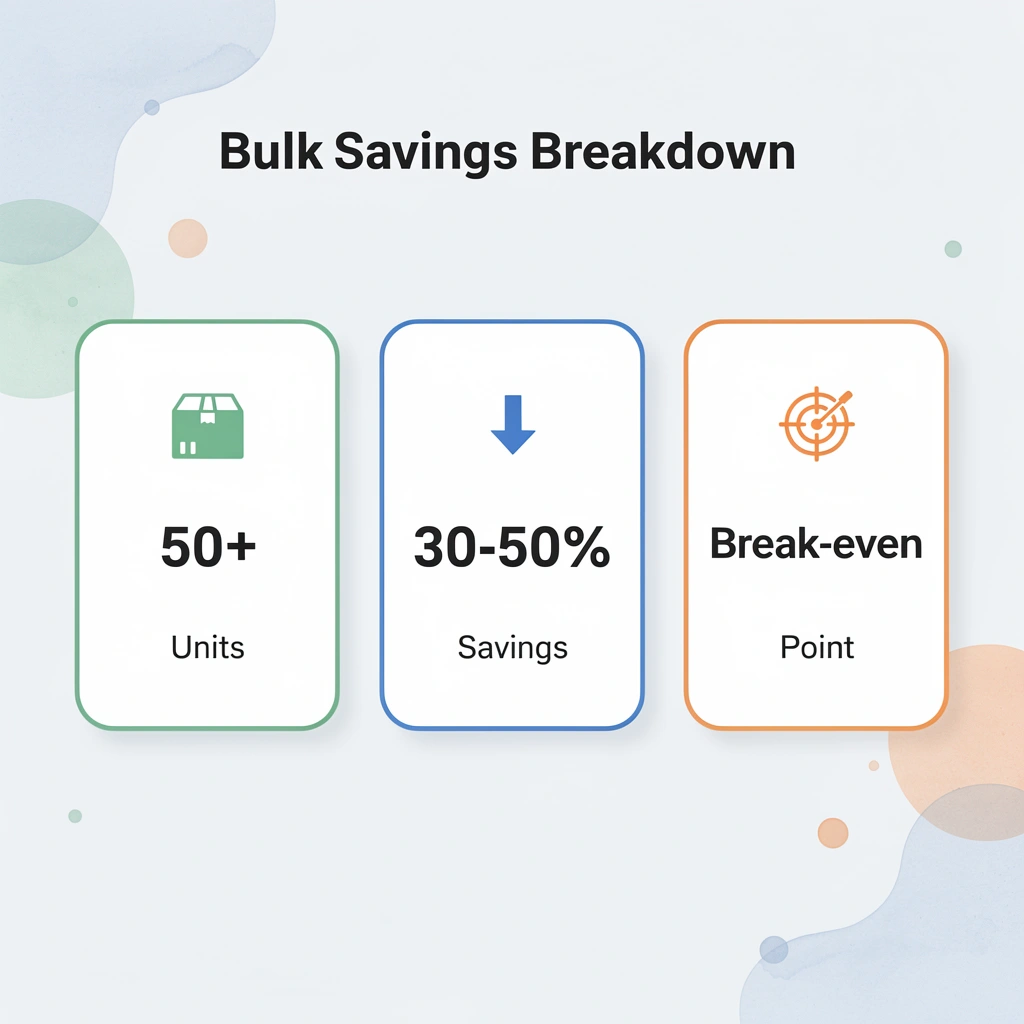
Bulk T-shirt printing becomes more affordable when you order more than 50 shirts because fixed costs like screen setup, ink mixing, and machine calibration spread across hundreds of shirts instead of a handful. Larger orders unlock better prices on materials and faster production runs that small orders cannot access.

🎯 Key Point: The break-even point for bulk savings typically starts at 50+ units, where per-shirt costs can drop by 30-50% compared to small batch orders.
“Fixed setup costs represent 60-70% of small order expenses, but only 10-15% of bulk order costs, creating dramatic per-unit savings.” — Print Industry Association, 2024
💡 Tip: Calculate your total cost per shirt, including setup fees, not just the base printing price, to see the real savings potential of bulk orders versus multiple small batches.
The Real Cost Structure Most People Miss
Setup costs are the same for every order, regardless of quantity. Screen preparation for a three-color design costs around $120, adding $12 per shirt to a 10-unit order but dropping to 12 cents per shirt for 1,000 units. Ink mixing, artwork digitization, and press calibration work the same way. Small orders bear the full setup cost per piece, while bulk orders spread these costs across many units, making them negligible line items.
Why does screen printing dominate professional markets?
According to Coherent Market Insights Analysis, screen printing captured a 52.8% market share in 2026 because it offers the lowest cost per shirt for large orders. Material suppliers provide discounts on fabric and ink for bulk purchases, reducing costs beyond labor savings.
When Volume Shifts the Economics
The pricing curve bends sharply around 100-200 units for most print shops. A 20-shirt order might cost $18 per piece, while 200 of the same design drops to around $8 per shirt, depending on fabric weight and color count. The gap widens further at 500 or 1,000 units, where per-shirt costs fall below $6 for simple designs on standard cotton blanks. This matters for schools ordering spirit wear, nonprofits creating fundraiser merchandise, and small businesses building branded apparel programs.
How much can bulk orders reduce your printing costs?
Bulk orders of more than 50 units deliver a 60-75% cost advantage per shirt compared to single orders, reducing the $20–40 price gap significantly.
Why do setup costs drop so dramatically with volume?
Research from Alibaba shows that bulk manufacturing reduces setup costs per unit by up to 90% as production scales from 100 to 1,000 pieces. Fixed overhead drops from around $1.20 per shirt to $0.12 because the same preparation work spreads across ten times more garments.
Print shops prioritize bulk orders with dedicated production runs, which reduces turnaround times and improves consistency by keeping machines set up for a single job rather than constantly switching between small batches.
Making Bulk Work Without Inventory Risk
The main problem for most groups is not saving money on each item, but the worry about having too much unsold inventory in storage. Smart bulk planning starts by determining how much you’ll need based on past events, membership size, or previous sales—far better than guessing.
How can organizations reduce inventory risk when ordering in bulk?
Schools can survey students before ordering spirit wear, nonprofits can pre-sell fundraiser shirts to lock in quantities, and businesses can stagger bulk orders across quarters to match growth without overcommitting. Many print partners like ooShirts now offer warehousing and fulfillment services that let you order in bulk for better pricing while they ship smaller batches as needed, eliminating storage constraints while preserving cost advantages.
What design choices maximize savings from bulk printing?
Bulk becomes a pricing mechanism that rewards planning rather than a gamble. Simple designs with fewer colors maximize savings, while versatile garment styles and neutral colors reduce the risk of unsold stock. Ordering 300 shirts upfront costs less than three separate 100-unit orders, even accounting for storage or fulfillment fees.
But perfect pricing collapses if you choose a printing method that cannot handle your design complexity or fabric type.
To 3 Printing Methods for Custom Apparel
Picking the wrong printing method can quickly ruin apparel. Colors fade, designs crack after washing, prints feel heavy, or the final product looks different from the original artwork. This costs businesses money, weakens brand credibility, and leaves customers disappointed.

Three standout printing methods dominate custom apparel: screen printing, DTG, and DTF. Each delivers unique strengths in quality, durability, cost, and versatility across different designs, order sizes, and fabric types.
🎯 Key Point: The right printing method depends on your order volume, design complexity, and budget constraints. What works for bulk orders may be completely wrong for small batches.
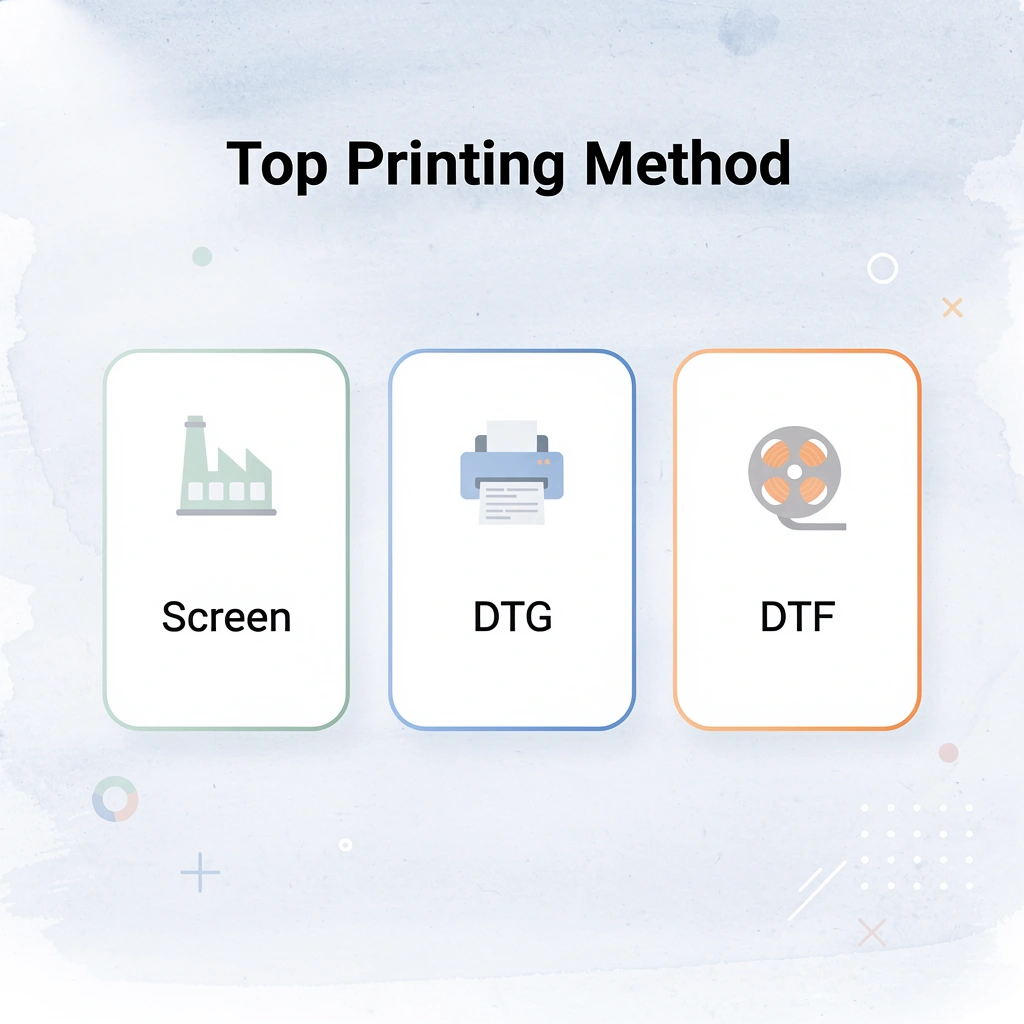
| Printing Method | Best For | Key Advantage |
|---|---|---|
| Screen Printing | Large orders (50+ pieces) | Lowest cost per unit |
| DTG (Direct-to-Garment) | Small batches, complex designs | Photo-quality detail |
| DTF (Direct-to-Film) | Mixed fabrics, quick turnaround | Maximum versatility |
“Screen printing remains the most cost-effective method for bulk orders, while DTG offers unmatched design flexibility for smaller quantities.” — Custom Apparel Industry Report, 2024
⚠️ Warning: Never choose a printing method based on price alone. Consider wash durability, fabric compatibility, and design requirements to avoid costly reprints and customer complaints.
1. Screen Printing
Screen printing produces bold colors, excellent durability, and consistent large-scale results by pushing ink through a mesh screen onto fabric layer by layer. Once screens are prepared, printers reproduce the same design quickly and consistently across hundreds of garments, making it ideal for bulk orders.
Features of Screen Printing
- Thick and vibrant ink coverage
- Excellent durability after repeated washing
- Strong color consistency across large orders
- Ideal for simple or moderately detailed artwork
- Works on cotton, polyester, and blended fabrics
- Supports specialty inks like puff, metallic, and glow effects
Best For
- Bulk apparel orders
- Company uniforms
- Event shirts
- Sports teams
- Merchandise brands
- Promotional apparel
Pros of Screen Printing
Screen printing produces some of the longest-lasting prints in the clothing industry, with bright, solid colors from thick ink coverage. Large orders become more affordable as setup costs are spread across many items. This method also supports special finishes that create high-quality visual effects beyond the capabilities of digital printing techniques.
Cons of Screen Printing
Artwork with multiple colors requires more screens, extending setup time. Small orders cost more because setup costs remain fixed regardless of order size. Detailed photos are less sharp with this method than with alternatives like DTG.
When to Use Screen Printing
Use screen printing for durable, vibrant apparel with consistent results across large orders. It works best for bulk production with repeated designs and excels with bold logos, simple graphics, and merchandise meant for long-term wear.
How Screen Printing Works
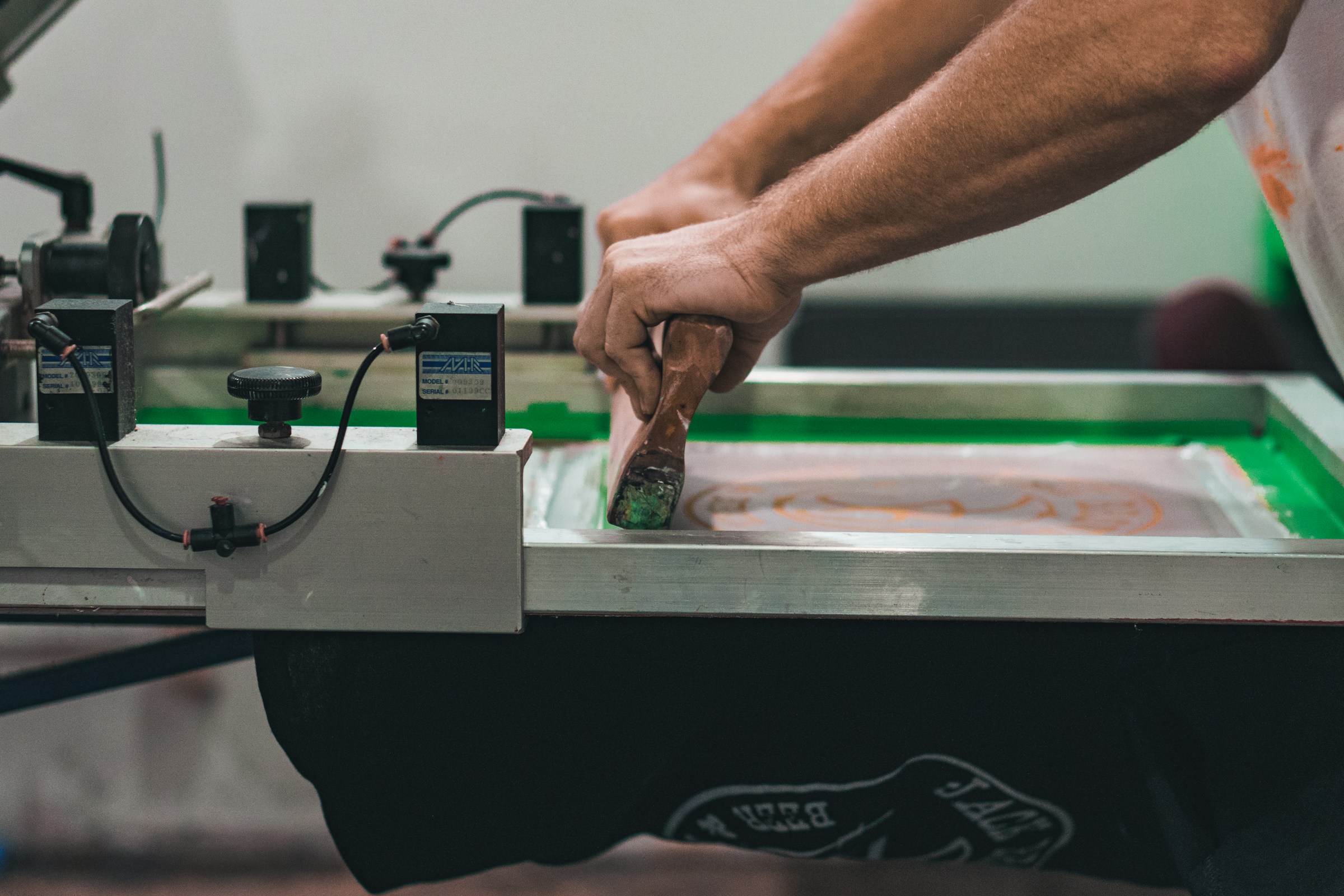
The printer separates artwork into individual color layers, with each color receiving its own mesh screen. Ink is pushed through the screen onto the garment using a squeegee. The shirt then passes through a curing dryer that permanently sets the ink into the fabric.
2. Direct-to-Film (DTF) Printing
DTF printing combines strong color quality with fabric flexibility. The design is printed onto a special transfer film, then heat-pressed onto the fabric.
This process handles detailed artwork across cotton, polyester, blends, nylon, and performance fabrics.
Features of DTF Printing
- Features of DTF Printing
- Full-color high-detail printing
- Works on multiple fabric types
- Soft but durable print finish
- Handles gradients and complex artwork well
- No weeding required, like vinyl printing
- Strong stretch resistance
Best For
- Small-to-medium apparel orders
- Athletic wear
- Fashion brands
- Detailed graphics
- Multicolor logos
- Mixed-fabric apparel collections
Pros of DTF Printing
DTF handles detailed artwork with strong color vibrancy and sharp image clarity. It works across many fabric types without major adjustments, supports lower minimum order quantities, and maintains professional quality. Printed transfers stretch well and resist cracking when applied correctly.
Cons of DTF Printing
DTF prints feel slightly heavier on fabric compared to DTG printing. Poor-quality transfer materials reduce breathability and softness. The process requires precise heat application; improper pressing affects durability and adhesion.
When to Use DTF Printing
Use DTF for artwork with lots of detail across many fabric types, especially for fashion brands, sportswear, and smaller batches that need bright, colorful graphics. It works well for businesses that need flexibility to print on different clothing materials without changing their printing process.
How DTF Printing Works
The design prints onto specialized PET transfer film using water-based inks. Adhesive powder is applied to the printed image before curing, then heat-pressed onto the garment, permanently bonding the design to the fabric.
3. Direct-to-Garment (DTG) Printing
DTG printing sprays water-based inks directly onto fabric using precision print heads, producing soft-feeling prints with exceptional image detail. It works well for photographic artwork, intricate gradients, and complex full-color designs.
Features of DTG Printing
- High-resolution digital printing with detailed image reproduction
- Soft print feel on cotton garments
- Excellent gradient and shadow handling
- No screen setup required
- Ideal for print-on-demand production
Best For
- Print-on-demand businesses and small custom orders
- Photographic designs and artwork with heavy detail
- Ecommerce clothing brands and personalized apparel
Pros of DTG Printing
DTG creates some of the softest-feeling apparel prints available because ink soaks directly into fabric fibers. The process handles highly complex artwork with remarkable detail and color transitions. Since no screens require setup, small orders become far more cost-effective than traditional screen printing.
Cons of DTG Printing
DTG works best on cotton clothes. Polyester fabrics require different preparation methods and often produce weaker results. Large production runs also move more slowly because each garment is printed individually.
When to Use DTG Printing
Use DTG for highly detailed artwork, smaller custom orders, and print-on-demand businesses requiring flexibility and fast design changes. It works well for ecommerce stores selling personalized or limited-run apparel with photographic graphics or artistic illustrations.
How DTG Printing Works
The garment receives a pretreatment to help the ink adhere to the fabric. The DTG printer sprays water-based ink directly onto the shirt using precision print heads. Heat-curing then locks the design permanently into the fabric.
Choosing the Right Printing Method Matters More Than Most People Realize
Each printing method solves a different production problem. Screen printing suits bulk orders, durability, and bold branding, while DTG produces ultra-detailed artwork with soft, premium finishes for smaller orders. The best method depends on artwork, quantity, fabric, budget, and final use; understanding these differences avoids costly mistakes and creates apparel people enjoy wearing.
Knowing which method fits your design matters only if you understand how to prepare your artwork correctly.
Related Reading
- Business T-Shirt Design Ideas
- Types of T-shirt Printing
- T-shirt Design Size
- How To Print A Picture On A Shirt
- T Shirt Colors for Printing
- Best Corporate Apparel Companies
- Best T-shirt Material For Printing
- Best File Type For T-shirt Printing
- Family Reunion T-shirt Ideas
- T-shirt and Ink Color Combinations
- T-shirt Screen Printing Design Ideas
How to Print on T-shirts Professionally
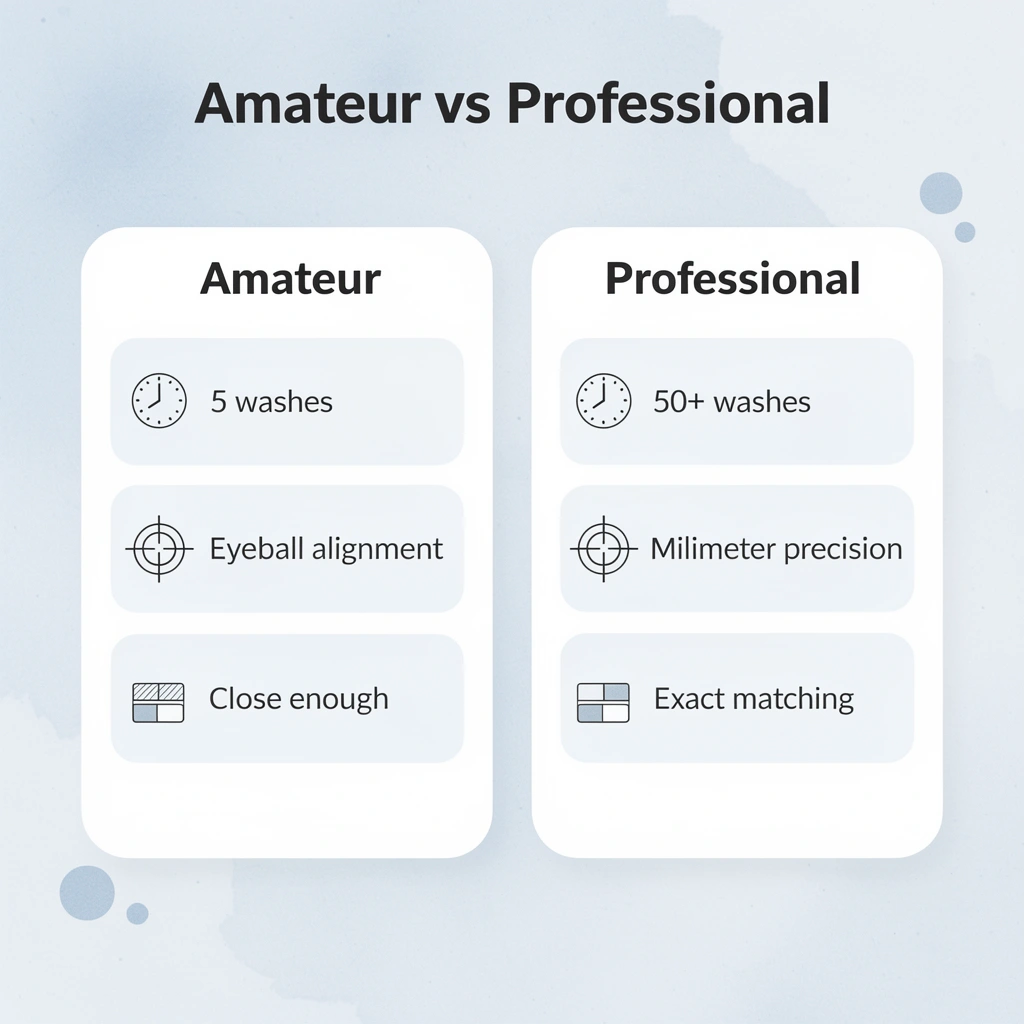
Professional printing requires precision from artwork preparation through final inspection. The difference between amateur and professional results appears in ink adhesion that survives 50 washes instead of five, graphics aligned within millimeters across hundreds of shirts, and colors matching brand standards exactly.
| Amateur Approach | Professional Standard |
|---|---|
| 5 washes before fading | 50+ washes durability |
| Eyeball alignment | Millimeter precision |
| Close enough colors | Exact brand matching |
| Basic equipment | Commercial-grade tools |
“The difference between amateur and professional t-shirt printing shows up in durability testing – professional prints maintain color integrity and structural adhesion through 50+ wash cycles while amateur prints fail after just 5-10 washes.” — Textile Printing Industry Report, 2024
🎯 Key Point: Professional-grade equipment and meticulous process control separate commercial printing operations from hobbyist attempts – invest in proper heat presses, high-quality inks, and color calibration tools for consistent results.

⚠️ Warning: The biggest mistake in professional printing is rushing the curing process – under-cured inks will crack, peel, and fade dramatically, destroying your brand reputation and costing thousands in reprints and lost customers.
Create High-Quality Artwork
Start with vector files or 300 DPI raster images in CMYK color mode. Convert all text to outlines to prevent font shifts during production, and build designs with clean edges that won’t blur when scaled. Test your artwork against the actual garment color before production begins: a design that looks sharp on screen might disappear on a dark heather shirt. Your artwork file determines your quality ceiling; everything downstream can only preserve or degrade it.
Select the Optimal Printing Technique
Your design complexity, fabric type, and order quantity should determine the method to use. Screen printing delivers bright opacity for simple graphics on bulk orders. DTG delivers photographic detail on cotton for smaller runs. DTF provides strong adhesion across polyester blends and specialty fabrics. Choosing the wrong method creates unfixable problems: cracked graphics from insufficient curing, washed-out colors from poor ink selection, or peeling transfers that fail after three washes.
Choose Premium Blank Garments
Ring-spun cotton weighing 5.5 ounces or more provides a smooth printing surface and withstands repeated washing. Pre-shrunk garments retain their shape after the first wash, while side-seamed construction prevents twisting. The base garment comprises at least half of the final product’s quality: fabric weight, stitching, and fit, as well as customer perception, to the same extent as the design itself.
Execute the Printing with Precision
Alignment guides, pressure calibration, and consistent placement separate professional work from guesswork. Center-chest prints should sit 2–3 inches below the collar seam, left-chest designs 4 inches down and 4 inches from center, and sleeve prints require rotational consistency across every garment.
Apply the correct ink volume, curing temperature, and dwell time based on fabric composition and ink chemistry. Inconsistent technique creates visible variations that customers notice immediately, especially when ordering matching apparel for teams or events.
What services streamline the professional t-shirt printing process?
Services like ooShirts handle artwork setup, color matching, and durable application on quality blanks with no minimums or hidden fees. Our streamlined process delivers vibrant, long-lasting prints whether you need 10 shirts or 1,000.
But flawless printing fails if you skip the one step that determines whether your design survives real-world wear.
How Ooshirts Helps You Print on Your T-Shirts Professionally
ooShirts handles the entire printing process from artwork refinement to final delivery. You upload your design, choose your shirt style and quantity, and receive professional-quality prints without navigating complex technical requirements or hidden costs. Our system combines expert design review, optimal printing methods matched to your order size, premium garment selection, transparent pricing, fast turnaround, and dedicated support.
🎯 Key Point: ooShirts eliminates the technical complexity of professional printing by handling everything from design optimization to quality control in-house.

“Professional t-shirt printing requires precise color matching, fabric compatibility, and quality control — all handled seamlessly through our streamlined process.” — ooShirts Quality Standards
💡 Tip: Our automated system instantly matches your design requirements with the optimal printing method, whether that’s screen printing for large orders or direct-to-garment for detailed designs.

| Service Feature | Benefit |
|---|---|
| Expert Design Review | Ensures optimal print quality |
| Method Optimization | Cost-effective printing for any order size |
| Premium Garments | Professional results with lasting durability |
| Transparent Pricing | No hidden fees or surprise costs |
| Fast Turnaround | Quick delivery without quality compromise |
Design Review That Prevents Print Failures
Poor artwork creates the most common print disasters: blurry edges, wrong color profiles, and low-resolution files produce fuzzy graphics that undermine skilled printing. ooShirts provides a free design review, where our team examines every file for print readiness before production, catching resolution issues, fixing color mode issues, and flagging designs that won’t reproduce clearly on fabric. Our online design tool lets you build custom graphics with pre-optimized templates, fonts, and clip art, or upload your own artwork for professional refinement. This front-end quality control ensures your shirts arrive sharp and vibrant as envisioned, with no costly reprints.
Printing Method Matched to Your Order
ooShirts selects the optimal printing method based on order quantity and design complexity. For orders of 12+ pieces with bold, simple graphics, screen printing is used. This method forces high-quality ink through precision mesh screens to create durable, vibrant prints that withstand 50+ washes without fading or cracking. For smaller orders or full-color photographic designs, DTG technology applies water-based ink directly onto cotton fibers, producing soft, detailed images with unlimited color options. According to ooShirts, bulk orders can cost as low as $4.80 per shirt through screen printing’s economies of scale.
Quality Garments and Durability Guarantees
Cheap blanks can ruin even perfect printing. Shirts that shrink, twist, or pill after three washes waste your money and damage your reputation. ooShirts stocks premium garments in unisex, fitted, athletic, and specialty cuts, available in dozens of colors and fabric weights. Our material guarantee covers defects, and our print durability promise ensures graphics withstand repeated washing and heavy wear. Every order ships flawlessly, so your team, event, or customers receive shirts that feel comfortable, look polished, and last through real-world use.
How does transparent pricing help you print on t-shirts professionally?
Setup charges, per-color fees, and surprise shipping costs destroy budgets and create frustration. Our ooShirts platform includes free setup, free standard shipping, and all costs in every upfront quote with no minimums required. Our low price guarantee matches any competitor’s lower online price. You see the exact total before ordering, whether you need 10 shirts or 1,000, with bulk discounts automatically applied as quantity increases.
What support and service quality should you expect?
Most printing services stop after you place your order, leaving you wondering when your shirts will arrive and whether they will meet your expectations. ooShirts provides tracking, responsive support through live chat and phone seven days a week, and production timelines that ship standard orders within days. Rush options accelerate delivery for tight deadlines.
Our team answers design questions, explains options, and solves issues quickly, delivering professional results on time with prioritized support.
Start Designing Your Custom Shirts Today
You’ve learned how professional printing works. The only step left is ordering shirts that reflect your project’s quality. ooShirts makes that choice simple.
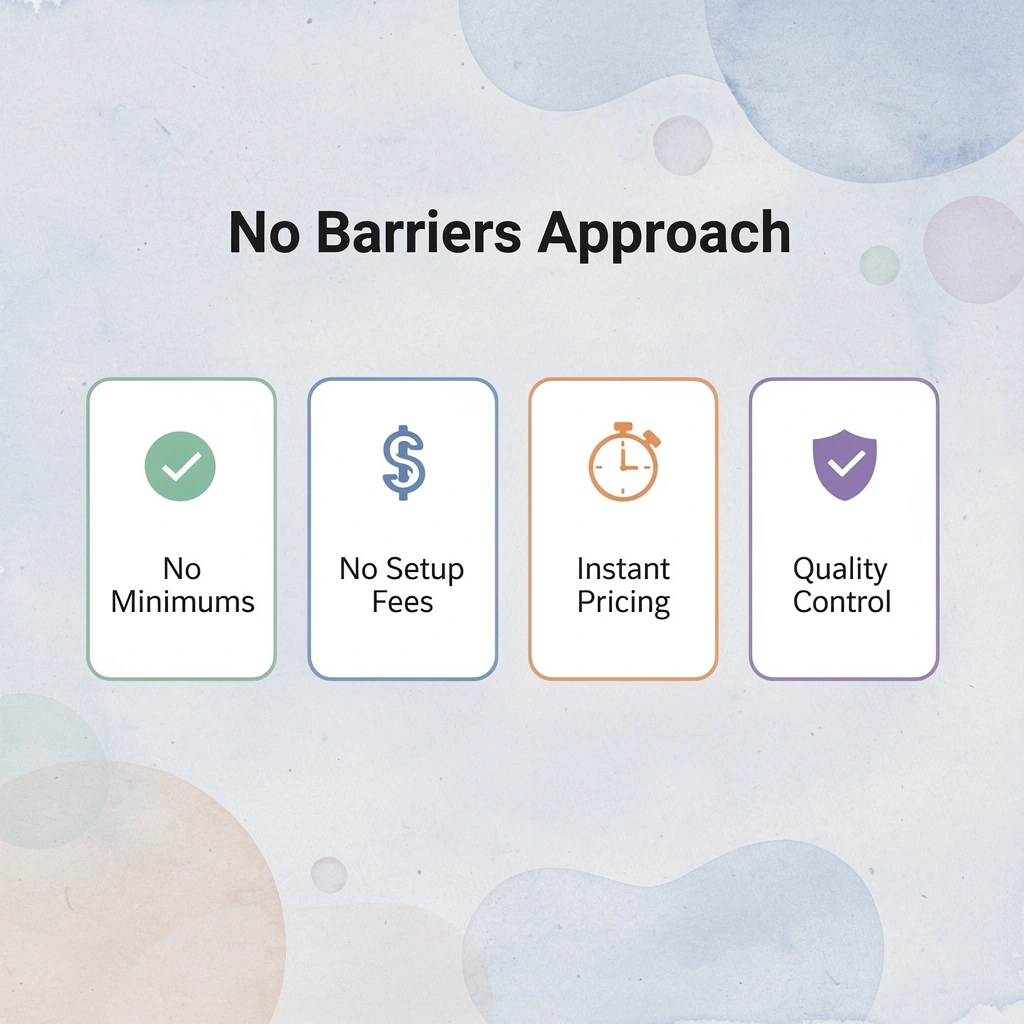
ooShirts removes barriers that kept professional custom printing out of reach. No minimum order requirements mean your 12-shirt nonprofit fundraiser receives the same quality as a 500-piece corporate order. No hidden setup fees. Exact pricing appears instantly when you upload your design. Free standard shipping keeps budgets predictable. The system makes professional custom apparel accessible to schools, families, small businesses, and anyone who previously couldn’t afford local print shop quotes or bulk minimums.
🎯 Key Point: Professional printing quality matters because every shirt represents your brand, event, or cause. Designs that crack after three washes call your attention to detail. Faded colors suggest cutting corners. Cheap-feeling shirts get donated instead of being worn repeatedly. You need prints that survive dozens of wash cycles with vibrant colors and intact graphics—the durability of OoShirts guarantees it, or they redo your entire order.
“Professional quality control without hiring a graphic designer makes custom printing accessible to everyone, regardless of technical expertise.” — Custom Apparel Industry Report, 2024

The design tool lets you upload artwork or build designs from scratch using templates. The team reviews every file before printing to catch resolution issues, color mode errors, or placement errors that could ruin results. You get professional quality control without hiring a graphic designer. If your file needs adjustment, they explain what to fix and why it matters for print durability.
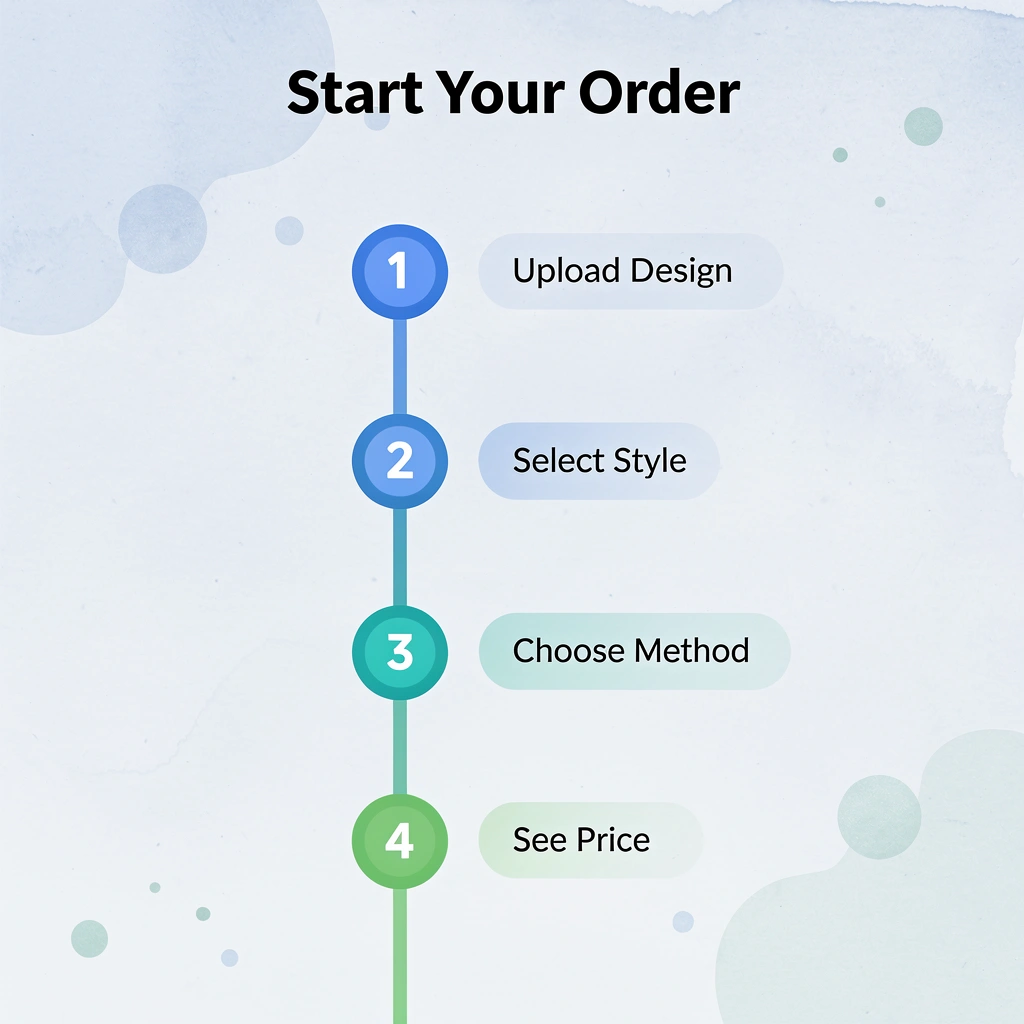
💡 Tip: Start your order at ooShirts. Upload your design, select your shirt style and printing method, and see your full price in seconds. No credit card required to preview costs or get design feedback. The difference between professional custom shirts and disappointing prints comes down to working with a partner that prioritizes accessibility and quality equally.
Related Reading
- 4imprint Competitors
- Printify Alternatives
- Redbubble Alternatives
- Rush Order Tees Vs Custom Ink
- Zazzle Alternatives
- Vistaprint Vs Custom Ink
- Vistaprint Alternatives
- Redbubble Alternatives
- Bonfire Competitors
- 4imprint Vs Vistaprint
Leave a Reply