Last updated: June 18, 2026
Whether you’re launching a startup, organizing a team event, or creating merch for your brand, finding the best T-shirt printing companies can make the difference between shirts that fade after three washes and ones people actually want to wear. You need a printing partner who understands quality fabrics, delivers sharp designs, and won’t blow your budget. The top custom t-shirt printing services each offer different strengths, from bulk screen printing to detailed digital artwork. Choosing the right company ensures you get high-quality tees that look great and last.
Quality doesn’t have to come with a premium price tag when you work with the right printing partner. Professional printing techniques can deliver durable shirts and crisp graphics at affordable rates, giving you exactly what you need to make your project stand out. Whether you need bulk orders or detailed custom designs, the key is finding a service that balances cost and craftsmanship. For reliable results that won’t break your budget, consider cheap custom T-shirts that deliver both quality and value.
Summary
- The print-on-demand market is projected to grow from $15.19 billion in 2026 to $46.43 billion by 2031, according to Mordor Intelligence. This explosion reflects how barriers to entry disappeared, making it possible for anyone with an audience and design software to build a profitable merch business without warehouses or upfront manufacturing costs. Creators now monetize attention directly through apparel, deepening fan relationships while generating scalable income.
- Personalization drives purchasing decisions more than ever before. This shift explains why digital printing methods that deliver vibrant detail without minimum orders now dominate small-batch and niche markets. Fans don’t just buy shirts anymore; they buy proof of belonging, early support, or alignment with specific communities, creating emotional connections beyond generic merchandise.
- Production method determines durability more than fabric quality alone. Screen printing survives 100+ wash cycles without fading when properly cured, while DTG prints may fade slightly faster despite feeling softer initially. DTG can produce designs with up to 16 million colors, making it ideal for photo-realistic artwork, but the water-based inks work best on 100% cotton and require careful fabric matching to prevent cracking or dullness.
- Fabric and printing method mismatches cause most quality failures. DTG on polyester yields dull or cracked prints because ink fails to penetrate the synthetic fibers, while screen printing on pure cotton for small runs wastes setup time and unnecessarily inflates costs. The Awesome Company notes that 50/50 cotton-polyester blends work well for DTG printing and excel in screen printing for bulk orders, but only when the ink type and curing process match the fiber composition.
- Sample testing prevents costly bulk-order disasters. A $25 test shirt reveals whether colors match digital mockups, whether prints feel smooth or plasticky, and whether fabric thickness matches specifications before committing to hundreds of units. Teams that skip sampling often discover quality issues only after receiving unwearable shirts with no time to reorder before critical event dates, turning preventable problems into budget-breaking emergencies.
- Creating a professional tech pack for a single garment requires 8 to 15 hours of detailed specification work before production begins, according to Innovate Apparel. That preparation time determines whether orders ship with correct colors, proper sizing, and durable prints, or arrive with mismatched expectations that force returns. Companies offering guaranteed delivery dates signal confidence in their processes, while those hiding behind estimates often lack the quality control needed to commit to specific timelines.
- Cheap custom T-shirts addresses the mismatch problem by pairing designs with appropriate printing techniques upfront, eliminating setup fees and minimum orders so teams can test quality before committing to bulk runs.
Why Are More Businesses and Creators Using T-Shirt Printing Companies in 2026?
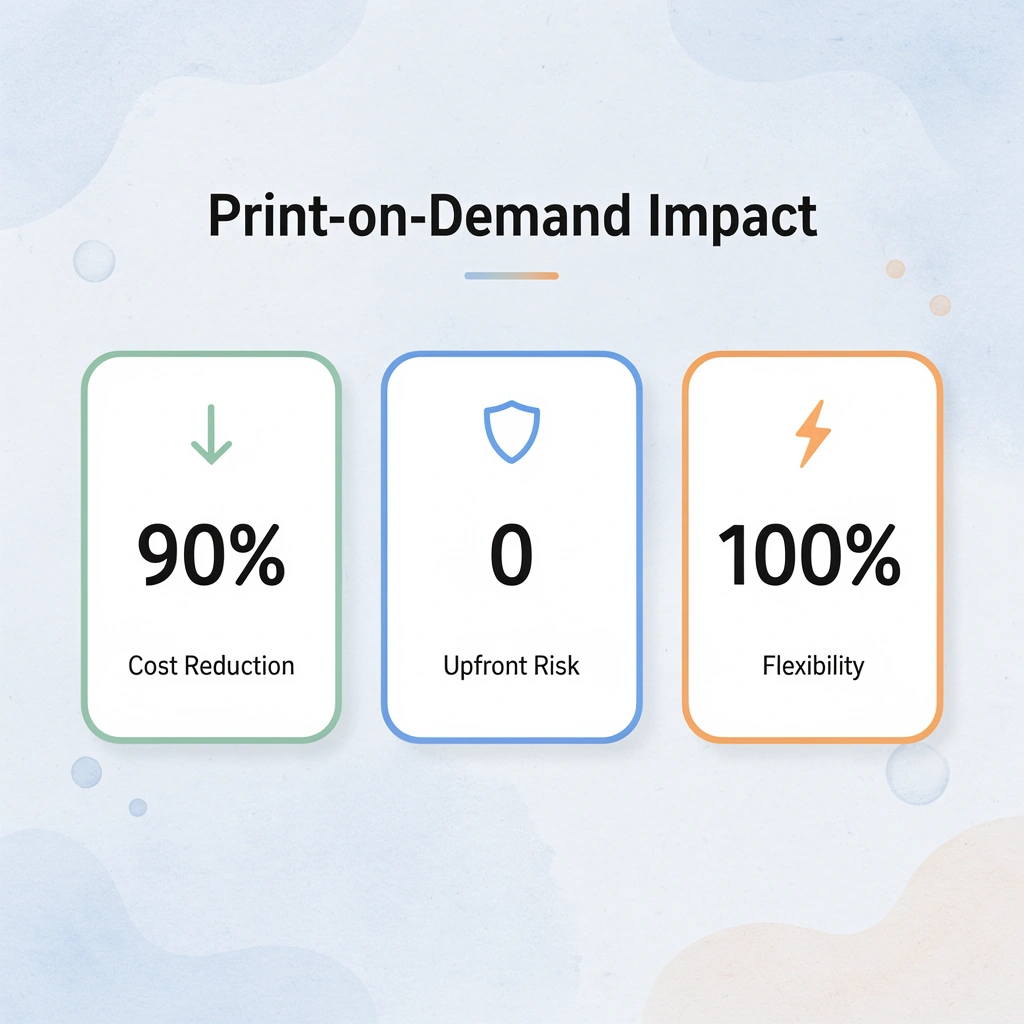
Custom t-shirt printing removes inventory risk by producing only what sells, freeing up cash flow and enabling rapid testing. Businesses can validate ideas quickly, creators can monetize their audiences immediately, and both can grow without the high costs of traditional manufacturing.
🎯 Key Point: Print-on-demand eliminates the traditional barrier of upfront inventory investment, making it accessible for businesses of any size to enter the custom apparel market.
“Print-on-demand has revolutionized how businesses approach custom merchandise, reducing startup costs by up to 90% compared to traditional manufacturing methods.” — Industry Analysis, 2026
💡 Tip: Start with 2-3 design concepts and let customer demand guide your product expansion rather than investing in large inventory upfront.
No More Inventory Nightmares
When you order 500 shirts upfront, you’re tying up capital that could fund marketing or product development. Print-on-demand eliminates that: production happens only after a customer pays. No storage fees, no unsold inventory losing value in boxes, no clearance sales to recover costs. Businesses pivot based on what sells rather than on what they predicted six months ago. Creators launch new designs weekly, reading audience response in real time and focusing on winners while retiring the misses.
Instant Brand Visibility That Lasts
Every person wearing your shirt becomes a walking endorsement reaching audiences that social media algorithms never will. Employees feel part of something bigger when wearing company apparel to the coffee shop or gym. Event attendees turn into mobile billboards long after your booth closes. This organic exposure builds trust because it’s human and unpolished, unlike sponsored posts that disappear in seconds. Teams unite around shared identity, customers signal belonging to a community, and your brand gains repeated impressions without paying for each one.
Lightning-Fast Personalization at Scale
Generic products no longer create loyalty. 70% of consumers prefer personalized products over mass-produced alternatives. Digital printing delivers that customization with vibrant detail and no minimum orders, enabling tailored corporate gifts, niche designs for specific communities, or limited drops that sell out and create urgency. Fans buy proof they were early, that they belong, that they support something specific. This emotional connection transforms one-time buyers into advocates who post photos and tag friends.
Cost Efficiency That Protects Your Margins
Professional printing eliminates the need for expensive equipment, maintenance, and labor costs. You pay for each item only when you make money from it, so every sale goes straight to profit. Small businesses can compete with big brands by accessing the same quality and fast turnaround without spending money upfront on equipment. Services like cheap custom t-shirts from ooShirts charge no setup or shipping fees, letting you allocate your budget to design and customer acquisition instead. Higher margins on direct sales fuel growth, not overhead costs.
Explosive Growth in the Creator Economy
Creators turned merchandise into a primary revenue stream because it converts attention into income without ads or sponsorships that might compromise authenticity. Influencers, artists, and niche community builders launch clothing lines that strengthen fan relationships while generating income that scales with audience growth.
Research from Mordor Intelligence shows the print-on-demand market is expected to grow from $15.19 billion in 2026 to $46.43 billion by 2031. The low barrier to entry means anyone with an audience and design software can build a profitable merch business. Fans wear the work of creators they admire, transforming passive consumption into active participation.
Why do printing methods matter when choosing the best t-shirt printing companies?
But quality and speed matter only if the printing method delivers what your design requires.
Related Reading
- How to Print on T-shirts Professionally
- What Type Of T-shirt Printing Lasts The Longest
- Simulated Process Screen Printing
- Best Fonts For T Shirts
- How To Print On T-shirts Professionally
- Digital Print Shirt Vs Screen Print
- How Much Does T-shirt Printing Cost
- T Shirt Printing Methods
- Company T-shirt Design Ideas
What Types of T-Shirt Printing Methods Do These Companies Use?
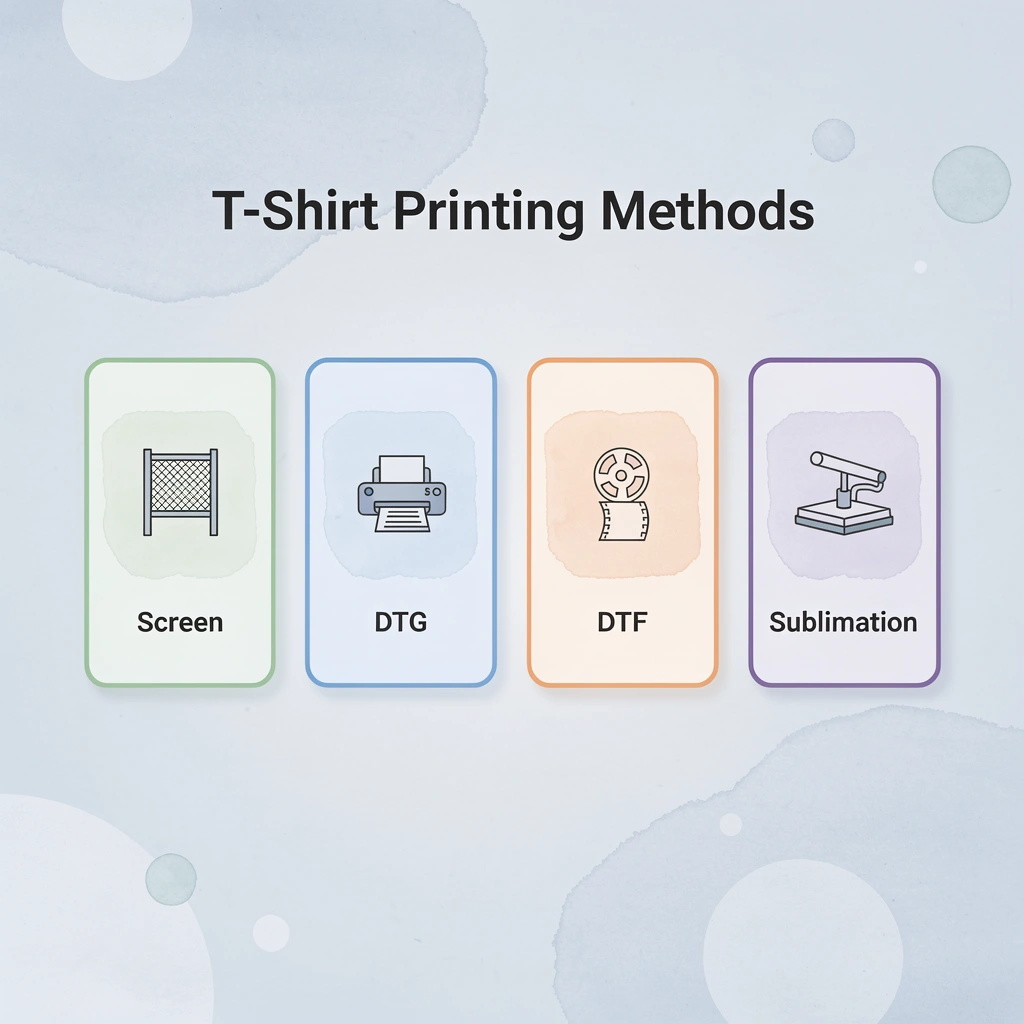
The printing method determines whether your design lasts, fades, or cracks after the first wash. Companies choose from screen printing, direct-to-garment (DTG), direct-to-film (DTF), dye sublimation, heat transfer vinyl, and embroidery. Each method produces different results based on fabric type, order size, and design complexity. Selecting the right technique prevents expensive reprints and ensures professional results.
| Printing Method | Best For | Durability | Order Size |
|---|---|---|---|
| Screen Printing | Simple designs, bulk orders | High | 50+ pieces |
| Direct-to-Garment (DTG) | Complex designs, photos | Medium | 1-50 pieces |
| Direct-to-Film (DTF) | Versatile designs | High | Any size |
| Dye Sublimation | Polyester fabrics | Very High | Any size |
| Heat Transfer Vinyl | Text, simple graphics | Medium | 1-25 pieces |
| Embroidery | Logos, premium look | Very High | Any size |
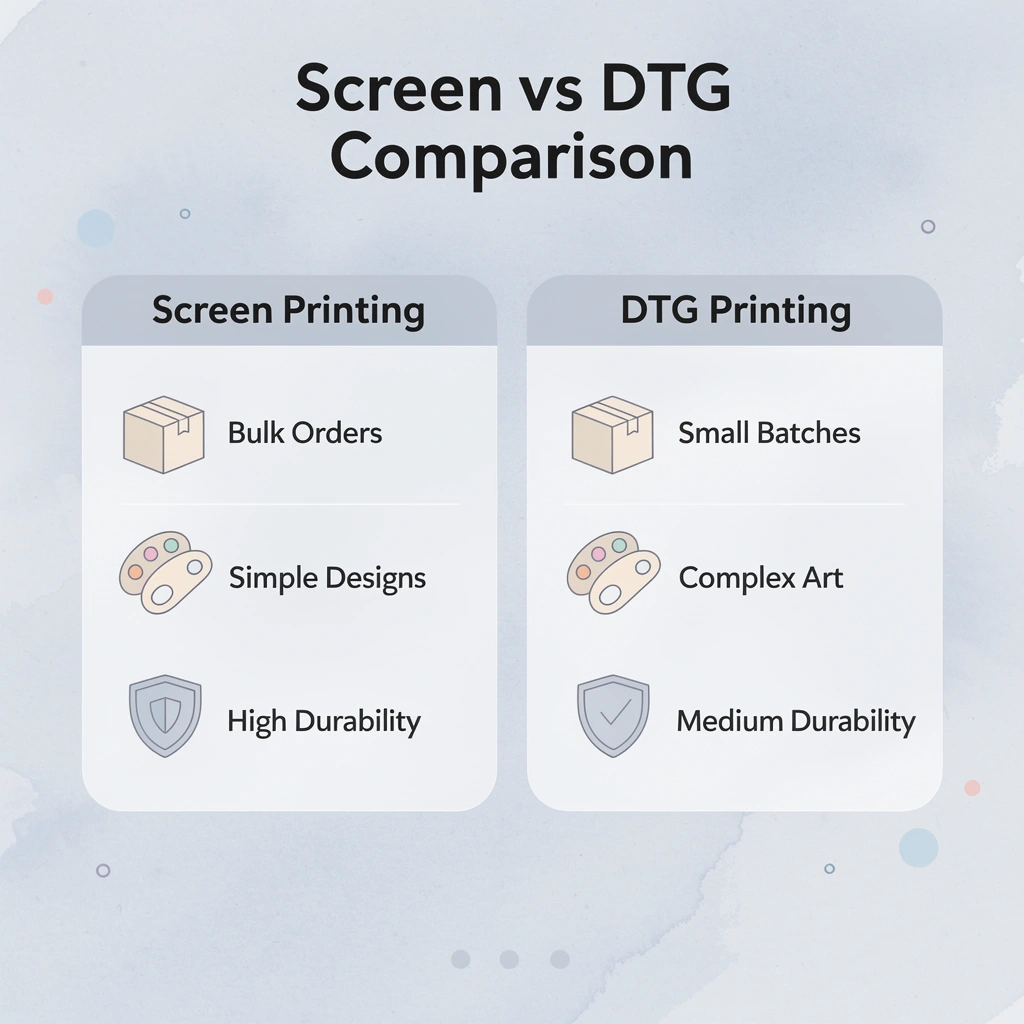
🎯 Key Point: Screen printing works best for large orders with simple designs, while DTG excels at small batches with complex artwork and multiple colors.
“The choice of printing method can make or break your custom apparel project – durability and cost-effectiveness depend entirely on matching the right technique to your specific needs.”
💡 Tip: Always request sample prints before placing large orders to ensure the printing method matches your quality expectations and design requirements.

Screen Printing Locks in Bold Colors for High-Volume Orders
Screen printing pushes ink through a mesh stencil onto fabric, then uses heat to cure it so the design bonds permanently into the material. This method works well for simple graphics with one to four colors, producing bright, crack-resistant prints that last through 100+ wash cycles without fading. Setup costs (creating screens for each color) make small runs expensive, but the per-shirt cost drops significantly at 50+ pieces. Sports teams, corporate events, and nonprofits prefer screen printing because every shirt looks identical and prints withstand heavy use, sweat, and repeated washing.
Direct-to-Garment (DTG) Printing Brings Complex Designs to Life
DTG works like an advanced inkjet printer, spraying water-based inks directly onto pretreated cotton for photo-realistic results with smooth gradients and fine details. It can produce designs with up to 16 million colors, making it ideal for artists, small brands, and print-on-demand sellers who need intricate artwork without setup fees or minimum orders. The prints feel soft because the ink soaks into the fabric rather than sitting on top, though they work best on 100% cotton and may fade slightly faster than screen-printed designs on blends.
Direct-to-Film (DTF) Printing Adapts Across Fabric Types
DTF prints the design onto special film, adds adhesive powder, and heat-presses it onto nearly any material (cotton, polyester, blends, nylon, or fleece). It delivers bright, sharp images on dark fabrics and tricky surfaces where DTG struggles, with a slightly raised finish that resists cracking through dozens of washes. Athletic wear brands and custom hoodie sellers use DTF because it handles mixed-material orders without pretreatment or fabric restrictions. Durability rivals screen printing, though the texture feels thicker on lightweight shirts.
How does dye sublimation printing work with polyester materials?
Sublimation turns solid ink into gas using heat, which permanently bonds to polyester fibers, creating edge-to-edge coverage with no texture, peeling, or fading. This produces breathable, lightweight prints ideal for sportswear, all-over patterns, and performance gear.
The catch? It only works on polyester or polymer-coated materials. Colors appear more muted on dark fabrics because the dye becomes part of the fiber rather than sitting on top. Athletes and fashion brands choose sublimation for full-bleed graphics that survive sweat, sun, and repeated washing.
What printing method costs should you consider when choosing the best T-shirt printing companies?
Most teams ordering custom shirts assume higher prices guarantee better results, but the real cost comes from using the wrong methods. Our cheap custom T-shirts match your design with the right printing technique from the start, eliminating setup fees and minimum orders so you can test quality before committing to larger quantities.
Choosing the right printing method matters only if the fabric can hold the ink.
Which T-Shirt Material Is Best for Custom Printing?
The best material depends on your printing method and intended use. 100% cotton works best for screen printing and DTG designs, offering excellent ink absorption, a soft feel, and breathability. Blends provide durability for large orders, while polyester suits sublimation and performance wear. Matching fabric to your printing technique prevents cracking, fading, and wasted orders.
| Material Type | Best Printing Method | Key Benefits | Ideal Use |
|---|---|---|---|
| 100% Cotton | Screen printing, DTG | Soft feel, breathability, excellent ink absorption | Casual wear, promotional items |
| Cotton Blends | Screen printing, heat transfer | Durability, wrinkle resistance | Large orders, workwear |
| Polyester | Sublimation, heat transfer | Moisture-wicking, color retention | Performance wear, sports teams |
🎯 Key Point: The wrong fabric choice can result in poor print quality, premature fading, and customer complaints – making material selection critical for business success.
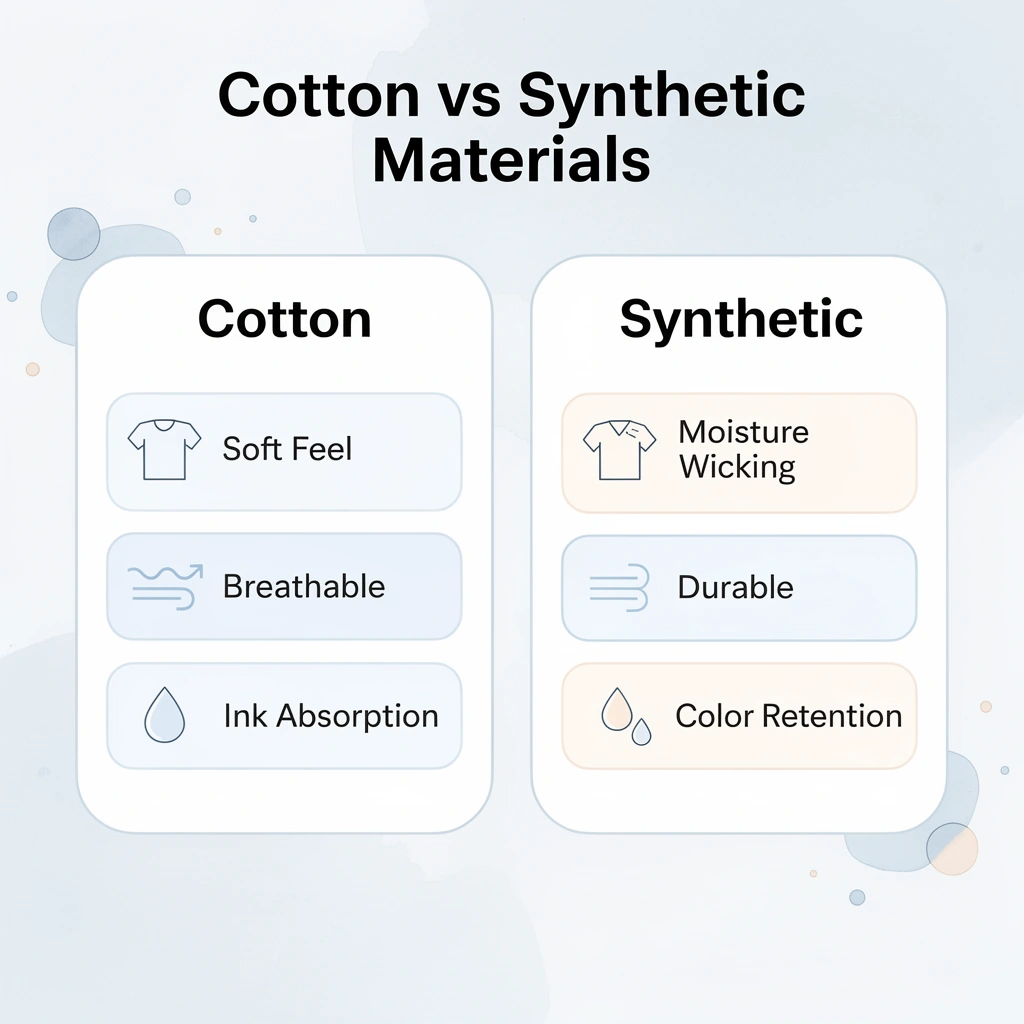
“100% cotton provides the most reliable results for traditional printing methods, with superior ink absorption compared to synthetic alternatives.” — Textile Printing Research, 2024
🔑 Takeaway: Always match your fabric choice to your printing method – this single decision determines print longevity, customer satisfaction, and your profit margins.

Cotton The DTG Standard
Ring-spun or combed 100% cotton works well for direct-to-garment printing because its natural fibers absorb pretreatment and ink deeply, creating bright, full-color prints with a soft, dyed-in texture. Heavier weights (5-6 oz) prevent bleed-through and support detailed designs without fabric twisting under pressure. Cotton eliminates the stiff, plastic feel of transfers whilst maintaining wash durability, making it ideal for photo-realistic designs and artistic custom tees. Cotton’s 49.20% market share in DTG substrates reflects its technical superiority for this inkjet process.
Cotton-Polyester Blends: The Workhorse for Screen Printing
50/50 cotton-polyester blends are ideal for screen printing bulk orders. Medium to heavyweight blends handle thick ink layers without absorbing excess ink that dulls colors, while providing shape retention and cost efficiency for team apparel or promotional runs.
Water-based or plastisol inks bond reliably to these stable fabrics, delivering long-lasting results across dozens or hundreds of shirts. The blend resists stretching during multiple passes, ensuring consistency for 50+ identical shirts for an event or fundraiser.
How do the best t-shirt printing companies avoid common fabric mistakes?
DTG on polyester produces dull or cracked prints because ink fails to penetrate synthetic fibers. Screen printing on pure cotton for small runs wastes setup time and increases costs.
Solutions like cheap custom T-shirts from ooShirts match your design with the right fabric and method from the start, eliminating trial-and-error orders and ensuring proper ink bonding, whether you need one shirt or two hundred.
How do polyester fabrics work with different printing methods?
Polyester works best with sublimation printing or DTF transfers because it doesn’t absorb water-based inks the way cotton does. DTF creates a design on film, then transfers it with heat and adhesive powder, bonding it mechanically rather than relying on fiber absorption.
This makes it perfect for performance wear, athletic apparel, or mixed orders where customers want different fabrics. The result feels slightly textured yet flexible, handling dark and light garments equally well while maintaining stretch through repeated washes.
Why do fabric and printing method mismatches cause problems?
Problems arise when you order 50 shirts only to discover the print method wasn’t suited to your fabric choice, resulting in stiff graphics or faded colors after the first wash. This mismatch occurs because most people choose material based solely on comfort, ignoring how ink, heat, and fiber structure interact.
The decision starts with understanding which companies test these combinations before your order ships, not after you’ve paid.
16 Best T-Shirt Printing Companies for Quality Tees in 2026
Quality custom tee printers solve five specific problems: prints that survive repeated washes, on-time delivery, colors that match your mockup, responsive support, and transparent pricing. The difference becomes apparent three washes in, when cheap prints crack, or your event date passes with empty boxes.
Most businesses waste weeks comparing options because quality signals hide behind marketing claims. The companies below earned their spots by addressing friction points that cause returns, missed deadlines, and brand damage.

1. ooShirts
ooShirts delivers affordable, high-quality custom t-shirt printing with no minimums, free shipping, and guaranteed delivery dates. Founded in 2007, it combines screen printing for bulk durability with digital options for full-color detail, making premium tees accessible to creators, small businesses, schools, and teams without the risk of inventory.
Key Features
- Screen printing produces bold, long-lasting designs and works best for larger orders.
- Digital (DTG) printing produces vibrant, full-color, photo-realistic artwork on small runs.
- No minimum order quantity.
- Free shipping on all standard orders with guaranteed delivery dates.
- Free setup fees and no hidden charges for screen printing.
- Expert design review included on every order.
- Wide selection of 100+ t-shirt styles, including Gildan, Bella+Canvas, athletic, youth, and premium fabrics.
- Easy online design tool with clip art, fonts, image upload, and professional refinement.
- Low price guarantee: match or beat any competitor’s quote.
- 7-day customer support via phone, email, and live chat.
Best For
Creators and small businesses testing designs, schools, nonprofits, teams, and anyone needing fast, reliable, budget-friendly custom tees without sacrificing print durability or comfort.
Pricing
Starts at $4.19 per shirt for basic styles, with bulk orders dropping significantly lower. All-inclusive pricing covers printing, setup, and free standard shipping. Instant online quotes show exact costs upfront.
Pros
Low costs protect margins and eliminate inventory waste; durable prints resist cracking and fading; fast, guaranteed turnaround prevents launch delays; free shipping and expert support reduce returns.
Cons
Screen printing works best with simpler designs and higher quantities to maximize savings.
Accessibility
Fully online design lab with mobile-friendly tools, live chat, phone support at 888-257-1918, and easy tracking. Serves customers across the US with production facilities on both coasts.
2. Designhill
Designhill is a complete custom t-shirt solution with built-in design tools and print-on-demand service that lets creators and businesses bring ideas to life without inventory risks or minimums. The platform offers a fast turnaround, worldwide shipping, and additional design services.
Key Features
- No minimum order quantity for on-demand printing.
- Supports screen printing, DTG, and embroidery.
- Wide range of styles, including V-neck, crew-neck, and performance fabrics in cotton, polyester, and blends.
- Built-in t-shirt maker with upload tools and templates.
- Access to premium brands like Gildan, Bella+Canvas, and Adidas.
- 24/7 customer support and secure payments.
- Integrated graphic design contests and professional designer services.
Pros
An all-in-one platform eliminates separate design costs; fast production reduces launch delays; high customer ratings confirm excellent print quality and comfort, addressing fading and stiffness issues.
Cons
A heavier reliance on user-uploaded designs may require additional refinement for complex artwork.
Accessibility
Fully online platform with easy web and mobile access; global shipping reaches creators everywhere.
3. Vistaprint
Vistaprint excels at reliable custom t-shirts for businesses and events through its extensive catalog and multiple decoration options, delivering consistent results for both small personal orders and larger team needs.
Key Features
- DTG, screen printing, heat transfer, and embroidery options.
- Selection of Gildan, Bella+Canvas, and organic cotton tees in many colors and fits.
- No minimums for DTG and heat transfer; screen printing starts at low quantities.
- Professional design templates and in-house designer assistance.
- Free samples available to test quality before bulk orders.
- Fast shipping with economy and rush options.
- Strong focus on branded uniforms and promotional apparel.
Pros
Proven durability addresses wash-fading complaints; wide color and size options prevent fit issues; expert support accelerates the design process.
Cons
Turnaround varies by method and volume; some techniques work best for simpler designs.
Accessibility
Intuitive online studio with live chat support and easy integration for business accounts.
4. UberPrints
UberPrints delivers fast custom t-shirts with no minimums, using state-of-the-art digital printing to ensure vibrant, detailed results on premium fabrics for creators and small businesses.
Key Features
- DTG, screen printing, heat transfer, and embroidery options.
- Selection of Gildan, Bella+Canvas, and organic cotton tees in many colors and fits.
- No minimums for DTG and heat transfer; screen printing starts at low quantities.
- Professional design templates and in-house designer assistance.
- Free samples available to test quality before bulk orders.
- Fast shipping with economy and rush options.
- Strong focus on branded uniforms and promotional apparel.
Pros
Fast turnaround eliminates shipping delays; unlimited colors solve detail loss in complex designs; soft hand-feel prevents stiffness complaints.
Cons
Higher costs for large bulk orders compared to pure screen printers.
Accessibility
User-friendly website with mobile design tools and straightforward ordering.
5. DiscountMugs
DiscountMugs combines custom t-shirt printing with promotional products, ideal for businesses seeking cohesive branding packages. The company emphasizes value pricing and bulk options while maintaining solid print quality.
Key Features
- Digital printing and screen printing methods.
- No minimum order for digital printing, with 1-2 business-day processing.
- Premium and basic t-shirt options in multiple styles and colors.
- Advanced online design studio with thousands of clip art and fonts.
- Free shipping on orders over $100.
- Quality guarantee on every shirt.
- Options for hoodies, tanks, and additional apparel.
Pros
Cost efficiency protects margins on larger orders; bundled products simplify marketing campaigns.
Cons
Slower delivery on some bulk orders; limited advanced design tools.
Accessibility
Straightforward online platform with bulk ordering tools.
6. Broken Arrow Wear
Broken Arrow Wear specializes in high-quality screen printing and fast custom apparel, with excellent customer service, and focuses on durable results for teams, events, and businesses.
Key Features
- Gildan and other cotton/blend options in numerous colors.
- Bulk pricing with free shipping thresholds.
- Easy artwork upload through the design lab.
- Matching promotional items, such as mugs and pens.
- No minimum on select styles.
- Reliable production for events and giveaways.
Pros
Exceptional durability prevents cracking and fading; quick production meets urgent needs; responsive support builds trust.
Cons
Some screen print runs require minimums.
Accessibility
Online quoting and ordering with direct customer assistance.
7. CaféPress
CaféPress serves creators and small businesses with a massive library of styles and an easy design tool. The platform handles print-on-demand fulfillment, eliminating inventory risks while delivering soft, durable shirts that resist fading and cracking.
Key Features
- Expert screen printing for bold, long-lasting designs.
- Embroidery and additional decoration options.
- Fast turnaround around 6 business days with free delivery options.
- Vast catalog and clipart resources.
- Premium and standard fabric choices.
- Strong quality control and money-back guarantee.
- Support for one-off to large volume orders.
Pros
Excellent wash durability eliminates fading complaints; soft hand-feel removes stiffness; fast small-order fulfillment reduces delays.
Cons
Shipping charges apply to smaller orders; higher per-unit costs for low volumes.
Accessibility
Intuitive online platform with easy mobile design tools and global shipping.
8. Spreadshirt
Spreadshirt empowers designers and brands through its print-on-demand platform and extensive product catalog, delivering high-quality custom tees with multiple print techniques that maintain vibrancy and comfort.
Key Features
- Digital direct printing and heat transfer methods for vibrant, embedded results.
- Wide selection of cotton, tri-blend, and Comfort Colors tees in men’s, women’s, kids’, and plus sizes.
- No minimum order quantity for most custom designs.
- Built-in design tool with photo upload and text options.
- Pre-designed graphics plus full customization.
- Multiple apparel styles, including V-necks, long sleeves, and hoodies.
- Strong focus on comfort with matte, fabric-integrated prints.
Pros
Versatile methods accommodate any design complexity; durable prints prevent cracking; quick turnaround supports urgent sales cycles.
Cons
Standard orders require 1–2 weeks and are best suited for mid-volume campaigns.
Accessibility
User-friendly website with creator marketplace and business tools.
9. Custom Ink
Custom Ink leads the industry with premium custom apparel for groups, events, and businesses. Expert-reviewed designs and all-inclusive pricing deliver consistent, professional results that build brand loyalty.
Key Features
- Digital direct, direct-to-film, screen printing, and embroidery options.
- Premium organic cotton, polyester blends, and performance fabrics.
- No minimums on most items with fast US production.
- Advanced online design tool supporting uploads and community designs.
- Full-bleed and multi-location printing capabilities.
- Options for hoodies, tanks, and accessories to expand lines.
- 90-day satisfaction guarantee with easy returns.
Pros
Artist approval ensures vibrant, long-lasting prints that reduce returns; fast delivery options address timing concerns; premium fabrics eliminate complaints about a cheap feel.
Cons
Higher costs for complex multi-color designs; minimums apply to some screen print runs.
Accessibility
Easy online studio with phone and chat support.
10. DesignAShirt
DesignAShirt provides reliable custom printing with strong quality control and flexible options for creators and teams, offering clear production timelines and premium techniques.
Key Features
- Screen printing, DTG, embroidery, and heat transfer options.
- Extensive selection of Bella+Canvas, Gildan, and tri-blend fabrics.
- No minimums on select styles; bulk discounts available.
- Professional design lab with artist review on every order.
- Free shipping on many orders and rush options.
- Thousands of templates and clip art resources.
- Live customer support and group ordering tools.
Pros
Reliable quality and timelines eliminate surprise delays and defects; durable prints resist cracking and fading; supportive service builds confidence for repeat orders.
Cons
Premium options cost more; certain methods require minimums.
Accessibility
Easy online studio with phone and chat support for businesses.
11. DesignAShirt
DesignAShirt provides reliable custom printing with strong quality control and flexible options for creators and teams. The platform offers clear production timelines and premium techniques that deliver shirts customers keep wearing long-term.
Key Features
- Screen printing and DTG (FlexPrint) for detailed, durable results.
- Premium tees, including their signature DAS Value line in various fits.
- Low minimums starting at 6 for screen printing.
- Online design studio with precise quoting.
- Options for full-color and multi-location prints.
- Fast turnaround with exact delivery dates provided upfront.
- Strong focus on promotional and group apparel.
Pros
Reliable quality and timelines eliminate surprise delays and defects; durable prints resist cracking and fading; supportive service builds confidence for repeat orders.
Cons
Prices lean higher for premium options; certain methods require minimums.
Accessibility
Straightforward website with direct customer support.
12. Spring (formerly Teespring)
Spring helps creators monetize designs through its direct print-on-demand service and marketplace tools. The platform focuses on high-quality production with no inventory burden, letting you test and scale merch lines profitably.
Key Features
- Advanced DTG and other digital printing for full-color designs.
- Wide range of premium blanks, including soft cotton and performance tees.
- No minimum orders with free shipping options.
- Easy design tools and mockup generator.
- Built-in sales platform for creators to sell directly.
- Fast production and fulfillment.
- Support for campaigns and social selling integration.
Pros
Quick turnaround and high-quality prints eliminate fading and delays; no upfront costs protect cash flow; sales tools turn designs into revenue without extra work.
Cons
Marketplace competition requires strong promotion; best suited for creative-driven campaigns.
13. Printful
Printful powers creators and businesses with premium print-on-demand fulfillment that eliminates inventory risks while delivering consistent, high-quality custom tees. The platform integrates seamlessly with major e-commerce stores and offers fast production, getting shirts to customers quickly and addressing delays and quality inconsistencies.
Key Features
- DTG printing for vibrant, soft full-color designs.
- Wide selection of Bella+Canvas, Gildan, and premium organic cotton tees.
- No minimum order quantities.
- Free design maker with a realistic mockup generator.
- Worldwide shipping and bulk order discounts.
- Embroidery and additional decoration options.
- Detailed product catalog with fabric and print previews.
Pros
Reliable DTG quality prevents fading and cracking; fast turnaround supports urgent launches; premium fabrics deliver a soft, comfortable feel that customers love.
Cons
Shipping costs vary by destination; production times depend on location and demand.
Accessibility
Intuitive dashboard with e-commerce integrations, mobile-friendly tools, and global fulfillment centers.
14. Printify
Printify connects you to a network of high-quality print providers through its easy-to-use platform, giving creators and entrepreneurs flexible options for custom tees without upfront investment. The service handles printing and shipping, so you focus on design and sales.
Key Features
- Multiple printing methods, including DTG and DTF, across providers.
- Over 1,300 products with various t-shirt styles and fabrics.
- No minimum orders or inventory requirements.
- Free design tool with mockup generator.
- Direct integration with Etsy, Shopify, Amazon, and more.
- Provider comparison for the best price and speed.
- Sample ordering to test quality.
Pros
Choice of providers ensures optimal quality and speed for every design; addresses stiffness and fading with premium blanks; zero upfront costs protect cash flow.
Cons
Quality varies slightly by chosen provider; requires comparing options for best results.
Accessibility
Web-based platform with strong app integrations and straightforward ordering.
15. Kite
Kite offers advanced print-on-demand solutions, focusing on high-grade photo printing and easy-to-use customization tools. The platform supports global fulfillment for businesses and creators seeking professional custom tees delivered quickly.
Key Features
- High-quality digital printing for detailed photo and graphic designs.
- Drag-and-drop design software with advanced editing.
- No minimum order limits.
- Wide range of apparel, including premium t-shirts and performance fabrics.
- Worldwide shipping and fast production.
- White-label options for branding.
- Extensive product catalog beyond apparel.
Pros
Precise photo printing captures intricate details without loss; durable results reduce returns from poor wash performance; flexible platform speeds up testing and launches.
Cons
Newer platforms may have fewer user reviews in some regions; best for digital-heavy designs.
Accessibility
Modern web interface with easy upload and ordering tools.
16. PrintAura
PrintAura specializes in on-demand DTG printing and dropshipping fulfillment, allowing designers to focus on creativity while the company handles production and shipping. The platform delivers full-color prints on quality garments with reliable service.
Key Features
- Direct-to-Garment (DTG) printing in full color with large print areas.
- No minimums or setup fees.
- Wide selection of t-shirts, hoodies, and accessories.
- Easy integration with Shopify, Etsy, and other platforms.
- Fast printing and direct-to-customer shipping.
- Affordable pricing structure.
- Branded packaging and fulfillment under your label.
Pros
Consistent DTG quality ensures vibrant, soft prints that last; the dropshipping model eliminates inventory headaches and delays; supports scalable growth without tying up cash in stock.
Cons
Primarily DTG-focused, which suits most designs but may require specific artwork prep.
Accessibility
User-friendly dashboard with e-commerce sync and direct support.
But choosing based on speed and price alone misses the quality signals that determine whether shirts survive their first wash or end up in donation bins.
Related Reading
- Business T-Shirt Design Ideas
- Types of T-shirt Printing
- T-shirt Design Size
- How To Print A Picture On A Shirt
- T Shirt Colors for Printing
- Best Corporate Apparel Companies
- Best T-shirt Material For Printing
- Best File Type For T-shirt Printing
- Family Reunion T-shirt Ideas
- T-shirt and Ink Color Combinations
- T-shirt Screen Printing Design Ideas
How to Choose the Right T-Shirt Printing Company for Your Quality Tees
Choosing the right printer means avoiding common problems: inks that fade after three washes, missed event deadlines, and hidden fees at checkout. The goal is to find a reliable partner with a proven system that works consistently every time you order.

🎯 Key Point: A quality printing partner should deliver consistent results, transparent pricing, and reliable timelines to protect your brand reputation and customer satisfaction.
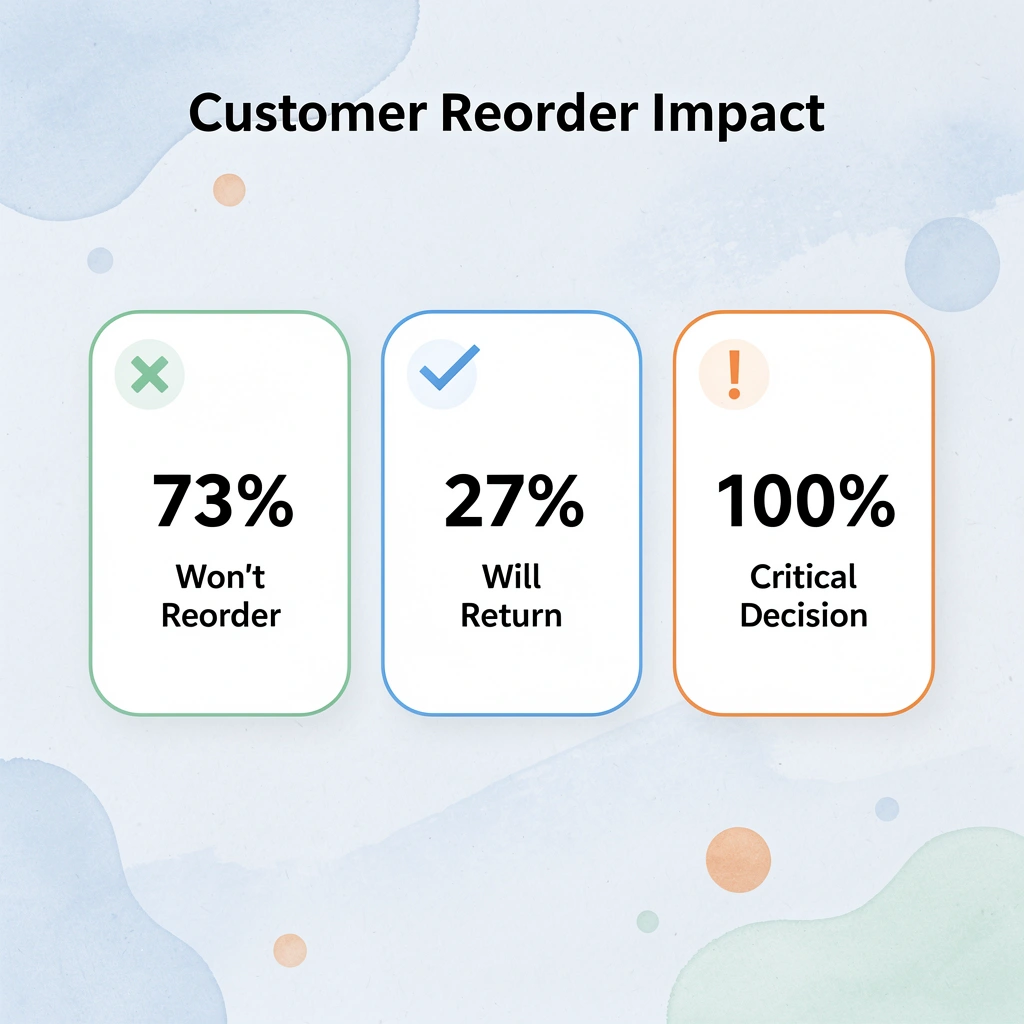
“73% of customers won’t reorder from brands that deliver poor-quality printed products, making printer selection a critical business decision.” — Print Industry Association, 2024
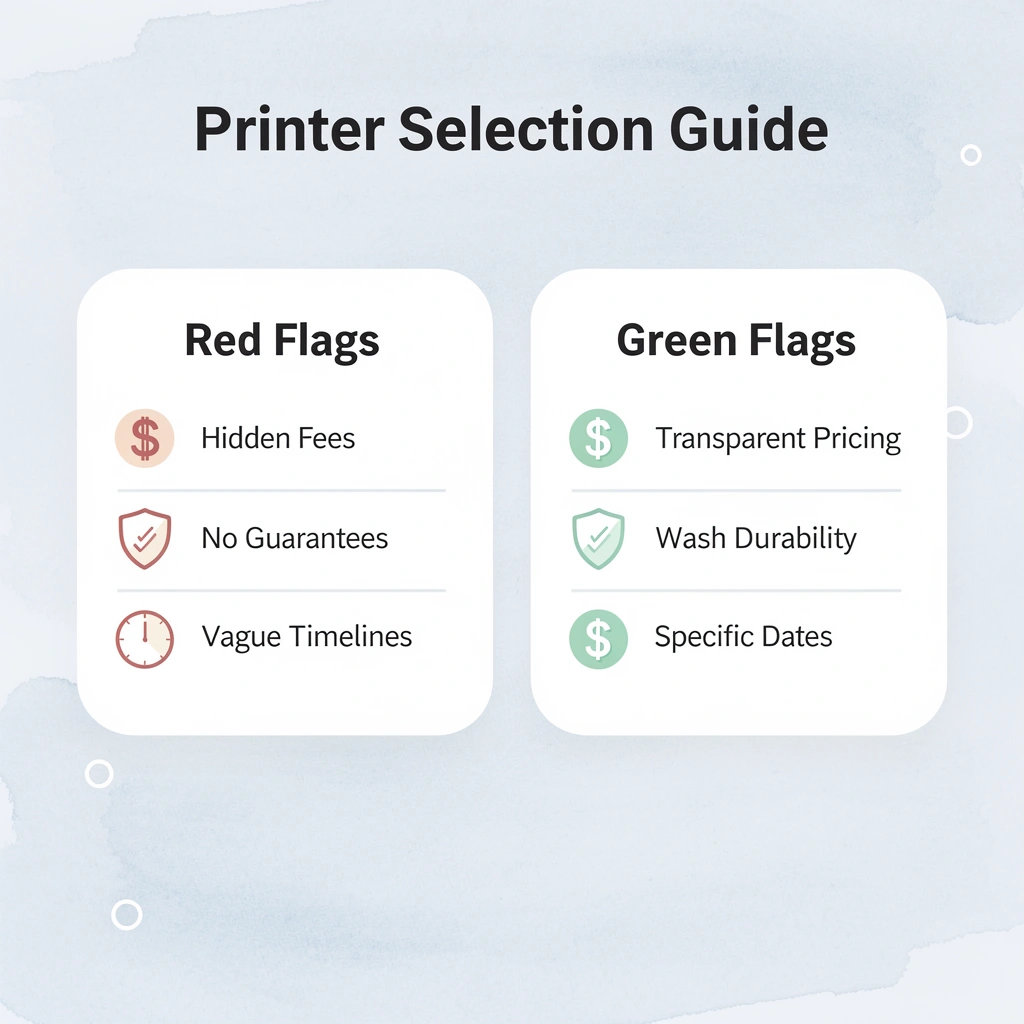
| Red Flags to Avoid | Green Flags to Seek |
|---|---|
| Hidden fees at checkout | Transparent pricing upfront |
| No wash guarantees | Wash durability promises |
| Vague timelines | Specific delivery dates |
| Limited communication | Proactive order updates |
⚠️ Warning: Never choose a printer based on price alone – cheap printing often leads to expensive reprints, angry customers, and damaged brand reputation.
Test Print Samples Before Committing to Large Orders
Order single samples from any printer you’re considering. The shirt that arrives reveals what their sales page won’t: whether the colors match your digital mockup, the prints feel smooth or plasticky, and the fabric thickness meets your needs. A $25 sample prevents a $2,500 mistake when their “premium cotton” feels like sandpaper or reds print orange. Teams that skip sampling often discover quality issues only after receiving hundreds of unwearable shirts with no time to reorder before their event.
Verify Real Customer Reviews Beyond Star Ratings
Star ratings hide the patterns that matter. Read three-star reviews first because they reveal specific breaking points: “Great quality but missed our deadline by a week,” or “Colors looked perfect, but shirts shrank two sizes.” Look for repeated complaints across multiple reviews about the same issue. Screen printing remains the most cost-effective method for orders of 50 units or more, but only if the printer delivers on time. One creator discovered that smaller operations sometimes outperform big-name services through direct quality control, noting that print consistency “swings a lot depending on which fulfillment partner is used.”
Confirm Production Capacity Matches Your Timeline
Ask directly whether they can handle your quantity within your deadline before uploading designs. Printers often accept orders they cannot fulfill on time, hoping to squeeze you in later. Request a guaranteed delivery date in writing, not an estimate. Solutions like cheap custom T-shirts eliminate this uncertainty: our guaranteed delivery dates come with every quote, whether you need 10 shirts in a week or 500 for next month’s conference.
Evaluate Their Design Support and File Requirements
Complicated file requirements and no design help lead to costly mistakes. The best printers review your artwork before production, catching resolution issues, color profile mismatches, or placement problems that would ruin the final product. Look for companies that offer live support across multiple channels, not just ticket systems with 48-hour response times. Accessible experts who prevent errors are far more valuable than charging rush fees to fix mistakes after printing begins.
But perfect quality and flawless service mean nothing if you can’t start your order when inspiration strikes.
Related Reading
- 4imprint Competitors
- Printify Alternatives
- Redbubble Alternatives
- Rush Order Tees Vs Custom Ink
- Zazzle Alternatives
- Vistaprint Vs Custom Ink
- Vistaprint Alternatives
- Redbubble Alternatives
- Bonfire Competitors
- 4imprint Vs Vistaprint
Start Designing Your Custom Shirts Today
When inspiration strikes, you need a printing partner that removes every barrier between your idea and the finished product: transparent pricing, instant production timelines, and quality guarantees that protect your investment.

🎯 Key Point: Most businesses choose printers based on price or availability, then discover the real cost—missed deadlines, colors that don’t match the design file, or vanished customer service. The familiar approach feels safe until you’re three days from your event, holding shirts with cracked ink and no time to reorder.
“Over 1,000,000 customers have printed more than 10 million shirts since 2007 because the process actually works.” — OOShirts Customer Data, 2024
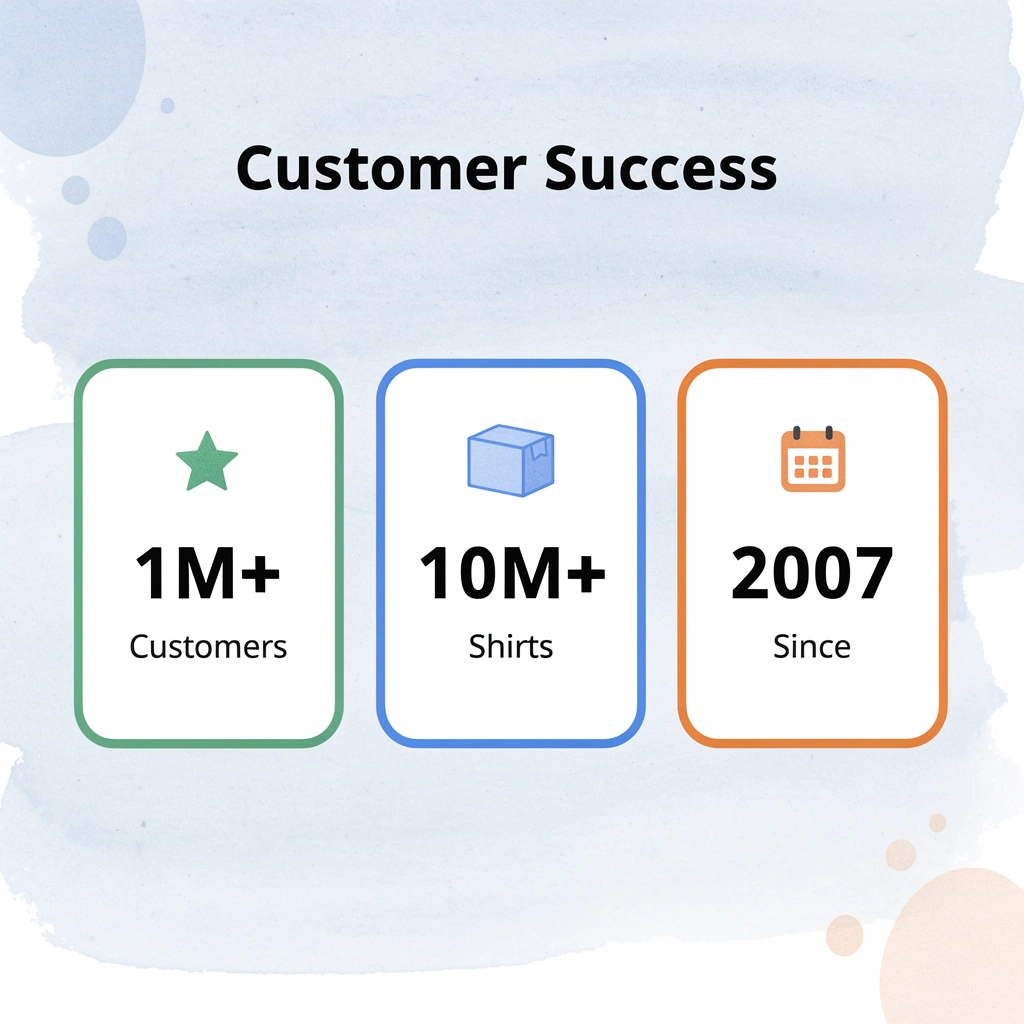
That’s why organizations keep returning to cheap custom T-shirts. Our no minimum orders eliminate dead inventory risk. Our free standard shipping, free setup, and guaranteed delivery dates transform budgeting into certainty. Our expert design review catches file issues before printing, and our print durability guarantee means cracked, peeled, or faded ink gets reprinted at no cost.
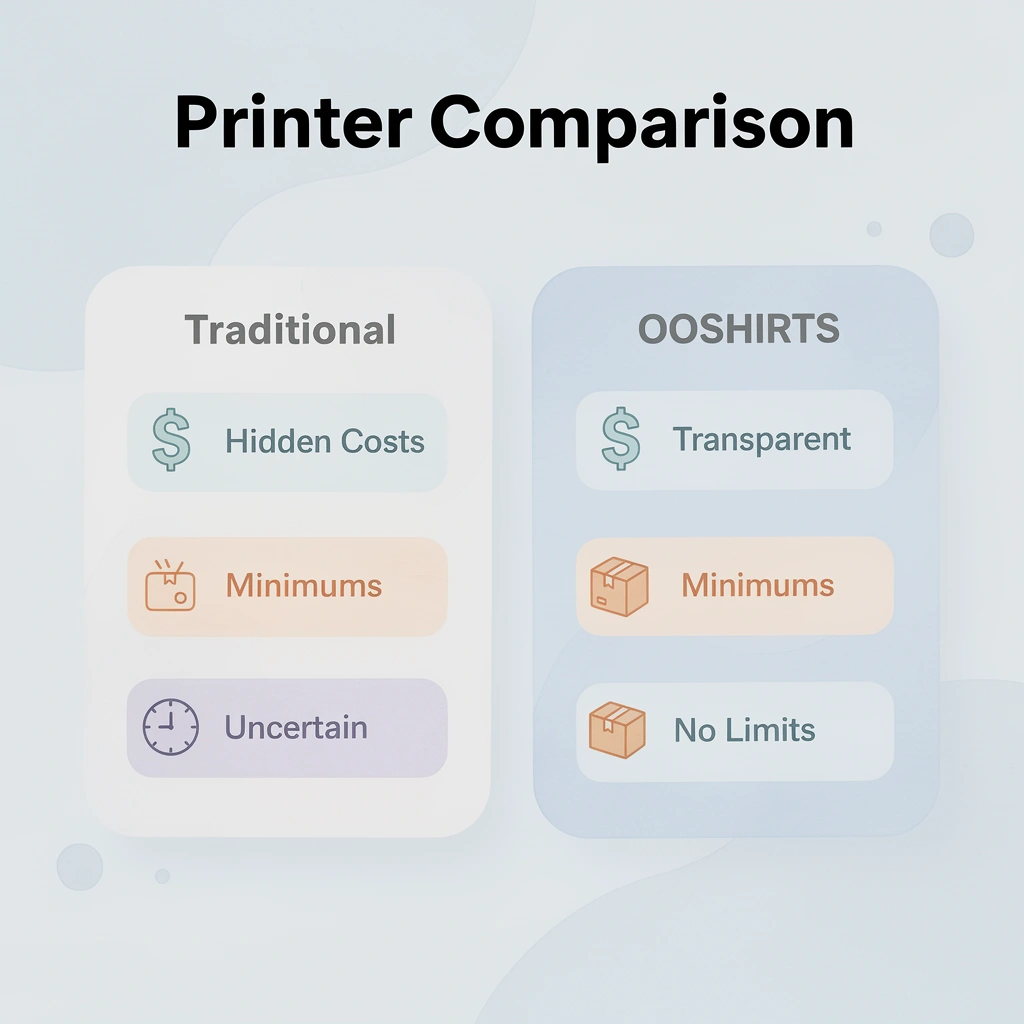
| Traditional Printers | OOShirts Advantage |
|---|---|
| Hidden fees and setup costs | Free setup and transparent pricing |
| Minimum order requirements | No minimums – order what you need |
| Uncertain delivery dates | Guaranteed delivery timelines |
| No quality protection | Print durability guarantee |
💡 Tip: Stop settling for companies that treat quality, service, and affordability as competing priorities. Start your design now and join the creators, schools, and businesses who’ve discovered that custom printing doesn’t require compromise.
Leave a Reply