Last updated: August 9, 2026
Custom shirt printing involves multiple techniques, each suited to different projects, budgets, and order sizes. Screen printing excels for large quantities with simple designs, while direct-to-garment printing handles complex artwork and small batches. Heat transfer and vinyl methods offer durability for specialty applications, making the selection of technique crucial to achieving the desired results.
Understanding these printing methods helps match the right approach to specific needs, whether creating band merchandise, startup uniforms, or promotional materials. Different techniques work better with various fabric types, design complexities, and quantity requirements. For projects requiring professional quality without premium pricing, ooShirts provides cheap custom T-shirts with access to multiple printing methods under one platform.
Summary
- Screen printing costs as low as $2-5 per shirt for bulk orders of 100+ units, making it unbeatable at scale, but the method requires upfront investment in screens, which makes small orders financially impractical. Digital methods like DTF eliminate setup fees entirely, keeping first-shirt costs identical to fiftieth-shirt costs, which changes the economics completely for orders under 50 pieces. The break-even point typically occurs around 50 units, where screen printing’s per-unit savings finally offset setup expenses.
- The printing method fundamentally determines the design’s lifespan through bonding mechanisms that either integrate ink into fabric fibers or leave it vulnerable on the surface. Properly executed screen printing withstands 50 to 100+ wash cycles because thick plastisol or water-based inks cure deeply into fabric, creating bonds that flex without breaking. DTG prints last for the first 30 to 50 washes when correctly pre-treated and cured, but a thinner ink application makes designs more susceptible to fading than thicker applications.
- The custom t-shirt printing market reached $5.16 billion in 2024, according to Grand View Research, yet many customers still face confusing quotes loaded with hidden charges for setup, shipping, or rush processing. All-inclusive pricing that shows exact costs upfront eliminates budget anxiety and lets buyers compare actual expenses rather than decoding fine print. Transparent pricing matters more as the market grows because trust separates partners who deliver from vendors who disappoint.
- Cotton accounts for 60% of the global t-shirt market, partly because it pairs seamlessly with cost-efficient, scalable screen printing, according to Alibaba industry data. Polyester rejects water-based inks but accepts dye sublimation’s heat-activated dyes that bond at the molecular level, creating permanent, vibrant prints that never crack. Fabric compatibility prevents waste and disappointment because mismatched technique-and-material combinations produce stiff prints or weak adhesion that fails prematurely.
- Design complexity quickly eliminates printing options: simple graphics with one to three solid colors favor screen printing or vinyl, while gradients, photorealistic images, or designs with more than five colors require DTG or DTF’s inkjet precision. Each color in screen printing incurs a separate setup cost, so a four-color logo requires four screens and additional preparation time. Matching method to artwork prevents paying for capabilities you don’t need or compromising designs to fit budget constraints.
- Most traditional print shops enforce minimum order requirements of 24, 50, or even 100 units because their cost structures depend on volume to remain profitable. But cheap custom T-shirts remove quantity barriers entirely by offering multiple printing methods without minimums, so customers order exactly what their projects require.
What is T-shirt printing, and Why Does Choosing the Right T Shirt Printing Method Matter?
T-shirt printing transfers designs, logos, or artwork onto fabric using specialized techniques that bond ink or materials to the garment surface. Your chosen method determines how the design looks, how long it lasts, and the production cost. Picking the right technique for your project is what separates professional results from disappointing ones.
🎯 Key Point: The printing method you choose directly impacts three critical factors: visual quality, durability, and cost-effectiveness.
💡 Example: Screen printing works best for large orders with simple designs, while direct-to-garment (DTG) excels at complex, full-color artwork in small batches.
“The global custom t-shirt printing market is expected to reach $10.73 billion by 2025, driven by demand for personalized apparel.” — Grand View Research, 2023
| Printing Method | Best For | Typical Cost |
|---|---|---|
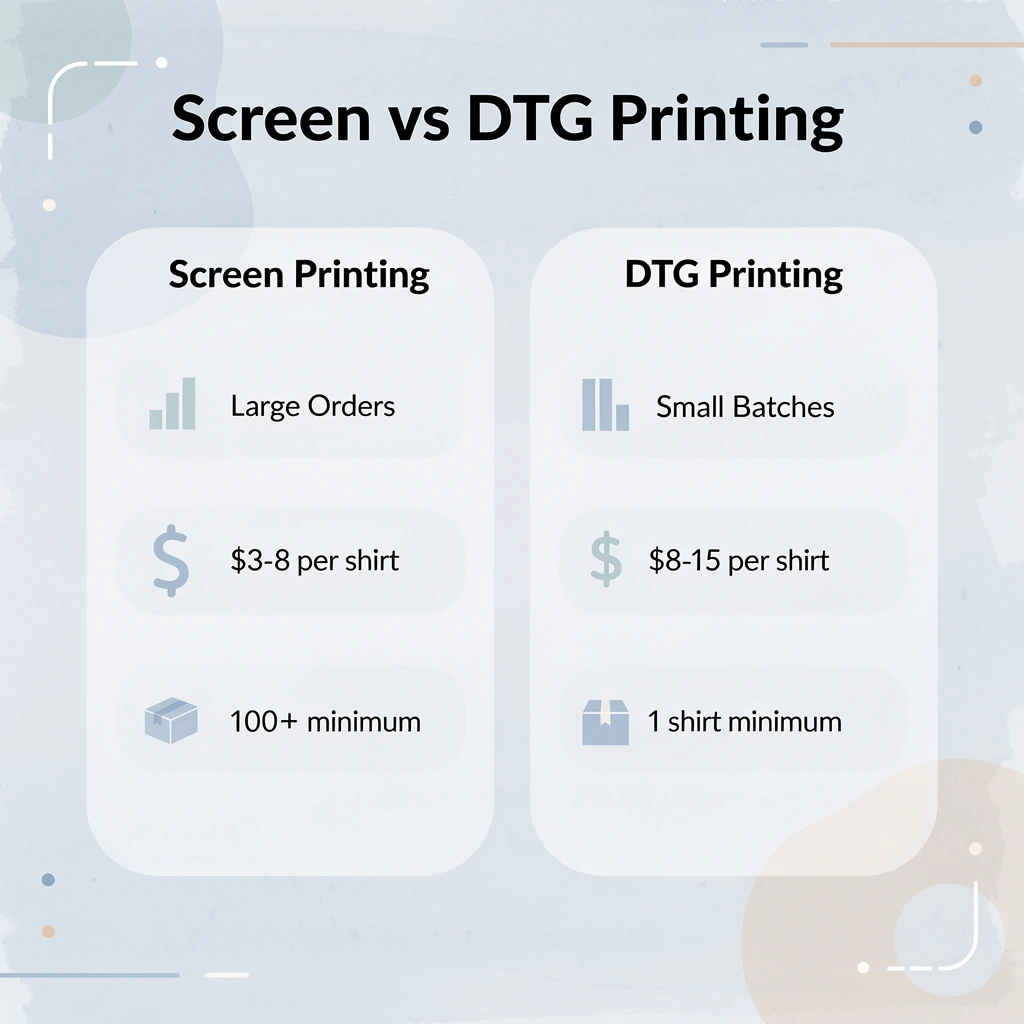
| Screen Printing | Large orders (100+ shirts) | $3-8 per shirt |
| DTG Printing | Small batches (1-50 shirts) | $8-15 per shirt |
| Heat Transfer | One-off designs | $5-12 per shirt |

The Method Shapes Every Outcome That Matters
Screen printing pushes ink through mesh stencils, building thick, durable layers ideal for bold graphics and bulk orders. Direct-to-garment (DTG) printing sprays water-based inks directly onto fabric like an inkjet printer, capturing photorealistic detail and color gradients without setup costs. Heat transfer applies pre-printed designs using pressure and temperature, perfect for small batches or complex artwork. Vinyl cutting creates designs from coloured sheets bonded through heat, delivering crisp lines and solid colors that withstand heavy use. Each method handles design complexity, fabric types, and order volumes differently; choosing the wrong one costs you money, time, or quality.
Durability Decides Whether Customers Come Back
The wrong printing technique can cause cracking, fading, or peeling within weeks, turning customers into critics. Screen printing lasts through 50 to 100+ wash cycles because thick plastisol or water-based inks cure deeply into fabric fibers, creating bonds that flex without breaking. DTG prints last for the last 30 to 50 washes when properly pre-treated and cured, but application shortcuts leave designs that flake after a few launderings. Heat transfers vary widely: some survive years while others peel at the edges after minimal wear. Durability problems cannot be fixed after production—only prevented by choosing methods proven to withstand your fabric and usage conditions.
Cost Structure Changes With Volume and Complexity
Screen printing requires an upfront investment in screens and setup, making small orders expensive but dramatically reducing per-unit costs at higher volumes. According to Alibaba, cotton t-shirts account for 60% of the global market, partly because they work well with cost-efficient, scalable screen printing. DTG eliminates setup fees, making single shirts affordable but keeping per-unit pricing steady regardless of quantity. Traditional printing companies often impose high minimums to justify their preferred methods. Our platform at ooShirts removes minimum order requirements entirely, letting you access multiple printing techniques tailored to your project’s specific needs.
Fabric Compatibility Prevents Waste and Disappointment
Polyester reacts poorly to water-based inks, causing colors to become dull or bleed, while cotton absorbs them for bright, soft results. Plastisol inks sit on top of synthetic fabrics without soaking in, creating long-lasting prints on polyester blends that water-based methods cannot match. Tri-blends require careful temperature control during heat application to avoid burning or twisting the fabric. Mismatched techniques and materials produce stiff, uncomfortable prints or weak bonding that fails quickly, wasting money and damaging your reputation.
Design Complexity Dictates Your Technical Path
Full-color photographs, intricate gradients, and fine details require DTG or sublimation methods that reproduce thousands of colors and subtle transitions accurately. Simple logos with one to three solid colors work well with screen printing or vinyl, delivering bold, opaque coverage that stands out against any fabric shade. Screen printing a photograph produces pixelated, low-detail results, while using DTG for basic text increases costs without improving quality. The printing method either unlocks your creative vision or forces compromise.
Related Reading
- Best T-Shirt Printing Companies
- How to Print on T-shirts Professionally
- What Type Of T-shirt Printing Lasts The Longest
- Simulated Process Screen Printing
- Best Fonts For T Shirts
- How To Print On T-shirts Professionally
- Digital Print Shirt Vs Screen Print
- How Much Does T-shirt Printing Cost
- Company T-shirt Design Ideas
What Is the Most Cost-Effective T-shirt Printing Method?
The most cost-effective T-shirt printing method balances upfront costs, per-unit pricing, durability, and order volume. The choice depends on matching the technique to your needs, order size, and design type.
| Printing Method | Best For | Cost Range | Minimum Order |
|---|---|---|---|
| Screen Printing | Large orders (100+ units) | $3-8 per shirt | 50-100 shirts |
| Direct-to-Garment (DTG) | Small batches, detailed designs | $8-15 per shirt | 1 shirt |
| Heat Transfer Vinyl | Simple designs, small quantities | $5-12 per shirt | 1 shirt |
| Sublimation | Polyester garments, full-color | $6-10 per shirt | 10-25 shirts |
🎯 Key Point: Screen printing becomes the most cost-effective method for orders over 100 units, while DTG printing offers the best value for small batches and complex designs.
“Screen printing can reduce per-unit costs by 60-70% compared to digital methods when printing large quantities.” — Printing Industry Research, 2024
💡 Pro Tip: Calculate your total project cost, including setup fees, shipping, and design preparation – not just the per-shirt price – to determine the true most cost-effective option for your specific order.

Order Volume Determines the Winning Method
When you order 50 shirts or more, screen printing becomes the best choice. The setup cost is spread across all shirts, making each shirt affordable. For smaller orders or single shirts, DTF or DTG printing works better because there are no setup fees. These methods keep your total cost low for small quantities.
Design Complexity Influences Per-Unit Savings
Full-color, photorealistic, or detailed designs stay affordable with DTF printing, which supports unlimited colors in a single pass without per-color charges. Simple logos or text with one to three colors cost significantly less when printed at scale using screen printing. Choosing the wrong method forces expensive redesigns or higher prices, undermining your competitiveness. The right pairing preserves your creative vision while protecting your profit margins.
Set up Costs Separate Budget Winners from Losers
Screen printing requires higher upfront costs for screens and color separations, but delivers low per-shirt costs at volume. Digital methods like DTF need minimal setup investment beyond garments and ink, making them ideal for tight cash flow. Overlooking setup realities leads to surprise bills that erase profits or force price increases that drive away buyers. Proper evaluation secures predictable expenses that support steady growth.
Durability Reduces Long-Term Replacement Expenses
Methods that embed ink deep into fabric or create strong bonds, such as high-quality screen printing or DTF, produce shirts that withstand dozens of washes without fading or peeling. Cheaper surface applications require frequent reprints and refunds, which multiply the true costs. Investing in proven durability upfront eliminates repeat production drains and builds customer loyalty.
Fabric Type Affects Overall Value
DTF works well on cotton, polyester, blends, and dark fabrics because it adheres firmly and feels soft. Screen printing works best on light cottons but requires adjustments for synthetic materials. Selecting the right method prevents batch rejection, maintains customer satisfaction, and reduces costs.
Turnaround Time Impacts Opportunity Costs
Digital options like DTF offer fast production for urgent custom orders, capturing sales during peak demand. Screen printing takes longer to prepare, but it prints bulk orders rapidly once set up. Choosing the right method prevents missed deadlines, rushed shipping fees, and lost contracts that damage profitability.
How do T-shirt printing methods impact market share?
Digital printing methods, including DTG and DTF, accounted for 47.3% of the custom T-shirt printing market in 2025, driven by low setup costs and the ability to profitably handle personalized small-batch orders.
What factors determine the best printing method choice?
Match the printing method to your order size, design needs, and budget to achieve the lowest true costs. However, the cheapest method means nothing if your shirts fall apart after the first month of wear.
Can T-shirt Printing Methods Affect Design Durability?
Yes, printing methods determine how long your design survives washing, stretching, and daily wear. The technique controls whether ink bonds into fabric fibers or sits on the surface, deciding whether shirts stay sharp through 100 washes or crack after 10. While price and fabric quality matter, the printing process creates the structural integrity that keeps designs intact or lets them fail.

🎯 Key Point: The printing method is the single most important factor determining whether your t-shirt design will look professional after months of wear or start peeling and fading within weeks.
“The printing technique controls whether ink bonds deep into fabric fibers or sits on the surface, deciding whether shirts stay sharp through 100 washes or crack after 10.”

💡 Pro Tip: Always ask your printer about their wash testing results – reputable shops test designs through 25-50 wash cycles to guarantee durability standards before recommending a printing method for your project.
| Printing Method | Durability Rating | Wash Resistance |
|---|---|---|
| Screen Printing | Excellent | 50+ washes |
| Heat Transfer Vinyl | Good | 25-40 washes |
| Direct-to-Garment | Moderate | 15-25 washes |
| Heat Press Transfers | Poor | 5-15 washes |
Why Surface Application Kills Designs Early
When ink sits mostly on the surface of fabric rather than soaking into the fibers, everyday friction breaks the bond. Machine agitation, detergents, and body movement stress the surface layer until it cracks or peels away. Incomplete curing worsens the problem because prints remain mechanically attached rather than chemically fused, causing them to expand and contract independently of the fabric beneath. OoShirts data reveals that 24% of consumers notice fading or cracking on budget-printed shirts after only 10 washes. Screen printing maintains quality through 50 to 100+ wash cycles, DTF holds up for 40 to 60+ washes, while DTG shows wear after 30 to 50 cycles. Properly executed methods maintain quality through 200+ washes, while weak surface applications show wear after a dozen cycles.
Screen Printing Builds Mechanical Strength
Screen printing pushes thick ink through mesh screens directly onto fabric, then heats it at high temperatures that mechanically and chemically lock the bond. This integrates the ink with cotton and blend fibers rather than leaving it on the surface, creating a durable layer that resists cracking and fading through 50 to 100+ wash cycles. The ink becomes part of the fabric’s structure, which is why screen-printed shirts outlast other options under heavy use and frequent washing.
DTF Balances Flexibility with Adhesion
DTF transfers use a film with a powder adhesive that melts onto different fabrics under heat and pressure. The adhesive creates a flexible, strong bond across cotton, polyester, and blends without the brittleness that causes cracking. DTF holds strong for 40 to 60+ washes because the transfer layer moves with the fabric rather than against it.
DTG Trades Thickness for Detail
DTG sprays ink directly onto pretreated fabric for photorealistic detail, but the thinner application makes designs more prone to fading. The ink doesn’t embed as deeply, leaving color vulnerable to breakdown under harsh conditions.
How long do T-shirt printing methods last under regular use?
Proper pretreatment and curing can extend lifespan to 30 to 50 washes, yet the fundamental limitation remains. DTG delivers fine detail on small runs but wears faster than screen printing or DTF under identical use conditions.
Which T-shirt printing methods are best suited to different fabric types?
Picking the right method for your fabric type and usage frequency determines whether the design stays bright or disappoints after a few wears. Understanding how each method works reveals which techniques merit investment in 2026 and when to apply each one.
Related Reading
- Business T-Shirt Design Ideas
- Types of T-shirt Printing
- T-shirt Design Size
- How To Print A Picture On A Shirt
- T Shirt Colors for Printing
- Best Corporate Apparel Companies
- Best T-shirt Material For Printing
- Best File Type For T-shirt Printing
- Family Reunion T-shirt Ideas
- T-shirt and Ink Color Combinations
- T-shirt Screen Printing Design Ideas
8 Best T-shirt Printing Methods You Should Know in 2026
Custom apparel demand continues to rise in 2026 as brands, creators, businesses, schools, and individuals seek high-quality shirt production. Modern printing technology offers unprecedented flexibility for everything from bulk promotional shirts to one-of-a-kind custom pieces.
🎯 Key Point: The right printing method can make or break your custom apparel project’s success and profitability.
“The global custom t-shirt printing market is expected to reach $10.2 billion by 2025, driven by increasing demand for personalized apparel.” — Market Research Future, 2024
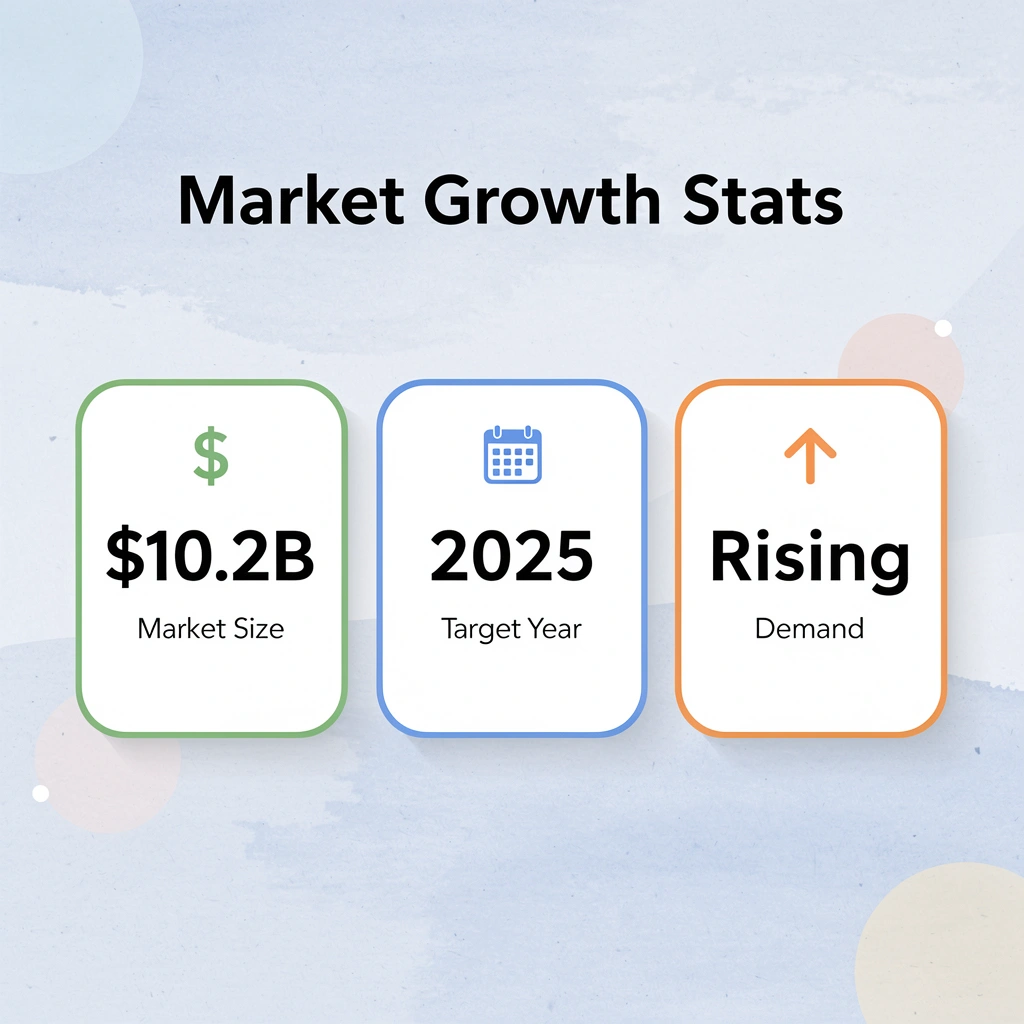
Each printing technique differs in durability, color quality, fabric compatibility, and cost. Below are the best t-shirt printing methods in 2026, including how each works, where it performs best, and its strengths and weaknesses.
💡 Tip: Consider your order volume, budget, and quality requirements before selecting a printing method – what works for 100 shirts may not be cost-effective for 10,000 units.

1. Screen Printing
Screen printing produces bold, long-lasting designs on custom apparel with bright colors that withstand heavy wear.
How does screen printing work?
Artists create individual stencils for each color, then push specialized ink through a fine-mesh screen onto the shirt with a squeegee. Heat curing locks the ink permanently into the fabric fibers.
What are the key features of this T-shirt printing method?
It works best on cotton shirts, blends, and certain synthetic fabrics. This method suits simple, bold graphics and logos rather than detailed artwork. It becomes cost-effective for bulk orders of 50 or more pieces due to setup requirements.
What are the advantages and disadvantages?
Designs resist cracking and fading exceptionally well, with colors appearing rich and opaque. Per-unit costs drop significantly with higher volumes.
It struggles with complex, multicolored, or photographic designs. Initial setup expenses make it inefficient for small runs. Print areas remain limited compared to full-coverage options.
2. Direct-to-Garment Printing (DTG)
DTG printing works like an advanced inkjet system for clothes, delivering digital precision for detailed, full-color artwork made on demand.
How does DTG printing work?
Operators prepare the fabric, load the shirt into a special printer, and spray water-based inks directly onto it. A final heat press bonds the ink to the material.
What are the key features of this T-shirt printing method?
It works best on 100% cotton and cotton-rich blends, handling detailed patterns, photos, and gradients beautifully. It suits small orders, one-of-a-kind items, and personalized products with no minimum quantity.
What are the advantages of DTG printing?
Makes soft, smooth prints with excellent color range and low setup costs. Fine details print accurately without layer limits.
What are the disadvantages of this method?
Performance drops on pure synthetics or dark fabrics without extra preparation. Longevity falls short of thicker-ink methods during heavy washing, and production speed slows for larger batches.
3. Dye Sublimation or All-Over Printing (AOP)
Dye sublimation creates bright, edge-to-edge designs that feel like part of the fabric itself by using heat to turn prints into permanent, seamless artwork.
How does the dye sublimation printing process work?
Designs are printed onto special transfer paper first. Heat and pressure convert the ink into a gas that soaks directly into the garment’s fibers.
This method requires light-coloured polyester fabrics, supports full-coverage patterns and bright multicolored scenes, and works well for small custom runs or individual pieces.
What are the benefits and limitations of this T-shirt printing method?
Prints stay fade-resistant, with a smooth hand feel and natural color blending, without visible edges, and handle complex all-over designs effectively.
Dye sublimation only works on polyester and light-colored fabrics; dark fabrics yield poor visibility. Costs are higher than those of some alternatives for basic projects.
4. Direct-to-Film Printing (DTF)
DTF printing offers flexible transfers that adhere to almost any fabric, combining digital printing with heat application for reliable results.
How do DTF T-shirt printing methods work?
Ink is printed onto a special film, then adhesive powder is applied and cured. Heat presses the film onto the shirt, permanently bonding the design.
What are the key features of DTF printing?
DTF works well on cotton, polyester, and fabric blends, handling both dark and light coloured materials. It produces bright, detailed designs with solid coverage and is well-suited to small- to medium-order quantities.
What are the advantages of DTF T-shirt printing methods?
Strong color vibrancy across mixed materials without pretreatment and versatility reduces fabric-related failures.
What are the disadvantages of DTF printing?
The finished print feels slightly thicker and less breathable. Extra transfer steps require more time than direct methods, and large all-over prints are less ideal.
5. Plastisol Transfers
Plastisol transfers combine screen-printing quality with heat-press convenience, creating durable designs ideal for uniforms and promotional wear.
How do plastisol transfers work in T-shirt printing methods?
Design screen prints onto transfer sheets with plastisol ink, then apply them to the shirt with a heat press to bond the ink layer to the fabric.
It works on cotton, blends, and some synthetics. Bold shapes and solid colors perform best. Medium batch sizes with minor customizations, such as names or numbers, suit it well.
What are the advantages of plastisol transfer printing?
Designs remain durable and crack-resistant. Special finishes such as gloss or texture are available, with high batch consistency for teams or events.
What limitations do plastisol transfers have?
It does not work well for detailed images or photographs. Transfer materials cost more at large sizes, and the print layer feels thicker than direct ink methods.
6. CAD Heat Transfer Vinyl Printing
CAD heat transfer vinyl printing produces crisp, professional lettering and logos for custom apparel, sports teams, uniforms, and personalized items.
How does CAD heat transfer vinyl printing work?
A computer-controlled cutting machine cuts coloured vinyl sheets into your desired shapes, text, or graphics. The cut pieces are weeded, positioned on the shirt, and bonded using a heat press that applies controlled temperature and pressure.
What are the key features of this T-shirt printing method?
It works well on cotton, polyester, and blends. This method suits simple logos, text, names, and numbers rather than complex images, and it’s effective for small- to medium-sized orders requiring individual customizations such as player names or jersey numbers.
What are the advantages of CAD heat transfer vinyl?
It produces sharp, bold results with a premium appearance across nearly any fabric type and allows easy personalization without requiring full redesigns for each piece.
What are the limitations of this printing method?
It cannot handle photographic, gradient, or highly detailed artwork. The cutting and application process takes more time per item, and the finished design has a textured, slightly stiffer feel than softer ink methods.
7. Embroidery
Embroidery adds a premium, textured finish that elevates shirts, polos, and hoodies. Digital files guide industrial sewing machines to stitch coloured threads directly into the fabric, building layers for depth and texture.
What materials work best with embroidery T-shirt printing methods?
Embroidery works best on thicker materials such as heavy cotton, polos, and hoodies. The technique favors logos, monograms, and simple graphics over fine details, making it ideal for corporate orders, uniforms, and small- to medium-quantity merchandise.
What are the advantages of embroidery printing methods?
Designs resist fading, cracking, and peeling over the years of use, with a raised, stitched appearance that conveys quality and professionalism. The process requires no inks or chemicals, making it more environmentally friendly than most printing methods.
What limitations do embroidery T-shirt printing methods have?
Embroidery cannot reproduce photorealistic or intricate multicolored images; production costs exceed those of most printing methods; and color options are limited to solid thread shades without smooth blending.
8. Discharge Printing
Discharge printing removes color from dark fabrics rather than adding layers on top, creating soft, vintage-style effects that blend with the fibers rather than sit on the surface.
How does discharge printing work with T-shirt printing methods?
Special discharge ink, often water-based, applies through screens. Heat activation removes the original dye while depositing new color, producing a faded appearance.
What are the key features of discharge printing?
Works best on 100% cotton, especially dark colors. It performs well with washed-out, vintage, or distressed graphics. It’s cost-effective for medium- to large-production runs.
What are the advantages and disadvantages?
Prints feel soft with no texture or plastic layer. Designs bond permanently without cracking or peeling. It achieves strong results on dark fabrics where other methods struggle.
Final colors vary slightly between shirts due to fabric differences. It does not work on synthetics and involves stronger chemicals than standard water-based inks.
Comparison Table for all 8 T-Shirt Printing Methods
| Method | Best Fabrics | Best Designs | Ideal Order Size | Durability | Hand Feel | Cost Efficiency |
| Screen Printing | Cotton, blends, some synthetics | Bold, simple graphics & logos | Large (50+) | Excellent (50-100+ washes) | Slightly textured | Best for bulk orders |
| Direct-to-Garment (DTG) | 100% cotton, cotton blends | Intricate, full-color, photorealistic | Small to medium (1-50) | Good (30-50 washes) | Very soft | Excellent for small runs |
| Dye Sublimation (AOP) | Light-colored polyester | All-over patterns, vivid full-color | Small to medium (1-100) | Excellent (fade-proof) | Completely smooth | Good for custom & all-over |
| Direct-to-Film (DTF) | Cotton, polyester, blends | Bright, detailed, solid colors | Small to medium (1-100) | Very Good (40-60+ washes) | Slightly thicker | Very good for mixed orders |
| Plastisol Transfers | Cotton, blends, some synthetics | Bold shapes, solid colors | Small to medium | Excellent | Medium thickness | Good for teams & uniforms |
| CAD Heat Transfer Vinyl | Cotton, polyester, blends | Text, logos, numbers, simple shapes | Small to medium | Very Good | Textured & stiff | Good for personalization |
| Embroidery | Thicker cotton, polos, hoodies | Logos, monograms, simple graphics | Small to medium | Exceptional (years) | Raised texture | Higher cost |
| Discharge Printing | 100% cotton (especially dark) | Vintage, washed-out, soft graphics | Medium to large | Excellent | Extremely soft | Good at scale |
How to Choose the Right T-shirt Printing Method for Your Goals
Choosing the right printing method means matching your project constraints to each technique’s strengths. Three variables determine your decision: order size, design characteristics, and intended use. Get one wrong, and you either overpay or receive prints that fail within weeks.

🎯 Key Point: The most expensive printing method isn’t always the best choice – it’s about finding the perfect match between your specific needs and each technique’s capabilities.
“85% of custom t-shirt printing failures stem from choosing the wrong method for the project requirements, not from poor execution.” — Print Industry Association, 2024
⚠️ Warning: Never choose a printing method based on price alone – factor in durability requirements, design complexity, and total project timeline to avoid costly reprints.
| Decision Factor | Screen Printing | DTG | Heat Transfer |
|---|---|---|---|
| Best Order Size | 50+ pieces | 1-25 pieces | 1-10 pieces |
| Design Complexity | Simple, few colors | Complex, photo-quality | Medium complexity |
| Cost Per Unit | Low (bulk) | Medium | High |
| Durability | Excellent | Good | Fair |
| Setup Time | Long | Short | Very short |

Match Method to Order Economics
The amount you order determines which printing methods suit your budget. Screen printing works well for orders of 12 or more shirts, with greater savings at 50+ pieces as setup costs spread across more units. For example, a school ordering 200 spirit shirts might pay about $4 per print with screen printing, while DTG (direct-to-garment) printing might cost $9 per shirt since the price remains constant regardless of order size.
What are the cost breakpoints for different printing methods?
A family reunion needing 18 custom shirts can avoid the $150 screen setup fee by choosing DTF or DTG, where per-shirt pricing remains predictable without minimums. These methods deliver quality results for small groups without hidden costs.
Between 12 and 50 shirts, both methods compete on price, so turnaround time or design complexity becomes a tiebreaker. Below 12 units, digital wins. Above 100 units, screen printing dominates unless your design requires photographic detail that screens cannot reproduce.
Design Complexity Eliminates Options Quickly
Simple graphics with one to three solid colors favor screen printing or vinyl because each method excels at bold, opaque coverage. Once your design includes gradients, photo-realistic images, or more than five colors, DTG and DTF become the only practical choices without high screen fees.
A nonprofit printing a logo with two Pantone colors across 80 shirts achieves crisp results cheaply through screens. That same nonprofit adding a full-color photo collage needs DTG’s inkjet precision to capture detail, though per-shirt cost increases.
Why does vinyl work better for text designs?
Vinyl works well for text-heavy designs, such as team names and numbers, because plotters cut sharp-edged letters that screen printing can soften. However, vinyl doesn’t work with detailed artwork or fonts under half an inch, where removing tiny pieces becomes impossible.
Fabric Dictates Bonding Success
Cotton absorbs water-based inks well, making it ideal for DTG and discharge techniques. Polyester repels water-based inks but accepts dye sublimation’s heat-activated dyes, creating permanent, vibrant prints that resist cracking. Blended fabrics require DTF’s adhesive layer, which adheres to mixed materials without chemical conflicts.
Dark fabrics create another problem. DTG on black shirts requires a white underbase layer to prevent colors from fading, which adds cost and stiffness. Screen printing handles dark garments naturally with opaque plastisol inks that cover in one pass. For black hoodies or navy polos, screen printing or DTF avoids the underbase penalty.
Durability Expectations Shape Long-Term Value
Shirts worn weekly need thick screen-printing ink that penetrates deep into the fabric, or high-quality DTF with a flexible adhesive to survive 50-plus wash cycles. Promotional giveaways worn once or twice can handle DTG’s softer feel and shorter lifespan, since upfront cost matters more than durability.
How do poor T-shirt printing methods damage your reputation?
People will notice when the prints crack after three washes. This damages your reputation and creates replacement costs that eliminate any savings from cheaper methods.
What printing options eliminate traditional compromises?
Traditional printers force you to choose between quality and affordability, either requiring large orders for better pricing or limiting design choices due to setup costs. ooShirts eliminates those tradeoffs by offering multiple printing methods without minimum order requirements. A parent ordering 15 family reunion shirts has access to the same per-unit quality and variety of techniques as a company ordering 500. Free shipping and transparent pricing let your decision focus purely on which method serves your design and durability needs.
Related Reading
- 4imprint Competitors
- Printify Alternatives
- Redbubble Alternatives
- Rush Order Tees Vs Custom Ink
- Zazzle Alternatives
- Vistaprint Vs Custom Ink
- Vistaprint Alternatives
- Redbubble Alternatives
- Bonfire Competitors
- 4imprint Vs Vistaprint
Why Customers Choose ooShirts for Custom T-shirt Printing
Customers choose a printing partner because they want results they can count on without problems: professional-looking shirts that arrive on time at reasonable prices. The decision comes down to whether a company solves real problems (unclear pricing, missed deadlines, fading prints) or makes empty promises.

🎯 Key Point: The most successful custom t-shirt orders happen when customers can trust their printing partner to deliver quality results without the typical headaches of hidden fees or delayed shipments.
“The difference between a good printing experience and a great one comes down to transparency in pricing, reliable delivery times, and consistent print quality that doesn’t fade after the first wash.”

💡 Pro Tip: Smart customers look for printing companies that offer upfront pricing, guaranteed delivery dates, and samples of their work before committing to large orders—these are the hallmarks of a reliable printing partner.
Quality That Survives Real Life
Print quality separates partners who care from vendors who ship. ooShirts uses commercial-grade inks and precise application techniques that embed color into fabric fibers rather than sitting on the surface. Screen-printed logos withstand 50-100+ wash cycles without cracking, while DTG prints maintain photorealistic detail through repeated wear. The quality guarantee promises free reprints if shirts arrive with defects or prints that don’t meet standards. You stop worrying about whether colors will fade after the first event or designs will peel before the season ends.
Transparent Pricing Without Surprise Fees
According to Grand View Research, the custom t-shirt printing market reached USD 5.16 billion in 2024, yet many customers face confusing quotes with hidden charges for setup, shipping, or rush processing. ooShirts eliminates this with all-inclusive pricing that shows exactly what you pay upfront. Free shipping, free setup, and our Low Price Guarantee let you compare actual costs without fine print. We match any lower price you find online, so you move from budget anxiety to confident planning.
Why do minimum order requirements limit printing method choices?
Most print shops impose minimum order requirements of 50 or 100 shirts, even when you need only 15. Our cheap custom T-shirts eliminate quantity barriers, letting you order exactly what your project requires. This flexibility makes screen printing and DTG both viable options based on which method best serves your design, not on which one meets arbitrary thresholds.
Delivery Speed That Matches Your Calendar
Missed deadlines destroy trust faster than poor quality. Customers consistently prefer to receive orders ahead of promised dates rather than manage late arrivals. ooShirts builds production timelines that account for both screen-printing setup (efficient for bulk runs) and DTG flexibility (fast for urgent custom pieces), and then guarantees those dates. You eliminate buffer time from every project because the delivery window holds. Whether you need 200 shirts for a weekend tournament or 30 custom pieces for a product launch, the production schedule works backward from your deadline, not forward from whenever the shop gets around to it.
Support That Answers Questions You Didn’t Know to Ask
Bad customer service turns simple projects into frustrating guesswork about file formats, color matching, or printing methods. ooShirts provides seven-day-a-week access to shirt specialists via phone, email, and live chat who review artwork, explain tradeoffs between screen printing and DTG for your design, and catch potential issues before production starts. This prevents discovering your gradient design won’t work with screen printing after paying setup fees, or that your chosen shirt color requires unexpected ink adjustments. The result is smooth projects that finish right the first time instead of expensive reprints.
Start Designing Your Custom Shirts Today
At ooShirts, you can upload your design, choose your printing method, and get an instant quote without entering a credit card or committing to a minimum order. The entire process takes less than two minutes, and our specialists review your design and recommend the right approach before you spend a dollar.
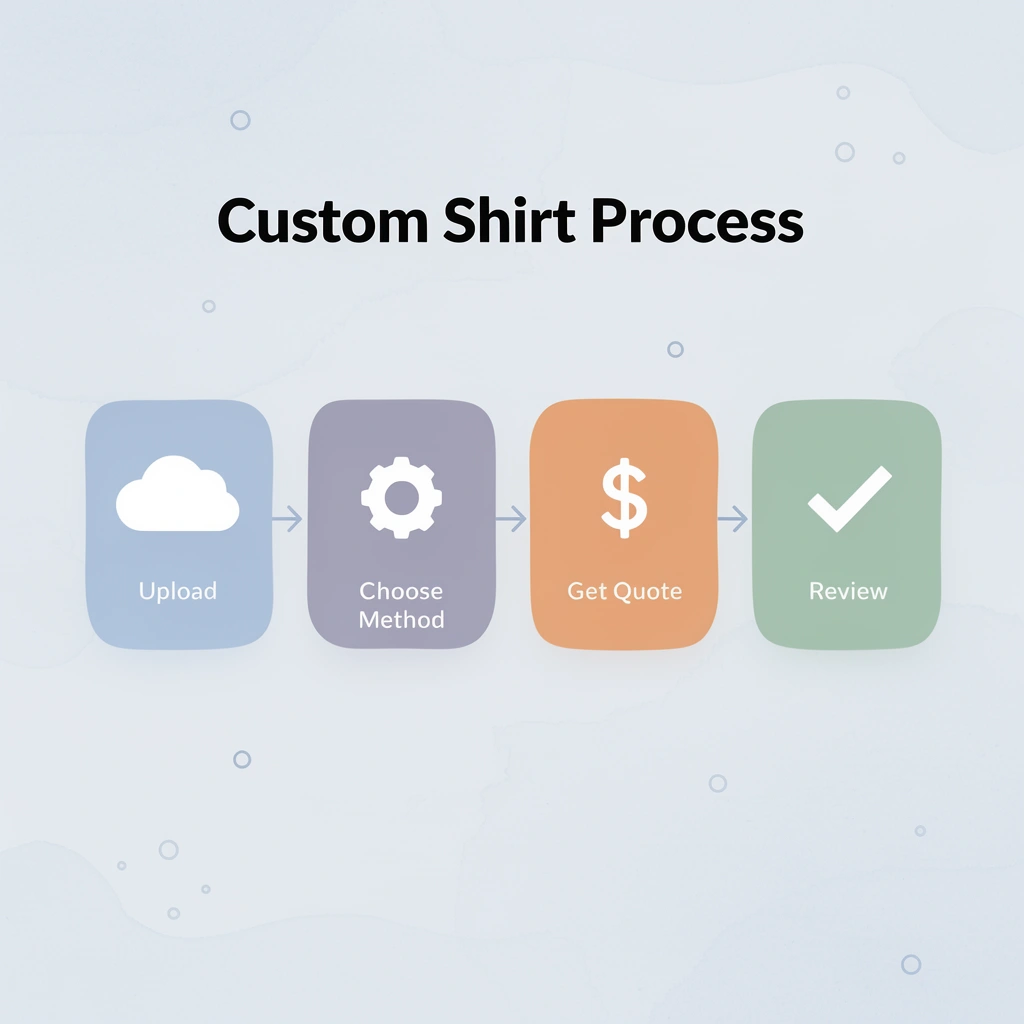
🎯 Key Point: Most custom printing companies force you to navigate complex order forms, decode pricing tiers, and guess whether your design will work with their equipment. Our cheap custom T-shirts solution eliminates that guesswork by providing upfront pricing, free shipping, free setup, and expert guidance. You see exactly what you’ll pay and how your shirts will look before approving anything.
“Our complete satisfaction guarantee ensures you don’t risk wasted money on prints that fade, crack, or arrive looking nothing like your proof.” — ooShirts Quality Promise
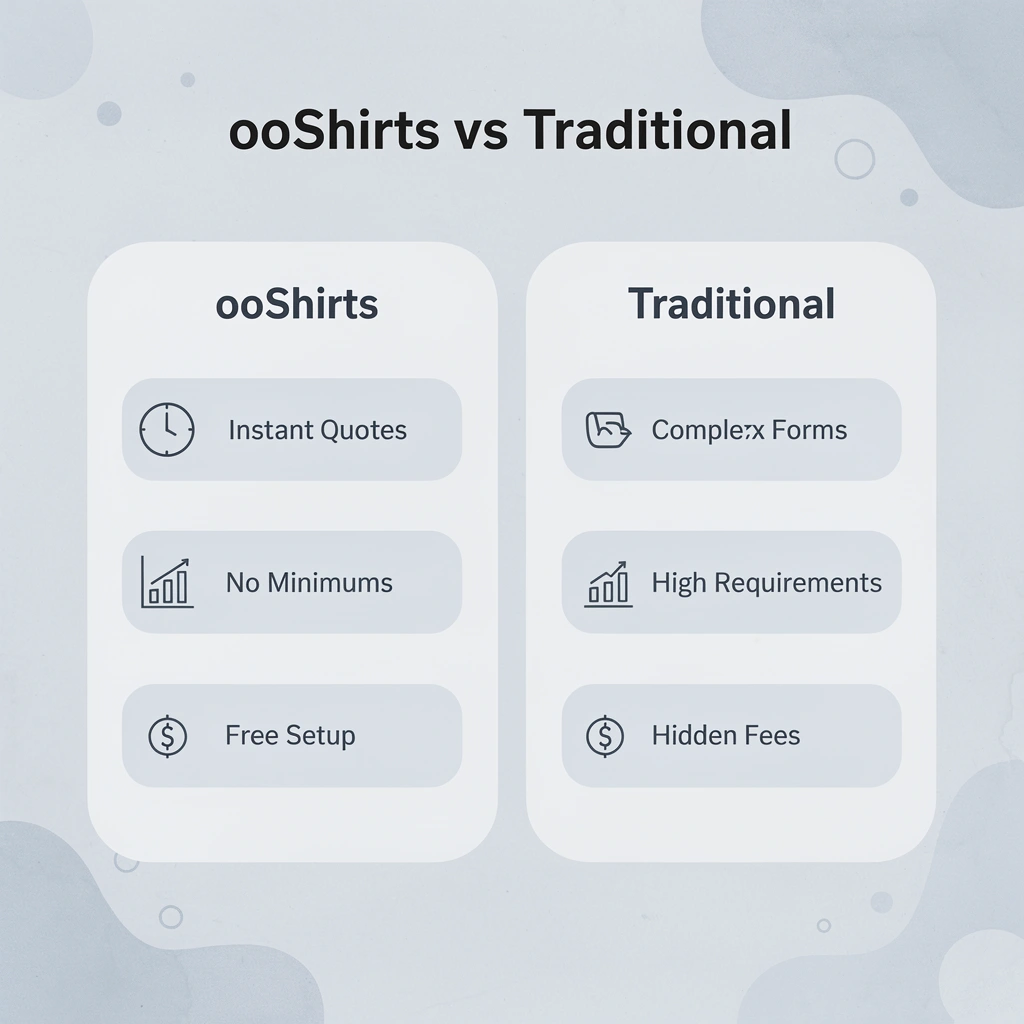
💡 Tip: With our complete satisfaction guarantee backing every order, you don’t risk wasted money on prints that fade, crack, or arrive looking nothing like your proof. Start your order today and turn your custom shirts into exactly what you envisioned, whether you need five shirts or five hundred.
| ooShirts Advantage | Traditional Printers |
|---|---|
| Instant quotes in under 2 minutes | Complex forms and waiting |
| No minimum orders required | High minimum requirements |
| Free shipping & setup | Hidden fees and charges |
| Expert design review before payment | Pay first, hope for the best |

Leave a Reply