
Last updated: August 10, 2026
Branded merchandise fulfillment breaks down more often than it should. Boxes arrive late, items get mixed up, and the brand impression suffers before anyone even opens a package. Understanding how the process works, from production to final delivery, helps teams avoid the most common pitfalls and get custom products to the right people on time.
Starting with items that are simple to produce, store, and ship at scale makes the entire operation easier to manage. Well-chosen swag bag ideas built around practical, high-quality products keep costs predictable and timelines realistic. For teams looking to add a reliable branded staple without overcomplicating logistics, ooShirts offers custom T-shirts that fit the bill.
Table of Contents
- What Is Branded Merchandise Fulfillment and How Does It Work?
- Why Is Branded Merchandise Fulfillment Important for Growing Brands?
- Should You Outsource Branded Merchandise Fulfillment?
- 7 Tips for Streamlining Branded Merchandise Fulfillment
- How to Choose a Branded Merchandise Fulfillment Company
- How ooShirts Simplifies Branded Merchandise Fulfillment
- Start Designing Your Custom Shirts Today
Summary
- Branded merchandise fulfillment is a complete operational system, not just a shipping step. It covers warehousing, inventory tracking, kitting, order processing, and last-mile delivery, all coordinated to ensure custom products reach recipients accurately and on time. When this system breaks down, the damage extends beyond logistics and into brand perception at the exact moment you are trying to build trust.
- The business case for getting fulfillment right is backed by measurable data. According to Rupt’s 2025 Branded Merchandise Statistics, 83% of consumers are more likely to do business with a brand after receiving branded merchandise. That result only holds when the item actually arrives on time and in the condition it was designed to appear. A delayed or damaged delivery does not simply fail to impress. It actively creates a negative impression.
- Merchandise longevity makes execution quality even more consequential. CT Marketing powered by Proforma reports that 73% of consumers keep promotional products for more than one year. Every item that reaches a recipient correctly becomes a long-running brand touchpoint, while every item that arrives wrong or not at all represents more than a year of missed exposure. At scale, those misses compound into a significant gap between what a merchandise program could deliver and what it actually does.
- Poor inventory management is one of the most common and costly failure points in branded merchandise programs. Industry patterns consistently show that weak stock visibility wastes 20 to 30 percent of a swag budget on items that never reach a single recipient, either because popular items run out during demand spikes or slow-moving products accumulate storage costs without purpose.
- Outsourcing fulfillment is often framed as a loss of control, but the data suggest the opposite. The Stord 2025 Mystery Shopping Report found that execution gaps in order accuracy and delivery consistency remain widespread, even among established brands, indicating that in-house management does not automatically produce better results. When logistics tasks begin to pull team attention away from core work, the operational cost of staying in-house typically exceeds that of working with a specialist.
- The promotional products industry is projected to reach $26.2 billion in 2025, according to Rupt, which reflects a shift in how organizations treat branded merchandise. It is no longer a discretionary line item but a distribution challenge that rewards teams who plan for it with the same rigor applied to other operational investments.
- ooShirts’ cheap custom T-shirts fit into this picture by giving budget-conscious organizations a high-quality, easy-to-store, and easy-to-ship starting point for merchandise programs, with all-inclusive pricing that removes the hidden fees that typically make fulfillment planning feel unreliable.
What Is Branded Merchandise Fulfillment and How Does It Work?
Branded merchandise fulfillment is the complete system that takes your custom products from production into the hands of the right people, reliably, at scale. It covers warehousing, inventory tracking, order processing, kitting, packaging, and last-mile delivery — all coordinated so your brand shows up consistently whether you’re sending one box or ten thousand.
“Branded merchandise fulfillment is not a single step — it’s an end-to-end system that connects production, storage, and delivery into one seamless brand experience.” — Industry Best Practice
💡 What It Covers: Branded merchandise fulfillment isn’t just shipping. It’s a fully integrated pipeline that manages every touchpoint between your product and your recipient.
| Fulfillment Component | What It Does |
|---|---|
| Warehousing | Stores your branded inventory safely and accessibly |
| Inventory Tracking | Monitors stock levels in real time to prevent shortages |
| Order Processing | Captures and validates orders for accurate fulfillment |
| Kitting | Assembles multi-item packages into a single branded experience |
| Packaging | Presents your brand professionally at the point of unboxing |
| Last-Mile Delivery | Gets your product to the right person, at the right time |
🎯 Key Point: Whether you’re distributing to one recipient or scaling to ten thousand, a reliable fulfillment system ensures your brand shows up consistently every single time.
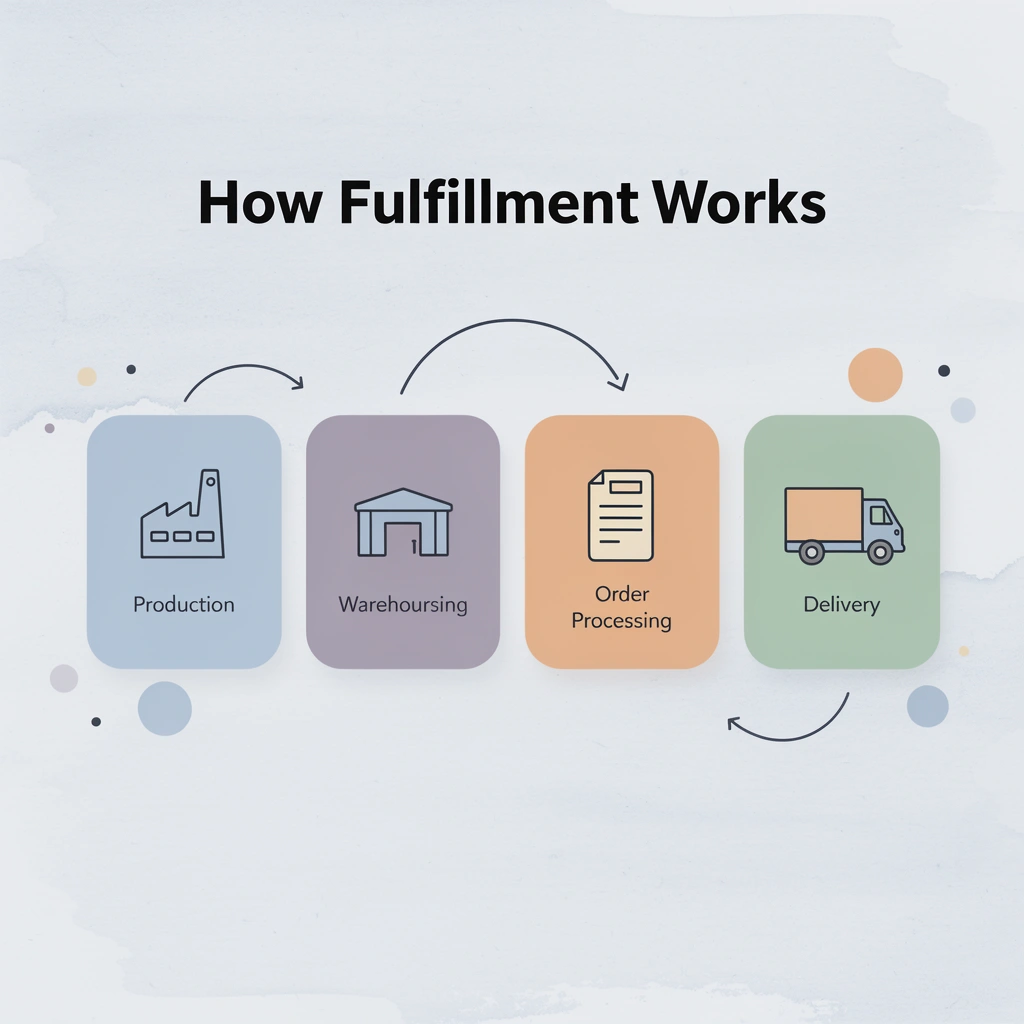
How does the fulfillment process actually work from start to finish?
The process starts with finding and customizing products to fit your needs, then moving finished inventory into managed warehouse facilities with real-time tracking of stock levels. Running out of onboarding kits during a hiring surge or discovering that half your event swag went to the wrong city are operational failures that quietly damage trust with the people you’re trying to impress.
Order processing verifies details, confirms availability, and assembles orders accurately. Kitting—bundling multiple items into a single package—adds complexity that manual in-house teams consistently underestimate. A welcome kit with a branded hoodie, a notebook, and a personalized card sounds simple until you’re doing it for 200 new hires across three time zones.
When do branded merch ideas outgrow manual in-house fulfillment?
Most organizations start by ordering in bulk, storing boxes in a back office, and packing shipments by hand. It works initially. Then volume grows, addresses become complex, and suddenly two people spend Friday afternoons on fulfillment instead of their actual jobs. Teams that shift to structured fulfillment systems, including straightforward products like custom T-shirts that are easy to store and ship in volume, often find that operational lift drops dramatically.
Why does fulfillment quality determine whether branded merch ideas actually pay off?
According to Rupt’s 2025 Branded Merchandise Statistics, 83% of consumers are more likely to do business with a brand after receiving branded merchandise. This impact depends on timely delivery and merchandise that meets your specifications. Fulfillment is the system that transforms a good product choice into measurable brand results.
Professional fulfillment systems track order amounts, delivery performance, popular items, and inventory usage rates, providing data to enable accurate predictions and demonstrate ROI. The promotional products industry is projected to reach $26.2 billion in 2025, according to Rupt, showing that branded merchandise is no longer a nice-to-have marketing line item. It’s a distribution challenge that rewards organizations treating it as such.
Why Is Branded Merchandise Fulfillment Important for Growing Brands?
Fulfillment is where brand promises either hold or fall apart. When order volumes climb and distribution spreads across multiple time zones, execution gaps become visible fast — and costly.
“Fulfillment is not just a logistics function — it is the final moment of truth where your brand either delivers on its promise or loses customer trust entirely.”
🎯 Key Point: As your brand scales, fulfillment stops being a back-office task and becomes a front-line brand experience — every delayed shipment or wrong item is a direct hit to your reputation.
💡 Tip: Growing brands should audit their fulfillment operations before scaling campaigns or launching new merchandise lines — catching execution gaps early is far less costly than managing customer fallout after the fact.
| Fulfillment Challenge | Impact on Growing Brands |
|---|---|
| Rising order volumes | Increases the risk of delays and picking errors |
| Multi-timezone distribution | Exposes gaps in coordination and carrier coverage |
| Inconsistent packaging | Weakens brand perception at the point of unboxing |
| Poor inventory visibility | Leads to costly stockouts and overselling |

What breaks first when fulfillment isn’t built to scale
The failure point is usually inventory control. Without real-time stock visibility, popular items disappear before peak demand, while slower-moving products accumulate in storage and drain budget. A growing tech company that overorders 5,000 branded pens before a rebrand loses not only the cost of the pens but also warehousing fees, disposal costs, and capital for other priorities. Poor inventory management wastes 20 to 30 percent of a swag budget on items that never reach recipients.
How does inconsistent vendor management affect branded merch ideas?
Branding consistency breaks next. When multiple vendors independently interpret your logo guidelines, the result is a collection of close approximations. The hoodie that arrives faded or off-spec signals that nobody was watching: a harder problem to fix than a bad print run.
Why does scaling swag programs outgrow patchwork fulfillment solutions?
Most organizations handle custom merchandise through local print shops or patchwork vendors, then store items in an office closet or garage. This works on a small scale. As headcount grows and campaigns multiply, coordination becomes unmanageable. ooShirts addresses this with all-inclusive pricing, free shipping, free setup, and a low-price guarantee, allowing organizations to plan merchandise programs without hidden fees that compress margins.
Why does branded merch impact make fulfillment non-negotiable?
Branded merchandise has real power with the people who receive it. According to CT Marketing powered by Proforma, 83 percent of consumers are more likely to do business with a brand after receiving a promotional product. This impact depends on execution: the product must arrive on time and in good condition. Delayed or damaged deliveries actively damage trust when a brand is trying to build it.
What does long-term retention mean for branded merch ideas at scale?
CT Marketing powered by Proforma reports that 73 percent of consumers keep promotional products for more than one year. Each item that reaches a recipient in good condition becomes a long-running brand touchpoint. Items that don’t arrive or arrive damaged represent a year or more of lost exposure. At scale, these misses create a meaningful gap between a program’s potential and its actual results.
Should you build fulfillment infrastructure internally or outsource it?
The choice between building fulfillment infrastructure in-house or hiring a specialist is complex.
Related Reading
- Swag Bag Ideas
- Promotional Products Marketing
- Branded Merch Ideas
- Swag Management Platform
- Sustainable Corporate Swag
- Promotional Product Sourcing
Should You Outsource Branded Merchandise Fulfillment?
Outsourcing branded merchandise fulfillment isn’t right for every organization, but for most growing brands, keeping it in-house costs more than it saves. The real question isn’t whether you can manage fulfillment internally—it’s whether doing so is the best use of your team’s time, budget, and attention.
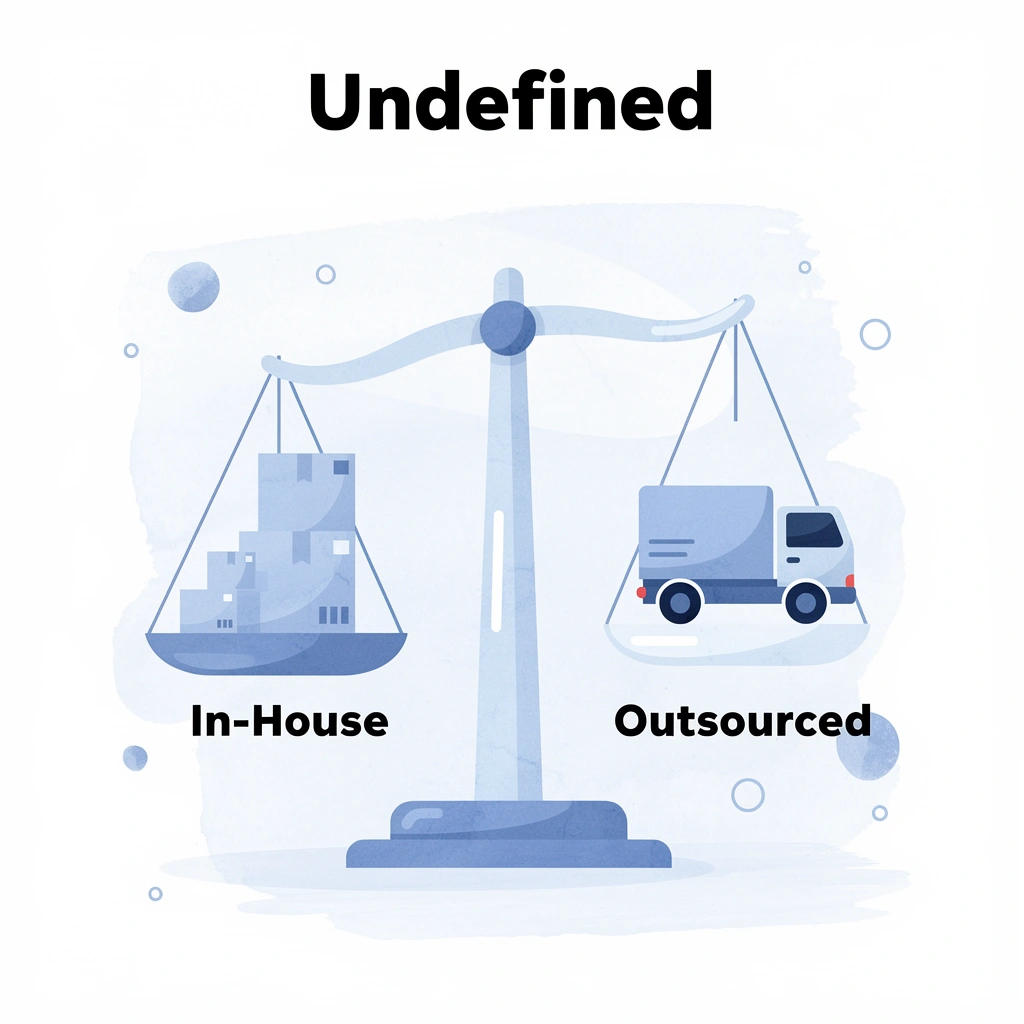
The decision point arrives when orders increase, shipping errors creep up, and someone on your team spends time chasing lost boxes instead of doing their actual job. That’s a focus problem, and it compounds fast.
When does in-house handling start to break down?
The failure point is usually invisible until it isn’t. Internal teams handle fulfillment well when volume is low and predictable, but unexpected demand from campaigns or product launches stresses fixed infrastructure. You either scramble to fulfill on time or over-prepare, incurring idle inventory costs. According to the Stord 2025 Mystery Shopping Report, which covers brands across Nutrition, Apparel, Beauty, and Food and Beverage fulfillment, execution gaps in order accuracy and delivery consistency remain widespread, even among established brands. This isn’t a small-team problem; it scales with you.
What hidden costs make branded merch ideas harder to scale in-house?
Most organizations handle custom merchandise by ordering directly from print vendors, storing items in-house, and shipping manually. This works for small order volumes, but as frequency increases, management becomes complex: tracking inventory, determining reorder timing, coordinating multiple vendors, and absorbing unplanned shipping costs. Platforms like ooShirts bundle printing, setup, and shipping into a single all-inclusive price, eliminating hidden costs that make in-house fulfillment seem cheaper than it actually is.
What does outsourcing actually transfer to a specialist?
When you hand fulfillment to a specialist, you’re transferring execution risk. Specialized providers maintain carrier relationships, quality control processes, and inventory systems that most internal teams would take years and significant capital to replicate. GNOC Ltd’s analysis on LinkedIn Pulse identifies five clear signals that a brand is ready to outsource fulfillment: when logistics management diverts attention from growth work, the cost of staying in-house exceeds that of outsourcing.
Does outsourcing branded merch ideas mean losing brand control?
Brands that resist outsourcing often cite brand control as their concern. However, brand control stems from the brief, design approval, and quality standards you set, not from who packs the box. A fulfillment partner versed in your standards will enforce them more consistently than an internal team juggling competing priorities. The control you believe you’re protecting by keeping operations in-house typically erodes first when volume increases.
What no one tells you is that the hardest part of this decision isn’t the logistics—it’s what comes after you make the switch.
Related Reading
- Eco-Friendly Swag Ideas
- Holiday Swag For Employees
- Best Swag Ideas For Conferences
- Inexpensive Swag Bag Ideas
- Company Swag Ideas
- Virtual Swag Bag Ideas
7 Tips for Streamlining Branded Merchandise Fulfillment
Good branded merchandise fulfillment keeps promotional campaigns on schedule, reduces operational costs, and delivers a consistent brand experience. Strategic improvements eliminate delays, reduce errors, and make fulfillment far easier to scale—whether managing employee welcome kits, company stores, customer giveaways, or event merchandise.
“Streamlined fulfillment isn’t just a logistics win—it’s a brand experience decision that impacts every recipient, every time.” — Fulfillment Industry Best Practices
💡 Tip: The most successful branded merchandise programs treat fulfillment as a brand touchpoint, not just a shipping task. Every on-time, error-free delivery reinforces trust and professionalism.
| Fulfillment Use Case | Key Priority | Common Challenge |
|---|---|---|
| Employee Welcome Kits | Personalization & timing | Onboarding delays |
| Company Stores | Inventory accuracy | Stockouts & overstock |
| Customer Giveaways | Speed & consistency | Bulk order errors |
| Event Merchandise | Deadline adherence | Last-minute changes |
⚠️ Warning: Ignoring fulfillment inefficiencies early leads to compounding operational costs and damaged brand perception at scale—address bottlenecks before they become crises.
🎯 Key Point: Whether you’re shipping 10 kits or 10,000, a streamlined fulfillment strategy is the single most impactful investment you can make in your branded merchandise program.
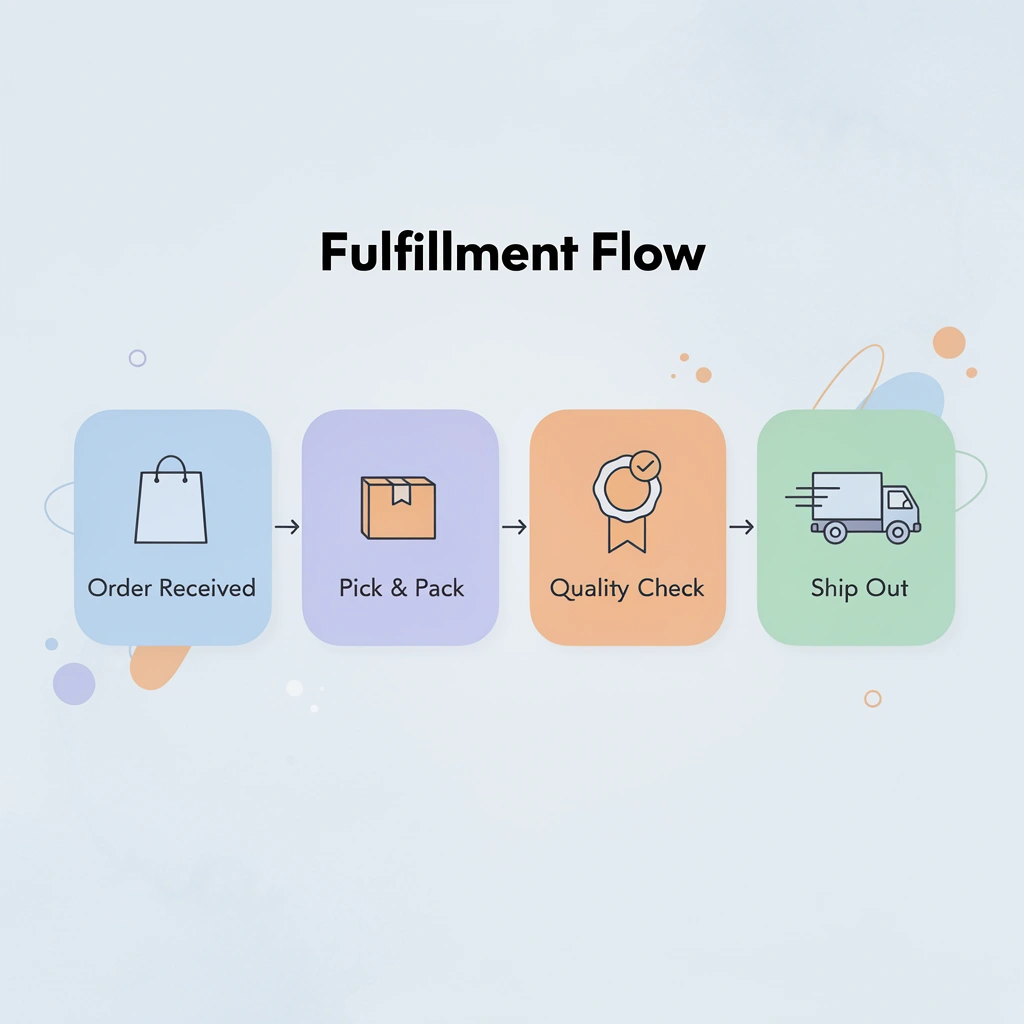
1. Choose High-Quality, Useful Products Upfront
Focus on items people will use and keep rather than discard. Practical apparel, tech accessories, and everyday essentials provide repeated brand exposure while reducing waste. Choose durable materials and flexible designs that match your audience’s needs. This extends your brand’s visibility and increases the perceived value of the gift.
2. Centralize Inventory Management with Real-Time Systems
Use centralized tracking tools to monitor activity across all locations and order channels. Set automatic reorder thresholds for popular items to prevent stockouts during campaigns while avoiding excess inventory. Real-time dashboards reveal usage patterns, enabling proactive adjustments and optimal inventory levels.
3. Standardize Processes for Picking, Packing, and Kitting
Create consistent workflows for assembling and packaging orders to speed up fulfillment and reduce mistakes. Set up dedicated stations for common order types and use kitting services to bundle complementary items, such as onboarding sets with apparel and accessories. Standardized quality checks at each stage ensure brand consistency and protect items during transit.
4. Leverage Technology and Automation Where Possible
Use warehouse management systems and automation to sort items, create labels, and update inventory. Connect these systems with your ordering tools so fulfillment starts automatically when an order is approved. This eliminates manual data entry, accelerates processing, and generates reports highlighting opportunities for efficiency.
5. Optimize Packaging and Shipping Strategies
Choose packaging that protects your products while displaying your brand’s identity through custom inserts or sustainable materials. Work with shipping carriers to offer zone-based shipping from multiple fulfillment centers. This reduces delivery times and lowers costs. Provide customers with tracking information and flexible delivery options, such as expedited service, to enhance satisfaction.
6. Find a Reliable Branded Merchandise Fulfillment Company
Work with an established provider that combines printing expertise with logistics support. ooShirts offers affordable custom apparel with no minimum order requirements, fast turnaround times, competitive pricing, high print quality, free standard shipping, and seven-day-a-week support.
7. Monitor Performance and Continuously Improve
Track key metrics including order accuracy, fulfillment speed, return rates, and customer feedback. Conduct regular reviews to identify issues and test improvements such as new products or operational changes. Data-driven refinements enable your fulfillment operation to scale with your business.
How to Choose a Branded Merchandise Fulfillment Company
The right branded merchandise fulfillment company protects your brand’s reputation by making sure every order is correct, arrives on time, and shows the quality your customers, employees, and partners expect. Look at providers based on fulfillment capabilities, technology, customer service, and their ability to support your long-term growth.
“The right fulfillment partner isn’t just a vendor — they’re a direct extension of your brand, and every shipment is a reflection of your company’s standards.” — Industry Best Practice
🎯 Key Point: Choosing the wrong fulfillment partner doesn’t just cause delays — it damages your brand’s credibility with the customers, employees, and partners you’ve worked hard to impress.
| Evaluation Criteria | Why It Matters |
|---|---|
| Fulfillment Capabilities | Ensures orders are picked, packed, and shipped accurately and at scale |
| Technology Integration | Enables real-time tracking, inventory visibility, and seamless ordering |
| Customer Service | Provides reliable support when issues arise — and they will |
| Scalability & Growth Support | Guarantees your partner can grow with your brand without missing a beat |
⚠️ Warning: Never choose a fulfillment company based on price alone — a low-cost provider that ships incorrect or low-quality merchandise will cost far more in lost trust and brand damage than you’ll ever save on fulfillment fees.
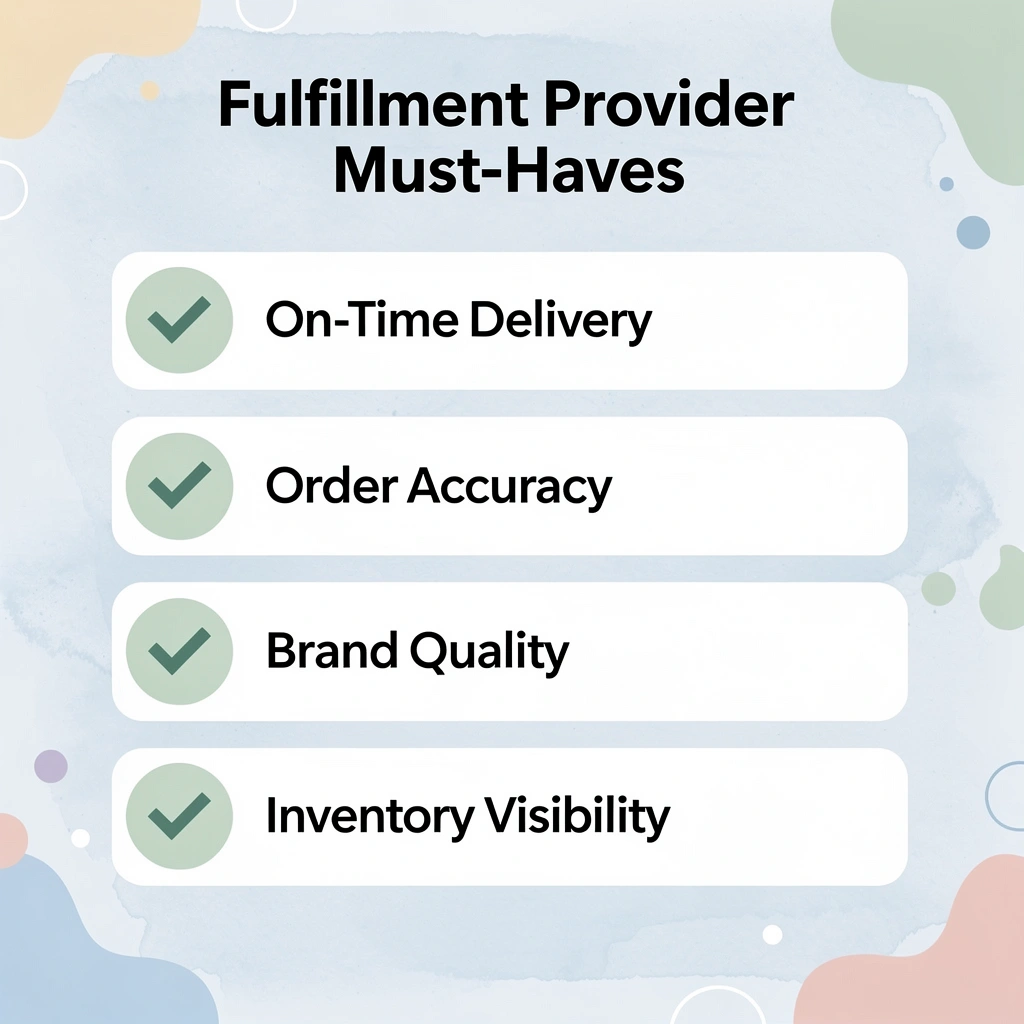
Assess Your Specific Program Needs First
Map out what you need now and what you might need in the future. Consider how many orders you’ll place, what types of products you need, where you’ll ship, and any special handling, such as kitting or custom packaging. Ensure your partner can handle both small one-time orders and large business campaigns without imposing high minimum order amounts. Clarity about your needs helps you avoid mismatched partnerships and select the right partner.
Evaluate Experience with Branded Merchandise Specifically
Look for providers that specialize in promotional products rather than general e-commerce fulfillment. Experienced partners understand decorated apparel, size variations, branding consistency, and quality control, helping prevent common issues such as color mismatches or damage during assembly and shipping.
Review Technology and Integration Capabilities
Good fulfillment companies offer robust platforms with real-time inventory visibility, automated order processing, and seamless integrations with your existing tools, such as HR systems and e-commerce stores. Advanced dashboards provide analytics on popular items, shipping performance, and budget usage. Reliable technology reduces manual work and errors while supporting scalable growth.
Examine Warehouse Locations and Shipping Network
Choose partners with fulfillment centers in strategic locations to reduce shipping time and costs to your main customers. The ability to handle both domestic and international shipping, including customs handling, is essential if you work with teams or customers around the world.
Analyze Pricing Structure and Total Cost Transparency
Ask for detailed breakdowns of all fees, including storage, pick-and-pack, kitting, returns, and setup costs. Top providers offer predictable pricing without hidden charges and demonstrate value through volume efficiencies and carrier negotiations. Compare total program costs against potential savings in time and reduced waste.
Check Quality Control, Reporting, and Customer Support
Ensure the company conducts inspections at multiple stages and adheres to your brand guidelines. Detailed reports on order accuracy, delivery times, and inventory levels help you track your return on investment. Knowledgeable support teams available through multiple channels respond quickly to solve problems and improve your program.
Request References, Case Studies, and Trial Options
Talk with clients in similar industries to understand how well providers perform on timelines, accuracy, and communication. Review case studies showing real improvements in efficiency or cost savings. Many providers offer pilot programs or initial assessments so you can test their fit before committing fully.
Prioritize Scalability and Long-Term Partnership Potential
Pick a company that can grow with your brand as you add new products, increase sales, or enter new markets. Flexible contracts, ongoing innovation, and strong teamwork ensure the relationship delivers increasing value rather than constraining your growth.
How ooShirts Simplifies Branded Merchandise Fulfillment
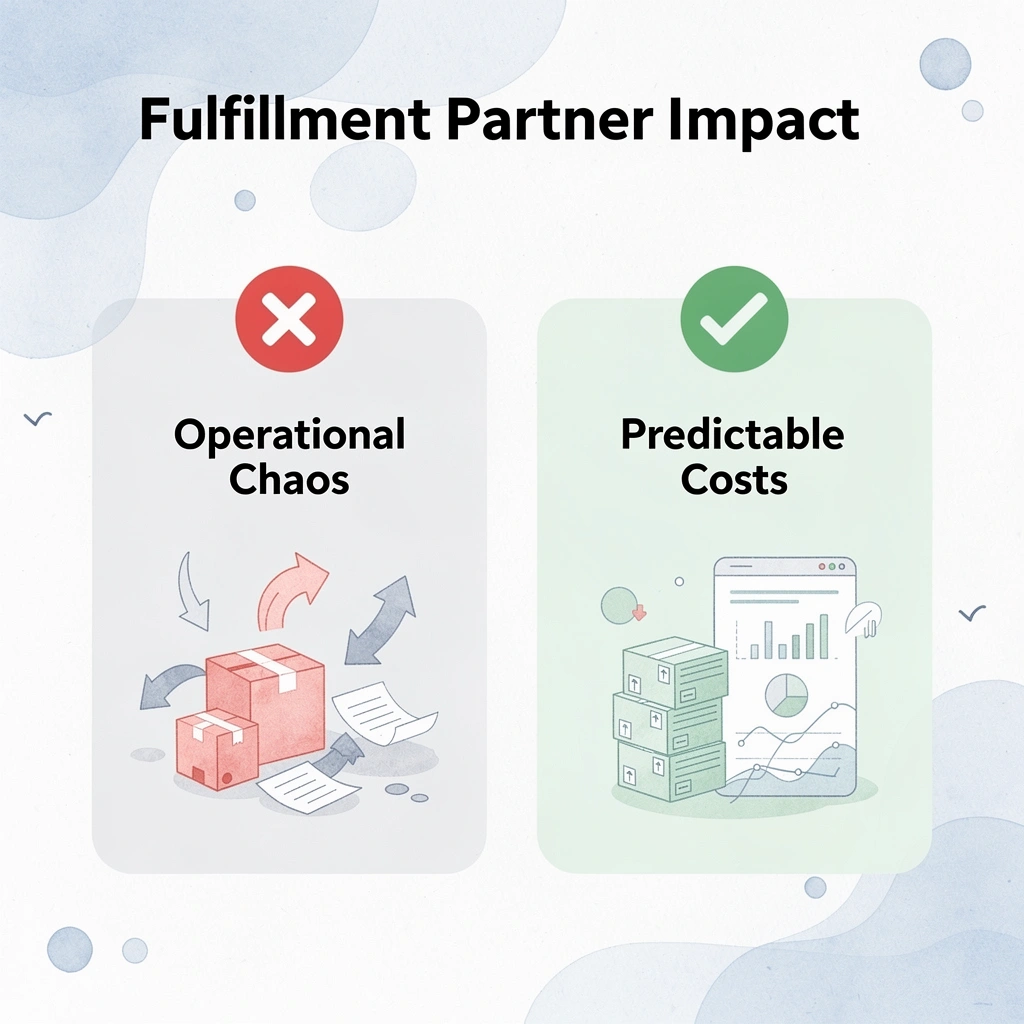
Using an outside company for order fulfillment can solve operational chaos, but it raises an important question: which partner delivers quality, speed, and predictable costs without hidden fees?
“The right fulfillment partner eliminates operational chaos — delivering quality, speed, and transparent pricing without the surprises that derail budgets.” — Industry Best Practice
💡 Tip: Before committing to any fulfillment partner, audit for hidden fees, minimum order requirements, and turnaround time guarantees. These three factors determine your real total cost.
ooShirts was built to answer that. Founded in 2007 by a high school student with just $2,000 — frustrated by overpriced local print shops — the platform cuts out middlemen to make quality custom apparel accessible to everyday organizations, not just well-funded marketing departments. This origin shapes everything: pricing transparency and no minimum order requirements.
| Feature | Traditional Print Shops | ooShirts |
|---|---|---|
| Pricing Model | Markup-heavy, opaque | Transparent, no hidden fees |
| Minimum Orders | Often high minimums | No minimums required |
| Accessibility | Built for large budgets | Everyday organizations |
| Founded | Varies | 2007 |
🎯 Key Point: ooShirts’ founding story isn’t just history — it’s the reason pricing transparency and no minimum orders are baked into the platform’s core identity.
✅ Best Practice: Organizations of any size — from small nonprofits to growing businesses — can leverage ooShirts without worrying about meeting bulk order thresholds or absorbing unexpected costs.
What makes the cost structure different?
ooShirts eliminates the typical vendor quote process: waiting days for responses, only to discover hidden setup fees, shipping charges, and design costs. By invoice time, budgets are stretched thin. ooShirts includes free shipping, free setup, expert design review upon request, and a low price guarantee upfront. You see the real cost before committing, making budget planning predictable for schools, nonprofits, and small businesses.
How does transparent pricing shape branded merch ideas for tight budgets?
Clear pricing makes a difference. According to custom apparel industry data, organizations that cannot see their costs clearly spend 15 to 25 percent more on branded merchandise programs because surprise fees accumulate across multiple orders. All-inclusive pricing provides a structural advantage for teams managing tight budgets across recurring merchandise needs.
How does the ordering process actually work?
The production workflow is where most fulfillment relationships break down: teams upload a logo, wait for a proof, send revision notes through email, and lose a week before printing begins. ooShirts replaces that fragmented back-and-forth with an integrated online design tool where you select styles, colors, and fonts, upload artwork, and receive expert review before production. Orders as small as one unit move through the same system as bulk runs, so a nonprofit testing a new design and an enterprise ordering 500 kits use the same efficient, transparent process. With standard production completing in a few business days and rush options available, the timeline from concept to delivery shrinks considerably.
Why does a vendor’s track record matter for branded merch ideas?
Since 2007, ooShirts has printed over 10 million shirts for more than 1 million customers, demonstrating a consistent track record of delivery. For teams concerned about vendor communication before an event, that history matters.
Related Reading
- Recruiting Swag Ideas
- Cool Swag Ideas For Employees
- Swag Ideas For Events
- Company Swag Ideas For Clients
- Top Merchandise Companies For Employee Swag
- Best Corporate Gift Promotional Product Options
- Work From Home Swag
- Corporate Swag Vendors
- Sendoso Alternatives
Start Designing Your Custom Shirts Today
If your team has struggled with vendor frustrations, inconsistent print quality, unpredictable costs, and slipping timelines, cheap custom T-shirts through ooShirts remove these barriers. You get no minimums, all-inclusive pricing, and expert design review built into every order, making professional-quality custom shirts accessible to teams of any size.
“No minimums, all-inclusive pricing, and expert design review — every barrier to ordering custom shirts, removed.” — ooShirts
💡 Tip: Whether you need 1 shirt or 1,000, ooShirts scales to your order without penalizing small quantities with hidden fees or setup charges.
✅ Best Practice: Look for a supplier that bundles design review, shipping, and printing costs into a single, transparent price — exactly what ooShirts delivers.
Start your first order at ooShirts today for instant pricing, no signup fees, and a design tool that moves you from concept to confirmed order in minutes. Quality fulfillment doesn’t require a big budget or a dedicated procurement team — just the right starting point.
🎯 Key Point: From first click to confirmed order, ooShirts is built for speed, simplicity, and budget-friendly results — no procurement expertise required.
⚠️ Warning: Don’t let complex ordering processes or surprise costs delay your project — ooShirts’ all-inclusive model means what you see is exactly what you pay.
| Feature | ooShirts Advantage |
|---|---|
| Order Minimums | None — order any quantity |
| Pricing Model | All-inclusive, no hidden fees |
| Design Support | Expert review on every order |
| Signup Required | No — instant access |
| Time to Order | Concept to be confirmed in minutes |
Leave a Reply