
Last updated: August 10, 2026
Pulling together swag bag ideas for a product launch, corporate event, or client gifting campaign involves more than picking the right items. Sourcing branded merchandise, managing inventory, packing orders, and shipping on time can quietly consume hours that most teams simply do not have. A well-structured fulfillment system handles order processing, product storage, and delivery without the chaos.
Custom T-shirts are a practical starting point because they scale well and appeal to almost any audience. Keeping production costs low makes it easier to order in bulk, fulfill orders consistently, and maintain a steady promotional merchandise pipeline, whether shipping to 10 people or 10,000. For teams ready to get started, ooShirts offers cheap custom T-shirts that make branded apparel accessible without compromising on quality.
Table of Contents
- What Is Branded Merchandise Fulfillment and How Does It Work?
- Why Is Branded Merchandise Fulfillment Important for Growing Brands?
- Should You Outsource Branded Merchandise Fulfillment?
- 7 Tips for Streamlining Branded Merchandise Fulfillment
- How to Choose a Branded Merchandise Fulfillment Company
- How ooShirts Simplifies Branded Merchandise Fulfillment
- Start Designing Your Custom Shirts Today
Summary
- Branded merchandise fulfillment covers the full chain from production to delivery, including warehousing, inventory tracking, kitting, and carrier handoff. The failure point in most in-house setups is not the design or printing but the inventory gap, specifically the moment a team needs to ship dozens of kits and discovers they are short on items with no system to catch it in advance. Fulfillment is the infrastructure that determines whether a merchandise investment actually reaches the right person at the right time.
- The financial case for outsourcing fulfillment is substantial. Fulfillment costs can account for up to 70% of operational expenses for some ecommerce businesses, and outsourcing to third-party logistics providers can reduce shipping costs by up to 30% through volume-based carrier networks. Those savings compound across high-volume programs, giving smaller organizations access to pricing structures that would otherwise require enterprise-scale order quantities.
- Branding consistency breaks down when fulfillment is handled by multiple vendors without centralized quality control. Print standards drift between production runs, colors arrive slightly off-spec, and recipients notice the inconsistency even when they cannot explain it. The cumulative effect is a brand that feels unreliable, which directly undermines the purpose of distributing custom merchandise in the first place.
- The promotional products industry is projected to reach $26.2 billion by 2025, and 83% of consumers report being more likely to do business with a brand after receiving branded merchandise. Those numbers only convert into real business outcomes when the product arrives on time, in good condition, and reflects the quality of the brand it represents. A delayed shipment or faded logo generates doubt rather than goodwill.
- Over 45% of online sellers now use print-on-demand services to fulfill orders for branded merchandise, a shift that reflects how consistently the bulk-or-nothing production model has failed smaller buyers. Print-on-demand eliminates minimum order requirements and can reduce upfront inventory costs by up to 100%, making flexible, on-demand production the practical default for organizations that cannot afford to overorder or carry excess stock.
- Packaging and presentation are consistently underinvested in branded merchandise programs. A shirt folded in branded tissue inside a printed box with a personalized insert sends a fundamentally different message than the same shirt stuffed into a plain poly mailer. The unboxing moment is a brand touchpoint, and how a product arrives shapes the recipient’s perception just as much as the product itself.
- ooShirts’ cheap custom T-shirts fit into this landscape by removing the minimum-order barrier and building shipping and setup costs into the upfront price, which makes budget forecasting accurate for nonprofits, school groups, and small businesses where every dollar is tracked before it is spent.
What Is Branded Merchandise Fulfillment and How Does It Work?
Branded merchandise fulfillment is the complete system that takes your custom products from production to the right person’s hands. It covers warehousing, inventory management, kitting, and shipping — every critical touchpoint between creation and delivery. When it works well, your brand shows up consistently, professionally, and on time, whether you’re sending ten onboarding kits or ten thousand event giveaways.
“Branded merchandise fulfillment isn’t just logistics — it’s the final impression your brand makes, at scale, every single time.”
💡 Example: A company onboarding 500 new hires across multiple locations relies on fulfillment to ensure every employee receives the same branded kit — same items, same quality, same experience — without the internal team lifting a finger.
🔑 Takeaway: Branded merchandise fulfillment is not just about shipping boxes. It’s about delivering a consistent brand experience across every recipient, every order size, and every deadline.
| Fulfillment Component | What It Does |
|---|---|
| Warehousing | Stores your branded inventory safely and accessibly |
| Inventory Management | Tracks stock levels to prevent shortages or overstock |
| Kitting | Assembles individual items into ready-to-ship branded packages |
| Shipping | Delivers orders to the right person, at the right time |

What actually happens behind the scenes
The process starts the moment your products are made. Real-time inventory systems track stock levels, flag low counts, and record what’s available. The failure point in most DIY fulfillment setups isn’t the printing or design—it’s when someone needs to ship 50 kits on a Tuesday and discovers they’re short on 3 items, with no system to catch it.
How does branded merchandise fulfillment handle orders end-to-end?
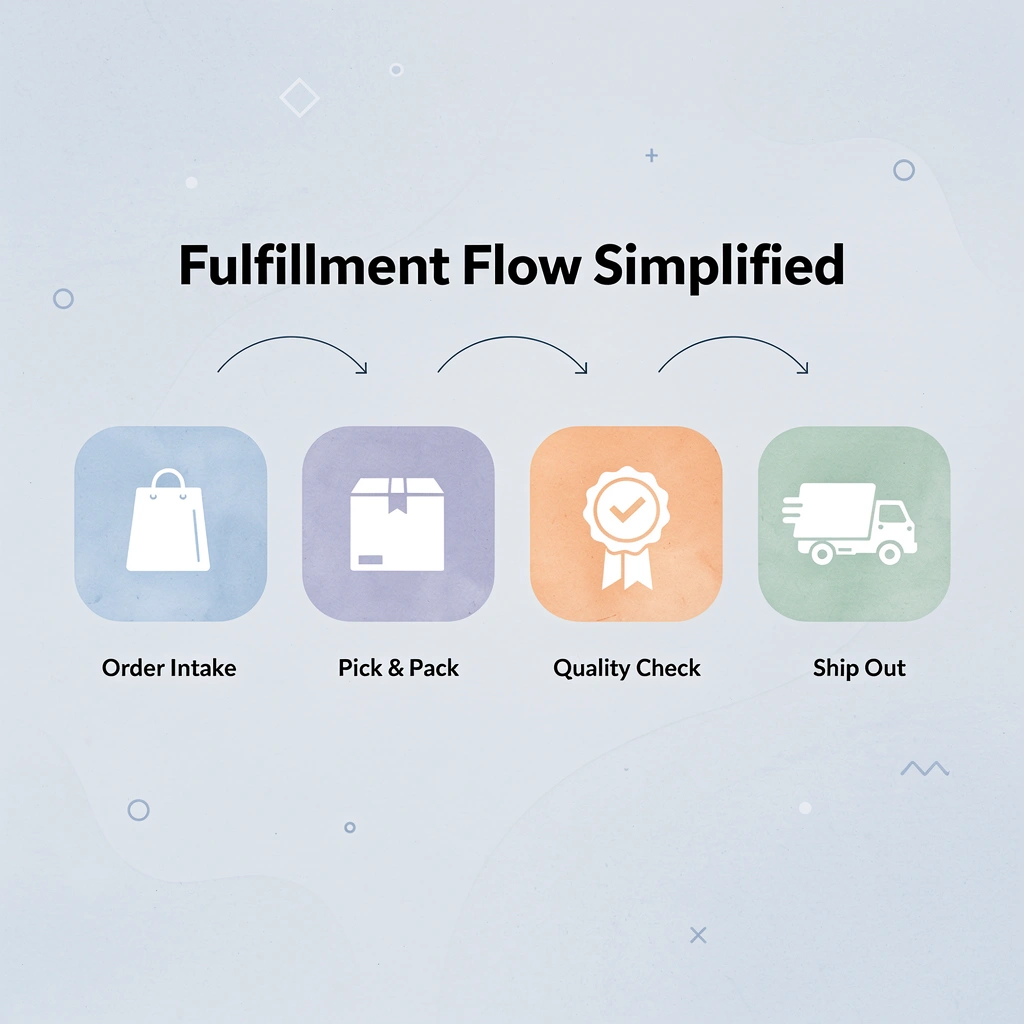
Order processing begins when a request arrives from an online company store, HR platform, or direct event registration. The fulfillment team picks items, assembles custom kits (branded hoodie, notebook, and personalized welcome card), verifies accuracy, and hands packages to carriers with full tracking. Automation reduces address errors and missing items.
Most teams start by ordering bulk custom apparel, stacking boxes in a back office, and packing shipments by hand—a process that breaks down as volume grows. Cheap custom T-shirts from ooShirts solve this by keeping per-unit costs low with no minimum order requirements, enabling smaller, smarter batches that feed into fulfillment without tying up capital in excess inventory.
Why do the numbers behind branded merchandise fulfillment matter?
According to Rupt’s 2025 Branded Merchandise Statistics, 83% of consumers are more likely to do business with a brand after receiving branded merchandise, and the promotional products industry is projected to reach $26.2 billion by 2025. These numbers translate into real business results only when the product reaches the right person, in good condition, at the right time.
How do packaging and presentation shape the brand experience?
Packaging and presentation matter more than most brands realize. A custom t-shirt stuffed into a plain poly mailer sends a different message than the same shirt folded in branded tissue inside a printed box with a handwritten note. The unboxing moment is a brand touchpoint: our fulfillment services use eco-conscious materials, custom inserts, and presentation standards that match product quality.
The fastest-growing brands aren’t investing in better products alone. They’re investing in better systems.
Why Is Branded Merchandise Fulfillment Important for Growing Brands?
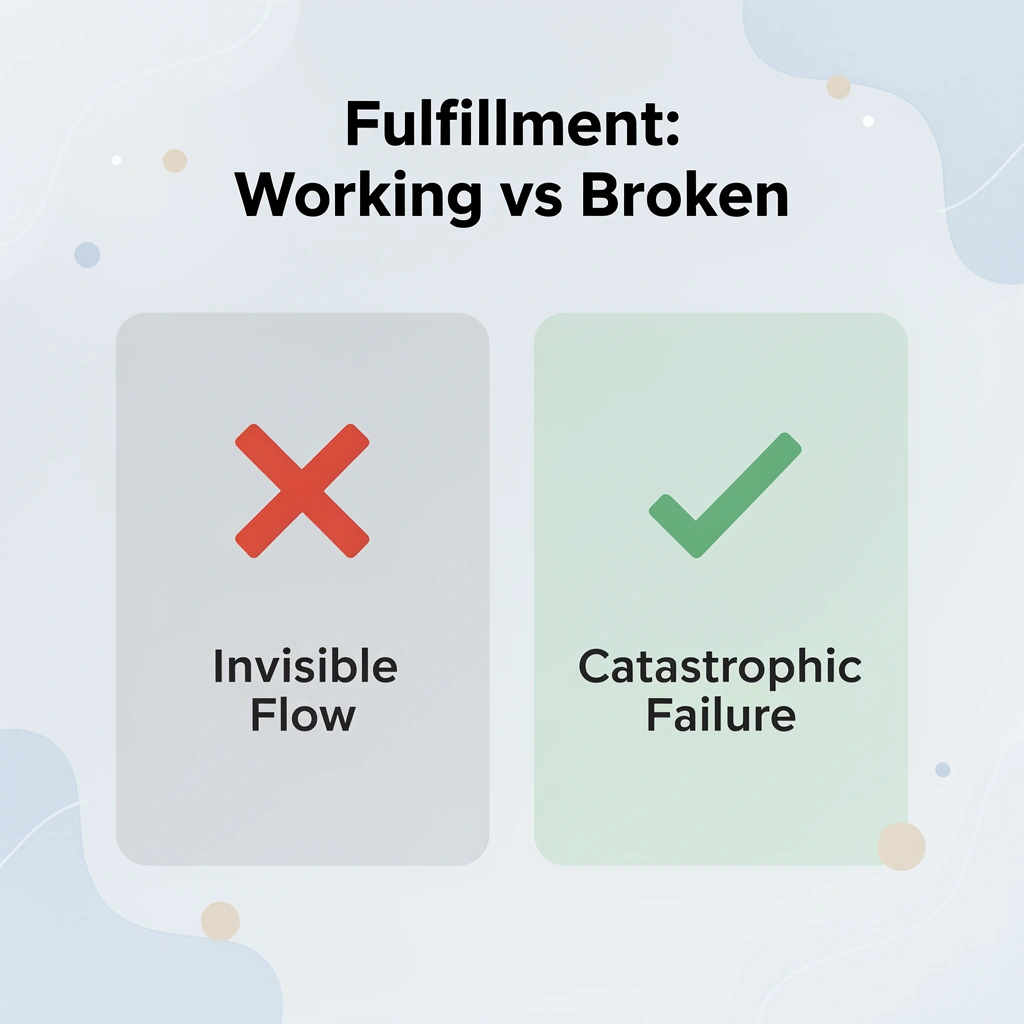
Growing brands fail not because of poor products, but because of systems that can’t grow with them. Branded merchandise fulfillment is invisible when it works — and catastrophic when it doesn’t.
“Branded merchandise fulfillment is invisible when it works and catastrophic when it doesn’t — making it one of the most critical yet overlooked systems for scaling brands.”
🎯 Key Point: A brand’s ability to scale successfully depends less on product quality and more on the operational systems built to support growth — and branded merchandise fulfillment sits at the center of that infrastructure.
💡 Tip: Before your brand hits its next growth milestone, audit your fulfillment system now — waiting until it breaks is the most expensive mistake a growing brand can make.
| Fulfillment System State | Brand Impact |
|---|---|
| Working seamlessly | Invisible — customers and teams notice nothing |
| Struggling under scale | Delays, errors, and damaged brand reputation |
| Completely broken | Catastrophic loss of trust, revenue, and loyalty |
What breaks first when fulfillment falls apart
The failure point is usually inventory control. Without a centralized system to manage stock, popular items disappear before key campaigns, while slow-moving products pile up in storage, consuming budget needed for growth. A rebrand can render thousands of pre-printed pieces worthless overnight, and without real-time tracking, teams often discover the problem only when standing in front of a conference booth with nothing to distribute.
How does branded merchandise fulfillment affect branding consistency?
Branding consistency is the second consideration. When fulfillment runs through multiple vendors without centralized quality control, print standards drift. One production run delivers sharp, accurate colors; the next arrives slightly off-spec because a different supplier interpreted the brand guide differently. Recipients notice, even if they cannot articulate why.
What happens when small teams handle fulfillment manually?
Most small organizations order in bulk from the lowest-cost supplier, then store products in a spare room or ship items manually as requests arrive. As order frequency grows, manual fulfillment becomes a time sink, and inconsistent packaging undermines product quality. Our cheap custom T-shirts eliminate minimum order requirements, so teams can order exactly what they need when they need it, without committing to unused inventory.
Why does fulfillment quality determine whether branded merchandise builds goodwill?
According to Rupt’s 2025 Branded Merchandise report, 83% of consumers are more likely to do business with a brand after receiving promotional products. This benefit depends on timely delivery, quality appearance, and strong brand representation. Delayed shipments or faded logos undermine goodwill and create doubt.
Why data is the missing piece
When fulfillment is scattered, data gets scattered too. Without a central place to manage and report on orders, teams can’t see which items customers prefer, which sizes sell out first, or where shipping takes longer. Brands that consolidate fulfillment can improve their merchandise mix, eliminate slow-moving inventory, and focus on what customers want.
Brands that see fulfillment as a strategic function rather than a logistics task build operational reliability that competitors can’t easily replicate. This reliability shows up in every shipment.
But knowing fulfillment matters and knowing how to structure it are two different conversations.
Related Reading
- Swag Bag Ideas
- Promotional Products Marketing
- Branded Merch Ideas
- Swag Management Platform
- Sustainable Corporate Swag
- Promotional Product Sourcing
Should You Outsource Branded Merchandise Fulfillment?
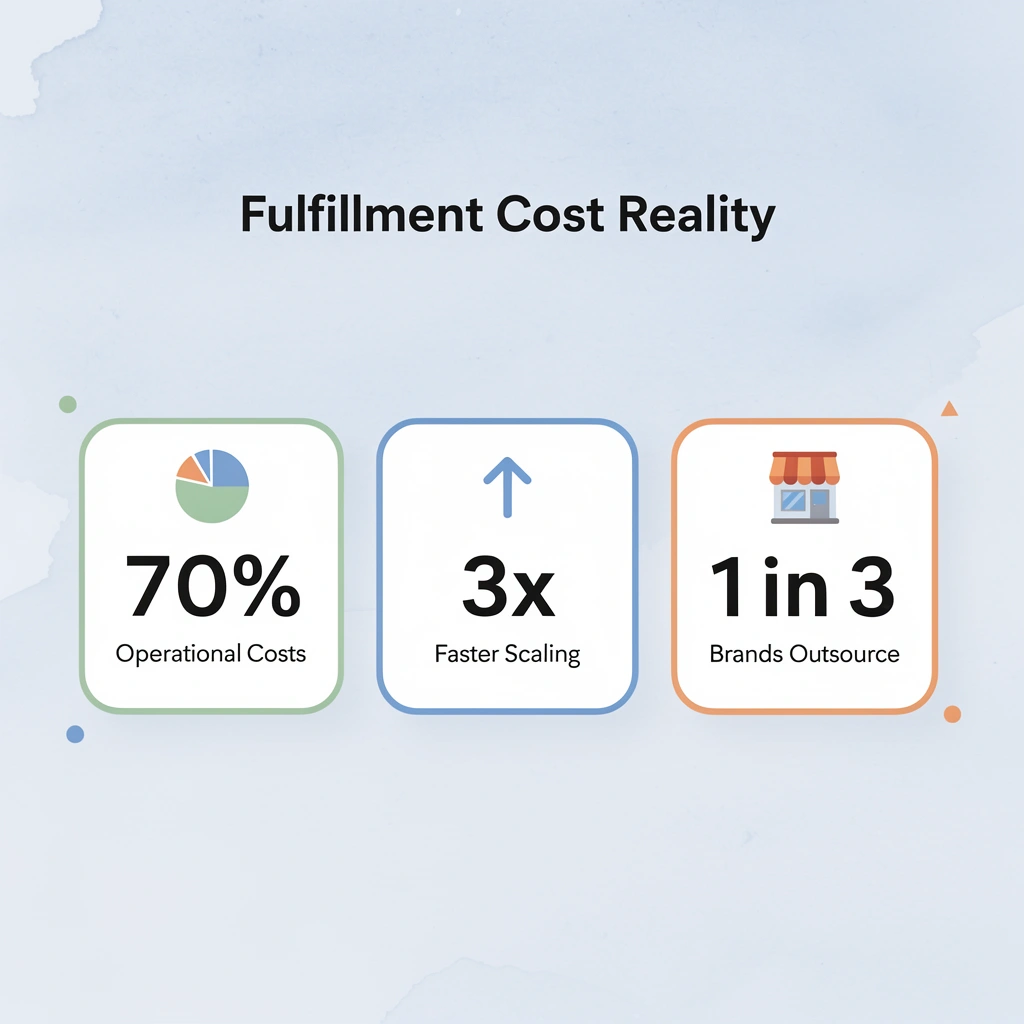
Outsourcing branded merchandise fulfillment is the right move for most growing organizations. According to Programming Insider, fulfillment costs represent up to 70% of operational expenses for some ecommerce businesses. This is fundamentally a financial decision — and the numbers make a compelling case.
“Fulfillment costs represent up to 70% of operational expenses for some ecommerce businesses.” — Programming Insider
🔑 Takeaway: When fulfillment overhead consumes up to 70% of your operating budget, keeping it in-house isn’t a strategy — it’s a liability.
💡 Tip: Before deciding, audit your current fulfillment spend against what a third-party provider would charge. The cost gap is often larger than expected.
| Fulfillment Approach | Cost Impact | Best For |
|---|---|---|
| In-House Fulfillment | Up to 70% of operational expenses | Early-stage or highly specialized operations |
| Outsourced Fulfillment | Reduced overhead, variable scaling | Growing organizations with expanding volume |
| Hybrid Model | Moderate cost control | Businesses with mixed product complexity |
What actually breaks when you keep it in-house
The failure point is usually invisible until it isn’t. Internal teams handling custom merchandise fulfillment split their focus among main priorities: warehouse coordination, order tracking, vendor follow-ups, and shipping exceptions. These tasks consume the focused energy needed for building programs, relationships, and products. When a campaign grows faster than expected or a new product line launches, that split focus becomes a costly bottleneck.
Where does the real cost of in-house storage show up?
Most organizations start by storing branded items in a spare room or shared storage space. The real cost isn’t the square footage; it’s the time spent on manual inventory counts, delayed shipments during peak periods, and inconsistent packaging that erodes recipient perception. Specialized fulfillment providers solve these problems through dedicated infrastructure, standardized quality checks, and carrier relationships that internal operations cannot replicate.
How does Branded Merchandise Fulfillment remove pressure from smaller teams?
When managing custom apparel orders in-house becomes difficult, ooShirts offers a practical starting point with our affordable custom T-shirts. No minimum order requirements mean organizations can order exactly what they need without committing to bulk inventory that consumes budget or warehouse space. For school groups, nonprofits, and small businesses, this flexibility removes the financial pressure that typically drives over-ordering.
Does outsourcing actually reduce costs or just shift them?
Outsourcing reduces costs through structural advantages. Programming Insider reports that outsourcing fulfillment can reduce shipping costs by up to 30% through 3PL provider carrier networks. Providers negotiate volume-based rates across hundreds of clients, giving smaller organizations access to pricing structures that would otherwise require enterprise-scale order volumes. You inherit the network’s leverage, not the service alone.
Why does branded merchandise fulfillment make hidden in-house costs visible?
In-house fulfillment often appears cheaper because real costs are spread out and obscured. Staff hours spent on packing and shipping coordination rarely appear as separate line items, and carrier rates negotiated without volume leverage don’t get compared against what a provider could deliver. An honest audit typically reveals the case for outsourcing.
Related Reading
- Virtual Swag Bag Ideas
- Eco-Friendly Swag Ideas
- Holiday Swag For Employees
- Company Swag Ideas
- Best Swag Ideas For Conferences
- Trade Show Swag Ideas
7 Tips for Streamlining Branded Merchandise Fulfillment
Efficient branded merchandise fulfillment keeps promotional campaigns on schedule, reduces operational costs, and delivers a consistent brand experience. Strategic improvements eliminate costly delays, reduce errors, and make fulfillment far easier to scale—whether managing employee welcome kits, company stores, customer giveaways, or event merchandise.
“Streamlined fulfillment is not just a logistics win—it’s a brand reputation decision that impacts every touchpoint downstream.” — Fulfillment & Brand Operations Best Practices
💡 Tip: The 7 tips below apply whether you’re shipping 10 kits or 10,000—scalable systems start with the same foundational improvements.
| Fulfillment Use Case | Key Priority | Common Pain Point |
|---|---|---|
| Employee Welcome Kits | Consistency & timing | Delayed onboarding experience |
| Company Stores | Inventory accuracy | Stockouts & overordering |
| Customer Giveaways | Speed & branding | Incorrect or damaged items |
| Event Merchandise | Deadline adherence | Last-minute production errors |
🎯 Key Point: Branded merchandise fulfillment is not just a back-office function—it’s a direct extension of your brand identity and a critical driver of campaign success.
⚠️ Warning: Overlooking the fulfillment strategy early leads to compounding issues—missed deadlines, budget overruns, and a damaged brand impression that’s difficult to recover from.
1. Choose High-Quality, Useful Products Upfront
Focus on items people use and keep rather than discard. Practical apparel, tech accessories, and everyday essentials provide repeated brand exposure while reducing waste. Choose durable materials and versatile designs that match your audience’s needs and withstand regular use. This keeps your brand visible longer and demonstrates greater value to recipients.
2. Centralize Inventory Management with Real-Time Systems
Use centralized tracking tools to see inventory across all locations and order channels. Set automatic reorder thresholds for popular items to prevent stockouts during campaigns while avoiding excess inventory. Real-time dashboards reveal usage patterns, enabling you to adjust inventory levels proactively.
3. Standardize Processes for Picking, Packing, and Kitting
Create consistent workflows for assembling and packaging orders to speed up fulfillment and reduce mistakes. Set up dedicated stations for common order types and use kitting services to bundle complementary items, such as onboarding sets with apparel and accessories. Standardized quality checks at each stage maintain brand consistency and protect items during transit.
4. Leverage Technology and Automation Where Possible
Use warehouse management systems and automation to sort items, create labels, and update inventory. Connect these systems with your ordering tools so fulfillment starts automatically when an order is approved. This reduces manual data entry, accelerates processing, and generates reports highlighting opportunities for efficiency.
5. Optimize Packaging and Shipping Strategies
Choose packaging that protects your products while showcasing your brand’s identity through custom inserts or sustainable materials. Work with shipping carriers to use zone-based shipping from multiple fulfillment centers to reduce transit times and costs. Provide customers with tracking information and flexible delivery options, such as expedited service, to enhance their experience.
6. Find a Reliable Branded Merchandise Fulfillment Company
Work with an established provider that combines printing expertise with logistics support. ooShirts offers affordable custom apparel with no minimum order requirements, fast turnaround times, competitive pricing, high print quality, free standard shipping, and seven-day-a-week support.
7. Monitor Performance and Continuously Improve
Track key metrics including order accuracy, fulfillment speed, return rates, and customer feedback. Conduct regular reviews to identify issues and test improvements such as product variations or process changes. Data-driven refinements help your fulfillment operation scale with your business.
How to Choose a Branded Merchandise Fulfillment Company
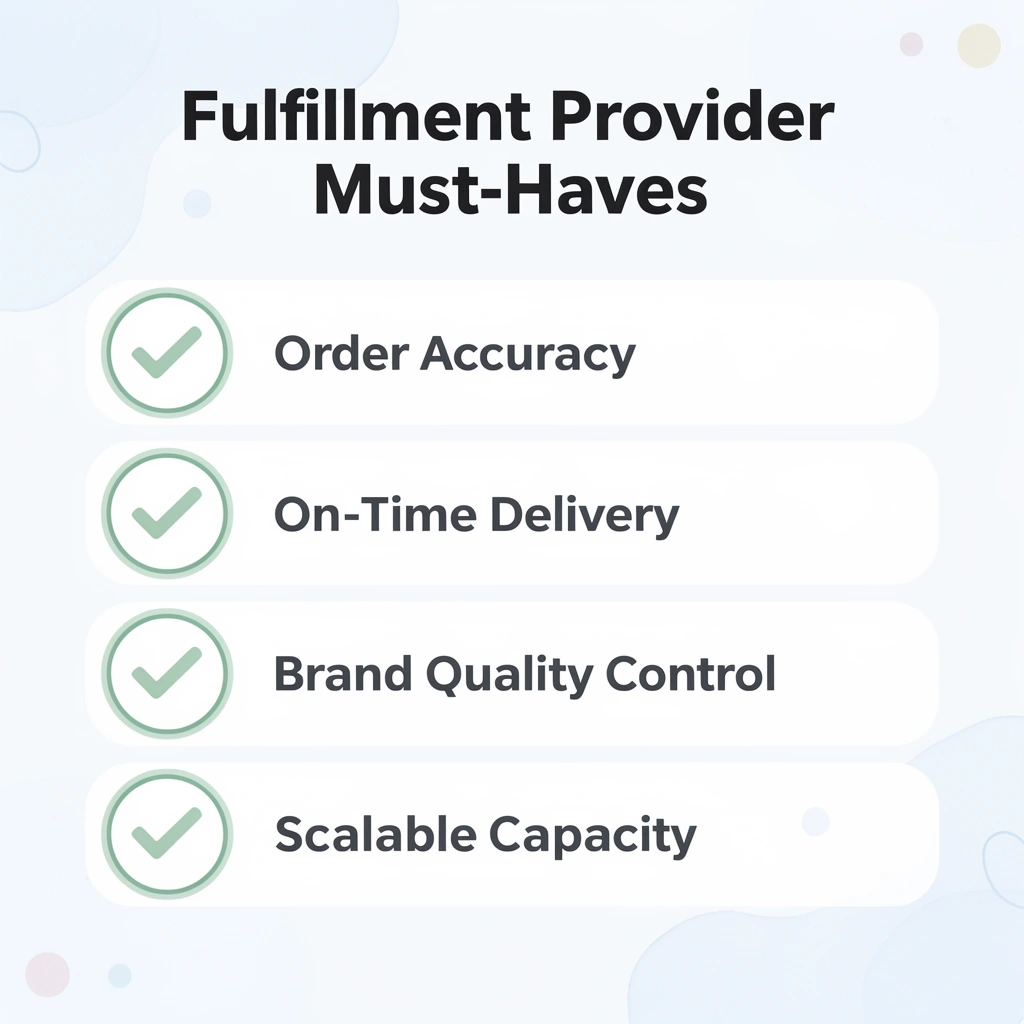
The right branded merchandise fulfillment company protects your brand’s reputation by making sure every order is correct, arrives on time, and shows the quality your customers, employees, and partners expect. Look at potential providers based on their fulfillment capabilities, technology, customer service, and ability to support your long-term growth.
“The right fulfillment partner isn’t just a vendor — they’re a direct extension of your brand, responsible for the first physical impression customers and employees receive.” — Branded Merchandise Industry Insight
| Evaluation Criteria | What to Look For |
|---|---|
| Fulfillment Capabilities | Order accuracy, speed, and shipping reliability |
| Technology | Real-time tracking, inventory management, integrations |
| Customer Service | Dedicated support, fast response times, and issue resolution |
| Long-Term Growth Support | Scalability, global reach, and flexible program management |
🎯 Key Point: A fulfillment partner who consistently delivers accurate, on-time orders is one of the most powerful tools for protecting and strengthening your brand image.
⚠️ Warning: Don’t evaluate fulfillment companies on price alone — a cheap provider who ships late or sends incorrect orders can cause lasting damage to your brand’s credibility with customers, employees, and partners.
Assess Your Specific Program Needs First
Plan what you need now and in the future: order volume, product types, shipping destinations, and special requirements like assembly or custom packaging. Ensure your partner can handle both single orders and large campaigns without imposing high minimum order amounts. Clear communication about your needs helps you avoid poor partnerships and select the right partner.
Evaluate Experience with Branded Merchandise Specifically
Choose providers that specialize in promotional products rather than general e-commerce fulfillment. They understand decorated apparel, size variations, branding consistency, and quality control, helping prevent issues such as color mismatches or damage during assembly and shipping.
Review Technology and Integration Capabilities
Good fulfillment companies offer robust platforms with real-time inventory visibility, automated order processing, and seamless integrations with your existing tools, such as HR systems and e-commerce stores. Advanced dashboards provide analytics on popular items, shipping performance, and budget usage. Reliable technology reduces manual work and errors while supporting scalable growth.
Examine Warehouse Locations and Shipping Network
Choose partners with fulfillment centers in strategic locations to reduce shipping times and costs. If you ship domestically or internationally, select a partner experienced in both. This includes expertise in customs handling, which is essential when working with teams or customers abroad.
Analyze Pricing Structure and Total Cost Transparency
Ask for detailed breakdowns of all fees, including storage, pick-and-pack, kitting, returns, and setup costs. Top providers offer predictable pricing without hidden charges and demonstrate value through volume efficiencies and carrier negotiations. Compare total program costs against potential savings in time and reduced waste.
Check Quality Control, Reporting, and Customer Support
Ensure the company conducts careful inspections at multiple stages and adheres to your brand guidelines. Detailed reports on order accuracy, delivery times, and inventory levels help you track your return on investment. Responsive support teams with product expertise, available through multiple channels, solve problems quickly and help you improve your program.
Request References, Case Studies, and Trial Options
Talk with current clients in similar industries to understand real performance on timelines, accuracy, and communication. Review case studies that highlight measurable improvements in efficiency or cost savings. Many providers offer pilot programs or initial assessments to test compatibility before committing fully.
Prioritize Scalability and Long-Term Partnership Potential
Pick a company that can grow with your brand as you add new products, increase sales, or enter new markets. Flexible contracts, ongoing innovation, and a collaborative team approach ensure the relationship delivers increasing value rather than constraining your growth.
How ooShirts Simplifies Branded Merchandise Fulfillment
A fulfillment partner needs three things: pricing you can trust, production that doesn’t require a purchasing committee, and support that shows up when something goes wrong.
“A fulfillment partner needs three things: pricing you can trust, production that doesn’t require a purchasing committee, and support that shows up when something goes wrong.” — Core Fulfillment Principle
| What You Need | Why It Matters |
|---|---|
| Pricing you can trust | Eliminates budget surprises and builds long-term confidence |
| Streamlined production | No approval bottlenecks or committee delays |
| Reliable support | Ensures problems get solved fast, not ignored |
🎯 Key Point: The best fulfillment partners don’t just deliver products — they deliver predictability, speed, and accountability at every stage of the process.
💡 Tip: When evaluating a branded merchandise partner, test their support before you commit — reach out with a question and see how quickly and clearly they respond. Response quality is a direct signal of how they’ll handle issues when it really matters.

Where does branded merchandise fulfillment typically break down?
The failure point in most branded merchandise programs isn’t the design—it’s the gap between placing an order and receiving something you’re proud to hand out. That gap widens when minimum order quantities force excessive purchases, when setup fees appear after commitment, or when customer service disappears after payment.
According to Printful’s print-on-demand research, over 45% of online sellers use print-on-demand services to fulfill orders for branded merchandise. The market has shifted toward flexible, on-demand production because the bulk-or-nothing model failed smaller buyers.
How does ooShirts compress the branded merchandise fulfillment timeline?
Cheap custom T-shirts through ooShirts replace email back-and-forths with an in-browser design tool where you select styles, upload artwork, and see pricing immediately, with optional expert design review before print. The result is a shorter timeline that requires no dedicated project manager.
What makes transparent pricing worth paying attention to?
Pricing opacity is one of the most consistent sources of frustration in branded merchandise fulfillment. You get a quote, then a setup fee, then a shipping charge, then a rush surcharge, and the original number you budgeted against is unrecognizable at checkout. ooShirts builds free standard shipping and setup into the quoted price, backs it with a low-price match guarantee, and shows bulk discount tiers in real time as quantities change. This all-inclusive structure makes budget forecasting accurate—critical for nonprofits, school groups, and small businesses where every dollar is accounted for before it’s spent. According to Coastal Reign’s 2025 Print-on-Demand Statistics and Trends report, print-on-demand eliminates minimum order quantities, reducing upfront inventory costs by up to 100% and making accessible pricing sustainable rather than promotional.
Does quality hold up when prices stay low?
The idea that a low price means low quality is a common myth. ooShirts uses high-quality inks and printing techniques that are tested to ensure garments last through repeated washing and everyday wear. If a defect gets through, our policy is a full reorder, not a discount code. A shirt that fades after three washes disappoints the recipient and hurts the brand it was supposed to represent. Since 2007, ooShirts has printed over 10 million shirts for more than one million customers: a volume that demonstrates reliability beyond marketing claims.
How does branded merchandise fulfillment support tight deadlines?
Seven-day support through live chat, phone, and email is critical because support availability is where many fulfillment relationships fail. You need it when a design file uploads incorrectly at 9 p.m., the night before a deadline. Knowing that someone is reachable on a Saturday changes how confidently a team can plan around tight timelines.
What becomes possible once the logistics are handled?
Once you understand what a fulfillment setup like this makes possible, the next step shifts from logistics to creative vision.
Start Designing Your Custom Shirts Today
What you want to create matters more than how you make it happen. When fulfillment works, your attention shifts to building community, representing your organization, and delivering something real people are proud to wear.
“When the logistics disappear, creativity takes over, and that’s when truly great custom apparel gets made.” — Design Industry Insight
🎯 Key Point: The best custom shirt projects happen when creators focus on vision and community rather than budgets, minimums, or logistics.

Cheap custom T-shirts from ooShirts make that shift possible without large budgets or minimum orders. Our all-inclusive pricing, free shipping, seven-day support, and low-price guarantee remove the barriers that once priced out creators entirely. Start designing at ooShirts today and see your price instantly — with no commitment required.
| ooShirts Advantage | What It Means for You |
|---|---|
| All-inclusive pricing | No hidden fees or surprise costs |
| Free shipping | Keep more money in your budget |
| Seven-day support | Help available all week long |
| Low-price guarantee | Confidence that you’re getting the best deal |
| No minimum orders | Order exactly what you need |
💡 Tip: Use the instant price preview tool at ooShirts to explore your options before committing — zero pressure, 100% transparency.
✅ Best Practice: Whether you’re outfitting a small team, a nonprofit, or a school club, starting with no minimums means you can test your design risk-free before scaling up.
Related Reading
- Recruiting Swag Ideas
- Cool Swag Ideas For Employees
- Swag Ideas For Events
- Company Swag Ideas For Clients
- Top Merchandise Companies For Employee Swag
- Best Corporate Gift Promotional Product Options
- Work From Home Swag
- Corporate Swag Vendors
- Sendoso Alternatives
Leave a Reply