Last updated: August 17, 2026
Your shirts didn’t shrink because of the wash cycle. They shrank because of a decision made at the warehouse, weeks before printing. Here is where the problem actually starts.
Two hundred shirts printed, boxed, and distributed at a company 5K. The design looks sharp. The deadline was hit. Then the complaint texts start arriving from employees who washed their shirts once and found something that no longer fits the way it should. The common assumption is that if shirts shrink after printing, the printing process or the washing method is to blame, so the fix is either a better printer or stricter laundry instructions given to the end-wearer. See our cheap custom t-shirt printing solutions for how this works in practice.
That frustration lands entirely on the organizer, even when they did everything right. Approved the proof. Stayed on budget.
Chose a vendor. The problem was the blank sitting in a warehouse weeks before the ink ever touched it.
The washing machine gets blamed because it’s the last thing that happened before the shirt stopped fitting. But cotton fibers are composed primarily of cellulose, which tightens and condenses when exposed to heat and moisture. That reaction is baked into the fiber’s chemistry. The machine triggers what was already waiting to happen.
Not all wholesale blanks are equal, and the difference that matters most rarely appears on the product photo. High-volume wholesale manufacturing often skips the pre-shrinking process to keep unit costs low, leaving garments in a state where cotton quality and weave density determine how much shrinkage is coming. Shrinkage on untreated 100% cotton can reach 3 to 5% after the first wash, enough to pull a fitted large into something closer to a medium. For an event organizer who ordered by size, that math is brutal.
3 to 5% Cotton shrinkage after just one wash
The hidden cost is the organizer’s credibility, fielding complaints from employees who did nothing wrong, absorbing the reorder conversation, and carrying the reputational weight of a problem that was set in motion at the sourcing stage, long before event day.
Key takeaways
- Shrinkage is decided at the fabric-sourcing stage: by the time ink touches the shirt, the outcome is already locked in.
- 100% cotton blanks carry the highest shrinkage risk because fiber tension releases the moment hot water hits them; pre-shrunk cotton-poly and tri-blend fabrics contract far less under the same conditions.
- Switching printers after a shrunken bulk order fixes nothing if the replacement order uses the same un-pre-shrunk blank; the printer was never the variable that mattered.
- Care label instructions are damage control, not prevention; no washing cycle recovers fit that was lost because the garment was never pre-shrunk before printing.
- Fabric selection is the most consequential procurement decision in a bulk custom apparel order, but material defects and print inconsistencies can still surface after production, meaning sourcing alone isn’t a complete risk shield.
- ooShirts closes that remaining gap: prints are guaranteed to last wash after wash, garments ship free of material defects, and any order with a print-quality issue or a mismatch from the approved design gets a reprint or a full refund.
Why T-Shirts Shrink – The Fiber Tension Science Behind Every Wholesale Blank
The washing machine already delivered its verdict, but most buyers still look for the culprit in the wrong place. Printing process, dryer temperature, cycle length, fabric setting: these feel like plausible explanations because they’re the last variables anyone touches before a shirt that fit perfectly at the event comes out looking like it belongs to someone two sizes smaller. That instinct is understandable, and it’s almost entirely misdirected. The real decision that determines whether your wholesale blanks shrink was made long before you placed your order.
This matters especially for anyone ordering custom shirts for a family reunion, a school play, a fundraiser, or a team promotion, the kinds of time-sensitive, one-shot occasions where a shirt that shrinks after the first wash can’t simply be reordered. The anxiety is real: many buyers worry about noticeable shrinkage before they even confirm their cart, and that worry doesn’t disappear just because they plan to wash carefully with cold water or hang-dry. The fiber science explains why that worry is well-founded, and why the fix starts upstream, in the manufacturing stage.
Cotton Fibers Are Stretched Under Tension During Spinning and Weaving
Raw cotton fiber, pulled from the boll, is soft and relaxed. The moment it enters industrial spinning and weaving, that changes. Mechanical tension is applied throughout both processes to draw fibers into yarn and lock yarn into fabric.
According to Soya Concept‘s clothing care research, untreated 100% cotton can shrink between 3 and 5 percent after the first wash under normal laundry conditions, enough to pull a fitted adult large into a noticeably tighter fit across the chest and shorter at the hem. Cotton fibers are stretched under this mechanical tension during spinning and weaving, storing potential energy in the structure of the fabric itself.
The shirt that arrives in your bulk shipment is holding tension, waiting for a reason to release it.
Heat and Moisture Are the Triggers, Not the Cause
Heat and moisture do not damage cotton fibers. They simply give those fibers permission to stop holding on. As Soya Concept‘s research explains, hot water and tumble-dryer heat are the primary environmental triggers that release stored fiber tension, causing the garment to contract back toward its natural, relaxed length. Critically, even gentler laundry methods, cold water, a delicate cycle, hang drying, reduce but do not eliminate this release. The shrinkage was already baked into the fabric at the manufacturing stage. The washing machine just pulls the trigger.
This is why buyers who are anxious about shrinkage before purchasing are asking exactly the right question, just directing it at the wrong variable. Washing method is a dial you can turn down; the stored tension in an untreated blank is a structural fact you cannot negotiate with after the shirt ships.
Washing method is a dial you can turn down; the stored tension in an untreated blank is a structural fact you cannot negotiate with after the shirt ships.
Why Wholesale Blanks Are Especially Vulnerable
Pre-shrinking (also called sanforizing) is a controlled manufacturing step that releases most of this stored tension before the garment ships. Many high-volume wholesale blank manufacturers skip it to reduce production costs and time. That means a significant portion of blanks on the market arrive in a loaded state: tension stored, shrinkage waiting to happen on first contact with heat and water. Buyers ordering custom apparel for an event rarely see this on the spec sheet. They see a garment weight, a color option, and a price. The pre-shrink status is often buried or absent entirely.
For anyone ordering shirts a team will actually want to wear long after the event, blank selection is the variable that matters most. When you’re comparing options, it pays to look beyond price per unit. Blend construction is one lever: according to NatuClothes FabricData Research Team, polyester fibers do not carry the same stored-tension vulnerability as cotton, which is why 60/40 cotton-polyester blends stay more dimensionally stable through repeated washing than 100% cotton alternatives.
How Much Will It Actually Shrink
The numbers are specific enough to matter. Soya Concept puts untreated 100% cotton shrinkage at 3 to 5 percent after the first wash under normal conditions. On a standard adult large with a 22-inch chest, 3 percent is roughly two-thirds of an inch across the chest, perceptible. At 5 percent, you’re approaching a full size shift in fit. For a family event order, a fundraiser tee, or team shirts with a hard delivery deadline, that delta is the difference between shirts people keep and shirts that quietly disappear to the back of a drawer.
A broad style range (ooShirts carries 100+ shirt styles) gives you the flexibility to match blank construction to your actual use case: a relaxed-fit blend for a team that will wash their shirts repeatedly, or a treated cotton for a one-day promotional run where fit on the day is what counts. Transparent, all-inclusive pricing and a price match guarantee mean you can make that choice on the merits of the fabric, not by reverse-engineering a quote. And with guaranteed delivery dates and free shipping, the shirts you specify are the shirts that show up, on time, for the play, the fundraiser, or the event, without the last-minute scramble that turns a shrinkage risk into a real problem.
How Fabric Type Affects Shrinkage – Cotton vs. Blends in Wholesale Printing
Fabric choice is the single procurement decision that determines how much a shirt will shrink before a single care label is ever read. Most event organizers discover this the hard way, after 200 shirts have already been distributed and the first wash complaints start coming in.
The Four-Tier Shrinkage Risk Ladder: 100% Cotton, Cotton-Poly, Tri-Blend, and 100% Polyester
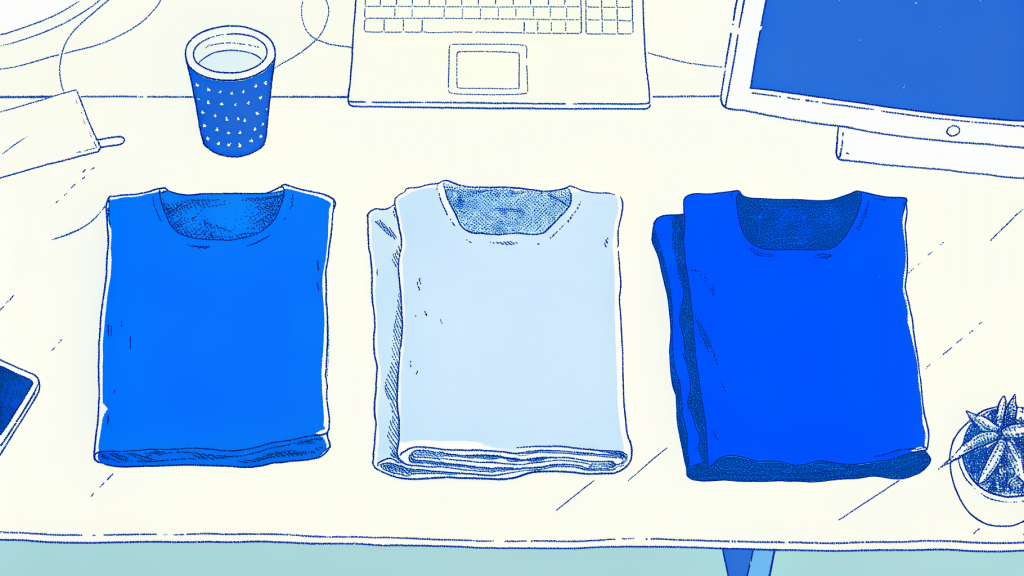
Not all blanks carry the same risk. 100% cotton sits at the top of the shrinkage ladder, averaging 3 to 5 percent shrinkage after the first wash. On a standard adult large, that translates to a shirt that fits noticeably tighter across the chest and shorter at the hem after one cycle. Cotton-polyester blends drop that figure meaningfully, because the polyester component resists the water absorption that drives fiber contraction.
Tri-blends (cotton, polyester, and rayon combined) typically exhibit very low shrinkage rates, so they rank among the lowest-risk wholesale blank options in this tier. 100% polyester sits at the bottom of the risk ladder entirely, with shrinkage so minimal it is rarely a practical concern for event buyers.
Why Synthetic Fibers Resist Shrinkage – Heat-Setting vs. Mechanical Fiber Tension
Polyester fibers are heat-set during production at high temperatures, which locks the molecular structure of the fiber into a stable, dimensionally fixed state. Cotton fibers, by contrast, are stretched under mechanical tension during spinning and weaving, storing energy that heat and moisture later release. A 60/40 cotton-polyester blank delivers structural shrinkage resistance that is built into the garment before printing ever begins, so fabric composition at the ordering stage is a more powerful control than any care label downstream.
Pre-Shrunk and Ring-Spun Cotton Blanks – What to Look for on a Wholesale Spec Sheet
Pre-shrunk cotton is treated before sale so that most of the shrinkage potential is removed during manufacturing, as Soya Concept’s 2024 guide explains. Pre-shrunk blanks can still carry some residual shrinkage potential, so they are not zero-risk. On a wholesale spec sheet, look for the words “pre-shrunk” explicitly stated, not just “ring-spun.” Ring-spun refers to yarn construction and affects softness, not shrinkage behavior.
Does the Printing Method Make Wholesale T-Shirts Shrink More? Screen Print vs. DTG Explained
Screen Print vs. DTG Explained
The assumption that follows a shrunken bulk order is almost always the same: the printer did something wrong. Switch printers, problem solved. In practice, buyers who make that switch and order the same un-pre-shrunk cotton blank get the same result, because the printer was never the variable that mattered.
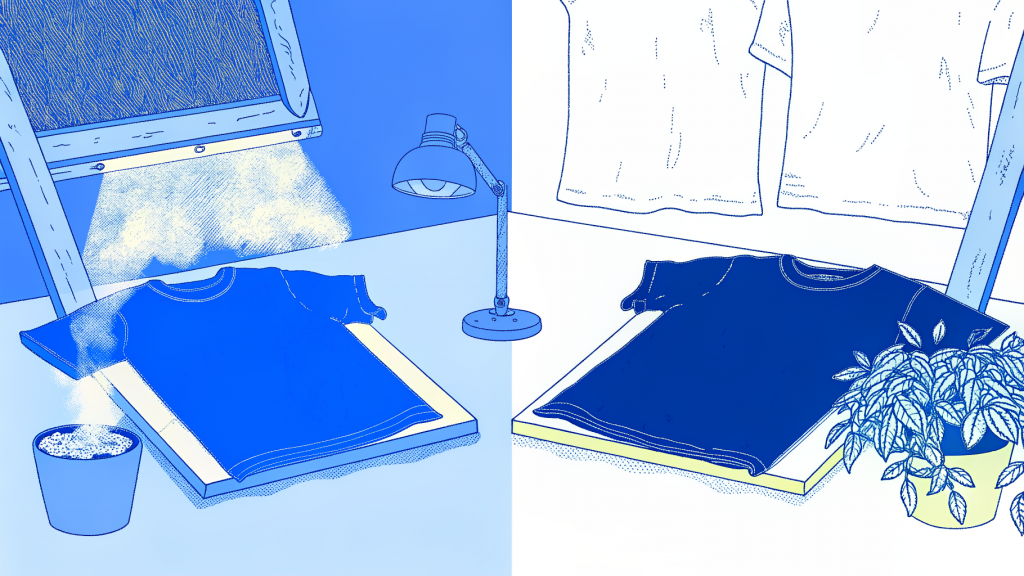
One reason this myth persists is that most buyers, especially those ordering branded company swag, onboarding kits, or their first run of custom shirts, cannot visually distinguish between screen printing and DTG after the garment is finished. When you cannot tell the methods apart by looking at a shirt, it is easy to assume the process that made the shirt must explain the problem that happened after it was washed. That instinct is understandable and almost always wrong.
What Screen Printing’s Flash Cure Actually Does to Fabric Fibers
Flash cure units in screen printing apply short, concentrated bursts of heat to gel plastisol ink between color passes, not to drive sustained heat through the garment. The unit targets the ink film, not the fabric substrate, meaning the garment itself absorbs far less heat than the ink surface during this step. Anatol Equipment similarly notes that flash cure settings are calibrated to the ink, with dwell time and distance dialed to gel, not to condition, the blank underneath.
On an un-pre-shrunk cotton blank, even that concentrated burst can release a portion of the stored manufacturing tension in the fibers. The shirt arrives at the customer partially contracted before the first wash ever happens. That first laundering looks like the cause. The dimensional change actually started on the press.
When ooShirts produces screen printing services across its shirt styles, the process calibration targets ink adhesion at minimum effective temperatures, exactly the discipline that keeps flash cure heat from becoming a secondary shrinkage driver on top of whatever tension the blank already carries.
DTG’s Heat Press and Tunnel Dryer – How Hot Is Hot Enough to Cause Shrinkage?
Direct-to-garment printing uses a heat press to pre-treat the fabric and a tunnel dryer to cure the ink after printing. The goal in both cases is ink adhesion, not garment conditioning, and reputable operations calibrate to the minimum effective temperature. The practical difference between DTG and screen printing on this axis is smaller than most buyers expect. Neither method, when run correctly, adds meaningful shrinkage beyond what the blank already carries.
This is a point beginners ordering their first run of custom shirts routinely miss. Because DTG and screen printing look nearly identical on a finished garment, buyers often attribute post-wash shrinkage to whichever method they happen to know less about. The physics do not cooperate with that theory. What matters is the blank, not the ink delivery system.
The Temperature Overlap – Where Print-Process Heat and Fiber Tension Collide
Cotton fibers begin releasing stored mechanical tension at temperatures that overlap with standard curing ranges. That overlap is narrow and manageable when the blank is pre-shrunk, because most of the tension has already been discharged. On an un-pre-shrunk blank, that same heat window becomes a trigger. The fiber has nowhere to go except shorter.
The print method is irrelevant here. Screen print or DTG, the physics are the same. Heat plus stored tension equals contraction.
For buyers comparing prices before placing a bulk order, a stage where ooShirts’ all-inclusive transparent pricing and price match guarantee make the numbers straightforward, understanding this distinction protects the entire investment. Choosing a pre-shrunk blank costs nothing extra at the decision point and eliminates the most common source of post-delivery complaints.
When the Printer Is Legitimately at Fault, and How to Tell the Difference
A printer is genuinely at fault in one specific scenario: excessive cure temperatures applied to any blank, pre-shrunk or not, beyond the fabric’s rated tolerance. Signs include warping of the print area, fabric hand that feels stiff or brittle at the design edge, or dimensional changes that are isolated to the printed zone rather than distributed evenly across the garment. That pattern points to a process calibration problem, not a blank sourcing problem, and is a legitimate basis for a reprint or refund conversation with the vendor.
If you are working with ooShirts, that conversation is backed by a quality guarantee and customer support available seven days a week, so if a legitimate process fault does occur, there is a clear, supported path to resolution rather than a dead end. The ability to reliably reorder custom shirts from a trusted vendor without surprises is exactly what that structure is designed to protect.
Related Reading
- Best Printer For T-shirt Printing
- Threadless Alternatives
- Spreadshirt Alternative
- Gotprint Vs Vistaprint
- Gooten Alternative
- Print Aura Alternatives
How to Prevent T-Shirt Shrinkage Before and After Printing Your Wholesale Order
Two decisions determine whether your bulk order fits the way it should on event day. Everything else, including the care label on the shirt and the washing habits of whoever receives it, is damage control after the fact. The two choices made before ink touches the shirt, selecting a pre-shrunk blank and selecting a cotton-polyester blend, are the only ones that meaningfully control the outcome, because once a garment enters production, no downstream step can release tension that has already been partially set or restore dimensions to fiber that has already contracted; every tip that follows is mitigation, not prevention.
“Uncertainty about fabric content (silk vs. polyester) makes it difficult to know the right prewashing method, which is directly analogous to not knowing the exact fabric blend of a bulk order before printing.”
This is where most first-time bulk buyers get into trouble. When you don’t know the exact fiber composition of the blank going into your order, whether you’re working from a spec sheet that lists “100% cotton” with no further detail, or one that simply says nothing about pre-treatment, you’re left guessing about how the shirt will behave under heat, moisture, and a recipient’s laundry routine. That uncertainty compounds fast when you’re ordering for a group. Getting conflicting signals about the right blank to specify, or receiving no guidance at all, is the single most avoidable source of post-event complaints. The fix happens at the ordering stage, not after the shirts are delivered.
Gate 1 – The Ordering Decision
Specify pre-shrunk or blended blanks before the print run starts. Pre-shrunk fabrics have already been washed and dried during manufacturing to remove most of their natural shrinkage potential, so they arrive dimensionally stable before printing begins. That single specification, made at the ordering stage, eliminates the problem before ink ever touches the shirt.
Cotton-polyester blends add a second layer of protection. As Soya Concept notes, the synthetic polyester fibers in a blend resist heat-induced contraction, making blended fabrics a practical choice when size consistency is critical across a large run. A 50/50 cotton-poly blank ordered pre-shrunk is the lowest-risk combination for wholesale custom apparel.
If you’re sourcing through ooShirts, this is the moment where 7-days-a-week customer support actually changes outcomes. Buyers who are uncertain which of the 100+ available shirt styles carries the right fabric spec for their use case can work through that question on the phone before the order is placed, not after it ships. That’s the intervention that matters.
Reading a Blank Spec Sheet
Three numbers tell you what you need to know: fabric weight (in grams per square meter), fiber composition (the cotton-to-poly ratio), and whether the garment is listed as pre-shrunk. Weight signals construction quality. Fiber composition tells you how the shirt will behave under heat and moisture. The pre-shrunk designation tells you whether the manufacturer already removed the stored tension that causes first-wash contraction.
If a spec sheet is missing any of those three, ask before ordering. Conflicting or absent fabric information at the sourcing stage is the exact moment bulk buyers make the decision they later regret. The same confusion that makes individual consumers uncertain whether to cold-wash or air-dry a shirt they can’t identify applies directly to wholesale buyers who don’t know what blank is going into their run, and the stakes are proportionally higher when the order is 200 units for a single event with a fixed date.
ooShirts’ all-inclusive transparent pricing and free shipping and setup mean the cost of getting that conversation right, asking the question, adjusting the blank selection, rerunning the numbers, doesn’t compound into a repricing conversation. The price you see is the price you pay, which removes the incentive to skip the spec check in order to avoid a quote revision.
Size-Buffer Math for Event Organizers
Even a well-specified pre-shrunk blank can shift slightly after repeated washing, and not every recipient follows care instructions. Building a one-size buffer into your order for a portion of the run costs a little more upfront but protects against the complaint that arrives two days after the event. A 100% cotton shirt that is not pre-shrunk can shift a full size after a single wash at standard home laundry temperatures, so ordering a portion of the run one size up, particularly for recipients who have indicated they prefer a fitted cut, creates a low-cost buffer against that complaint.
What that math also has to account for is headcount movement. Event orders almost never close at the same count they opened.
Jessie Creighton, who ordered custom shirts for her grandmother’s surprise birthday party in Gorham, Maine, experienced exactly this: partway through her order, the count shifted, the way it always does when you’re collecting names for a family event. Instead of forcing her to restart, the ooShirts team adjusted the order and rushed it so it would land before the party. Her order also involved custom requests that couldn’t be handled through the design tool alone, so the team worked through them with her on the phone. She rated both print quality and service 5/5 and specifically called out the phone support and the willingness to absorb the late size change.
That story matters for size-buffer planning because it reframes the math. The question that follows is “what happens if my headcount moves after I’ve placed the order?”
For buyers whose count is still in flux, which describes most event organizers and many department-level corporate runs, knowing that an order can be adjusted, rather than cancelled and restarted, changes how conservatively you need to spec your buffer in the first place. Standard orders printed and shipped within 7-10 business days, with a rush printing option available in as little as 3 business days, mean that a late adjustment doesn’t automatically mean a missed event. It means a phone call.
Why a Quality Guarantee Is the Shrinkage Safety Net Your Bulk Order Needs
Choosing the right fabric reduces shrinkage risk but does not eliminate it, and for a bulk order with a fixed budget and a fixed event date, the gap between “reduced” and “eliminated” is where real financial exposure lives. A quality guarantee closes that gap, converting a potential open-ended loss into a defined, recoverable outcome through a clear reprint-or-refund standard. Understanding exactly what a meaningful guarantee covers, and what weaker versions quietly exclude, is the difference between genuine protection and reassuring fine print.
The Hidden Budget Risk That Perfect Fabric Selection Still Can’t Eliminate
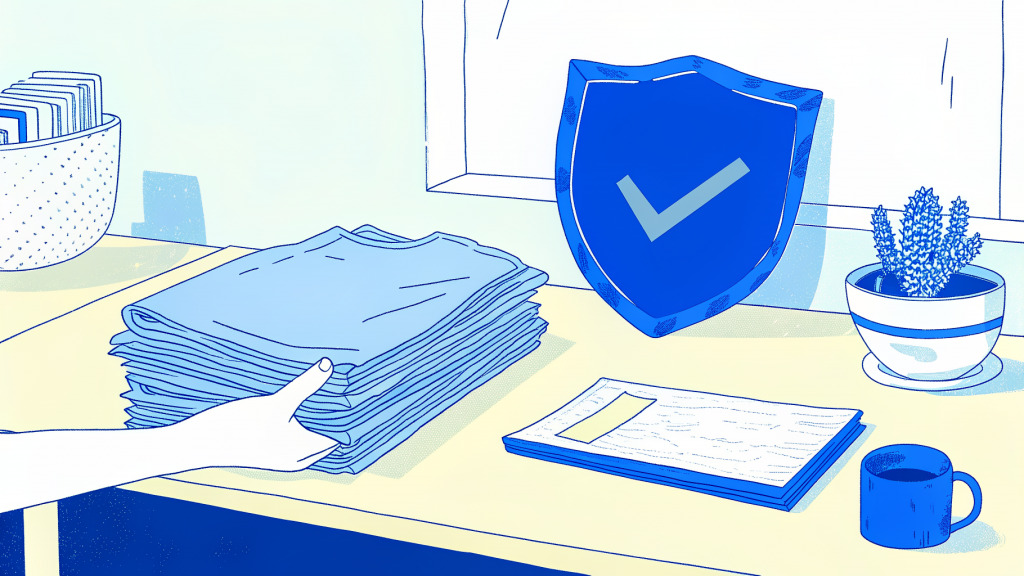
Fabric selection is the most consequential decision in a bulk custom apparel order, but it is not a complete risk shield. Material defects and print inconsistencies can emerge after production even when a buyer selects the correct fabric, so sourcing decisions alone do not eliminate bulk-order risk. For an event organizer with a fixed date and a fixed budget, that residual risk is not theoretical. It is the unpriced liability sitting inside every wholesale order.
What a Meaningful Quality Guarantee Actually Covers in Wholesale Custom Printing
A real guarantee covers two distinct failure modes: material defects in the garment itself and print quality that does not match the approved design file. Both categories can result in wasted spend for a bulk buyer when no remedy exists. The practical standard is reprint or refund, giving the buyer a defined exit from a defective order rather than an open-ended loss.
Not every printer’s guarantee reaches that standard. Some cover only catastrophic errors; others exclude garment-level defects entirely, treating those as the blank manufacturer’s problem rather than theirs.
Reprint or Refund – How the Guarantee Converts Bulk-Order Risk Into a Recoverable Outcome
Most event organizers treat a quality guarantee as reassuring fine print. It is a financial risk-mitigation instrument that converts an open-ended liability into a recoverable outcome. Custom t-shirt printing with ooShirts includes exactly this backstop: a satisfaction guarantee that covers print quality defects and material issues, giving bulk buyers a defined path to a reprint or refund rather than an unrecovered loss on a defective run.
Next steps
If your bulk order ended up generating size complaints after one wash, the path forward starts with treating fabric sourcing as the only decision that actually controls fit at scale. Every downstream fix, including cold-water washing and delicate cycles, is damage mitigation applied after the real choice was already made. Start with our cheap custom t-shirt printing.
Polyester content functions as a physical anchor against shrinkage that no care label can replicate, meaning fabric composition at the ordering stage outperforms any laundry instruction a recipient will ever follow. A quality guarantee converts the residual risk that survives correct blank selection into a recoverable outcome rather than a total write-off, meaning even well-specified orders have a defined exit from defective runs. Together, they point to choosing a supplier who lets you verify blank specs before printing and backs the result with a reprint-or-refund commitment.
Start with ooShirts, where 100+ shirt styles, all-inclusive transparent pricing, and a satisfaction guarantee mean the blank you specify is the blank that ships, on time, with a clear path to resolution if it isn’t.
Frequently Asked Questions
What’s the difference between pre-shrunk and regular cotton blanks?
Pre-shrunk cotton is treated during manufacturing so that most of the shrinkage potential is removed before the garment ships, while regular (untreated) cotton arrives with mechanical tension stored in the fibers that heat and moisture will later release. Pre-shrunk blanks can still carry some residual shrinkage potential, so they are not zero-risk, but they eliminate the bulk of the problem. On a spec sheet, look for the word “pre-shrunk” explicitly, “ring-spun” refers to yarn construction and softness, not shrinkage behavior.
How much can a 100% cotton shirt actually shrink after one wash?
Untreated 100% cotton can shrink between 3 and 5 percent after the first wash under normal laundry conditions. On a standard adult large with a 22-inch chest, 3 percent is roughly two-thirds of an inch across the chest, and at 5 percent you’re approaching a full size shift in fit, enough to pull a fitted large into something closer to a medium.
Will a cotton-polyester blend shirt shrink less than a 100% cotton shirt?
Yes, meaningfully so. Polyester fibers are heat-set during production at high temperatures, which locks their molecular structure into a dimensionally stable state, so they don’t carry the same stored-tension vulnerability as cotton. A 60/40 cotton-polyester blend stays more dimensionally stable through repeated washing than a 100% cotton alternative, and 100% polyester sits at the bottom of the shrinkage risk ladder entirely, with shrinkage so minimal it is rarely a practical concern for event buyers.
Does screen printing or DTG printing cause shirts to shrink more?
Neither method, when run correctly, adds meaningful shrinkage beyond what the blank itself already carries, the print method is not the determining variable. That said, on an un-pre-shrunk cotton blank, even the concentrated heat from a screen printing flash cure or a DTG tunnel dryer can release a portion of the stored manufacturing tension in the fibers before the shirt ever reaches the customer. The blank’s pre-shrink status matters far more than which printing method is used.
Will washing with cold water or hang-drying prevent my wholesale shirts from shrinking?
Gentler laundry methods reduce but do not eliminate shrinkage. Cold water, a delicate cycle, and hang-drying turn the dial down on how much stored fiber tension is released, but they cannot remove tension that was built into the fabric during spinning and weaving. The shrinkage was baked into the blank at the manufacturing stage; washing method is a variable you can adjust, but it cannot substitute for choosing a pre-shrunk or blended blank in the first place.
Leave a Reply