
Last updated: August 10, 2026
Putting together swag bag ideas that people actually want to keep is harder than it looks. Balancing cost, quality, and brand relevance across multiple vendors takes real strategy, and the margin for error is slim. Whether the challenge is comparing bulk pricing, managing supplier relationships, or avoiding merchandise that looks nothing like the sample, the sourcing process demands careful planning.
The right approach starts with knowing which products deliver the most value per dollar and which suppliers can be trusted to deliver consistently. Custom apparel is one of the strongest performers in any promotional mix, offering high visibility at a relatively low cost per unit. For teams working with tight budgets and high-volume needs, cheap custom T-shirts from ooShirts offer reliable print quality without the premium price tag.
Summary
- Apparel consistently delivers the highest return among all promotional product categories. According to the ASI 2023 Ad Impressions Study, a branded jacket generates 7,856 impressions over its lifetime, more than any other tracked item. That figure reflects organic, repeated exposure across commutes, school pickups, and public spaces, contexts that paid digital advertising cannot reach or replicate.
- Drinkware earns its place in any sourcing strategy through daily-use frequency. The same ASI study found that branded drinkware generates 3,162 impressions per item, with 63% of recipients keeping these items for at least a year. 30% of recipients also report being more likely to do business with the company that gave them logoed drinkware, indicating a direct connection between a physical product and a purchase decision.
- Promotional products outperform most advertising channels on cost efficiency, but only when the item is durable enough to stay in use. The average cost per impression for promotional products is $0.004, lower than nearly every other medium. That advantage disappears entirely when poor sourcing decisions result in items that fade, crack, or are discarded within the first week.
- Minimum order requirements create a structural mismatch between how suppliers operate and how most organizations actually buy. A nonprofit needing 20 shirts or a school group ordering 35 for a fundraiser often faces supplier minimums of 72 or more, forcing buyers to either overbuy inventory they cannot use or settle for a second-choice product. This constraint is not a sourcing failure on the buyer’s side. It is a supplier model built for volume that ignores the real distribution of how most orders are placed.
- Hidden costs are one of the most consistent sources of budget failure in promotional product sourcing. Setup fees, shipping charges, and tariff adjustments often surface after the quoted price has already been approved, turning budget planning into guesswork. Buyers who evaluate suppliers on unit price alone routinely absorb these costs at the worst possible moment, typically when an event deadline is already close.
- The environmental cost of poor sourcing decisions is often left out of procurement conversations entirely. According to GiftAFeeling’s Promotional Product Statistics 2026, 66% of promotional products end up in landfills, reflecting that items are chosen for cost or convenience rather than for genuine utility or durability. When a product is discarded, the brand impression disappears with it, and the environmental cost remains.
- Cheap custom T-shirts from ooShirts address the core structural problems in promotional apparel sourcing by combining no-minimum-order requirements, all-inclusive pricing, and guaranteed print durability into a single model built for the way real organizations actually buy.
What Is Promotional Product Sourcing, and Which Promotional Products Deliver the Best ROI?
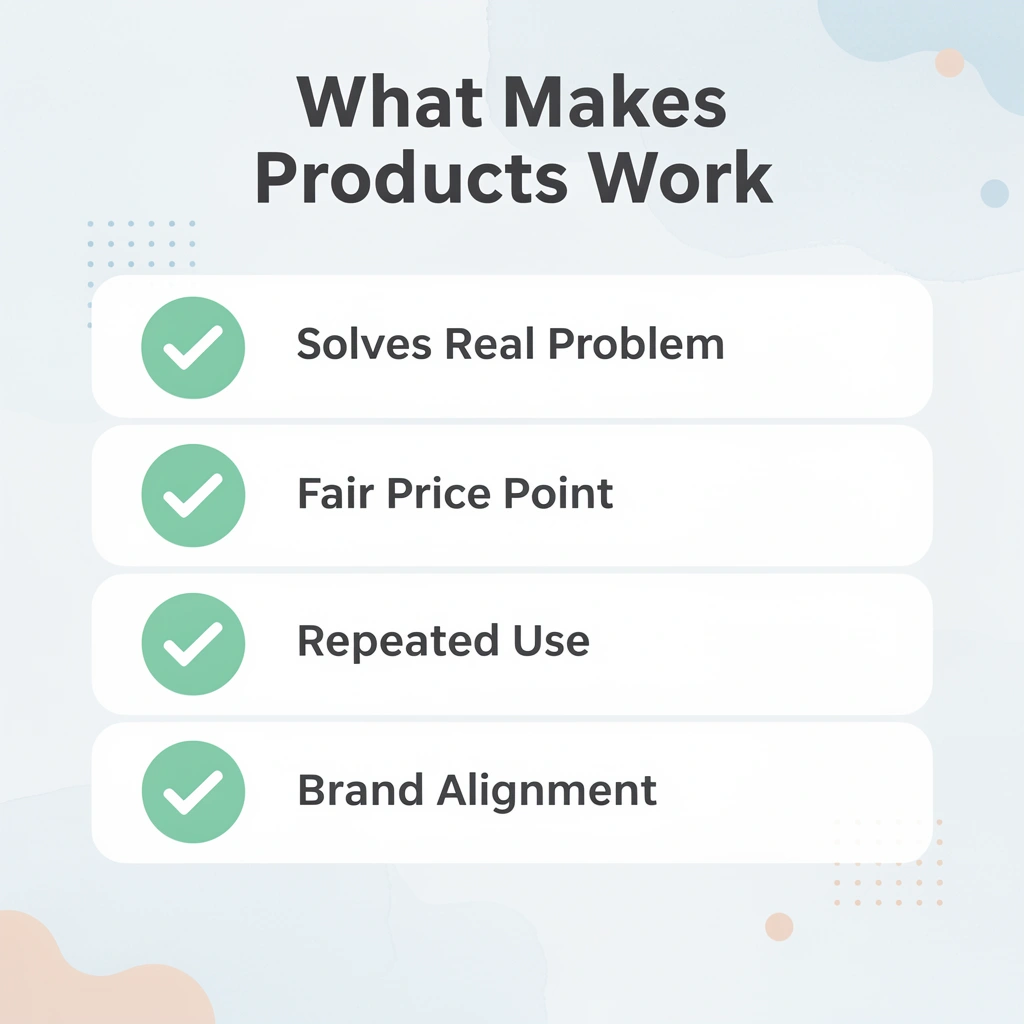
Finding promotional products that work well means picking the right item at a fair price, not just the cheapest one. The items that give you the best return on investment solve a real problem, last through repeated use, and keep your brand visible without asking anything from the person who gets it. When you get that combination right, your marketing investment pays off over months, not just minutes.
“The best promotional products solve a real problem, last through repeated use, and keep your brand visible — delivering value over months, not just minutes.”
💡 Tip: When evaluating promotional products, ask yourself: Will the recipient actually use this daily? The more daily touchpoints a product creates, the higher your ROI over time.
🎯 Key Point: Promotional product sourcing is the process of identifying, evaluating, and procuring branded merchandise that balances quality, cost-effectiveness, and audience relevance — so every dollar spent drives maximum brand exposure.
Which product categories consistently outperform?
Apparel leads the category by a wide margin. According to the ASI 2023 Ad Impressions Study, a branded jacket generates 7,856 impressions over its lifetime, the highest of any promotional item tracked. This reflects real-world exposure: someone wearing your logo on a commute, at school pickup, at a weekend market. You’re buying thousands of impressions across situations that digital channels cannot reach.
Drinkware follows closely. People use tumblers and water bottles multiple times a day, so your brand appears in their hands during meetings, workouts, and commutes at no additional cost. The ASI study found that branded drinkware generates 3,162 impressions per item. Sixty-three percent of recipients keep these items for at least a year, and 30% say they are more likely to do business with the company that gave them logoed drinkware, creating a direct link between a physical product and a purchase decision.
Most teams source apparel under budget pressure: they call a local printer, receive a high quote, order fewer shirts than needed, and compromise on quality. The result fades after a few washes and reflects poorly on the brand. Suppliers like ooShirts eliminate middlemen that inflate local quotes, offering all-inclusive pricing with free setup and shipping, expert design review, and a price-match guarantee. Budget-conscious buyers get durability without sacrificing quality.
What makes tech accessories and bags worth considering?
Tech accessories and tote bags solve problems. A branded cable organizer or phone stand sits on a desk for months. A reusable tote bag travels to grocery stores, offices, and airports, carrying your logo into spaces no digital ad could reach. People associate the quality of a promotional item with the professionalism of the brand behind it: a cheap item that breaks in a week sends the wrong message.
How does Promotional Product Sourcing affect brand recall and ROI?
According to the Sock Club Blog’s Promotional Products Industry Statistics guide, promotional products help people remember a brand 90% of the time after receiving them. The best items become everyday essentials. Whether your item achieves this depends on its usefulness, durability, and relevance to the recipient. When you combine those qualities with transparent pricing from a trusted supplier, the return on investment becomes clear.
But the numbers tell only part of the story, leaving out why brand marketing works at all.
Related Reading
- Swag Bag Ideas
- Promotional Products Marketing
- Branded Merch Ideas
- Swag Management Platform
- Sustainable Corporate Swag
- Promotional Product Sourcing
Why Is Sourcing Promotional Products Important for Brand Marketing?
Choosing where to get promotional products determines whether your brand becomes part of someone’s everyday life or gets forgotten in a drawer. It affects print quality, how long the product lasts, whether you can trust your supplier, and cost—all of which directly impact how long your logo stays visible and how positively people think about it.
“The source of your promotional products is not a minor logistics decision—it is a brand marketing decision that shapes perception, longevity, and ROI every time someone interacts with your item.” — Promotional Marketing Insight
🎯 Key Point: Sourcing quality isn’t just about price—it’s about how long your brand impression lasts in the real world.
💡 Tip: Before committing to a supplier, evaluate all four critical factors—print quality, product durability, supplier reliability, and cost—to ensure your promotional items actually work as a marketing tool.
⚠️ Warning: Choosing a supplier based on price alone risks poor print quality and short-lived products—meaning your logo disappears far sooner than it should.

What do the numbers actually confirm about promotional product sourcing?
According to the PPAI / Perfect Imprints 2025 Promotional Products Trend Report, more than 85% of people who receive a promotional product do business with the advertiser. This reflects the cumulative effect of repeated, positive brand exposure that occurs only when the product merits keeping. A poorly sourced item is discarded before the connection forms, resulting in no exposure.
How does sourcing promotional products protect your cost-per-impression advantage?
The same report shows that promotional products have an average cost per impression of $0.004, which is lower than that of almost every other advertising type. This advantage requires people to use the product. A custom t-shirt that fades after two washes or a tote bag with a cracked logo generates no impressions after the first week. The cost-per-impression benefit depends on prioritizing material quality and print durability over the lowest per-item price.
When budget pressure pushes buyers toward shortcuts
Most budget-conscious buyers search for the cheapest option, place the order, and hope quality holds up. When the item represents your school, nonprofit, or small business at a public event, a flimsy product signals that the organization cuts corners. Our cheap custom T-shirts maintain quality standards without breaking your budget, keeping your organization’s reputation intact.
How does smart sourcing of promotional products protect first-time buyers?
Teams ordering custom apparel for the first time often discover that cheap sourcing costs compound after delivery through reprints, complaints, and unused inventory. Suppliers like ooShirts address this by combining transparent pricing with expert design review and a price-match guarantee, allowing buyers to maintain quality without sacrificing affordability. No minimum order requirements mean that a school group ordering twenty shirts receives the same print standards as an organization ordering two thousand shirts.
Why sourcing is a brand decision, not just a procurement one
The critical difference between promotional products that build brand equity and those that hurt it comes down to vendor selection. Buyers who evaluate suppliers on unit price alone overlook lead-time reliability, imprint durability, and fulfillment accuracy, all of which determine whether the product arrives on time, looks right, and lasts long enough to matter. Each variable is a sourcing decision made before production begins.
What questions should Promotional Product Sourcing decisions start with?
Treating sourcing as a brand decision means asking different questions upfront: Does this supplier include setup fees in the quoted price? What happens if print quality does not match the proof? Can the order scale up without a price penalty? This discipline filters out suppliers who profit from hidden costs and separates brands that build visibility over time from those starting fresh after each campaign.
What obstacles does Promotional Product Sourcing still face beyond price and quality?
But even buyers who ask the right questions encounter obstacles unrelated to price or quality, and these prove harder to anticipate than expected.
What Challenges Do Brands Face When Sourcing Promotional Products?
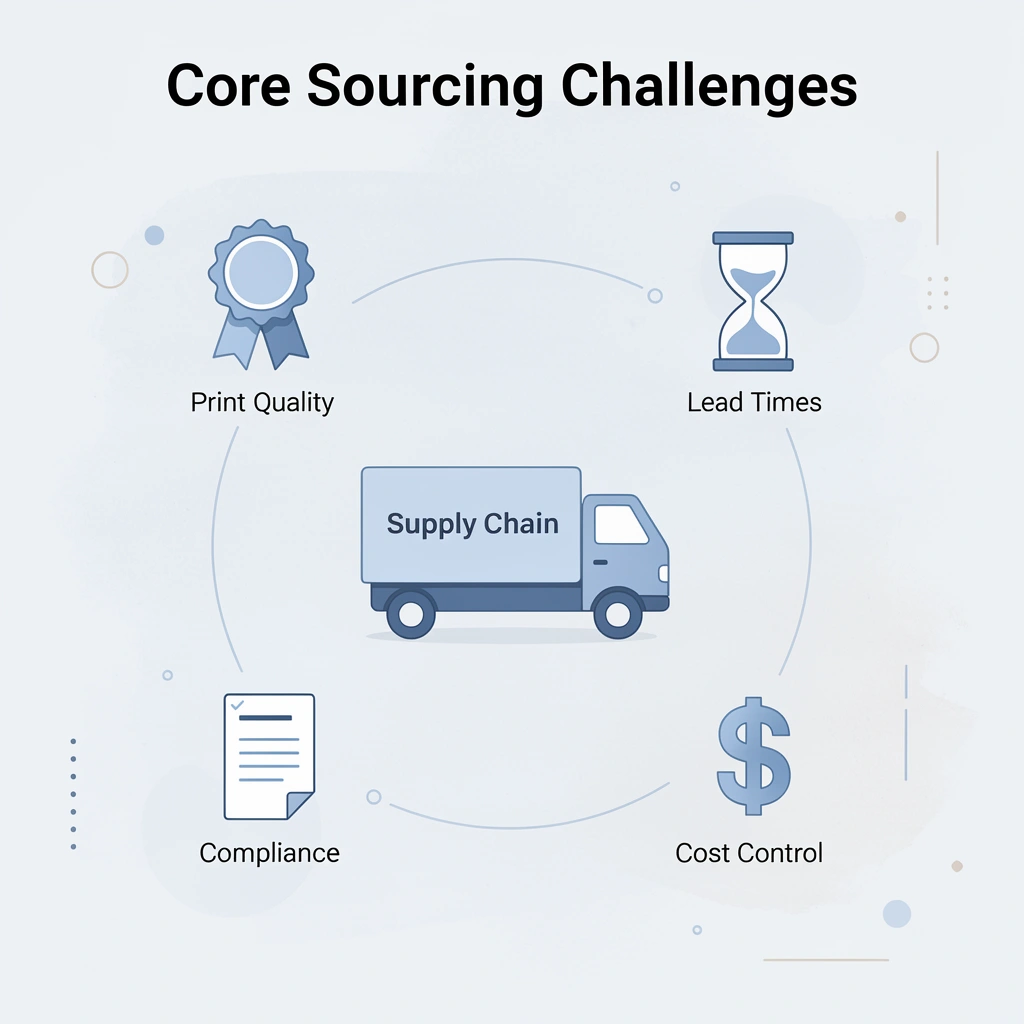
Finding promotional products comes with challenges that go far beyond just cost and how well things are printed. The real problems come from supply chain complexity, trouble communicating, and when supplier operations and marketing timelines don’t match up.
“The real problems in promotional product sourcing stem from supply chain complexity, communication breakdowns, and misaligned timelines — not just price tags and print quality.”
🚨 Warning: Brands that focus only on unit cost often overlook the hidden operational challenges — like supplier misalignment and communication gaps — that cause campaigns to fail before they even launch.
🔑 Takeaway: Supply chain complexity, cross-team communication, and timeline mismatches are the true sourcing obstacles — and solving them requires more than just finding the lowest price.
When the supply chain becomes the campaign risk
Tariff changes have made buying products harder and more stressful. According to PPAI Research’s Outlook 2025, tariff threats ranked as a top expected challenge for promotional product firms heading into 2025. When import costs rise unexpectedly, brands face three options: absorb the extra cost, reduce orders, or quickly find a new supplier. Each choice compromises the campaign, forcing teams to react to problems rather than plan ahead.
Why does the minimum order trap block small buyers?
The failure point is usually quantity. A school group needs 30 shirts for a fundraiser. A nonprofit wants 15 custom tees for a volunteer event. Traditional suppliers impose minimums of 72, 144, or higher, forcing buyers to overbuy, store excess inventory, or abandon the project entirely. This structural mismatch reflects a supplier model built for volume, not for how most organizations actually order.
How does Promotional Product Sourcing change the options available?
Most teams settle for a second-choice product with a lower minimum or split orders across multiple suppliers, hoping the colors match. When cheap custom T-shirts from ooShirts remove the minimum order requirement entirely, they challenge the assumption that small orders deserve fewer options and less care—the assumption that priced out buyers in the first place.
Why customization errors cost more than reprints
Communication problems in global sourcing often surface at delivery, when the logo is the wrong shade of blue, the font has been changed, or the placement is two inches off-center. With the event two weeks away and the reprint timeline four weeks, the problem costs money and damages trust when a marketing team must explain to leadership why branded merchandise doesn’t match the brand. Detailed specifications reduce risk but cannot eliminate the time-zone gap, language barriers, or the distance between what a supplier confirms and what actually ships.
The sustainability gap nobody budgets for
According to GiftAFeeling’s Promotional Product Statistics 2026, 66% of promotional products end up in landfills. This reflects items chosen for cost or convenience rather than utility or durability. When a product is discarded, the brand impression vanishes along with it, while environmental costs persist. Buyers treating sourcing as a cost exercise spend money on items that generate neither loyalty nor lasting visibility.
The more surprising question is what a simpler model looks like when it works.
Related Reading
- Eco-Friendly Swag Ideas
- Best Swag Ideas For Conferences
- Inexpensive Swag Bag Ideas
- Holiday Swag For Employees
- Virtual Swag Bag Ideas
- Trade Show Swag Ideas
12 Best Practices for Promotional Product Sourcing
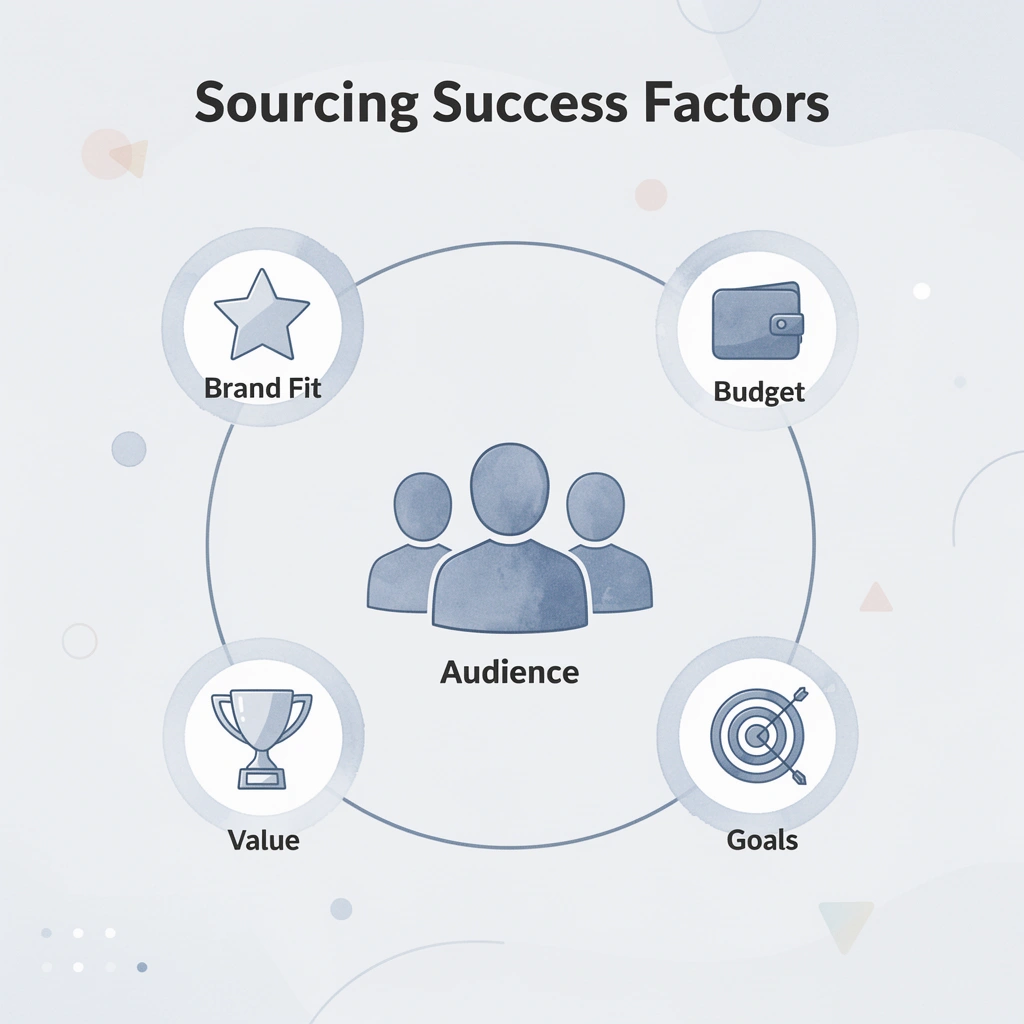
Successful promotional product sourcing starts by picking products that match your audience, brand, budget, and marketing goals. The following best practices help you source promotional products that people truly value and create measurable results.
“The most effective promotional products are those that align precisely with audience needs, brand identity, and campaign objectives — turning everyday items into powerful marketing tools.”
🎯 Key Point: The foundation of effective sourcing is understanding that promotional products are not one-size-fits-all — every choice must be intentional and strategic.
💡 Tip: Before sourcing any product, define your target audience, set a clear budget, and establish specific marketing goals to ensure every dollar spent drives real, trackable impact.
1. Define clear campaign objectives up front
Start every sourcing project by outlining specific goals, target audience preferences, budget limits, and desired outcomes such as brand recall or lead generation. Teams that skip this step waste resources on generic products that fail to connect with audiences or drive results.
2. Research and vet suppliers thoroughly
Spend time vetting potential partners by requesting references, reviewing industry memberships, ordering samples, and reading quality control reviews. Prioritize suppliers with strong track records for reliability, customization capabilities, and ethical practices.
3. Prioritize audience relevance and utility
Pick products that solve real problems or fit easily into everyday life rather than follow trends. Useful items stay with customers longer and increase brand visibility. Test your ideas with focus groups or analyze data from past campaigns before ordering in bulk.
4. Balance cost with long-term value
Compare total ownership costs—including quality, durability, shipping, and potential reprints—rather than unit price alone. Higher-quality options often deliver better ROI through extended use and positive brand associations.
5. Leverage platforms like ooShirts for custom apparel needs
For branded apparel and t-shirts, platforms such as ooShirts stand out with no minimum order quantities, allowing brands to test designs or fulfill small runs without inventory risk. Our service includes free shipping, expert design review, guaranteed fast delivery, and a low price guarantee backed by high-quality printing. We provide 7-day support and have earned praise from over a million customers for affordability and reliability in custom apparel sourcing.
6. Establish strong quality control protocols
Use multi-stage inspections to check materials, printing accuracy, and durability before accepting the final product. Request detailed specifications and test samples under real-world conditions. Quality assurance protects your brand reputation and reduces negative recipient feedback.
7. Factor in lead times and fulfillment logistics
Plan exact timelines from materials procurement through decoration and delivery, adding buffer time for customs or production delays. Choose partners with proven fulfillment systems and real-time tracking capabilities.
8. Incorporate sustainability and ethical considerations
Check suppliers’ environmental practices, labor standards, and sourcing methods. This ensures alignment with customer expectations for responsible branding. Choose eco-friendly options like recycled fabrics or low-impact inks when suitable for your audience and budget.
9. Negotiate clear contracts and performance metrics
Write down all terms, including pricing, quality guarantees, delivery schedules, and consequences for non-compliance in formal contracts. Set clear, measurable KPIs such as on-time delivery rates or defect percentages to hold partners accountable.
10. Test small batches before scaling
Order small amounts of new products or from unfamiliar suppliers to test their performance in real delivery situations. Gather feedback from initial recipients about product usefulness and quality before committing to larger orders.
11. Track performance and gather feedback
Measure results using metrics such as message retention, usage duration, and direct business impact, such as increased inquiries or referrals. Collect structured feedback via surveys or follow-up conversations to identify what worked and what needs adjustment.
12. Build long-term strategic partnerships
Build strong, ongoing relationships with suppliers you can trust who understand your brand’s voice and evolving needs. Collaborative partnerships can help you secure better prices, faster service, and custom solutions tailored to your business.
How to Choose the Right Promotional Product Supplier
Choosing your supplier is just as important as choosing your product. A good supplier gives you consistent quality, accurate branding, clear pricing, and reliable schedules. The wrong supplier can cause delays, printing errors, and wasted marketing money.
“The supplier you choose determines the quality, accuracy, and reliability of every promotional product that carries your brand.” — Industry Best Practice
🎯 Key Point: Your choice of supplier directly impacts your brand reputation — a single printing error or missed deadline can undermine an entire campaign.
⚠️ Warning: Never select a supplier based on price alone. Hidden costs from delays and reprints can far exceed any upfront savings.

List exactly what you need: product categories, order volumes, customization options, timelines, and budget. Evaluate how each supplier handles your unique challenges, such as rush orders or specialized imprinting. This careful matching prevents delays, quality problems, and extra costs.
Assess Reputation and Industry Experience
Research potential suppliers by examining client testimonials, case studies, industry memberships like ASI, and years of experience in the promotional space. Established partners demonstrate reliability through consistent performance and reduce risks associated with new or untested vendors.
Examine Product Quality and Quality Control Processes
Ask for detailed information about materials, manufacturing processes, and quality control procedures. Request samples and references from similar projects to verify product durability and imprint quality. Suppliers with strong quality systems protect your brand image and reduce defects.
Review Pricing Transparency and Total Value
Compare the full costs, including setup, shipping, customization, and rush fees, not just base prices. Look for clear price-matching policies or guarantees that support long-term savings.
Evaluate Customization and Design Support
Choose partners that offer advanced design tools, expert art review, and a wide range of decoration methods such as screen printing or embroidery. Strong support teams help refine your ideas to ensure professional results that represent your brand.
Analyze Lead Times and Fulfillment Reliability
Look into how long it takes to make and ship products, including how companies perform during busy seasons or supply shortages. Reliable partners provide real-time tracking and communicate proactively to keep projects on schedule.
Check Sustainability and Ethical Practices
Ask about environmental policies, labor standards, and product sourcing. Suppliers committed to responsible practices strengthen your brand and meet contemporary consumer expectations.
Test Communication and Customer Service
Check how quickly a partner responds to your initial questions and what contact methods they offer: phone, chat, or a dedicated account manager. Partners who communicate clearly and resolve problems quickly build confidence in the working relationship.
Review Contract Terms and Performance Metrics
Ensure agreements clearly specify deliverables, quality standards, problem-resolution processes, and measurable goals, such as on-time delivery percentages. Clear terms protect both parties and establish accountability.
How ooShirts Simplifies Promotional Product Sourcing
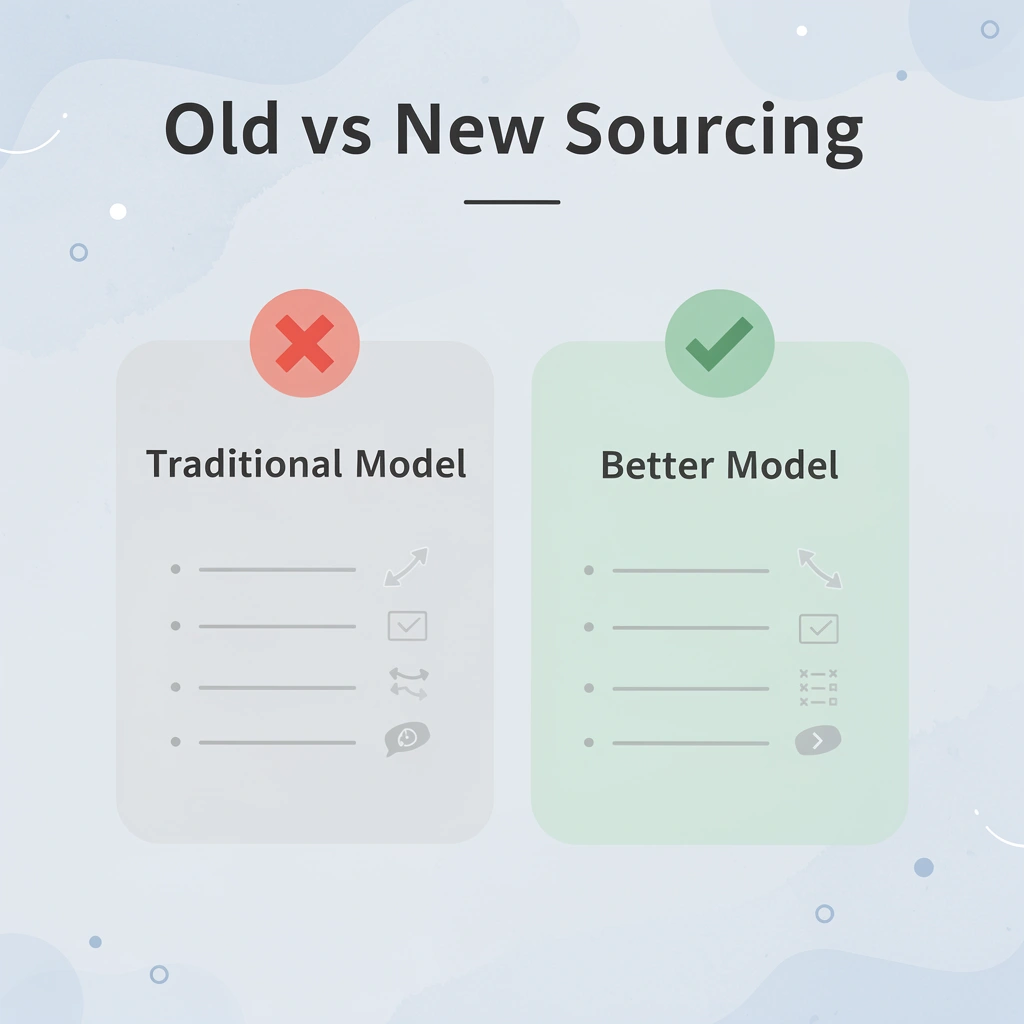
Simplifying promotional product sourcing means removing friction points that waste time and money. The traditional model—calling suppliers, negotiating minimums, waiting on quotes, chasing proofs, absorbing surprise fees—creates drag at every stage. A better model eliminates those steps and builds transparency from the start.
“The traditional sourcing model creates friction at every stage—from supplier calls and minimum negotiations to surprise fees and delayed proofs. A smarter approach builds transparency in from the start.” — Industry Insight
🎯 Key Point: Every step in the old sourcing process—quotes, proofs, hidden fees—is a friction point that costs your team time and money.
✅ Best Practice: Look for a sourcing partner that offers upfront pricing, instant proofs, and no surprise fees so your team can move fast without second-guessing every order.
What makes minimum order requirements a core failure in promotional product sourcing?
The main problem is the minimum order requirements. A school fundraising committee needs 35 shirts; a nonprofit wants 20 custom tees for a volunteer event. Traditional suppliers impose minimums of 72 or 144 units, forcing buyers to incur excess costs on unwanted inventory or to cancel orders. ooShirts solves this with no minimum order quantities and all-inclusive pricing that covers setup and shipping, so a team ordering 25 shirts gets the same straightforward experience as one ordering 2,500 shirts.
How does transparent pricing change promotional product sourcing?
Most buyers expect hidden costs: setup fees after artwork submission, shipping charges at checkout, tariff adjustments weeks later. This makes the quoted price never the real price, turning budget planning into guesswork. According to the ooShirts blog, all-inclusive pricing with a low-price guarantee and a price-match promise gives buyers a fixed number to plan around rather than a moving target.
Does lower pricing mean lower print quality?
Print quality deserves the same honesty. The assumption that low prices mean lower quality is wrong. Expert design review catches artwork problems before production. Inks that hold up to repeated washing keep the shirt sharp on the tenth wear, turning a branded t-shirt into a long-term visibility asset rather than a one-event throwaway.
How does speed change the sourcing equation?
Tight timelines force sourcing decisions under pressure, pushing teams to default to the fastest supplier regardless of print quality or cost. With ooShirts, guaranteed fast delivery, rush options, and free standard shipping eliminate that panic. The sourcing process becomes something you can plan around, not scramble through.
The same applies to support. Our seven-day live chat, phone, and email model ensures that questions that surface on a Saturday morning before a Monday event are answered immediately. That accessibility makes the difference between a smooth order and a stressful one.
Knowing the model works is only the beginning of the real question.
Related Reading
- Recruiting Swag Ideas
- Cool Swag Ideas For Employees
- Swag Ideas For Events
- Company Swag Ideas For Clients
- Top Merchandise Companies For Employee Swag
- Best Corporate Gift Promotional Product Options
- Work From Home Swag
- Corporate Swag Vendors
- Sendoso Alternatives
Start Designing Your Custom Shirts Today
The real question was never whether a better sourcing model exists—it was whether you were willing to stop accepting the old one. Flexible quantities, transparent pricing, and reliable fulfillment are not premium features. They are the baseline that any serious buyer should expect.
“Flexible quantities, transparent pricing, and reliable fulfillment are not premium features — they are the baseline any serious buyer should expect.”
💡 Tip: If your current supplier requires high minimums or hides fees in the fine print, you’re not getting a deal. You’re accepting unnecessary limitations that a modern sourcing model has already solved.
⚠️ Warning: Don’t mistake familiarity with the old model for value. Settling for outdated fulfillment standards costs you more in the long run: in time, money, and missed opportunities.
Cheap custom T-shirts from ooShirts deliver exactly that: no minimums, all-inclusive pricing, guaranteed print quality, and seven-day support. Start designing today and experience promotional product sourcing built for the way you actually buy.
🎯 Key Point: ooShirts removes every traditional barrier to custom apparel — no minimums, no surprise costs, and no compromises on quality.
✅ Best Practice: Start your custom shirt design today and take full advantage of a fulfillment model built around your buying needs — not the supplier’s convenience.
Leave a Reply