Last updated: August 10, 2026
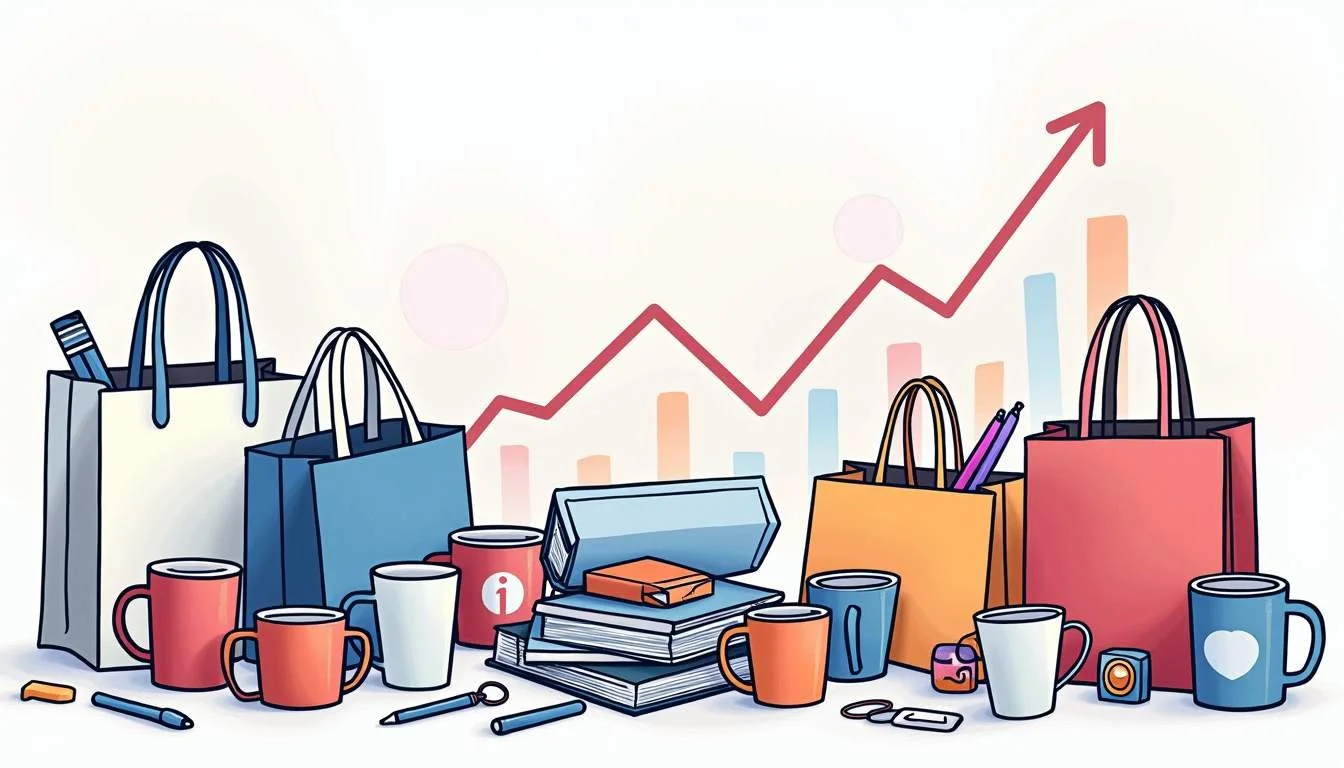
The right swag bag ideas can turn a casual event attendee into a repeat customer, but only when the products are worth keeping. Promotional merchandise works best when it combines everyday usefulness with consistent brand visibility, giving businesses a tangible way to stay top of mind long after the event ends.
Custom T-shirts remain one of the most cost-effective options in any branded giveaway strategy, offering walking visibility that outlasts flyers, stickers, and novelty items. They scale well across budgets, suit nearly any audience, and reinforce brand recognition with every wear. For businesses ready to put that into practice, ooShirts delivers cheap custom T-shirts built for exactly that purpose.
Summary
- Promotional products marketing works because physical objects persist in ways digital impressions cannot. A screen ad disappears in a scroll, but a branded item sits on a desk, rides in a bag, or gets worn to the grocery store for months. Research from Sellers Commerce shows that 89% of consumers can recall the advertiser of a promotional product they received in the last two years, a recall rate that reflects how memory responds to things we touch and use repeatedly.
- The channel starts with a built-in advantage that most marketing lacks. Pinnacle Promotions reports that 83% of consumers like receiving promotional products, meaning the brand message arrives as a welcome rather than an interruption. That goodwill is rare and valuable because most advertising has to earn attention before it can deliver a message at all.
- Timing is what separates effective promotional campaigns from forgettable ones. Launch events, trade shows, onboarding moments, and seasonal gifting windows are all points when a person’s attention and emotional receptivity are already elevated. Distributing a practical, branded item at these moments gives recipients a physical anchor for the brand’s memory, one that renews every time the item is used.
- Measurement is where most promotional campaigns fall short. Teams count how many items went out and call it done, but real measurement tracks what recipients did next. Research from Siteimprove found that businesses setting clear campaign goals are 376% more likely to report success, and companies using data-driven marketing are 6 times more likely to be profitable year over year. Embedding unique QR codes or promo codes on items turns a passive giveaway into a traceable conversion tool.
- The impact of promotional products on referrals is consistently underestimated. Perfect Imprints reports that promotional products generate up to 500% more referrals from satisfied customers than other marketing mediums, and that 85% of people who receive a promotional product do business with the advertiser. Both outcomes depend on the item being something people actually want to keep and use, which makes product quality a strategic variable rather than just an aesthetic one.
- Smaller organizations, including school clubs, nonprofits, and community groups, often assume this channel requires large budgets and bulk orders, but that assumption is outdated. The real barrier has been minimum order requirements and opaque pricing structures, not the strategy itself.
- Cheap custom T-shirts from ooShirts address this directly by offering no minimum order quantities and all-inclusive pricing that covers setup and shipping, making branded apparel practical for budget-conscious groups that need exactly what they need, when the moment calls for it.
What Is Promotional Products Marketing, and Who Benefits Most From It?
Promotional products marketing is the practice of giving out branded, useful items to build awareness, strengthen relationships, and create measurable business results. Physical objects last in ways digital impressions simply cannot. A screen ad disappears when you scroll; a branded item sits on a desk, rides in a bag, or gets worn to the grocery store.
💡 Example: Think about the last time you used a branded pen, wore a logo t-shirt, or carried a custom tote bag — that’s promotional products marketing working exactly as intended.
| Format | Lifespan | Recall Potential |
|---|---|---|
| Digital Ad | Seconds | Low — disappears on scroll |
| Email Campaign | Hours to days | Moderate — easily deleted |
| Branded Physical Item | Months to years | High — used daily |

“89% of consumers can recall the advertiser of a promotional product they received in the last two years.” — Sellers Commerce Blog’s Promotional Products Statistics
According to the Sellers Commerce Blog’s Promotional Products Statistics, 89% of consumers can recall the advertiser of a promotional product they received in the last two years. We remember what we touch, use, and carry.
🎯 Key Point: No other marketing channel combines physical permanence with daily brand exposure the way promotional products do — making them uniquely powerful for long-term recall.
⚠️ Warning: Brands that overlook promotional products marketing in favor of purely digital strategies may be missing one of the highest-recall touchpoints available to them.
Why does Promotional Products Marketing outlast digital advertising?
Paid social campaigns spike for a week, then flatten. Promotional merchandise creates a physical connection between your brand and audience that renews with each use. Pinnacle Promotions reports that 83% of consumers like receiving promotional products. Unlike most marketing, which must earn attention first, promotional items arrive welcomed, giving the brand message a warmer reception than cold ads.
Who can realistically run a Promotional Products Marketing campaign?
Most teams assume this channel belongs to large companies with event budgets and dedicated brand managers. A school fundraiser, neighborhood service business, or community nonprofit can run a branded merchandise campaign with the same strategic logic as a Fortune 500 company, scaled appropriately. Cheap custom T-shirts from ooShirts, with all-inclusive pricing and no minimum order requirement, remove the traditional barrier that made this feel out of reach for budget-conscious groups.
The organizations that benefit most have something genuine to communicate and a reason to stay connected with their audience over time. Schools building community identity, small businesses earning repeat customers, nonprofits sustaining donor loyalty, and event organizers turning one-day experiences into lasting impressions all need a presence that outlasts the moment. Knowing that promotional products work is only half the equation. The harder question is determining when to deploy them.
When Should Businesses Use Promotional Products in Their Marketing Strategy?
Timing is the difference between a promotional product that stays on someone’s desk and one that gets donated by Friday. The most effective branded merchandise campaigns are planned carefully and given to people at times when they are already paying attention and feeling open to new things — like moments of emotional receptivity.
“The most effective branded merchandise campaigns are planned carefully and given to people at times when they are already paying attention — leveraging emotional receptivity to maximize lasting impact.” — Core Principle of Promotional Strategy
🎯 Key Point: When you distribute a promotional product matters just as much as what the product is — poor timing means even high-quality merchandise gets ignored or discarded.
💡 Tip: Align your promotional product distribution with moments of high engagement — such as trade shows, onboarding, product launches, or seasonal events — to dramatically increase brand recall and retention.
| Timing Scenario | Why It Works | Ideal Product Type |
|---|---|---|
| Trade shows & events | Attendees are actively seeking new brands | Tote bags, pens, tech accessories |
| Customer onboarding | Recipients feel invested and receptive | Branded kits, notebooks, apparel |
| Product launches | Excitement drives emotional connection | Exclusive, themed merchandise |
| Seasonal campaigns | Relevance boosts perceived value | Holiday gifts, weather-related items |
| Employee milestones | Personal moments create lasting loyalty | Premium, personalized keepsakes |
Launch events and trade shows create natural entry points
A product launch creates a natural window of opportunity when prospects are curious and actively evaluating your brand. Giving people a practical branded item provides a physical anchor for brand memory. According to the Sellers Commerce Blog – Promotional Products Statistics, 89% of consumers can recall the advertiser of a promotional product they received in the last two years. Trade shows amplify this effect: visitors actively compare options, and a useful item in their bag keeps you in the consideration set when they return to their desk Monday morning.
Onboarding and recognition moments build loyalty from the inside out
New employees form first impressions within their first few weeks, and a branded welcome kit demonstrates that the company cares and wants them to feel they belong. Recognizing team milestones with high-quality merchandise reinforces that their efforts are noticed, which directly affects retention. These touchpoints shape how people feel about their organization and how they represent it to others.
How does Promotional Products Marketing remove barriers for smaller orders?
Most organizations order promotional items in bulk once a year and then distribute the leftovers throughout the year without a plan. When a school club needs shirts for a fundraiser or a nonprofit wants to outfit volunteers, order quantity and cost become obstacles. Services like cheap custom T-shirts from ooShirts remove that obstacle with no minimum order quantity and all-inclusive pricing, making it practical to order exactly what you need, when you need it.
Seasonal and lifecycle moments keep your brand visible when decisions happen
Holiday gifting, contract renewals, and post-purchase follow-ups are moments when customers reflect on their relationship with your brand. A well-chosen branded item sent during these times feels like genuine care, not marketing. The Sellers Commerce Blog’s “Promotional Products Statistics” report states that promotional products generate up to 500% more referrals from happy customers. Useful items like branded drinkware or apparel that people use repeatedly spread goodwill across months.
How does Promotional Products Marketing shorten trust-building in new markets?
When expanding into a new market, a carefully chosen promotional item at a first meeting demonstrates that you value the relationship enough to bring something tangible: what a business card cannot achieve. This shift from transactional to relational shortens the timeline for building trust in unfamiliar territory.
How do you know if your Promotional Products Marketing is actually working?
But knowing when to use promotional merchandise only solves half the problem. The harder question is whether it’s working.
Related Reading
- Swag Bag Ideas
- Promotional Products Marketing
- Branded Merch Ideas
- Swag Management Platform
- Sustainable Corporate Swag
- Promotional Product Sourcing
How Do You Measure the Success of a Promotional Products Marketing Campaign?
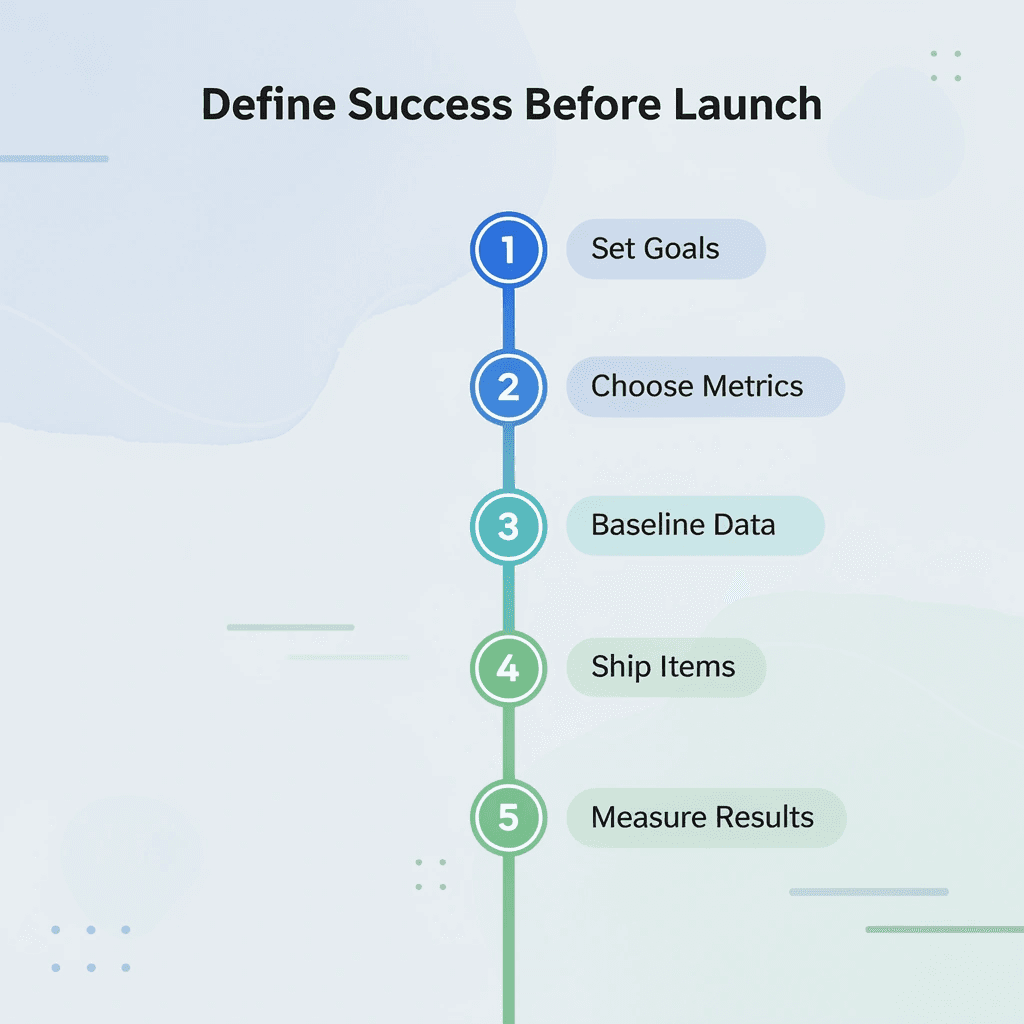
Measuring success in a promotional products campaign starts with defining what success looks like before items ship. According to Siteimprove’s research on measuring marketing campaign effectiveness, businesses that set clear campaign goals are 376% more likely to report success. Unclear intentions produce unclear outcomes.
“Businesses that set clear campaign goals are 376% more likely to report success.” — Siteimprove Research
🎯 Key Point: Always define your success metrics before your promotional products ship — not after. Retroactive goal-setting makes it impossible to measure what actually worked.
| Metric Type | What It Measures | Example KPI |
|---|---|---|
| Brand Awareness | Reach and visibility | Impressions, recall rate |
| Lead Generation | New contacts captured | Form fills, QR code scans |
| Customer Retention | Loyalty and repeat engagement | Repeat purchase rate |
| ROI / Revenue | Financial return | Cost-per-acquisition, revenue lift |
⚠️ Warning: Launching a promotional products campaign without predefined goals is one of the most common — and most costly — mistakes marketers make. Unclear intentions produce unclear outcomes.
💡 Pro Tip: Tie every promotional product to a specific, measurable action — such as a unique URL, QR code, or promo code — so you can track exactly how each item performs.
The metrics that actually move the needle
The failure point is the measurement that stops at distribution. Teams count how many items went out, then call it done. Real measurement tracks what recipients did next: did they redeem a code, visit a landing page, place an order, or mention the brand to someone else? Embed unique QR codes or promo codes directly on your items so every interaction becomes a data point. This transforms a branded product from a passive giveaway into an active conversion tool with a traceable path to revenue.
Does promotional products marketing require expensive tracking infrastructure?
Organizations watching their spending often assume advanced tracking requires costly equipment. A small business or school club ordering custom T-shirts from ooShirts can print a unique URL or QR code on each shirt and then track traffic using free analytics tools. Our all-inclusive pricing ensures the entire budget goes toward the item itself, not hidden fees that reduce profits.
What does a metric-driven promotional products marketing program look like in practice?
A distributor case study documented clients who shifted from volume-focused giveaways to metric-driven programs. One manufacturing client saw attributable revenue increases after implementing code tracking and surveys, whereas previous unmeasured efforts showed no lift despite similar spend. An events company used redemption data to refine items, resulting in higher engagement rates and repeat business from recipients.
Calculating return on investment without guesswork
Return on investment (ROI) on promotional products follows a straightforward formula: subtract total campaign costs (product, customization, distribution, and fulfillment) from the revenue or value generated, then divide by total cost. The result is a percentage that validates your approach or pinpoints where to adjust. Teams that skip this step treat merchandise as a sunk cost rather than a strategic investment, which is why their next campaign remains unchanged.
Retention and referral data reveal what revenue metrics alone cannot. Compare repeat purchase rates and referral volumes between recipients and non-recipients over a period of 60 to 90 days after distribution. A meaningful lift confirms the item built relationship equity, not momentary awareness. Siteimprove also reports that companies using data-driven marketing are six times more likely to be profitable year over year, making each campaign smarter than the last.
Closing the feedback loop
After-campaign surveys are underutilized. A three- to five-question follow-up sent within two weeks of distribution captures brand recall, perceived usefulness, and likelihood of further engagement. These responses reveal whether your product selection resonated and provide qualitative texture that raw redemption data cannot. When recall is high but conversion is low, the product worked, but the offer did not. When conversion is high, but recall is low, you have a targeting problem, not a product problem. Each distinction requires a different fix.
Related Reading
- Eco-Friendly Swag Ideas
- Company Swag Ideas
- Virtual Swag Bag Ideas
- Best Swag Ideas For Conferences
- Trade Show Swag Ideas
- Holiday Swag For Employees
15 Promotional Products Marketing Ideas to Drive Sales
The best promotional products encourage people to buy, strengthen customer loyalty, and keep your business visibly present long after a campaign ends. These ideas focus on practical ways businesses use branded merchandise to increase engagement, generate repeat customers, and create lasting sales opportunities.
“Promotional products are one of the most cost-effective marketing tools available — keeping your brand visible long after the initial campaign ends.” — Promotional Products Industry Insight
🎯 Key Point: The most effective promotional products don’t just look good — they drive measurable business outcomes like repeat purchases and long-term brand loyalty.
💡 Tip: Focus your branded merchandise strategy on items that offer daily utility — the more often a customer uses your product, the more sales opportunities you create.
| Goal | Promotional Product Strategy | Outcome |
|---|---|---|
| Increase Engagement | Distribute at events & campaigns | Higher brand interaction |
| Generate Repeat Customers | Loyalty-based merchandise rewards | Stronger customer retention |
| Drive Sales Opportunities | Branded items with calls-to-action | Measurable revenue growth |

1. Custom Apparel for Team Uniformity at Events
Your staff blends into the crowd due to a lack of cohesive branding. Outfit your team in matching custom polo shirts or jackets embroidered with your logo and tagline. This professional appearance makes representatives easy to spot, sparks conversations, and projects reliability that builds trust, leading to on-site demos, lead capture, and closed sales.
2. Branded Tote Bags as Trade Show Essentials
Trade show floors overflow with forgettable items that end up in trash bins. Equip your booth with high-quality custom tote bags featuring your logo and a strong call-to-action website or promo code. Attendees fill them with materials and carry your brand throughout the event and beyond, turning one-time visitors into long-term prospects who reference your materials and visit your site for purchases.
3. Personalized Drinkware for Customer Appreciation
Clients receive generic thank-yous that fail to create lasting connections. Send premium custom tumblers or mugs engraved with your branding, along with a personalized note tied to their recent purchase. Recipients use these items daily, receiving constant reminders of your service and associating positive experiences with your brand, which encourage repeat business and referrals.
4. Branded Tech Accessories as Lead Magnets
Prospects ignore standard business cards in favor of useful gadgets. Offer custom phone stands, wireless chargers, or laptop sleeves with your logo and QR code at networking events. These practical tools solve daily problems, keep your contact information accessible, and drive scans that feed prospects into your sales funnel for nurturing and conversion.
5. Custom Hoodies for Seasonal Loyalty Programs
Winter weather creates opportunities many brands miss. Reward loyal customers with exclusive custom hoodies in your brand colors as part of a points-based loyalty tier. Recipients wear them proudly, generating social proof and word-of-mouth exposure while feeling valued, thereby boosting retention rates and motivating additional purchases to unlock higher rewards.
6. Custom Caps and Headwear for Outdoor Promotions
Outdoor events and field marketing demand items that withstand use while promoting your brand. Distribute custom-embroidered caps or visors featuring your logo at summer festivals, through sports sponsorships, or during community activations. Participants wear them for sun protection and style, creating organic visibility that reaches new audiences and drives foot traffic or online searches back to your offerings.
7. Branded Notebooks and Journals for B2B Nurturing
Decision-makers collect stacks of brochures that get discarded. Provide premium custom notebooks with your branding, contact details, and helpful industry tips at conferences or sales meetings. Professionals use them for daily notes, to keep their message top of mind during planning sessions, and to increase the likelihood of follow-up calls or orders.
8. Custom Apparel Bundles for Referral Programs
Referrals slow down without strong incentives. Create bundles of custom t-shirts or hoodies that customers earn by referring friends who make qualifying purchases. Both the referrer and the new customer receive high-quality branded apparel, turning satisfied buyers into active promoters who expand your reach and generate new revenue streams through trusted recommendations.
9. Eco-Friendly Tote Bags and Reusable Items for Sustainability Campaigns
Consumers increasingly choose brands that demonstrate environmental responsibility. Launch campaigns with custom reusable tote bags made from recycled materials, imprinted with your logo and a sustainability message. Shoppers use them repeatedly for groceries or daily errands, aligning your brand with positive values while driving sales through eco-conscious promotions and events.
10. Personalized Keychains and Accessories as Daily Reminders
Keys and bags offer constant real estate that many marketers overlook. Design durable custom keychains or bag tags with your logo, tagline, and a scannable code for special offers. Recipients attach them to everyday items, receiving frequent brand exposure that prompts impulse visits to your store or website for promoted products.
11. Branded Workwear for Employee and Partner Programs
Technicians and field teams represent your brand every day on job sites. Supply custom embroidered work shirts, jackets, or vests to employees and channel partners. This builds professional presence, enhances safety visibility, and turns your workforce into a mobile sales force that generates leads and reinforces trust with every customer interaction.
12. Custom Stickers and Decals for Viral Sharing
Digital sharing needs physical anchors to extend its reach. Produce high-quality custom vinyl stickers or decals featuring your logo and a fun design tied to current campaigns. Customers place them on laptops, vehicles, or water bottles, creating user-generated exposure that spreads your message organically and drives curiosity-led website visits and sales.
13. Premium Custom Apparel for Influencer and Affiliate Partnerships
Influencers and affiliates need products that align with their personal brand. Collaborate by gifting premium custom hoodies or polos for them to wear in content. Their authentic endorsements reach targeted audiences, build credibility, and drive direct sales through affiliate links or promo codes featured in posts and stories.
14. Branded Umbrellas and Weather Gear for Seasonal Giveaways
Unexpected rain creates memorable moments. Offer custom umbrellas or rain jackets at outdoor events or as part of seasonal promotions. Recipients stay dry while displaying your logo prominently, associating your brand with thoughtful care and generating conversations that lead to inquiries and purchases during inclement weather periods.
15. Tiered Custom Merchandise for VIP Customer Clubs
Loyalty programs gain power through exclusive perks. Develop tiered custom apparel collections, such as limited-edition jackets or performance tees, available only to top customers. This exclusivity fosters a sense of community and prestige, encouraging higher spending to reach new tiers while turning VIPs into brand advocates who promote your business.
How to Choose the Right Promotional Products for Your Audience
A promotional products campaign works best when the items fit your audience — not just because you have a lot of them. Well-chosen products become part of people’s daily routines, keeping your brand visible for months or even years. Picking the right promotional products means understanding your audience, your goals, and the impression you want your brand to make.
“The most effective promotional products are those that align with the recipient’s lifestyle — turning everyday items into long-term brand touchpoints.” — Promotional Products Association International
🎯 Key Point: The best promotional products aren’t the most expensive — they’re the ones your target audience will actually use, making your brand visibility last far longer than a single campaign.
⚠️ Warning: Choosing products based on bulk pricing or convenience alone is one of the most common mistakes brands make — a mismatched item ends up in the trash, not in your customer’s hands.
| Audience Factor | Why It Matters | Example Product Match |
|---|---|---|
| Daily Routine | Products used daily = maximum brand exposure | Branded tumblers, notebooks |
| Demographics | Age and lifestyle shape what feels relevant | Tech accessories for younger audiences |
| Campaign Goal | Awareness vs. loyalty requires different items | Premium gifts for retention campaigns |
| Brand Impression | The quality of the item reflects the perceived brand value | Eco-friendly products for sustainable brands |
Know Your Audience Demographics and Lifestyle
Generic items fail when they ignore daily realities. Analyze age, gender, occupation, location, and lifestyle factors, including commute patterns, work environment, time spent outdoors, and sustainability values. A tech professional in a city might appreciate a sleek wireless charger, while a construction worker benefits more from durable custom workwear or tool accessories built for tough conditions. This alignment guarantees relevance and frequent use.
Align Products with Your Brand Values and Image
Mismatched promotional products create confusion and weaken trust. Choose items that reflect your company’s core identity, quality standards, and mission. A premium jewelry brand selects elegant custom keychains or engraved drinkware, while an eco-friendly company invests in recycled-material totes or organic cotton apparel. This consistency reinforces your message and positions every giveaway as an extension of your professional reputation.
Match Products to Campaign Objectives and Goals
Define your goal—lead generation, customer retention, employee motivation, or event traffic—then select products accordingly. Trade shows benefit from portable, useful giveaways like branded totes with QR codes, while loyalty programs work better with premium custom apparel that recipients wear proudly and share on social media. Clear objectives ensure every product drives measurable actions.
Consider Budget, Quality, and Longevity
Low-cost products that break quickly damage your brand more than they help. Balance cost per item with durability and perceived value by investing in quality items like custom hoodies or stainless steel tumblers. Calculate all program costs—design, production, and shipping—then choose options that people will keep and use for months or years rather than discard after one week.
Evaluate Practicality and Daily Use Potential
Items that don’t serve a purpose gather dust. Focus on products that solve real problems or integrate into daily life: custom notebooks for office workers, reusable water bottles for people who exercise, or phone accessories for technology users. Test potential items by asking how often your target audience would use them and whether your brand name remains visible during normal use.
Research Trends, Sustainability, and Customization Options
People notice when products are outdated or environmentally harmful. Meet customer expectations for sustainable materials, personalization, and innovative features. Offer customization options such as embroidery, engraving, or full-color printing that make products unique. Review supplier catalogs and industry reports to identify options aligned with current consumer values.
Test and Gather Feedback Before Full Rollout
Run small pilot distributions or surveys with a sample audience to measure product appeal, purchase intent, and brand connection before ordering in bulk. Use these insights to select products that resonate with your audience and maximize return on investment.
How ooShirts Helps Businesses Create High-Impact Promotional Products
Knowing how to measure a campaign gives you the framework — but choosing the right partner to execute it is where most organizations quietly lose ground.
“The difference between a good campaign and a great one isn’t just strategy — it’s the execution partner who brings it to life with precision, quality, and speed.” — Promotional Products Industry Insight
🎯 Key Point: ooShirts specializes in turning high-impact promotional concepts into tangible, professionally crafted products that make your brand impossible to ignore.
💡 Tip: When evaluating a promotional products partner, prioritize quality, consistency, turnaround speed, and customization flexibility — the three pillars that separate average vendors from truly strategic allies.
| What the Right Partner Delivers | What the Wrong Partner Costs You |
|---|---|
| Consistent print quality | Inconsistent branding across items |
| Fast turnaround times | Missed campaign deadlines |
| Flexible customization options | Limited creative execution |
| Scalable order volumes | Lost bulk savings |

Why does friction quietly undermine promotional products marketing campaigns?
The failure point is usually not ambition, but friction. A school fundraising committee, a nonprofit events team, or a small business owner does not need a complex vendor relationship. Most traditional print shops operate with minimum order requirements, layered fees, and unclear timelines that punish budget-conscious groups. The result: organizations either overpay, over-order, or abandon the project entirely.
That approach carries hidden costs: unused inventory sits in storage, rushed reorders eat into budgets, design files get rejected without explanation, and deadlines slip. According to the 2026 ASI Global Advertising Impressions Study, 85% of consumers remember the advertiser who gave them a promotional product, and promotional items rank as the most preferred advertising channel over TV and digital.
How does ooShirts remove the barriers that hold organizations back?
ooShirts was built to remove those barriers. No minimum order quantities mean a youth soccer league can order 12 shirts for a tournament without paying for 200 extras. All-inclusive pricing covers shipping and setup, so the price you see is the price on your invoice. A Low Price Guarantee matches any lower online quote, and every order includes expert design review plus access to shirt specialists seven days a week.
Print quality is where affordable printing has historically broken its promise. Logos that crack after three washes or colors that fade by the second season hurt brand recognition. ooShirts backs its quality with a satisfaction guarantee, redoing any order that arrives with defects.
What does a reliable promotional products marketing partner look like at scale?
When the ordering process is fast, pricing is honest, and quality holds up wash after wash, promotional apparel stops feeling like a gamble. Over one million customers and more than 10 million shirts printed since 2007 demonstrate that ooShirts has proven itself across budget-sensitive situations. The right product, well printed and strategically distributed, does its job quietly and consistently. But what does it feel like to go from idea to finished shirt?
Start Designing Your Custom Shirts Today
Cheap custom T-shirts from ooShirts remove the barriers that have traditionally made custom printing hard for schools, small businesses, and nonprofits to access. You get an Online Design Lab, no setup fees, free standard shipping, and a Low Price Guarantee — everything you need to bring your vision to life without hidden costs.
“Custom apparel shouldn’t be reserved for big budgets — no setup fees, free standard shipping, and a Low Price Guarantee make professional printing accessible to everyone.” — ooShirts
| Feature | What You Get |
|---|---|
| 🎨 Online Design Lab | Free, easy-to-use design tool |
| 💰 Setup Fees | $0 — none, ever |
| 🚚 Standard Shipping | Free on every order |
| 🏷️ Low Price Guarantee | Best price or we match it |
💡 Tip: The Online Design Lab requires zero design experience — anyone can create a professional-quality custom shirt in minutes.

Every event, campaign, or customer interaction is a chance to put your brand in motion. Start your free design at ooShirts today, get instant all-inclusive pricing, and order exactly what you need — from one shirt to one thousand — with no minimums and no surprises at checkout.
🎯 Key Point: Whether you need 1 shirt or 1,000, ooShirts scales to your needs with no minimum order requirements and fully transparent pricing from the start.
✅ Best Practice: Take advantage of instant all-inclusive pricing before finalizing your design. You’ll see your total cost upfront with no hidden fees at checkout.
Related Reading
- Recruiting Swag Ideas
- Cool Swag Ideas For Employees
- Swag Ideas For Events
- Company Swag Ideas For Clients
- Top Merchandise Companies For Employee Swag
- Best Corporate Gift Promotional Product Options
- Work From Home Swag
- Corporate Swag Vendors
- Sendoso Alternatives
Leave a Reply