
Last updated: August 31, 2026
Most sellers leave Gooten for the same reason: the price shown is never the price paid. Here is how to find a platform where the math actually works before you commit.
Sellers searching for a Gooten alternative rarely start with a clear diagnosis. The common assumption is that more features and a longer product catalog mean a better POD platform, so they open comparison lists and start counting features. That instinct is understandable. The real problem is pricing opacity, and it compounds across every sale, every month, until the margin math stops working entirely. If you’ve felt that frustration, the fix is not more SKUs.

Gooten is a print-on-demand fulfillment network that routes orders through a distributed partner network rather than operating its own production facilities. That model works well for high-volume ecommerce sellers who need geographic flexibility and a wide product range. See our cheap custom t-shirt printing solutions for how this works in practice. It was not built for sellers who need to forecast per-unit profit on a 50-shirt run before committing to a retail price.
Sellers using Shopify and Gooten together have reported in POD community discussions that fulfillment surcharges can surface after a product page price is first displayed, a pricing architecture that, regardless of intent, makes it harder to model per-unit cost before committing to a retail price. Platforms built around cheap custom t-shirt printing with all-inclusive live quoting show the exact price, shirt plus printing plus shipping, before a single decision is locked in. That’s the difference between a business model that works and one that leaks.
The community consensus among POD sellers is blunt: pricing opacity and middleman markup are the core margin killers. In those discussions, sellers using aggregator platforms report paying elevated per-unit and shipping costs, making reliable profit planning difficult without manually reverse-engineering the final checkout total on every SKU.
Key takeaways
- Sellers leave Gooten because they can’t predict their real per-unit cost, not because the catalog is too short or the integrations are too few.
- True per-unit cost is base price plus printing fee plus shipping plus platform surcharges; most sellers only budget the first number and absorb the rest as margin erosion.
- A healthy POD margin requires knowing your all-in cost before you set a retail price; platforms that obscure that number make profitable pricing structurally impossible.
- Feature counts and catalog size are distractions; the only metric that universally determines platform fit across every seller profile is price transparency at checkout.
- Switching platforms carries a hidden migration risk: margin shock that doesn’t surface until live orders ship on the new platform and the checkout total diverges from the quoted price.
- ooShirts closes that gap with all-inclusive live quotes that show the exact price, shirt, printing, and shipping combined, before you commit, with no fees added at checkout.
Key Evaluation Metrics for POD Platforms – Before You Read Any Alternatives List
Not every Gooten alternative is built the same, and the difference between a platform that protects your margin and one that quietly erodes it often comes down to metrics most sellers never think to check before committing. The sub-sections below walk through the specific calculations and cost layers that reveal what a platform actually charges versus what it advertises. Running these numbers before you choose is how you avoid the pricing gaps that surface at checkout, long after the decision felt final.

True Cost Index – Real Per-Unit POD Cost
The product-page price is the starting point, not the finish line. Across the market, true per-unit cost equals base product price plus printing fee plus shipping plus any platform surcharges. Based on our market understanding, a significant share of sellers who skip the full calculation routinely underprice and erode their margin before a single order ships.
Run this calculation on every platform you evaluate: take a representative 24-unit tee order and build the total from each cost layer. If a platform quotes $12.99 on the product page but the checkout lands at $18.40 after shipping markups and a per-order fee, the margin math changes completely.
Key takeaway: The price you see is not the price you pay on most platforms. That gap between product-page price and checkout total is the True Cost Index in action, and it is the silent margin killer most sellers discover too late.
When a buyer is shopping and comparing prices before placing an order, which is exactly when most purchasing decisions are locked in, hidden fees are the silent margin killer. ooShirts removes that friction with all-inclusive transparent pricing and free shipping and setup baked in from the start. There are no checkout surprises to reconcile after the fact. If you find a lower price elsewhere, ooShirts’ price match guarantee means you are not forced to choose between cost certainty and platform reliability. That combination makes building an honest True Cost Index straightforward rather than an exercise in reverse-engineering a competitor’s checkout flow.
Order Freedom Score – Small Runs, Mixed SKUs, and One-Off Orders
Most POD platforms carry no formal minimum order quantity. But the absence of an MOQ floor does not mean small orders cost the same per unit as larger ones. Tiered pricing, premium-plan gates, and per-order handling fees can all quietly penalize a 6-piece mixed-SKU run that a team, club, or small business needs to place without committing to bulk.
Score each platform on one question: can you order any quantity, in any SKU mix, at the price shown, with no access-tier requirement attached? If the answer requires a paid subscription to unlock a competitive rate, that subscription cost belongs in your True Cost Index calculation too.
ooShirts answers that question directly: there are no minimum orders for DTG printing, and the platform is built to serve teams of any size, from a single jersey to a full club kit. With 100+ shirt styles available and cheap custom t-shirt printing that does not hide costs behind volume gates, teams and small businesses get the same transparent rate whether they are ordering 6 pieces or 600. That is order freedom in practice.
Print Quality Consistency – What Repeat-Buyer Brands Must Verify
Most small businesses assume that more features and a longer product catalog mean a better POD platform. Switching fulfillment providers mid-store is where that assumption gets tested: if print color, placement, or weight changes between your old and new supplier, repeat buyers notice, and a single bad reorder can erode the brand trust you built with the first one.
Brands that supply professional custom apparel for teams face this risk most acutely, because those buyers reorder by muscle memory and expect the second run to match the first exactly. Before committing to any Gooten alternative, order a print sample of your top-selling SKU and compare it directly against your current product.
ooShirts backs consistency with a quality guarantee, so if a print does not meet the standard, there is a clear resolution path rather than a support ticket that goes cold. Customer support is available 7 days a week, which matters when a reorder deadline is tied to a game day or event. Pair that with guaranteed delivery dates and standard orders printed and shipped within 7-10 business days, with a rush printing option available in as little as 3 business days, and the risk of a mid-switch quality gap, the thing that quietly ends repeat-buyer relationships, becomes a manageable variable rather than an open-ended one.
The 16 Best Gooten Alternatives for Print-on-Demand in 2026 – Ranked and Reviewed
The three metrics above exist because feature lists seduce you. A 1,300-product catalog, a dozen integrations, a slick dashboard, all of it looks like progress until you reach checkout and discover the price you budgeted is not the price you pay. That gap, repeated across every order, is where margins disappear. The 16 platforms below are ranked not by catalog size but by how well they serve a specific seller’s actual cost structure, fulfillment needs, and order flexibility.
1. ooShirts – Best Overall Gooten Alternative for Lowest-Price Custom Apparel
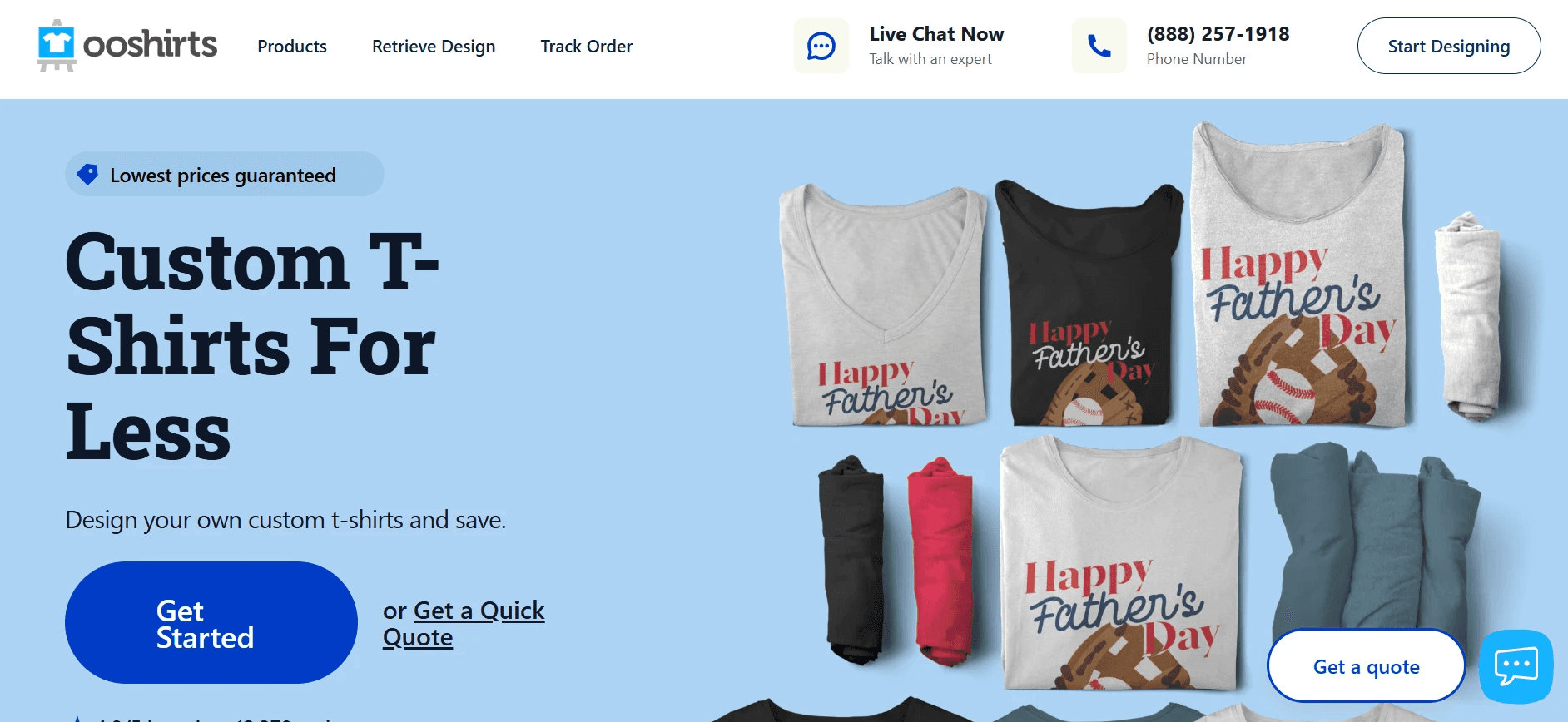
Most sellers scanning a list like this are looking for one thing underneath all the feature comparisons: certainty. Certainty that the price quoted at the start is the price charged at the end. Sellers who have watched major POD platforms quietly erode payouts and pile on hidden fees at checkout know exactly how quickly a seemingly healthy margin can evaporate by the time an order confirms.
ooShirts is built around exactly that promise. All-inclusive transparent pricing shows shirt cost, DTG printing, and free shipping (contiguous US) in a single live quote before you commit, so when a buyer is shopping and comparing prices before placing an order, they see the complete number upfront, not a stripped base price that balloons at checkout. That structure directly addresses the most common frustration small-run buyers face: not knowing the real total until after a decision is already locked in.
The platform backs that pricing with a price match guarantee, which means sellers who find a lower comparable quote elsewhere have a concrete recourse rather than just absorbing the difference. Free setup is included, so there are no onboarding costs layered on top. And with no minimum orders for DTG, ooShirts is the right pick for teams, clubs, nonprofits, and event organizers ordering any quantity without penalty, making affordable t-shirt printing for nonprofit groups genuinely accessible, not just theoretically possible.
Beyond price, consistency matters for repeat buyers. ooShirts combines a quality guarantee with expert design review, a human check on submitted artwork that catches issues before they reach production, so sellers can expect consistent print quality across multiple orders rather than discovering a color-matching problem after a batch ships. That combination of a good-looking, quality print at a reasonable price is what makes repeat ordering reliable rather than a gamble. Customer support is available 7 days a week, and fast turnaround times with guaranteed delivery dates mean sellers running time-sensitive group orders or event apparel aren’t left managing deadline anxiety without a fallback.
The catalog covers 100-plus shirt styles, and screen printing services are available alongside DTG, giving buyers flexibility on production method based on order size and design requirements. The honest tradeoff: the catalog is narrower than aggregator platforms, so sellers who need a wide product mix beyond custom apparel will need a second vendor.
2. Printful – Best Gooten Alternative for Premium Print Quality and Branding
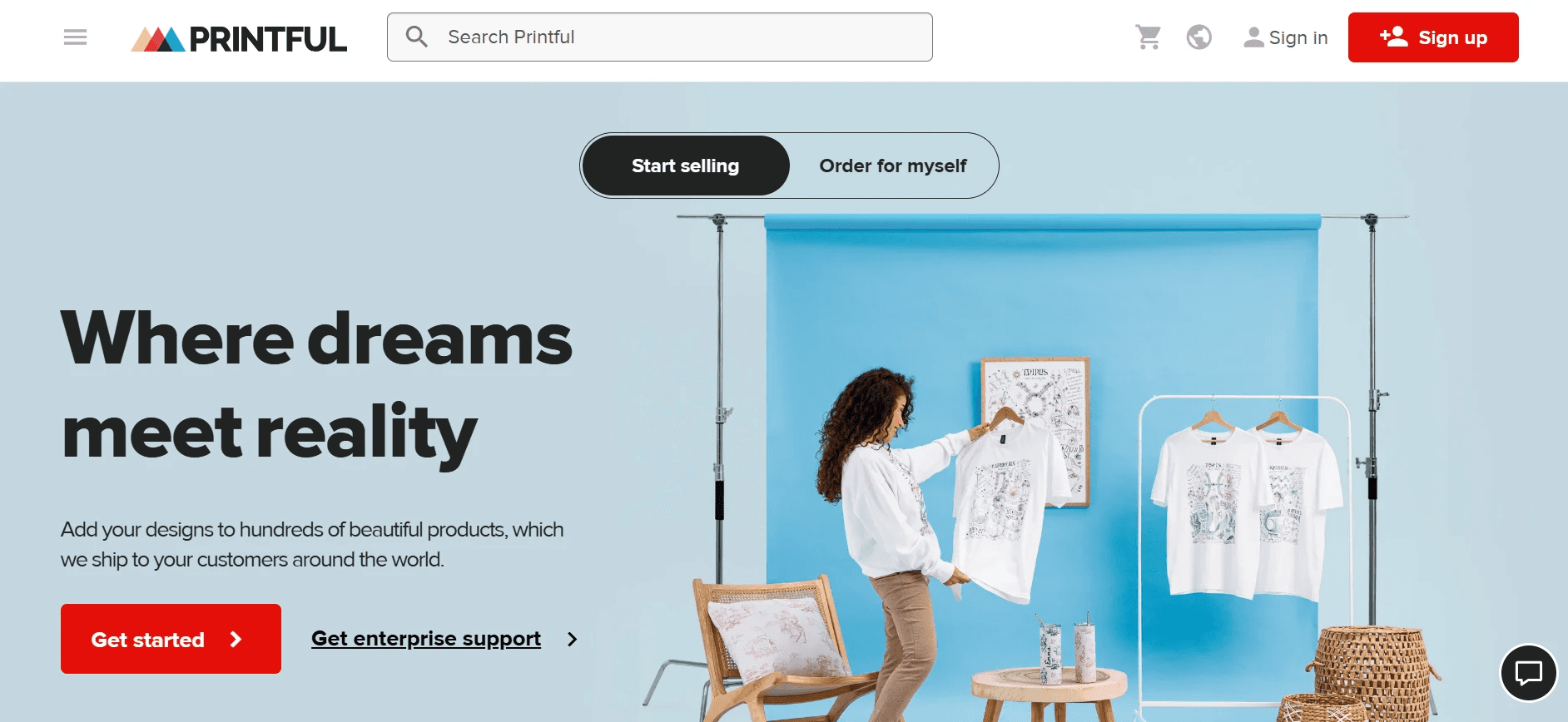
Printful differs from Gooten in one structural way that matters: it owns and operates its own fulfillment centers rather than routing orders through a partner network. That in-house model gives Printful tighter quality control and consistent color output across repeat orders, which is critical for brands whose customers notice when a hoodie looks different from the last batch. White-label branding options, including custom tear-away tags and branded packaging, add genuine brand-building value. The real tradeoff is base cost: Printful’s per-unit prices run higher than most alternatives, which compresses margins for sellers who compete on price rather than brand equity. Best when brand consistency outweighs per-shirt cost.
3. Printify – Best Gooten Alternative for Print Provider Flexibility and Scale
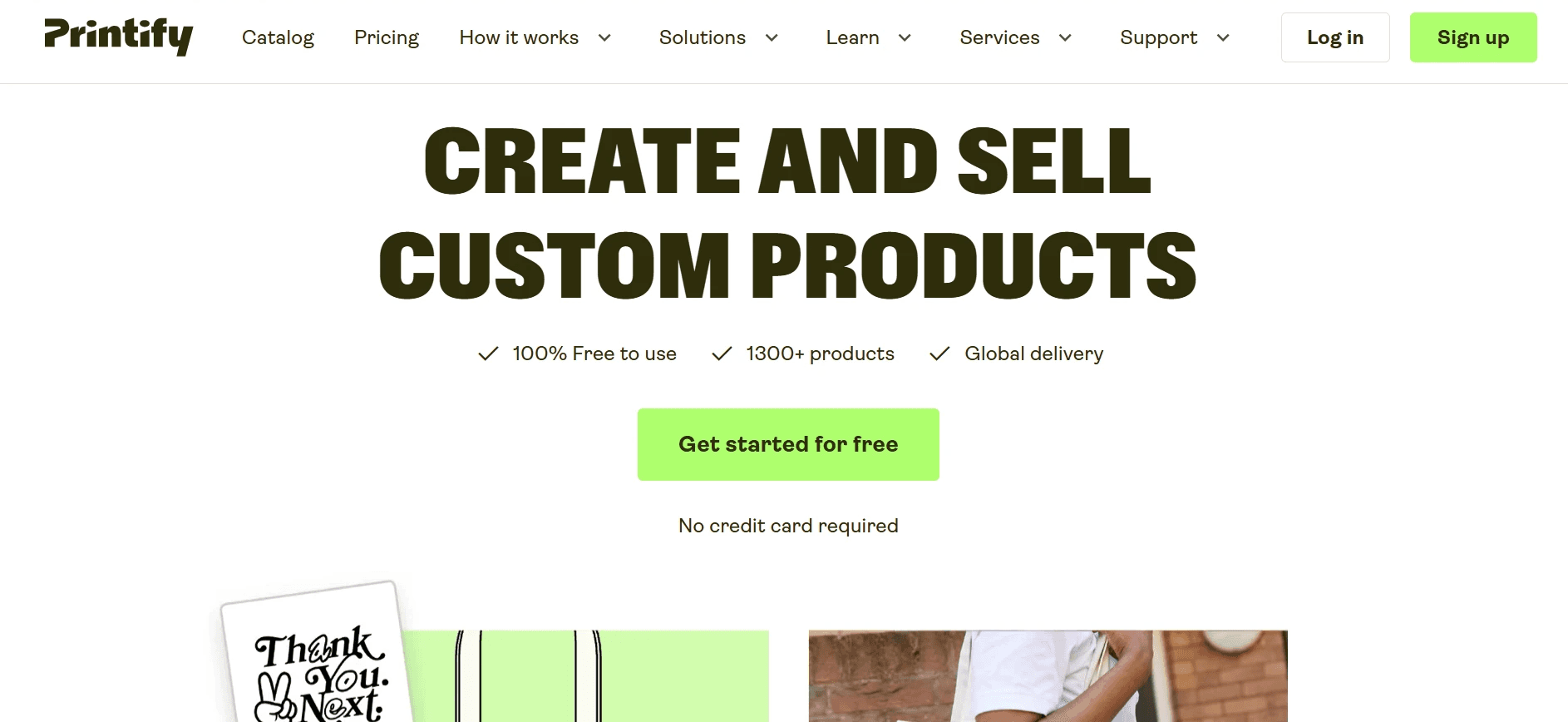
Printify differs from Gooten by giving sellers direct control over which print provider fulfills each order, pulling from a network that spans over 1,300 products across dozens of suppliers. That flexibility is the platform’s sharpest edge and its biggest hidden cost. A bigger catalog often means less predictable margins: sellers who chase the widest SKU range end up manually auditing and switching providers to find the best price on the same product, a task that takes real time and still produces surprises.
The Printify Premium plan unlocks up to 20% off all products and now costs $39/month, raised from $29 in February 2026. That discount only pays for itself once order volume is high enough to absorb the fixed overhead. Best for high-volume ecommerce sellers who can invest time in provider optimization; not ideal for sellers who need predictable per-unit costs without ongoing manual work.
$39/month Printify Premium cost, raised from $29
4. Gelato – Best Gooten Alternative for Global Local Fulfillment
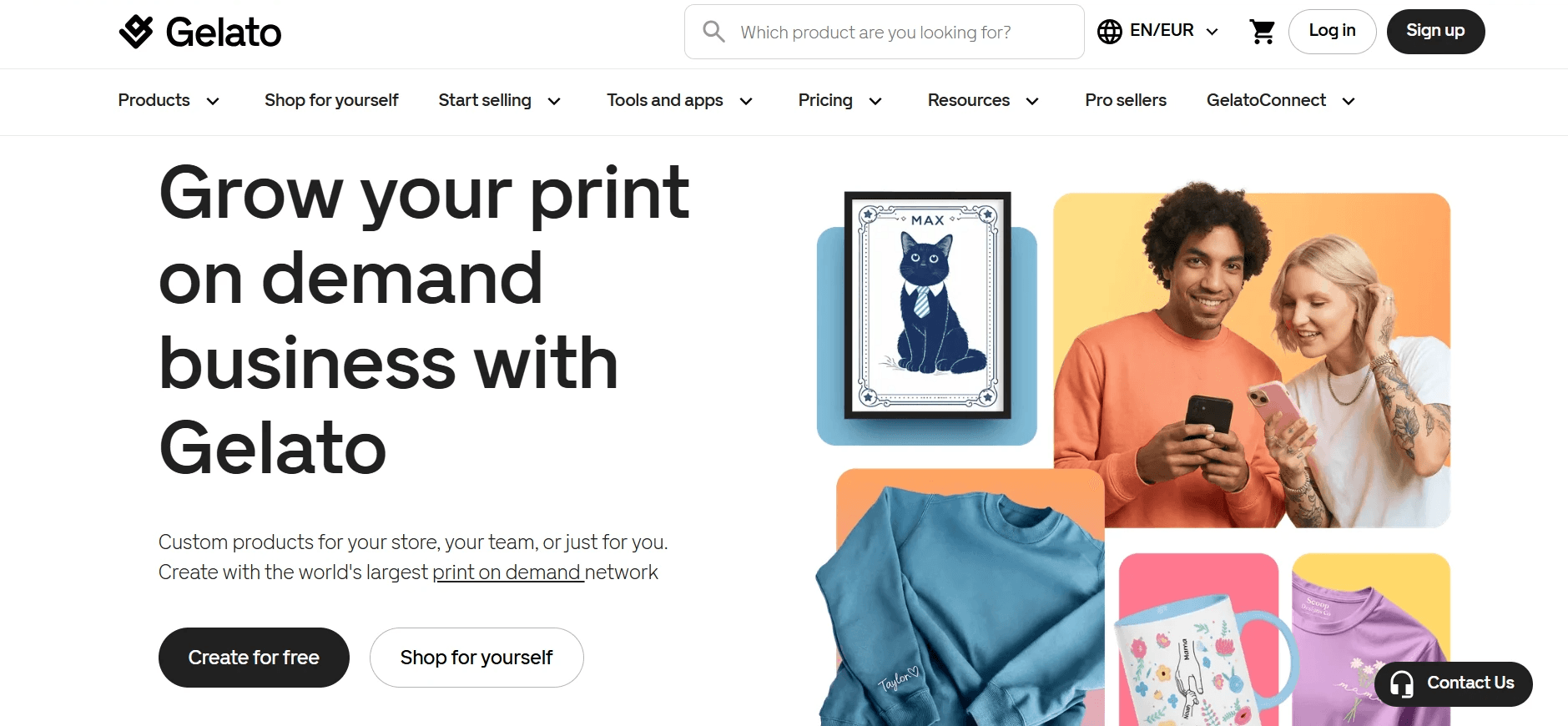
Gelato differs from Gooten by routing each order to the production partner closest to the end customer, drawing on a global network of partners spread across dozens of countries. That local-production model cuts international shipping times and reduces cross-border shipping costs compared to centralizing fulfillment in one country. For sellers with a genuinely global customer base, that routing advantage translates into faster delivery windows and fewer customs complications. The tradeoff is that quality consistency depends on which local partner fulfills a given order, and sellers with strict color-match requirements across markets may see variation. Best for international DTC brands scaling across multiple regions; less critical for sellers whose customers are concentrated in one country.
5. SPOD – Best Gooten Alternative for Ultra-Fast Fulfillment Turnaround

SPOD, powered by Spreadshirt, differs from Gooten primarily on production speed. SPOD is built around an industry-leading production speed, targeting fulfillment within 48 hours, a benchmark that is difficult for most POD alternatives to match. For sellers running time-sensitive campaigns, limited drops, or seasonal promotions where a slow fulfillment window kills the sale, that speed is a genuine differentiator. The platform’s product catalog is narrower than Printify’s or Printful’s, and customization depth is more limited. Best for sellers who prioritize fast turnaround over catalog breadth; a poor fit for brands that need extensive product variety or deep white-label options.
6. Redbubble – Best Gooten Alternative for Artists Wanting a Built-In Marketplace
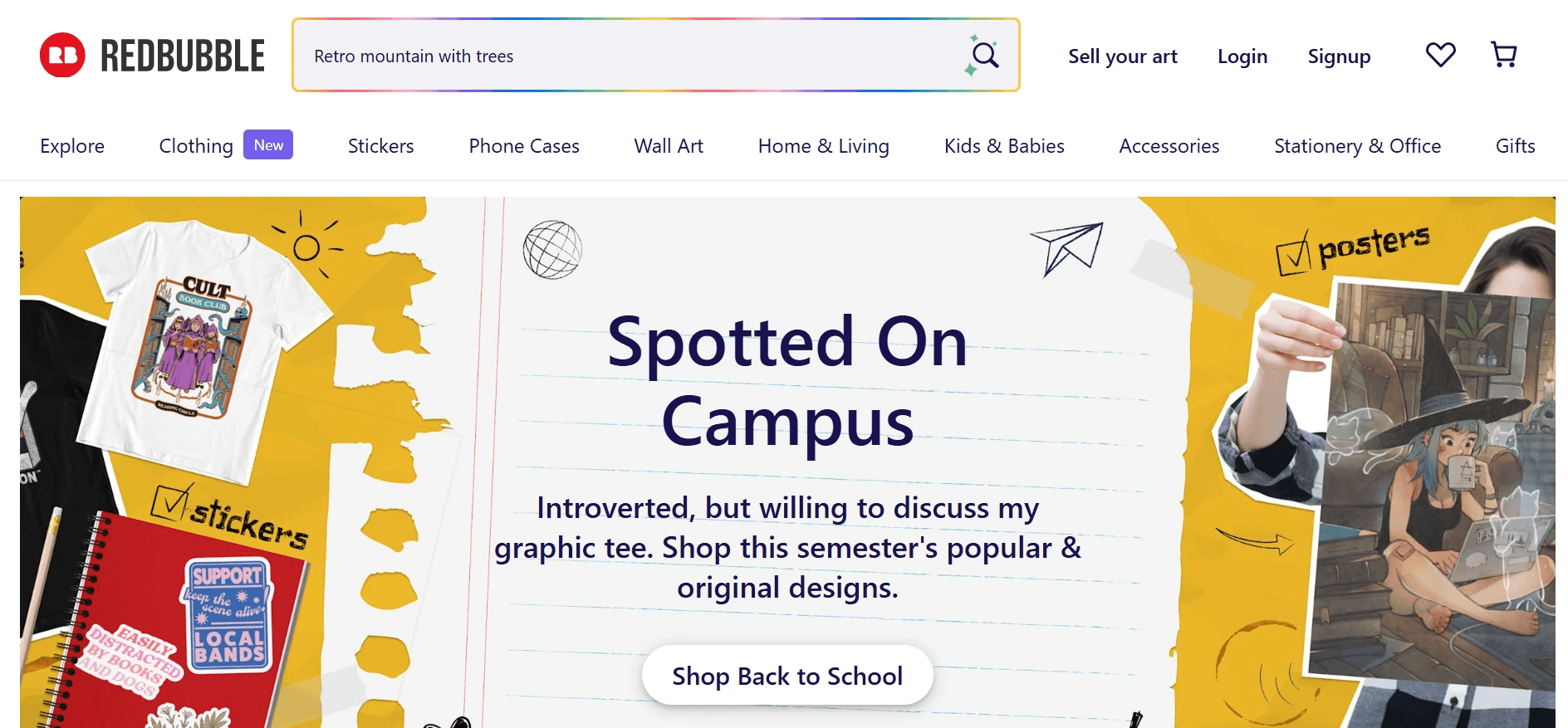
Redbubble is less a fulfillment platform and more a marketplace with built-in traffic, which makes it a fundamentally different model than Gooten. Artists upload designs, set a markup percentage above Redbubble’s base price, and earn royalties when the platform’s existing audience buys. There is no store-building required and no customer acquisition cost on the seller’s side. The tradeoff is control: you do not own the customer relationship, pricing is constrained by the platform’s structure, and payout rates have been squeezed significantly over recent years as the marketplace has matured; some sellers now earn a fraction of what the same volume returned a few years ago. Best for artists who want passive income from existing designs without building a store; not suitable for sellers who need brand ownership or margin control.
7. Zazzle – Best Gooten Alternative for Hyper-Customizable Product Variety
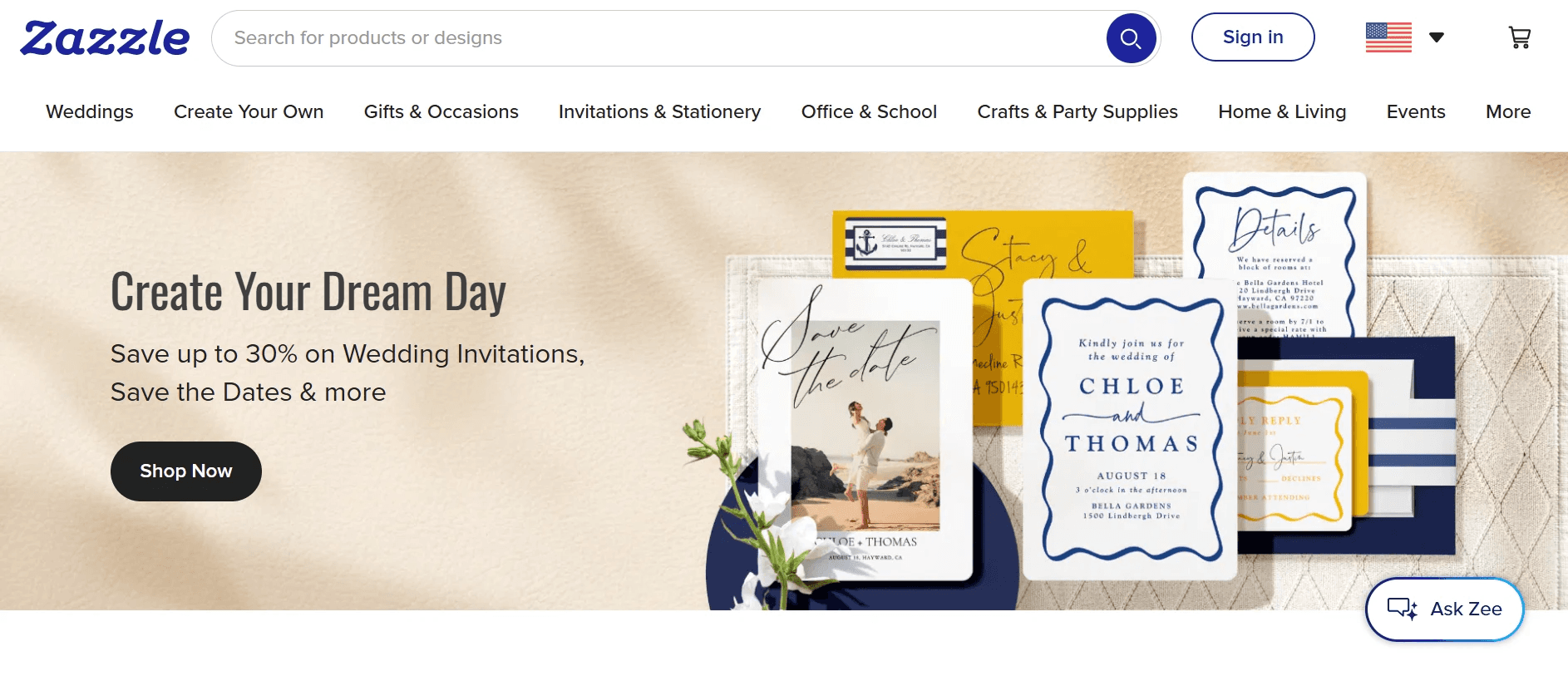
Zazzle’s core strength is product breadth. The catalog runs into hundreds of product types, and the platform allows buyers to customize products themselves at the point of purchase, which creates a self-service model that works well for gifting and novelty categories. Sellers set royalty rates on top of Zazzle’s base prices.
The limitation for serious ecommerce operators is the same as Redbubble’s: you are a vendor inside someone else’s marketplace, not the owner of a brand. Margin control is limited, and the platform’s aesthetic skews toward personalization rather than brand-forward apparel. Best for designers who want access to a large buyer pool without managing fulfillment; not a fit for sellers building a distinct brand identity.
8. Teespring (Spring) – Best Gooten Alternative for Creator-Economy Sellers

Spring, formerly Teespring, is built around the creator economy rather than traditional ecommerce. Its native integrations with YouTube, Twitch, and other creator platforms let content creators sell merch directly to their audiences without managing a separate storefront. Fulfillment is handled end-to-end, and the setup requires minimal technical work.
The tradeoff is that Spring’s model optimizes for creator convenience, not margin depth. Base prices are not the lowest in the category, and sellers outside the creator ecosystem will find the platform’s tools less relevant to their workflow. Best for content creators monetizing an existing audience; less compelling for independent brands or businesses without a social following.
9. Society6 – Best Gooten Alternative for Art-Focused Premium Home Décor

Society6 occupies a specific niche: art prints, wall art, and home goods sold through a curated marketplace that attracts buyers looking for design-forward products. Artists earn a royalty on each sale, with Society6 controlling pricing and fulfillment. The platform’s buyer base is genuinely interested in art as a category, which means designs that fit that aesthetic can find an audience without paid acquisition. The limitation is the narrow niche: Society6 is not a general apparel platform, and sellers whose primary product is custom t-shirts or team apparel will find the catalog and audience a poor match. Best for visual artists selling art-adjacent products; not a Gooten replacement for apparel-first businesses.
10. Yoycol – Best Gooten Alternative for Budget All-Over-Print Products
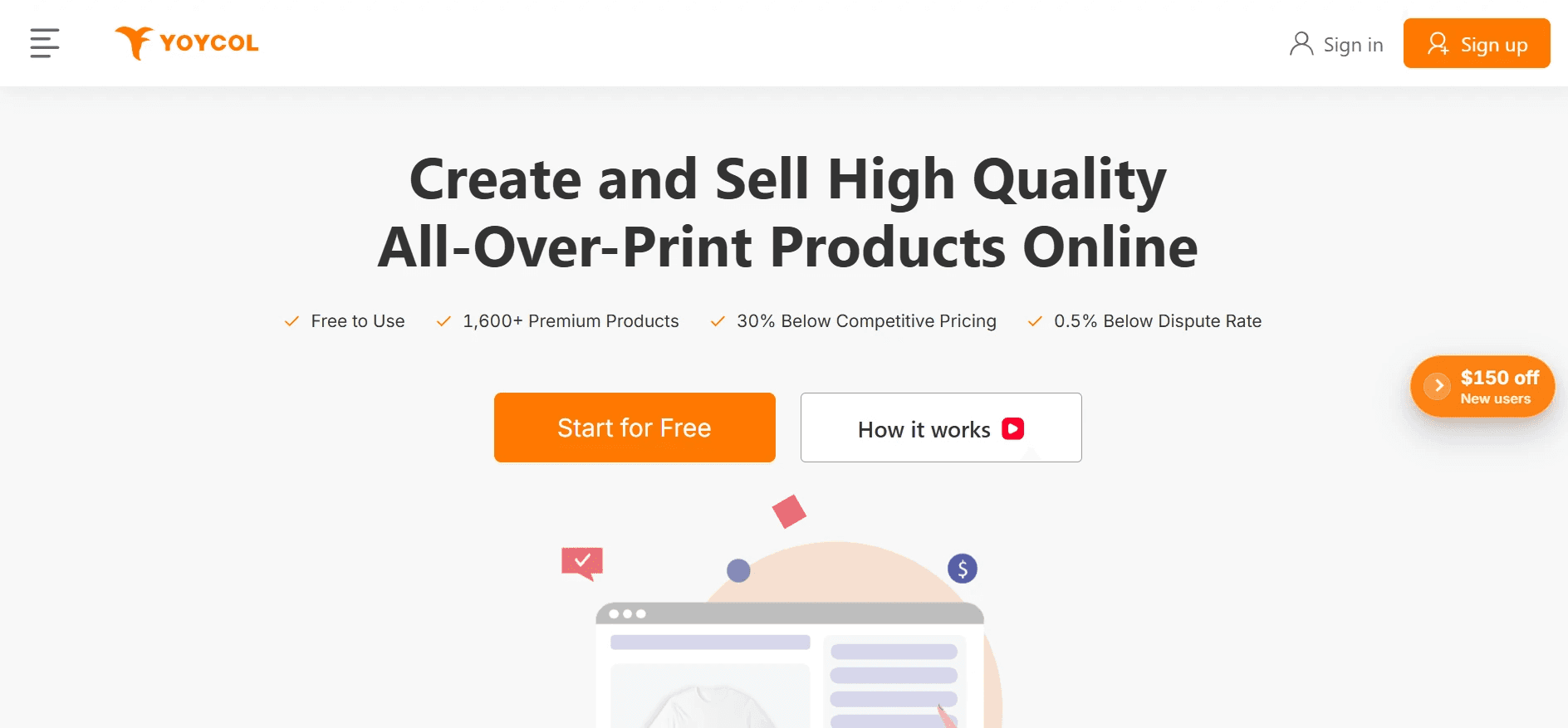
Yoycol is a China-based POD supplier with a large all-over-print catalog and base prices that undercut most Western alternatives. For sellers whose primary concern is per-unit cost on AOP products, Yoycol’s pricing structure is genuinely competitive. The tradeoffs are shipping time and quality consistency. Orders fulfilled from China carry longer transit windows to US and European customers, and print quality on individual orders can vary more than with in-house fulfillment platforms. Best for sellers who are price-sensitive on AOP products and whose customers can tolerate longer shipping windows; a poor fit for brands where delivery speed or color-match consistency is non-negotiable.
11. Fourthwall – Best Gooten Alternative for Merch Storefronts with Fan Memberships
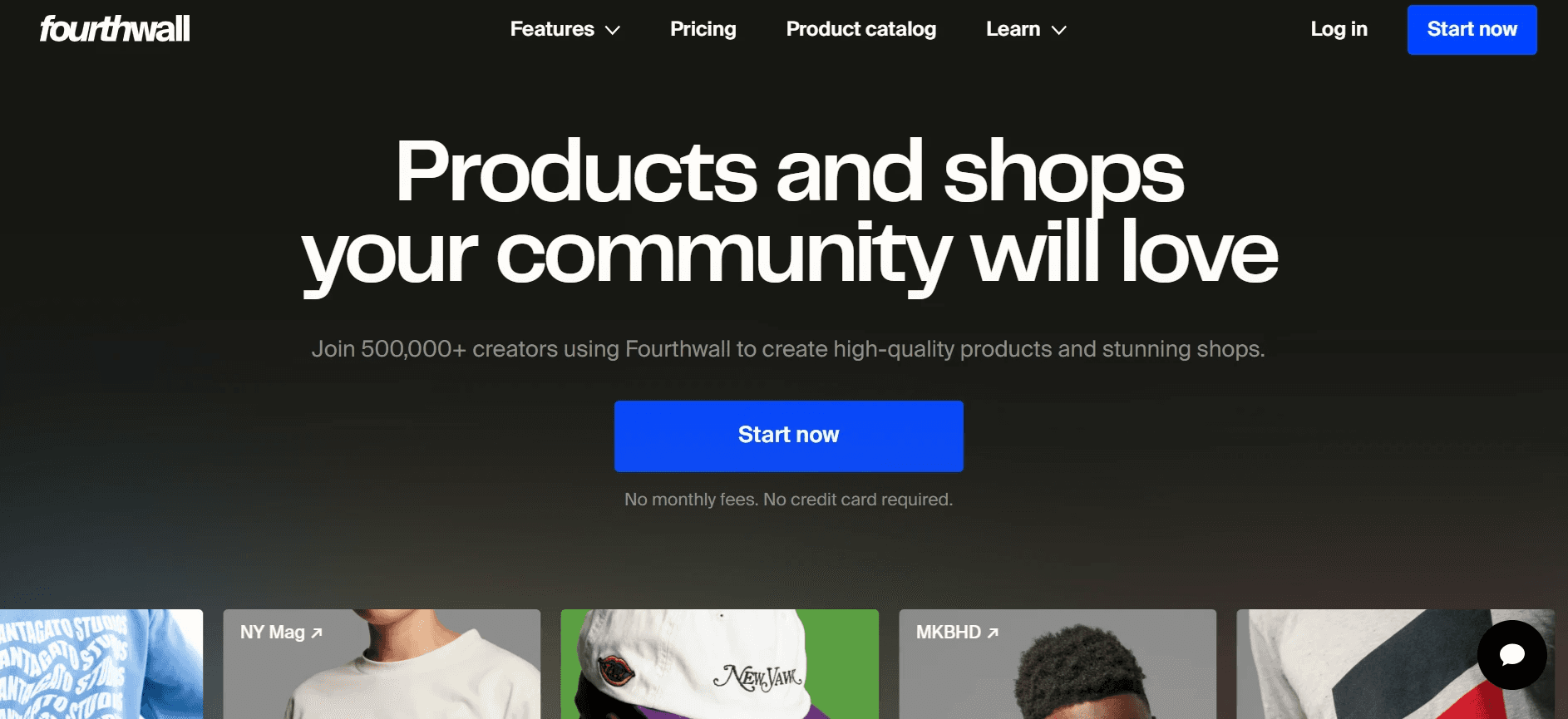
Fourthwall combines a merch storefront with fan membership and tipping tools, making it a hybrid between a POD platform and a creator monetization product. Sellers can offer physical products alongside digital memberships, which creates a revenue mix that pure POD platforms cannot replicate. The platform charges no transaction fees on merchandise sales, which is a meaningful structural advantage over some alternatives. The tradeoff is that Fourthwall’s value compounds when a seller already has an engaged audience; for businesses without that existing fan base, the membership features add complexity without immediate payoff. Best for creators and independent brands with loyal communities; less useful for cold-start ecommerce stores.
12. CustomInk – Best Gooten Alternative for Group and Bulk Custom Apparel Orders

CustomInk is among the most widely searched names in group custom apparel, a recognition that carries real weight for buyers who need reassurance that an order will arrive correctly for a team, event, or organization. The platform’s group ordering tools, design review process, and customer support infrastructure are built specifically for the multi-buyer, deadline-driven scenario. The tradeoff is cost: CustomInk prices reflect the reassurance premium, and for buyers whose primary concern is per-shirt cost on a straightforward order, that premium is significant. Best for large group orders where the buyer’s primary fear is something going wrong, not the per-unit price; less competitive for cost-sensitive buyers who need affordable custom t-shirt printing without the overhead.
13. Apliiq – Best Gooten Alternative for Private-Label Streetwear Brands
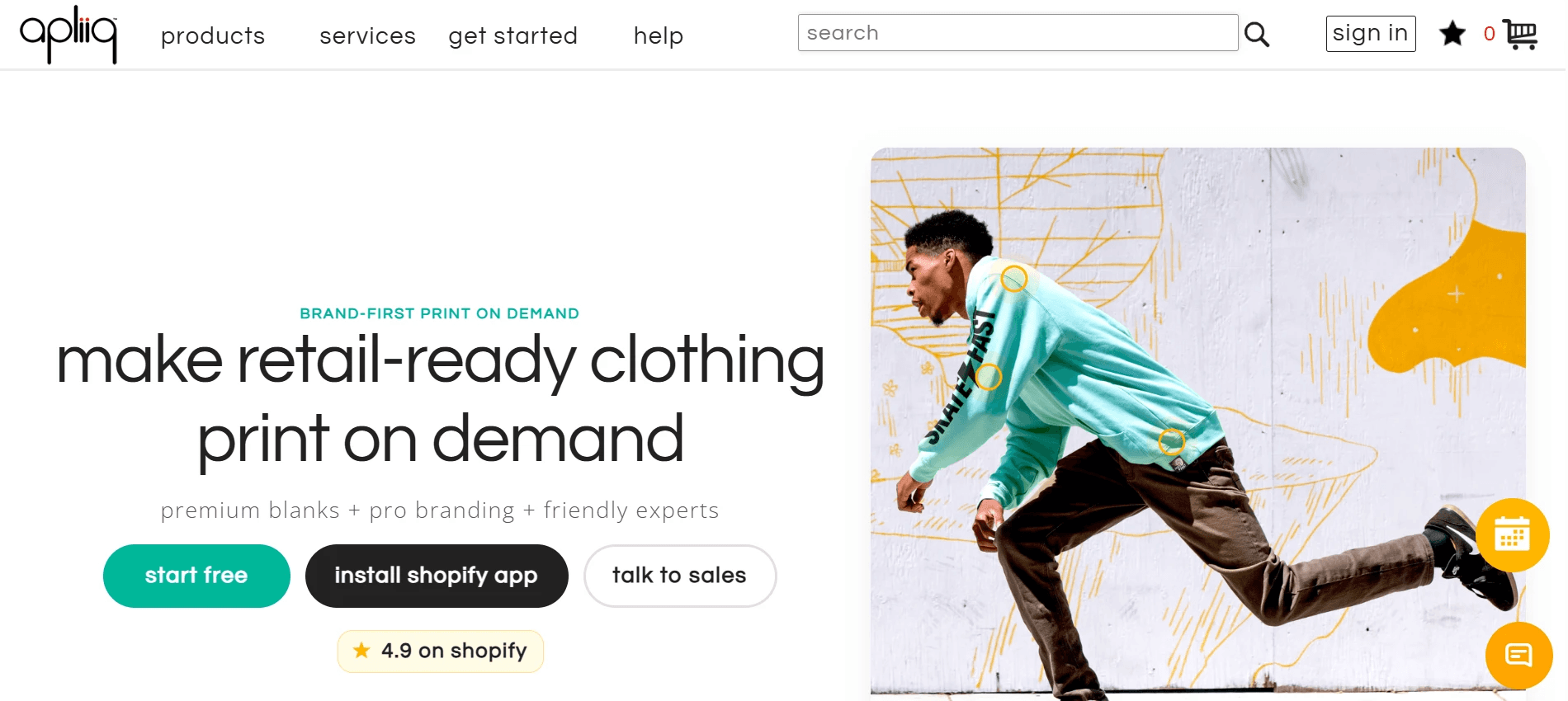
Apliiq sits in a distinct category: it is built for brands that want private-label apparel with custom labels, patches, and fabric-level customization that standard DTG or screen printing cannot produce. For streetwear brands or independent labels trying to build a product that looks and feels like a manufactured garment rather than a printed tee, Apliiq’s capabilities are genuinely differentiated. The tradeoff is price and complexity. Per-unit costs are higher than standard POD, and the ordering process requires more upfront design work. Best for apparel brands where product differentiation depends on construction details, not just print; not a fit for sellers who need straightforward, affordable custom t-shirt printing at scale.
14. Lulu Direct – Best Gooten Alternative for Self-Publishers and Book POD

Lulu Direct is the clearest category specialist on this list: it is a book printing and POD platform, not an apparel platform. For self-publishers who want to sell physical books, journals, or printed products through their own storefront without managing inventory, Lulu Direct’s print quality and distribution options are well-regarded. The limitation for most readers of this comparison is obvious: if you are looking for a Gooten alternative to fulfill custom apparel or general merchandise, Lulu Direct is not the right tool. Best for authors, educators, and content creators selling printed books or workbooks; irrelevant to apparel-first POD businesses.
15. Printbase – Best Gooten Alternative for All-in-One POD Store Builder
Printbase combines a POD fulfillment back end with a built-in storefront builder, targeting sellers who want to launch a POD business without connecting a separate ecommerce platform. The all-in-one structure reduces technical setup friction, and the platform’s product catalog covers standard apparel and home goods. The tradeoff is flexibility: sellers who already operate on Shopify, Etsy, or WooCommerce will find Printbase’s walled-garden approach limiting, and the platform’s base prices are not the most competitive in the category. Best for new sellers who want the fastest path to a live store without integration work; less suited for established sellers who need to plug into an existing tech stack.
16. AOP+ (All-Over-Print Plus) – Best Gooten Alternative for UK-Based All-Over-Print Fulfillment
AOP+ fulfills from the UK, which makes it the most practical all-over-print option for sellers whose customer base is concentrated in the United Kingdom or Europe. UK-based fulfillment means shorter shipping windows and no customs complications for European buyers, which is a structural advantage that US-based POD platforms cannot replicate for that geography. The catalog focuses on all-over-print apparel and accessories rather than standard DTG products. The tradeoff is that for sellers whose customers are primarily in the US, the UK fulfillment location adds shipping time and cost rather than reducing it. Best for European sellers and UK-based brands; a poor fit for US-centric businesses where domestic fulfillment speed matters.
The common thread running through this list is that every platform’s advertised advantage comes with a specific condition attached. Printify’s provider flexibility only pays off if you invest time in auditing suppliers. Printful’s quality consistency comes at a higher base cost. SPOD’s 48-hour production window is real, but the catalog is narrower. The sellers who get burned are the ones who evaluate platforms on the headline feature without reading the fine print on pricing structure, provider variability, or order minimums.
That pattern is exactly why the first filter for any buyer whose primary concern is cost certainty should be whether the platform shows a complete, all-inclusive price before checkout, not after. Most POD platforms quote a base price, then add shipping at the end, sometimes with handling fees or plan costs layered on top. For sellers trying to build reliable margins on custom team shirts or nonprofit group orders, that opacity makes profit planning a guessing game. The sellers who avoid the most painful surprises are the ones who insist on seeing the full number, shirt plus print plus shipping, before they commit any volume. That is the standard ooShirts is built to meet, backed by a price match guarantee and 7-day customer support for when questions arise mid-order.
Every platform above has a legitimate best-fit scenario, but “best overall” and “best for you” are two different answers. The next section maps these alternatives to seller profiles, so you can skip straight to the shortlist that matches how your business actually operates.
Related Reading
- Best Printer For T-shirt Printing
- Spreadshirt Alternative
- Gooten Alternative
- Gotprint Vs Vistaprint
- Print Aura Alternatives
Best Gooten Alternative by Use Case – Which Platform Fits Your Seller Profile
Platform fit is a seller-profile problem. Since POD suppliers require full payment at checkout with no deferred billing, pricing architecture is the universal filter; seller-type features are secondary. Pricing transparency and true cost per item determine margin outcomes far more reliably than catalog breadth. The seller who knows that going in stops chasing the longest product list and starts asking a sharper question: does this platform’s pricing model match how I actually generate revenue?

This question becomes urgent if a fulfillment partner goes quiet mid-season. Sellers who built their Q4 revenue around a best-selling product, say a calendar or a seasonal apparel line, and suddenly find their fulfillment partner unresponsive are evaluating alternatives while active orders sit in limbo. That kind of mid-selling-season disruption is one of the most damaging scenarios a POD business can face, because every day of delay compounds into lost sales, refund requests, and eroded customer trust. The right answer, before that crisis hits, is to anchor on a vendor you can reliably reorder from without surprises, one whose pricing, timelines, and availability are stated clearly before you commit.
The Six Seller Profiles That Map to Six Different Right Answers
Each of the six profiles below has a structurally different answer. The ecommerce dropshipper needs provider-network flexibility. The brand-first DTC seller needs fulfillment consistency. The international seller needs local production routing. The high-volume US apparel buyer needs aggressive unit economics. The time-sensitive campaign seller needs speed guarantees. And the group or community buyer needs something most POD platforms were never designed to offer: a complete, all-inclusive price before any commitment is made.
Ecommerce Dropshipper vs. Brand-First DTC – Two Profiles That Need Completely Different Fulfillment Models
The dropshipper’s priority is margin-per-SKU across a wide catalog. Provider-network platforms that let you manually switch print partners to optimize cost work well here. The brand-first DTC seller, by contrast, is building repeat-buyer trust on color consistency and packaging.
In-house fulfillment networks reduce the quality variance that third-party provider switching introduces. Printify suits the first profile; Printful suits the second. Neither is wrong. They are built for different risk tolerances around quality control, and treating them as interchangeable is where brand equity quietly erodes.
For sellers whose primary product is custom apparel, the calculus shifts again. Printify’s research on high-margin products confirms that unit economics hinge on seeing the true landed cost upfront. ooShirts is built around that requirement: all-inclusive transparent pricing means the number a buyer sees when comparing options is the number they pay, with free shipping and setup already included.
There are no fulfillment fees revealed at checkout, no per-item surcharges applied after the fact. When a buyer is shopping and comparing prices before placing an order, that clarity is the margin calculation itself. Pair that with a price match guarantee, and the dropshipper and DTC seller alike have a hard floor under their cost projections.
Beyond price, brand-first sellers need quality they can stake their reputation on. ooShirts backs production with a quality guarantee and a broad range of shirt styles, which means a DTC brand is not forced to compromise on fit, fabric weight, or print method to stay within budget. Screen printing services are available for higher-volume runs where per-unit cost must come down, while DTG carries no minimum order requirement, making it practical to test a new colorway or respond to a one-off custom request without committing to inventory. Seven-day-a-week customer support means that when a production question comes up on a Saturday before a Monday campaign launch, there is a real answer available, not a ticket queue.
International Volume vs. Domestic Speed – The Geography Axis Most Comparison Guides Skip
Geography is a pricing variable, not just a logistics one. Gelato operates production facilities across a broad network of countries, which means a seller shipping to European buyers pays domestic-equivalent shipping rather than transatlantic rates. SPOD targets a fast production window and routes primarily through US and European facilities, making it the right answer for time-sensitive campaign sellers who need a reliable speed floor. For sellers whose customers span both continents, SPOD’s production speed reduces the window between a campaign launch and product delivery, a meaningful advantage when a promotion has a hard end date.
For domestic US apparel volume, the speed question resolves differently. ooShirts publishes guaranteed delivery dates, which means a campaign seller can build a promotion timeline backward from a real ship date rather than working from a probability range. Fast turnaround times combined with that delivery guarantee make it possible to plan a short-window campaign, a weekend sale, a product launch tied to an event, with the confidence that the fulfillment side will hold. The sellers who have been burned by a platform going MIA mid-season understand exactly why a guaranteed date, stated before the order is placed, is worth more than an estimated one discovered after payment clears.
How to Switch from Gooten Without Losing Momentum – A Practical Migration Checklist
Deciding to switch is the easy part. The hard part is making it through the switch without a margin surprise that only shows up after your first live orders ship on the new platform. The real migration risk when switching from Gooten is the compounding margin shock that occurs when a seller moves to a platform whose checkout price diverges from its quoted product-page price. Any quality inconsistency discovered during the parallel-testing window triggers reprints whose true cost was never modeled in the migration decision, turning a seemingly safe switch into a loss event that only shows up weeks after go-live.

Before You Touch a Single Listing – Run a True Cost Audit on Your Current Gooten SKUs
Start by pulling your actual per-unit cost on every active Gooten SKU, including shipping. The checkout total, not the product-page price. Sellers managing even a modest catalog often find that a small handful of SKUs carry the bulk of their revenue, so the audit does not need to be exhaustive. It needs to be accurate on the SKUs that matter most. That number becomes your benchmark. Every platform you evaluate gets measured against it.
The Parallel Test-Order Protocol – Stress-Testing a New Platform Before Going Live
Run a small test batch on your shortlisted platform before migrating a single live listing. Order the same SKU you benchmarked in Step 0, go all the way through checkout, and capture the true total: base cost, print fee, and shipping in one number. Advertised product-page prices frequently differ from what appears at checkout. That gap is where margin plans collapse.
The Most Common Migration Mistake – Skipping Checkout Price Verification Before Switching from Gooten
Most sellers glance at a product page, assume the number is real, and commit volume. The checkout total often arrives meaningfully higher than the figure they planned around. They are now mid-migration with live orders in flight and no clean exit. Sellers who catch this gap before migration can avoid it entirely; those who discover it mid-migration face the harder problem of repricing live listings while orders are already in flight.
POD Platform Migration Checklist – Run Before Going Live on Any New Platform
| Step | Action | Pass Criterion |
| 0 | Pull true checkout total (not product-page price) for every active SKU generating >10% of revenue | Actual per-unit cost documented for each SKU |
| 1 | Run a parallel test order of your top SKU on the shortlisted platform | Full checkout total captured: base + print + shipping |
| 2 | Compare shortlisted platform checkout total against your Gooten benchmark | New platform total ≤ Gooten total, OR margin model updated to reflect delta |
| 3 | Inspect received test order against current product spec (color, weight, print placement) | No reprints triggered; quality match confirmed |
| 4 | Confirm integration with existing storefront (Shopify, Etsy, WooCommerce) before migrating any live listing | Zero live-listing downtime during cutover |
| 5 | Migrate listings in small batches; do not go all-live simultaneously | Rollback is possible if a quality or pricing issue surfaces post-migration |
Add this checklist to your migration plan before touching a single live listing.
Related Reading
- Fourthwall Alternative
- Teelaunch Vs Printify
- Printify Vs Gelato
- Gelato Alternatives
- Society6 Alternatives
Next steps
If your margins keep slipping because the price on a platform’s product page bears no resemblance to what you pay at checkout, the path forward starts with treating pricing transparency as the first filter, not a secondary consideration.
Because a bigger catalog often means less predictable margins, chasing a 1,300-SKU network often produces more manual auditing work and more checkout surprises, not better profit. Because POD suppliers require full payment at checkout with no deferred billing, the only variable that universally matters across every seller profile is whether the all-in price is visible before you commit. Together, they point to one concrete action: get a complete quote that includes shirt cost, printing, and shipping before you evaluate anything else.
Start with cheap custom t-shirt printing at ooShirts, where the number you see before checkout is the number you pay, free shipping and setup included. From there, run your benchmark order, compare the true total against whatever your current platform charges at confirmation, and the margin math will tell you the rest.
Frequently Asked Questions
Is Gooten actually a print-on-demand company?
Gooten is a print-on-demand fulfillment network, but it does not operate its own production facilities, it routes orders through a distributed partner network. That model is built for high-volume ecommerce sellers who need geographic flexibility, not for sellers who need to forecast per-unit profit on smaller runs before committing to a retail price.
Why does my Gooten checkout total keep coming out higher than the price I saw on the product page?
Sellers using Shopify and Gooten together have reported that fulfillment surcharges can surface after a product page price is first displayed, making it harder to model per-unit cost before committing to a retail price. The post calls this gap between the product-page price and the checkout total the “True Cost Index”, and it’s the silent margin killer most sellers discover too late.
What’s the best Gooten alternative if I need fast shipping for a time-sensitive order?
If fast turnaround is your priority, ooShirts offers standard orders printed and shipped within 7–10 business days, with a rush printing option available in as little as 3 business days, plus guaranteed delivery dates, so you’re not managing deadline anxiety without a fallback.
Is there a Gooten alternative that works well for global or international fulfillment?
Gelato is covered in the post as an option that routes each order to the production partner closest to the end customer across dozens of countries, which can cut international shipping times and reduce cross-border costs. However, the post notes that quality consistency depends on which local partner fulfills a given order, so sellers with strict color-match requirements may see variation across markets.
Which Gooten alternative gives me the most control over my brand?
ooShirts is built around the pricing transparency and quality consistency that repeat-buyer brands need most, including a quality guarantee, expert design review on submitted artwork, and customer support 7 days a week. If brand consistency across reorders is the core concern, the post recommends verifying print quality by ordering a sample of your top-selling SKU and comparing it directly against your current product before committing to any switch.
Leave a Reply