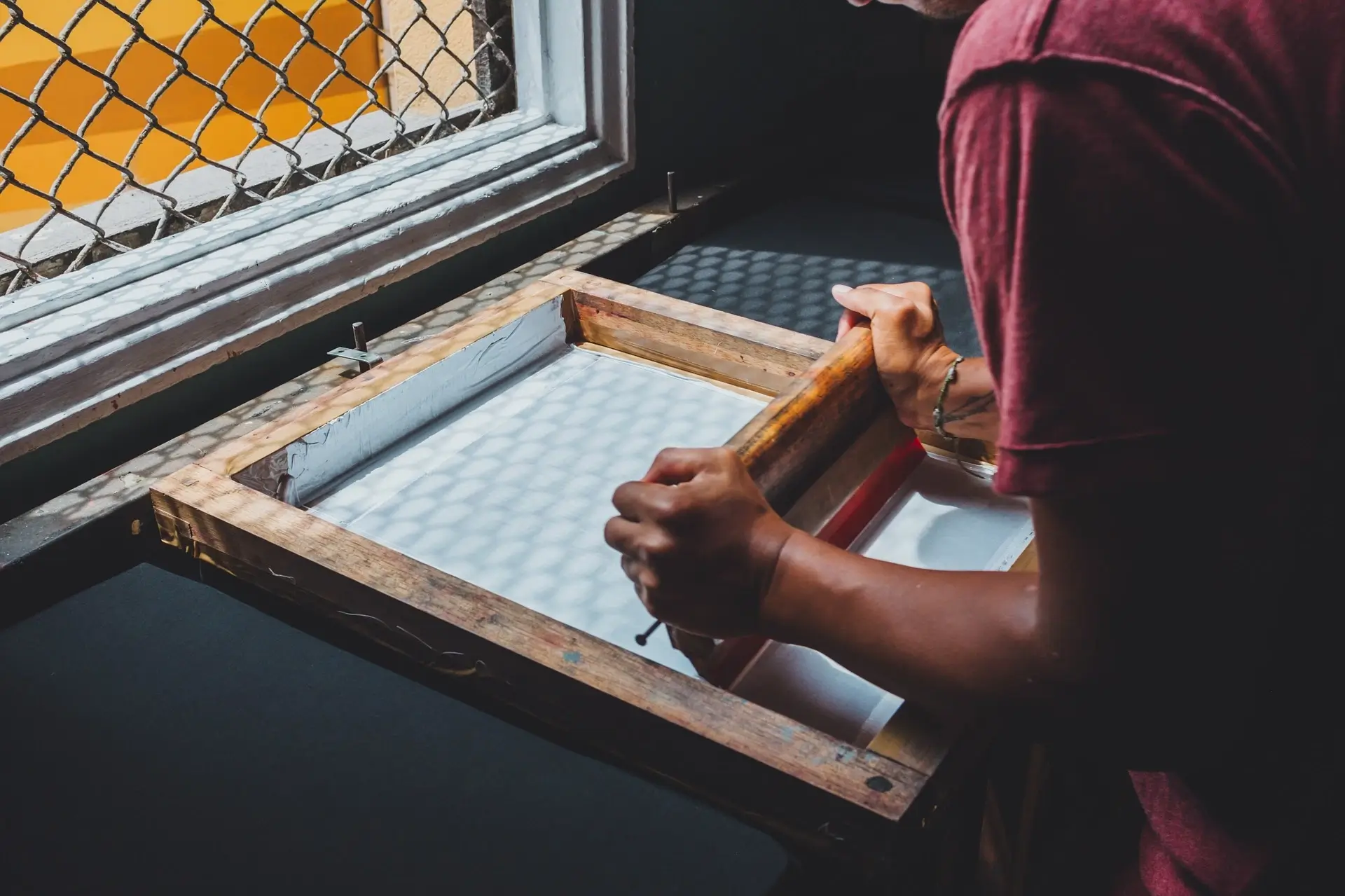
Whether launching a clothing line, organizing a charity run, or building team spirit at a startup, turning shirt ideas into reality requires the right printing method. Screen printing has powered custom apparel for decades, delivering bold graphics and lasting quality that other techniques struggle to match. Understanding how screen printing works and which companies deliver reliable results helps ensure designs transform into professional wearable products.
Finding a trustworthy partner for custom printing projects shouldn’t involve guesswork. Quality screen printing services make it possible to bring visions to life, whether the order is for 10 shirts for a family reunion or 1,000 for a product launch. ooShirts delivers professional results without premium price tags through their cheap custom t-shirts.
Table of Contents
- What is Screen Printing, and How Does It Work?
- What are the Key Types of Screen Printing?
- What Types Of Fabrics Can Be Screen Printed On?
- 6 Best Screen Printing Companies to Try in 2026
- How to Choose the Best Screen Printing Company for Your Goals
- Start Designing Your Custom Shirts Today
Summary
- Screen printing accounts for approximately 60% of all custom apparel decoration, according to 2025 industry market share data, dominating the space because it delivers sharp, durable prints that withstand repeated washing and outdoor exposure better than most alternatives. The technique works by pushing ink through a prepared mesh screen onto fabric using a squeegee blade, with a stencil blocking certain areas so that ink transfers only where the design should appear. This process scales beautifully from single prototypes to thousands of identical pieces without losing quality, and you can print on cotton, polyester, wood, metal, glass, or plastic with the same core technique by adjusting only the ink formula and curing method.
- Setup costs remain constant whether you print 10 shirts or 1,000, which is why screen printing remains 40 to 60 percent more cost-effective than direct-to-garment printing for orders exceeding 50 units, according to a 2025 cost analysis. Once screens are ready, each additional print costs only ink and a few seconds of press time, making the per-piece expense drop dramatically as quantities climb. Traditional print shops used to demand high minimums to justify their setup labor, pricing out small organizations and individuals who needed just a handful of custom pieces, but that barrier has largely disappeared as newer providers have removed minimums entirely and offer transparent per-piece pricing regardless of order size.
- The screen printing market is expected to grow at a CAGR of 16.5 percent from 2025 to 2032, according to Metastat Insights, driven by rising demand for sophisticated decoration techniques that balance cost with visual impact. Simulated process printing, which combines halftone dot patterns with selected spot colors across multiple screens to recreate nearly any image, has become increasingly popular for modern apparel demanding lifelike quality without excessive expense. This hybrid approach handles gradients, photographs, and intricate details on both light and dark fabrics by incorporating underbase layers where needed, producing soft-hand prints, especially when water-based or discharge formulas are used.
- Mordor Intelligence projects the screen printing services market will grow from USD 8.16 billion in 2025 to USD 10.24 billion by 2030, fueled partly by demand for full-color custom apparel that matches digital artwork. CMYK four-color printing layers transparent cyan, magenta, yellow, and black inks through four dedicated screens to build a full spectrum of hues and tones, enabling photorealistic reproduction of complex images with broad tonal ranges when executed on light or white substrates. Automatic presses deliver superior registration and consistency for the fine dot patterns required, though the technique demands skilled separation and curing to prevent issues like moiré patterns.
- Fabric quality frustrates customers when brands substitute cheaper materials or deliver thinner blends than advertised, making transparency about fabric specifications critical for building trust. Each material demands specific ink formulas and curing methods to ensure proper adhesion and durability, with cotton pulling ink deep into natural fibers for sharp, vivid designs, polyester requiring low-bleed inks and lower curing temperatures to avoid dye migration, and tri-blends needing gentle handling to preserve their soft drape. Providers that test thoroughly for surface consistency and offer transparent fabric specifications eliminate the guesswork that leads to disappointment when structure and finish fall short of expectations.
- Services like cheap custom t-shirts from ooShirts address the old barriers of high minimums and hidden fees by offering professional screen-printing quality with transparent per-piece pricing, no setup charges, and access to the full range of techniques, from simple spot color to complex simulated process work.
What is Screen Printing, and How Does It Work?
Screen printing pushes ink through a prepared mesh screen onto fabric, paper, or other materials using a squeegee blade. A stencil blocks certain areas of the mesh, allowing ink to transfer only where the design appears.
💡 Key Point: The stencil acts as a selective barrier – it’s what makes screen printing so precise for creating identical designs across multiple items.
🔑 How It Works: Think of screen printing like using a sophisticated stencil system. The mesh screen holds your design template, the squeegee applies even pressure, and the ink flows through only the open areas of your stencil pattern.
Why is screen printing so durable and popular?
This creates sharp, durable prints that withstand repeated washing and outdoor exposure, which explains why screen printing accounts for approximately 60% of all custom apparel decoration, according to 2025 industry market share data.
What materials can screen printing work on?
The process scales from single prototypes to thousands of identical pieces without losing quality. You can print on cotton, polyester, wood, metal, glass, or plastic by adjusting only the ink formula and curing method. This flexibility makes screen printing the standard for band merchandise, nonprofit fundraiser shirts, circuit boards, and fine art posters.
How does the mesh control ink flow in screen printing
The mesh screen works like a controlled gate: fine threads create tiny openings that let ink pass through only where the stencil allows. Higher thread counts capture detailed designs and thin lines, while coarser meshes allow thicker ink deposits for bold graphics. The stencil forms when light-sensitive emulsion hardens everywhere except where your design blocks UV exposure, leaving open mesh in the shape of your artwork.
What determines print sharpness in screen printing
Mesh tension and stencil precision determine print sharpness. Excessive squeegee pressure pushes ink beyond intended boundaries, creating blurry edges, while insufficient pressure leaves coverage gaps. The right balance delivers clean, bright results matching your original design, which is why professional shops test squeegee angles and stroke speed before running full batches.
Why Screen Printing Costs Less at Volume
Setting up requires each colour to have its own screen, exposure, and alignment—a fixed cost regardless of order size. Once screens are ready, each additional print costs only ink and press time. Research from 2025 shows screen printing remains 40-60% more cost-effective than DTG for orders exceeding 50 units, making it ideal for larger quantities.
Traditional print shops demanded high minimums to justify setup labor, pricing out small organizations and individuals. Services like cheap custom t-shirts eliminated minimums, offering transparent per-piece pricing for orders of any size.
How does screen printing transfer designs to fabric
Clean digital artwork outputs onto transparent acetate film, which sits on the emulsion-coated screen during UV exposure. Light hardens the emulsion everywhere except where the design blocks it. After rinsing away the soft emulsion, you have an open mesh in the exact shape of your design. The screen locks into position above your substrate, and the squeegee sweep transfers ink through the mesh in one pass.
What equipment handles multicolor screen printing production
Multicolor designs require careful alignment so each layer lands in exactly the right spot. Manual presses work well for small batches, while automatic rotary equipment speeds up large production runs without losing alignment. After printing, items move through a conveyor dryer or heat press to permanently cure the ink, bonding it to the fabric so it won’t crack, fade, or wash away.
Related Reading
- Shirt Ideas
- How To Wash A Hat
- Does Polyester Shrink
- Best T-shirts for Men
- Retirement Gift
- Best Stain Remover For Clothes
- How To Wash A Hat
What are the Key Types of Screen Printing?
Spot color gives bold, solid graphics with premixed inks, while halftone and grayscale methods use dot patterns to create depth from a single shade. Duotone blends two tones for artistic effects, CMYK layers transparent inks to build full-color images, and simulated process combines both approaches for photorealistic results on any fabric color. Your choice depends on the artwork’s complexity, the material’s color, and production volume.
🎯 Key Point: Spot color works best for simple designs with solid colors, while CMYK and simulated process excel at complex artwork with gradients and photographs.
“Screen printing techniques can be categorized into five main types, each offering distinct advantages for different design complexities and fabric colors.” — Print Industry Research, 2024
💡 Tip: For beginners, start with spot color printing on light-colored fabrics – it’s the most forgiving technique and produces consistent, vibrant results with minimal setup complexity.
| Printing Type | Best For | Color Limitation | Complexity Level |
|---|---|---|---|
| Spot Color | Simple designs, logos | 1-3 colors | Beginner |
| Halftone/Grayscale | Black & white photos | Single color | Intermediate |
| Duotone | Artistic effects | 2 colors | Intermediate |
| CMYK | Full-color photos | Unlimited colors | Advanced |
| Simulated Process | Photos on dark fabric | Unlimited colors | Expert |
What is spot color screen printing?
Spot color uses premixed Pantone-matched inks applied through individual screens, one per color. Each layer is opaque and uniform, creating bright blocks of colour that remain vibrant after many washes. The ink thickness, controlled by mesh count and squeegee pressure, ensures excellent coverage on dark fabrics without an underbase.
Designs using four colours or fewer print quickly and cost less because they require less setup and registration work.
When does spot color screen printing work best?
This method works well for logos, team uniforms, and event shirts where accurate brand colours matter more than photorealistic detail. Clothing manufacturers prefer it for large orders because colours remain consistent across thousands of pieces.
The ink layer adheres permanently to cotton, polyester blends, and performance fabrics, and does not crack when stretched or stressed.
What is halftone screen printing?
Halftone techniques break a single ink into patterns of tiny dots that vary in size and spacing, creating the illusion of gradients and multiple shades when viewed from a normal distance. This single-screen process builds tonal depth without extra colours or complex separations, transforming flat graphics into dynamic images with subtle highlights and shadows.
How does halftone screen printing reduce production costs?
Using one or two inks keeps costs low while maintaining a professional appearance. Printers employ this method for designs with colour gradients on clothing, where cost efficiency matters without compromising quality. This technique suits medium-sized production runs and can be combined with different ink types to create sharp or soft effects, depending on dot spacing.
What makes grayscale screen printing effective for detailed designs?
Grayscale converts full-colour images into tonal values using halftone dots in a single shade, typically black or a neutral tone. Adjusting dot density captures fine details and realistic shading, producing sophisticated monochrome prints with excellent contrast and texture. Higher dots per inch yield sharper resolution, turning photos or artwork into high-quality reproductions that emphasise form over colour.
Why choose grayscale screen printing for budget-conscious projects?
Its single-screen efficiency makes this option economical compared to full-spectrum methods while providing impressive depth for artistic or minimalist projects. Garment decorators use it for black-and-white photography, vintage illustrations, or budget-conscious designs where colour is unnecessary. The approach maintains strong durability after curing and works reliably across materials without the registration challenges of multi-colour layering.
What is duotone screen printing?
Duotone printing layers two separate halftone images, typically a black or dark base followed by a complementary tint, to create rich blended effects with sophisticated tonal ranges and vintage-inspired aesthetics. With two inks, it simulates far more complexity than single-colour printing. Specially selected Pantone-matched colours enhance emotional impact while keeping the print soft and integrated with the fabric.
Why choose duotone screen printing for your designs?
This method offers creative freedom at a lower cost than full-colour printing, making it ideal for posters, promotional apparel, and designs seeking a distinctive retro or premium look. It transforms simple artwork into visually striking pieces without requiring more than 4 screens. Duotone works best on lighter garments where the different shades are clearly visible, delivering long-lasting results that balance artistry with practical production.
What is CMYK four-color screen printing?
CMYK layers transparent inks (cyan, magenta, yellow, and black) through four screens, building full-spectrum colours by overlapping dots in precise alignments. This enables photorealistic reproduction of complex images with broad tonal ranges on light or white substrates. Automatic presses deliver superior registration and consistency for fine dot patterns, though manual operation suits smaller batches.
How does CMYK screen printing support market growth?
Mordor Intelligence’s Screen Printing Services Market Report projects the industry will grow from USD 8.16 billion in 2025 to USD 10.24 billion by 2030, driven by demand for full-colour custom apparel matching digital artwork. Textile specialists use CMYK for projects requiring accurate colour reproduction on light-coloured garments. The technique demands skilled separation and curing to prevent moiré patterns, making it essential for high-end, detailed apparel where precision is critical.
What is simulated process screen printing?
A simulated process combines halftone dot patterns with spot or premixed colours across multiple screens (often six to twelve) to recreate nearly any image by blending hues optically into photorealistic results. This hybrid approach handles gradients, photographs, and intricate details on both light and dark fabrics by incorporating underbase layers where needed, enabling vibrant reproduction that standard four-colour methods cannot achieve on coloured shirts.
Opaque inks enhance stability and opacity, producing soft-hand prints when water-based or discharge formulas are used.
Why is simulated process screen printing becoming more popular?
This method works well for complex artwork with many colours using fewer screens. It is becoming more popular for modern clothing that needs realistic aesthetics without high cost or limitations. According to Metastat Insights, the screen printing market is expected to grow at a CAGR of 16.5% from 2025 to 2032. This growth reflects increasing demand for advanced decoration techniques that balance cost with design quality.
Designers choose simulated processes for detailed illustrations and photographic transfers. This method provides durability and breathability that feels natural on the garment. Traditional shops often steered customers toward simpler methods to avoid the labour and registration challenges of advanced techniques.
Services like cheap custom t-shirts removed that barrier by offering access to the full range of screen printing methods at transparent pricing. With ooShirts, you can choose the technique that best matches your artwork without worrying about hidden fees or arbitrary minimums. But picking the right technique matters only if the fabric underneath can hold the ink properly.
What Types Of Fabrics Can Be Screen Printed On?
Many people think screen printing only works on plain cotton shirts, but the textile screen printing market—valued at $12.2 billion in 2024 and projected to reach nearly $19 billion by 2030 with 7.6% yearly growth—demonstrates that this technique works on all kinds of materials.
“The textile screen printing market is valued at $12.2 billion in 2024 and projected to reach nearly $19 billion by 2030 with 7.6% yearly growth.” — Grand View Research, 2024
🎯 Key Point: Screen printing’s versatility across multiple fabric types drives its market growth and widespread adoption.
This flexibility opens fresh ways to create long-lasting designs on athletic pieces, upscale items, and everyday staples.
🔑 Takeaway: The ability to screen print on diverse fabrics transforms this technique from a basic t-shirt method into a comprehensive solution for any textile printing need.
What makes cotton ideal for screen printing projects?
Cotton pulls ink deep into its natural fibres, creating sharp, vivid designs that survive dozens of washes. This absorbency makes it ideal for everyday clothing like t-shirts, hoodies, and tote bags.
Variations such as ring-spun or combed cotton deliver smoother textures that enhance detail without print cracking. Higher thread counts and tighter weaves in premium cottons improve ink hold and resist flaking, enabling intricate multi-colour work when you match mesh counts to design complexity and cure at proper temperatures.
How do you prepare cotton for successful screen printing?
Wash items before printing to reduce shrinkage and maintain stable sizing. Choose plastisol inks for durability or water-based options for a softer feel.
Testing samples first helps you get the heat settings right and prevent color changes, ensuring clear, strong prints that withstand multiple washings and stretching.
Polyester Fabrics
Polyester resists wrinkles, shrinkage, and wear while maintaining lightweight, moisture-wicking qualities, making it ideal for performance and athletic wear such as jerseys, active tops, and uniforms. Its synthetic makeup allows vibrant colours to stand out, making it suitable for items that endure heavy use or outdoor conditions without losing shape or print quality. Success requires low-bleed plastisol inks, pretreatments to prevent dye migration and improve ink adhesion on the non-absorbent surface, and lower curing temperatures to avoid melting the fibres.
Cotton-Polyester Blends
Cotton-polyester blends combine the softness and ink absorption of natural fibres with the strength and stability of synthetic materials. Common ratios like 50/50 or 60/40 prioritise either comfort or durability, delivering bright results with less shrinkage than pure cotton and fewer adhesion issues than full polyester.
Use low-bleed inks formulated for your blend ratio and pre-wash garments to equalise absorption differences across fibres, ensuring consistent colour depth. This hybrid approach streamlines production for bulk orders while maintaining a broken-in look after washing, keeping prints vibrant and crack-free through everyday wear.
Tri-Blend Fabrics
Tri-blend fabrics mix cotton, polyester, and rayon to create a soft, flowing feel with subtle vintage texture. They work well for relaxed tees, dresses, and lightweight tops. The lightweight blend allows ink to flow smoothly for detailed designs while remaining breathable and premium to the touch. Printing on tri-blends requires testing the surface for consistency and using inks compatible with the rayon component. Employ gentle flashing and curing to preserve the fabric’s drape and prevent heat damage.
Nylon Fabrics
Nylon works well for screen printing on tough, water-resistant items like jackets, bags, and outdoor gear because it is lightweight, strong, and has a smooth surface. This synthetic material withstands rubbing and harsh weather while allowing prints to adhere firmly when properly prepared. This makes it ideal for promotional products or functional clothing where durability matters.
Print on nylon using special low-cure inks or bonding additives to overcome its slippery nature and prevent cracking or peeling. Control curing temperatures carefully and test samples to ensure proper adhesion. This produces durable graphics that withstand rough handling and washing.
Silk Fabrics
Silk provides a luxurious, lustrous base for screen printing, making it well-suited for high-end accessories, scarves, and delicate garments. The natural fibre’s inherent shine enhances colour vibrancy, while its smooth surface renders fine details with clarity. However, silk requires careful handling to preserve its upscale appeal.
Water-based inks with low-heat curing soak in strongly without damaging silk. Gentle pre-treatments ensure even ink spread for detailed patterns. With proper testing and soft printing pressure, prints remain durable and refined through repeated washing.
Related Reading
- Family Reunion Shirt Ideas
- Cotton Vs Polyester
- Cool Shirt Designs
- Family Reunion Shirt Ideas
- 20th Birthday Ideas
- T-shirt Design Ideas
- 80th Birthday Ideas
6 Best Screen Printing Companies to Try in 2026
Screen printing companies have changed dramatically and now offer far more than they used to. The best companies in 2026 combine technical skill with clear pricing, flexible order sizes, and specialty inks that expand creative possibilities. Choosing the right partner means matching their capabilities to your design complexity, fabric choices, and timeline without compromising durability or colour accuracy.

🎯 Key Point: Modern screen printing companies offer advanced specialty inks and flexible minimums that weren’t available just a few years ago, making custom printing accessible for both small businesses and large corporations.
“The screen printing industry has evolved to meet diverse customer needs with improved technology and streamlined processes that deliver higher quality results faster than ever before.” — Industry Analysis, 2026

💡 Tip: When evaluating screen printing partners, prioritize companies that offer sample prints, transparent pricing, and clear turnaround times to ensure your project meets both quality standards and delivery deadlines.
1. ooShirts
ooShirts is a leading online provider of custom screen-printed t-shirts since 2007. We deliver affordable, high-quality results ideal for groups, events, teams, schools, and businesses. Using thick plastisol inks, our custom t-shirts feature vibrant colours and long-lasting prints that bond permanently to fabrics, making them ideal for bulk orders where cost efficiency and print longevity matter.
Key Features of ooShirts
- We offer professional screen printing with state-of-the-art equipment for vibrant, opaque results on any garment colour.
- Our cheap custom t-shirts use thick, highly pigmented plastisol inks that deliver bold colours, particularly on dark fabrics with a white underbase.
- We support specialty inks, including metallic, glow-in-the-dark, puff, glitter, and discharge for unique textured or soft-hand effects.
- Our prints cure at high temperatures to bond permanently, resisting fading, cracking, or peeling through hundreds of washes.
- We provide free setup with no separate screen charges per colour or location.
- We require a minimum order of 12 shirts due to setup and materials costs.
- Our all-inclusive pricing covers setup, expert design review, and free shipping with guaranteed delivery dates.
- We allow 1–3 ink colours for cost-effective pricing; higher colour counts increase costs but remain economical for larger runs.
- We produce consistent, uniform results across large quantities, ideal for uniforms, merchandise, or team apparel.
- We deliver faster production speed once setup is complete: hundreds of shirts per hour with superior durability compared to digital methods.
- We provide an online design lab for uploading artwork, adding text or clipart, and receiving professional reviews.
- We offer rush shipping options and satisfaction guarantees, including reprints or refunds for defects or late delivery.
- We emphasize low per-unit costs that drop significantly with higher quantities, often under $5 per shirt for bulk orders.
Why Customers Choose ooShirts
Customers choose ooShirts for our lowest prices (with a Low Price Guarantee), exceptional print quality that lasts wash after wash, and outstanding service available 7 days a week via phone, email, and live chat.
With nearly two decades of experience, over 10 million shirts printed, and more than 1,000,000 satisfied customers, ooShirts eliminates unnecessary markups, provides transparent communication from design proof to delivery, and includes free shipping with no hidden fees and expert guidance.
2. Custom Ink
Custom Ink provides screen-printed t-shirts for group orders, fundraisers, and corporate needs with dependable production standards and easy-to-use customization options.
Key Features
- Delivers bold, vibrant colours with excellent colour matching on t-shirt materials.
- Supports flexible minimum orders starting at six shirts.
- Includes free shipping on many qualifying purchases.
- Features an advanced online design studio with instant previews and easy edits.
- Uses durable inks proven to last 50 or more wash cycles without major fading.
- Maintains standard production timelines of 14 days.
- Waives separate setup fees for screens.
3. Rush Order Tees
Rush Order Tees delivers fast screen-printed t-shirts for time-sensitive needs, combining hybrid printing capabilities with competitive pricing and attentive customer support.
Key Features
- Combines screen printing with other methods for versatile, long-lasting t-shirt designs.
- Offers rush options with 1- to 3-day turnaround for urgent bulk orders.
- Provides volume discounts that lower per-unit costs for 100+ shirts.
- Includes professional design reviews to ensure artwork translates perfectly to fabric.
- Uses specialty inks, such as metallics, for standout effects.
- Features responsive service with quick proof approvals and issue resolution.
- Accommodates no minimum for standard orders and scales smoothly for larger runs.
4. Threadbird
Threadbird is a screen-printing specialist focused on sustainable, high-quality t-shirt production using certified organic blanks and eco-conscious inks. It’s ideal for brands seeking premium quality and environmental responsibility, combining expert craftsmanship with flexible fulfillment services.
Key Features
- Applies water-based and discharge inks via screen printing for soft, breathable results on organic t-shirts.
- Holds verified GOTS and OEKO-TEX certifications for ethical and safe apparel.
- Delivers vibrant prints that maintain integrity through 40-60 wash cycles.
- Uses compostable packaging to support eco-friendly brand initiatives.
- Provides in-house design support alongside premium blank selections.
- Scales effectively from a 24-unit minimum to higher volumes with volume-based pricing tiers.
- Ensures 12-day standard turnaround while prioritizing sustainability at every step.
5. Broken Arrow
Broken Arrow focuses on wholesale-volume screen printing for t-shirts, offering competitive rates and reliable quality suited to experienced buyers and large-scale apparel needs.
Key Features
- Specializes in traditional screen printing optimized for bold, high-volume t-shirt runs.
- Achieves strong durability with inks that hold up well under repeated use.
- Provides attractive per-unit pricing that drops notably at 100+ quantities.
- Maintains consistent 10-day production schedules for dependable planning.
- Supports experienced customers with straightforward ordering for bulk apparel.
- Delivers professional results ideal for wholesale or event merchandise.
- Focuses on cost-effective scaling without compromising print sharpness or color depth.
6. Real Thread
Real Thread offers a complete USA-based solution for screen-printed t-shirts, using water-based inks that create soft, long-lasting prints. Their one-stop approach suits various custom apparel projects, with additional services including embroidery and expedited shipping.
Key Features
- Utilizes water-based screen printing inks that bond deeply into fabric for superior softness and durability.
- Offers low minimum orders and free standard shipping nationwide.
- Features rush capabilities, including 2-day and 1-week expedited options.
- Includes add-ons such as glow-in-the-dark effects or embroidery for enhanced t-shirts.
- Emphasizes sustainable practices with ethical production standards.
- Delivers vibrant, fade-resistant prints tailored for cotton and blended tees.
- Serves as a full-service partner with design assistance and fulfillment support.
Technical capabilities and pricing structures matter only if the company aligns with your specific project goals and constraints.
How to Choose the Best Screen Printing Company for Your Goals
Look for companies that match your design complexity, quantity needs, and timeline without imposing rigid minimums or unclear pricing. A good fit accommodates your fabric preferences, offers specialty inks your artwork demands, and delivers consistent quality at any order size. The right partner simplifies the process through clear communication and transparent costs.

🎯 Key Point: The best screen printing partner aligns with your specific project requirements rather than forcing you to adapt to their limitations or minimum order quantities.
“73% of businesses report better outcomes when working with screen printing companies that offer transparent pricing and flexible minimums from the start.” — Print Industry Association, 2024

| Evaluation Factor | What to Look For | Red Flags |
|---|---|---|
| Pricing Structure | Transparent costs, detailed quotes | Hidden fees, vague estimates |
| Order Flexibility | Low/no minimums, scalable pricing | Rigid quantity requirements |
| Communication | Quick responses, clear timelines | Delayed replies, unclear processes |
| Quality Standards | Portfolio samples, consistent results | Limited examples, quality variations |
⚠️ Warning: Avoid companies that can’t provide clear timelines or refuse to show recent work samples – these are often signs of inconsistent quality or unreliable delivery.
How does artwork complexity affect screen printing quality?
How complex your artwork is determines which companies can execute your vision properly. Simple two-colour logos print reliably almost anywhere, but photorealistic images with gradients require simulated process separations and skilled colour matching that many shops skip to save setup time.
If your design uses metallic accents, discharge inks, or puff effects, ensure the company has those formulas in stock and understands how they cure on your chosen fabric blend. Requesting samples demonstrates whether they can handle fine detail without dot gain or maintain registration across multiple screens.
Why do mesh counts matter in a screen printing setup?
Mesh counts matter more than most buyers realize. Higher thread counts capture detailed linework and halftone dots cleanly, while coarser screens handle bold graphics with heavy ink deposits.
A provider that asks about your artwork’s resolution and suggests appropriate mesh specifications demonstrates technical knowledge. Companies that rush through setup without discussing these details often deliver blurry edges or uneven coverage.
How do different fabrics affect screen printing ink compatibility?
Different materials absorb and hold ink differently. Cotton readily accepts plastisol and water-based inks, but polyester requires low-bleed inks and careful temperature control to prevent dye migration, which muddies colours.
Tri-blends require gentle curing to preserve their soft feel, while performance fabrics need special adhesion promoters that standard setups lack. A company offering only basic options forces you to choose between fabric quality and print durability.
What pre-printing steps ensure high-quality screen printing?
Ask whether they pre-wash garments before printing to control shrinkage, especially for retail items where sizing consistency protects your reputation. Providers that skip this step risk uneven shrinkage after customer laundering.
Testing procedures that verify ink adhesion and colour fastness before running full batches catch problems early, reduce waste, and ensure every piece meets the durability standards that justify your pricing.
How does pricing transparency affect screen printing costs?
Old-fashioned shops add charges for setup, screens, print locations, and rush fees, making final costs unpredictable until the invoice. This lack of clarity penalises multi-colour designs and forces you to simplify artwork to stay within budget.
Providers that include setup in the per-piece price eliminate guesswork and enable accurate quote comparison. Free shipping thresholds, included design reviews, and no-fee rush options reflect a business model built on transparency rather than revenue from hidden charges.
Why do minimum order requirements limit screen printing access?
Old-school minimums kept small organisations and individuals from ordering custom pieces. Services like cheap custom t-shirts from ooShirts removed those restrictions, offering professional screen-printing quality whether you order one shirt or 500.
Clear per-piece pricing with no setup charges means your budget goes toward actual production instead of outdated business practices.
How do delivery guarantees impact screen printing orders?
When you need apparel for events, fundraisers, or product launches with set dates, production timelines directly impact whether your order arrives on time. Companies offering guaranteed delivery windows with tracking demonstrate confidence in their operations. Those using words like “usually” or “typically” signal potential delays and limited accountability.
Rush capabilities matter when you have tight deadlines, but only if they don’t compromise print quality or force you to accept substandard materials.
What should you expect from standard shipping timelines?
Standard shipping should arrive on time and incur no extra fees for orders placed with sufficient lead time. Providers that charge more for basic on-time delivery profit from manufactured urgency rather than delivering quality service.
Look at what customers say about delivery reliability, since one missed deadline can ruin an entire event or campaign. Choosing the right company gets you only halfway to custom apparel that delivers on your vision and budget.
Start Designing Your Custom Shirts Today
Ready to bring your screen printing project to life without high costs, minimum orders, or uncertain quality? The smartest choice depends on matching capabilities to your specific needs.

🎯 Key Point: Choose a provider that eliminates common barriers like minimums and setup fees while delivering consistent quality.
ooShirts stands out as a reliable, affordable solution for quality screen printing. Whether you’re outfitting a school group, nonprofit, family reunion, or small business, ooShirts makes it easy to design and order custom t-shirts with sharp, durable results. With over 10 million shirts printed since 2007, ooShirts brings proven experience to every order.

“With over 10 million shirts printed since 2007, ooShirts has established itself as a trusted leader in custom apparel printing.” — ooShirts Company History
| Feature | Benefit |
|---|---|
| Low price guarantee | Matches any competitor’s online rate |
| Free shipping | No hidden delivery costs |
| No setup fees | Eliminates surprise charges |
| Top-grade inks | Vibrant, long-lasting designs |
| Quality guarantee | Defective garments redone free |
| No minimums | Perfect for small runs |

A low price guarantee matches any competitor’s online rate, while free shipping and no setup fees eliminate hidden surprises. Top-grade inks deliver vibrant, long-lasting designs, and garments with material defects are redone at no extra cost. No minimum order required suits small runs or testing ideas.
💡 Tip: Take advantage of the 7-day expert support and user-friendly design tool to create professional-looking shirts even without design experience.

Expert design support is available 7 days a week via phone, email, and live chat, as well as a user-friendly design tool. Start designing or get a free quote at Cheap Custom T-shirts to see how much you can save on high-quality custom t-shirts.
Related Reading
- Custom Ink
- Rush Order Tees
- Threadless
- 70th Birthday Party Ideas
- How To Make Custom Shirts
- Mardi Gras Shirt Ideas
- Types of T-shirts
- Printful
Leave a Reply