
Last updated: August 31, 2026
The base price on your screen is rarely the price you pay. Here is how to find a Print Aura alternative that shows you the real number before you commit, not after the fees hit.
Sellers searching for Print Aura alternatives usually start with a simple assumption: find a lower base price per shirt, and the margin problem is solved. Most small businesses think the cost problem is that simple. That assumption costs real money before most sellers realize it.
Print Aura’s limitations are rarely about the catalog or the integrations. According to a March 2024 review by Ecommerce Platforms, the platform’s quoted base prices appear competitive at first glance, but per-order fees, shipping costs, and other charges compound on top, eroding profit margins more than sellers initially expect. The sellers who leave aren’t usually chasing a feature.

They’re escaping a cost structure that only reveals itself after the first real orders ship. See our cheap custom t-shirt printing solutions for how this works in practice. Print Aura is a print-on-demand fulfillment service that connects to Shopify, Etsy, and WooCommerce, handling orders as they come in without requiring sellers to hold inventory.
Per Print Aura’s own blog, standard orders are printed and shipped within 3–5 business days. That model works cleanly for a solo seller moving low volumes with flexible timelines. It starts to crack when a small business needs reliable reorders, consistent color matching across batches, or any kind of deadline certainty.
Fulfillment inconsistency is the complaint that surfaces most often among sellers who outgrow the platform’s sweet spot. Ecommerce Platforms’ 2024 review notes that Print Aura has a mixed reliability record, with reported fulfillment delays and limited scaling capabilities that frustrate sellers as their businesses grow.
For an HR manager trying to reorder branded team shirts before a company event, a quoted 3-to-5-day window that occasionally stretches longer is a credibility problem. The same review flags customer support quality and ease-of-use friction as trust-eroding factors. That finding matches a recognizable pattern: a seller tolerates one delayed order, then a second, then files a support request and waits.
The friction compounds. Platforms like ooShirts show the complete price upfront, shirt, printing, and shipping, in a single live quote before checkout, a structure confirmed by the published pricing page, where no setup fee or screen charge appears at any order stage.
Key takeaways
- Most sellers leave Print Aura hunting for a lower base price per shirt; that’s the wrong number to chase, because base price and final price are rarely the same thing.
- Screen charges, setup fees, and shipping tacked on at checkout routinely add $3–8 per order on platforms that look cheap at the quote stage.
- Five print-on-demand platforms can appear identical on a comparison table and land at five completely different totals by the time you hit ‘place order.’
- The platform’s integration list and catalog size are secondary: if you can’t see the all-in price before you commit, you’re flying blind on margin.
- Buyer profile determines platform fit more than any feature list: high-volume sellers, international sellers, and small-group buyers each have a different cost structure that changes which platform actually wins.
- 48% of online shoppers abandon carts because extra costs appear too late; that same dynamic hits your customers when your own pricing is built on a platform that hides fees until checkout.
- ooShirts closes the gap with live quotes that show the exact price, shirt, printing, and shipping included, before any order is placed, with no hidden fees or surprise charges at checkout.
The Hidden-Fee Trap – What to Actually Compare Before Switching Print-on-Demand Platforms
The common assumption is that you just need to find a platform with a lower base price per shirt than Print Aura and your cost problem is solved. But checkout is where the real price reveals itself. You’ve built the order, chosen the garment, uploaded the design, and then the platform stacks on a screen charge here, a setup fee there, and a shipping surcharge that somehow costs more than the shirts themselves.
This is one of the sharpest pain points for anyone running custom apparel orders: margins that looked workable at the quoted price evaporate the moment hidden fees surface at checkout. The all-in cost of a print-on-demand product, including base price, printing fee, and shipping, determines actual profitability, not the quoted per-unit price alone. That gap between what you expected to pay and what you actually owe is the trap most comparison guides never warn you about.

All-In Price Is the Only Number That Matters
Platform A quotes $8 per shirt. Platform B quotes $10. Platform A looks like the obvious pick, until you reach checkout and find a $3 setup charge plus $6 shipping per order. Platform B includes free shipping and free setup. Platform B is actually cheaper by a dollar per shirt. That math plays out constantly across the custom apparel category, and it’s why the only useful comparison metric is the all-in price: shirt plus print plus shipping plus every fee, shown before you commit.
This is precisely the problem ooShirts’ all-inclusive transparent pricing is built to eliminate. Free shipping and free setup are included in the live price you see before you design, so the number at quote is the number at checkout, a claim verifiable by pulling any live quote on ooShirts.com, where the checkout total matches the initial estimate without additional line items. There are no screen charges applied mid-process, no per-order setup fees tacked on at the end. For buyers comparing prices before placing an order, that price match guarantee means the first number you see is the number you plan around, which is exactly how margin math should work.
The struggle is real for first-time and experienced buyers alike: platform fees and hidden shipping costs compress margins in ways that only become apparent after you’ve already committed to an order. ooShirts removes that ambiguity structurally, not through fine print. The all-inclusive pricing model means cost management doesn’t require a spreadsheet to decode.
Print Consistency Across Reorders – The Deal-Breaker Most Comparison Lists Ignore
A church group ordering 40 shirts for a retreat needs the second batch to match the first. An HR manager ordering team apparel in waves across the year cannot explain to the CEO why the Q1 shirts are a different shade of navy than the Q3 batch. And the first-time buyer, the one spending on behalf of a group, with a hard deadline and a headcount that keeps shifting, faces every one of these failure modes at once, without the procurement experience to navigate them.
Jessie Creighton of Gorham, Maine, was exactly that buyer. She was organizing custom shirts for a surprise birthday party for her grandmother, a one-shot event with a fixed, unmovable date. Her order involved several custom requests that couldn’t be handled through the design tool alone, so the ooShirts team worked through them with her directly on the phone.
Partway through, her order count changed, the way it always does when you’re collecting names for a family event. Instead of forcing her to restart, the team adjusted the order and rushed it so it would land before the party. She rated print quality 5/5 and service 5/5, noted delivery arrived on time, and called out the phone support and the team’s willingness to absorb the late size change. She described the team as going above and beyond.
That outcome, on time, on price, on quality, for a buyer with no procurement experience hitting three classic failure modes simultaneously, is the proof point that matters. The low price is what got her in the door. A person on the phone rerunning her order is what made the party happen. ooShirts backs that with customer support available seven days a week and guaranteed delivery dates, so the number you’re told and the date you’re given are both commitments. For anyone who has been burned by a platform where nobody picks up the phone, that’s the answer to the trust objection that usually sends first-time buyers to a more expensive competitor.
The low price is what got her in the door. A person on the phone rerunning her order is what made the party happen.
Design Tool Depth – When “Easy” Becomes a Liability
The third failure mode is the one that surfaces earliest in the process and costs buyers the most time: a design tool that looks functional in a demo but breaks down the moment a real order gets complicated. Most platforms optimize their builders for the simplest possible use case, a single front-print design on one shirt style, and that works fine until you need to place art on a sleeve, adjust placement across multiple garment sizes, or upload a file that doesn’t behave the way the tool expects.
For the first-time buyer, this is where confidence collapses. You’ve already chosen your shirt, you’ve already gotten a price you can work with, and then the design step becomes a forty-minute loop of re-uploading files, guessing at placement coordinates, and second-guessing whether what you see on screen will actually match what gets printed. For the experienced buyer managing a reorder, the failure mode is different but equally costly: a tool that doesn’t preserve your previous design settings forces you to rebuild from scratch, which is how color drift and placement inconsistency enter the picture before the order even reaches production.
ooShirts addresses this at both ends. The online design tool supports front, back, and sleeve placement with live previews that reflect actual print dimensions, so what you’re approving on screen corresponds to what goes into production. For orders where the design tool isn’t enough, the same phone support team that handled Jessie Creighton’s last-minute size change is available to work through custom placement requests, file formatting issues, and multi-location print configurations directly.
That combination, a capable self-serve tool backed by a human escalation path available seven days a week, closes the gap between what a buyer needs and what a purely automated platform can deliver. The design step is where most orders either build confidence or lose it entirely, and the platform that handles it cleanly is the one that earns the reorder.
18 Best Print Aura Alternatives for Print-on-Demand 2026
Five platforms can look identical on a comparison table and land at five completely different totals by the time you hit “place order.” That gap between the quoted price and the real price is precisely what the True Cost Index and Order Freedom Score are designed to expose, and it is the only lens that actually matters when building a shortlist of print-on-demand platforms for 2026.
The print-on-demand category has expanded fast. According to Printify’s November trend report, the market now includes platforms purpose-built for distinct buyer segments, from API-driven enterprise workflows to creator storefronts to small-group direct buyers, and platform fit for use case matters as much as headline pricing when evaluating alternatives. That observation sounds obvious until you realize most comparison guides still rank platforms by catalog size and base price, the two numbers least likely to predict what you actually spend per order.
What follows is an editorial ranking of the 18 strongest Print Aura alternatives in 2026. Each entry is graded on the axis that matters most to cost-conscious buyers: does the price you see at quote reflect the price you pay at checkout, and is this platform genuinely built for your order type?
1. ooShirts – Best for Lowest-Price Custom Apparel with Free Shipping
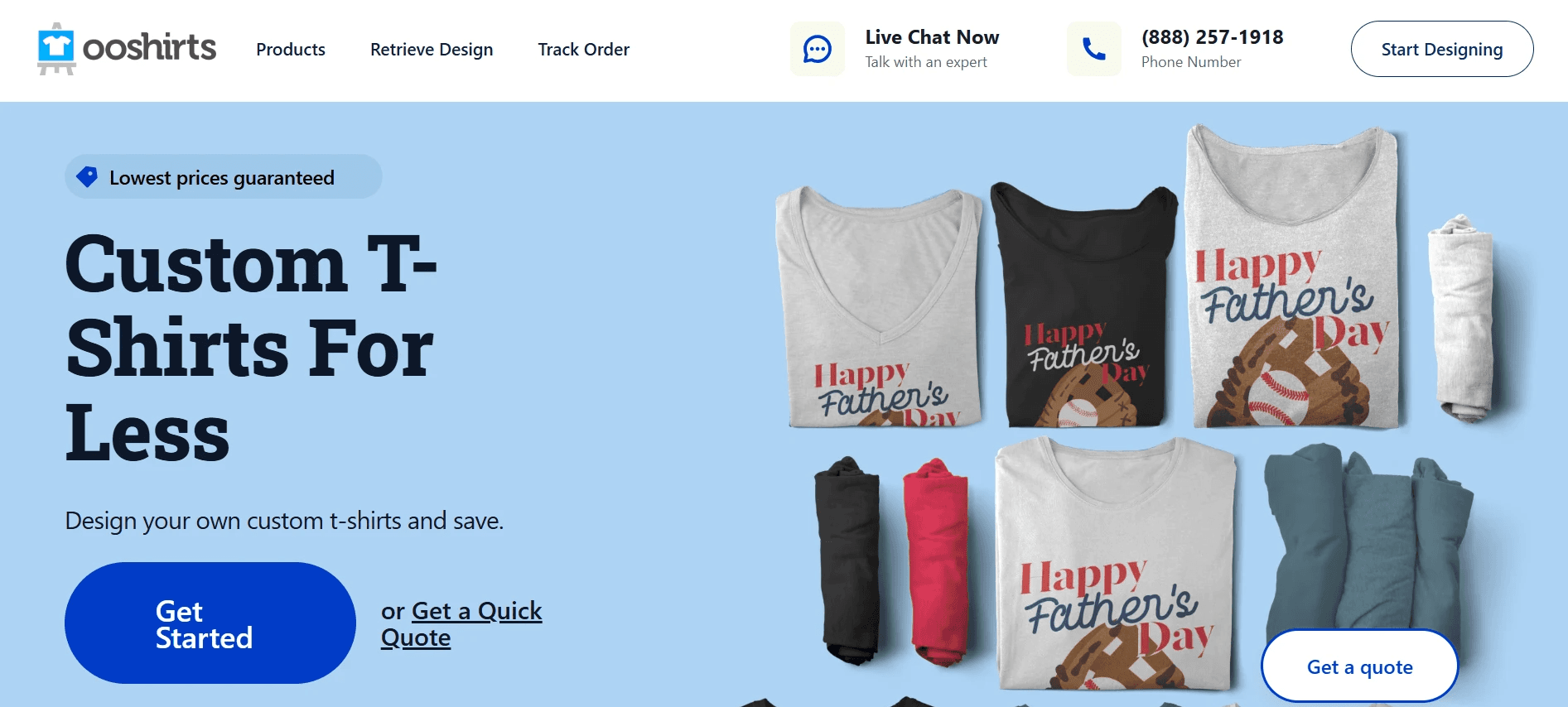
Most small-group buyers, from sports teams to nonprofit fundraisers to HR managers ordering company shirts, start their search assuming the base price they see is roughly what they will pay. ooShirts breaks that pattern by baking shirt cost, printing, and free shipping into a single live quote from the first click. The number you see before you design is the number you pay after you order: no subscription required, no per-item markup, no checkout surprise. The honest trade-off is that ooShirts is optimized for custom apparel in quantity, so sellers who need a wide product mix will want to pair it with a second platform.
2. Printful – Best for Premium Quality and Brand Consistency
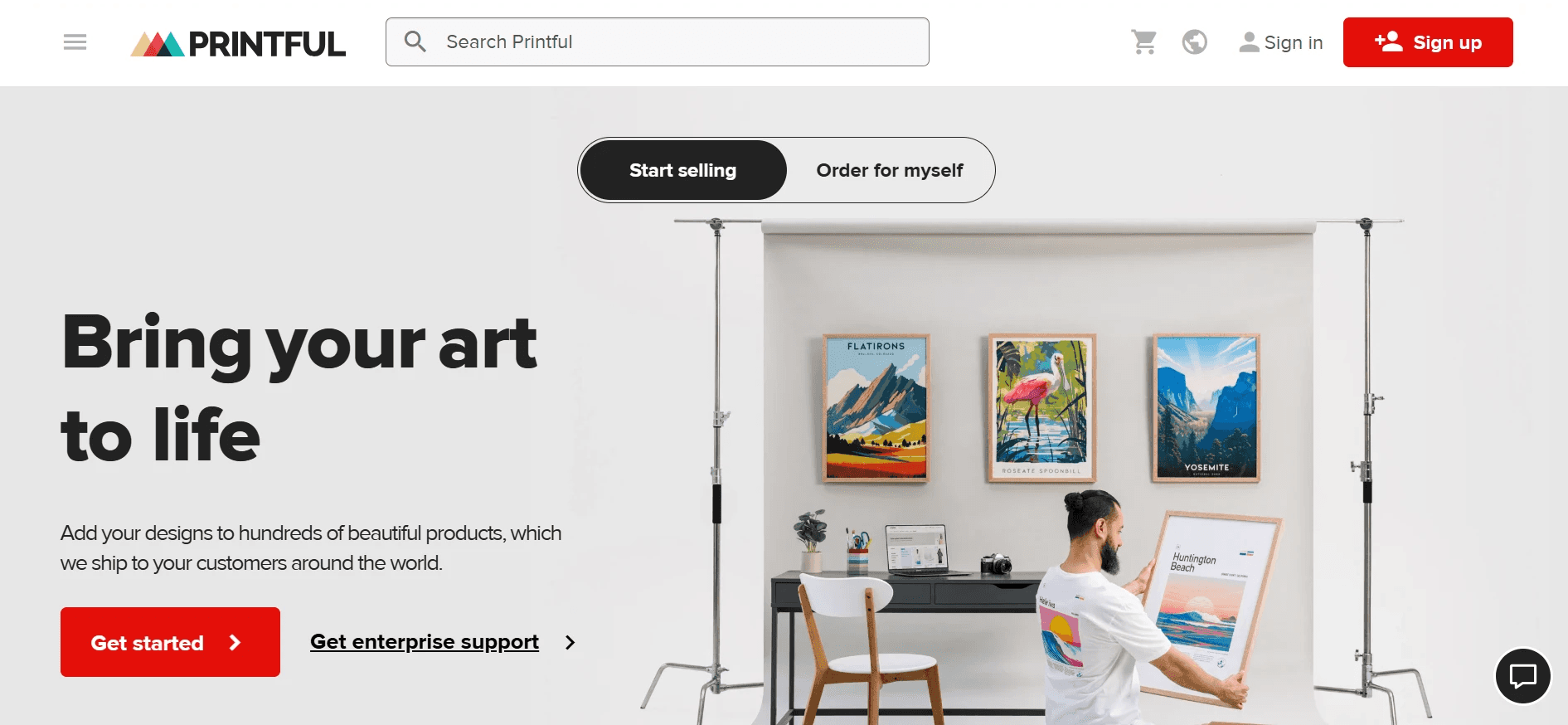
Printful is the right answer when brand consistency across reorders is non-negotiable. Unlike aggregator platforms that route orders to third-party facilities, Printful operates its own fulfillment centers across the US, Europe, and beyond, with direct quality control and white-label packaging options that support a cohesive branded experience. That infrastructure is what makes it defensible for corporate apparel and branded merchandise programs where a color-match miss on a reorder is a real problem. The trade-off is price: Printful’s per-unit costs run higher than most alternatives, and there is no subscription tier that meaningfully closes that gap for low-volume buyers.
3. Printify – Best for Cost-Flexible POD with Multiple Print Providers
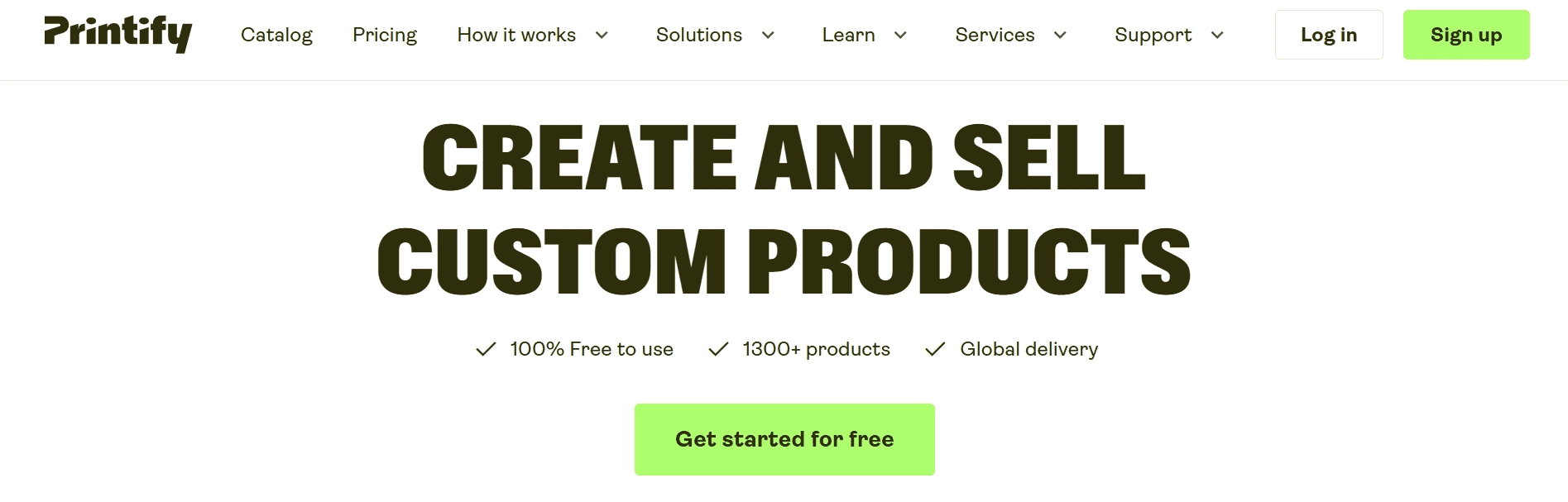
Printify connects sellers to a global network of 80+ print providers and 1,300+ products, according to Printify’s own November 2024 trend data, giving it the widest catalog footprint of any platform on this list. That breadth is useful for sellers who need product variety. The critical trade-off, and the one most comparison guides skip, is that Printify operates only the software layer: catalog, mockups, order routing, and integrations. It does not own or operate print facilities, as confirmed by PodVector AI’s August explainer.
1,300+ Products available on Printify’s platform
80+ Print providers across Printify’s global network
That means catalog width comes at the cost of quality accountability. Reprint rates and inconsistent color output across providers are the silent margin destroyers that a lower base price never accounts for. Printify’s premium subscription plan does reduce per-item cost enough to offset the fee for sellers moving 100 or more units per month, but below that volume the math rarely favors upgrading.
4. Gelato – Best for Global Fulfillment with Local Production
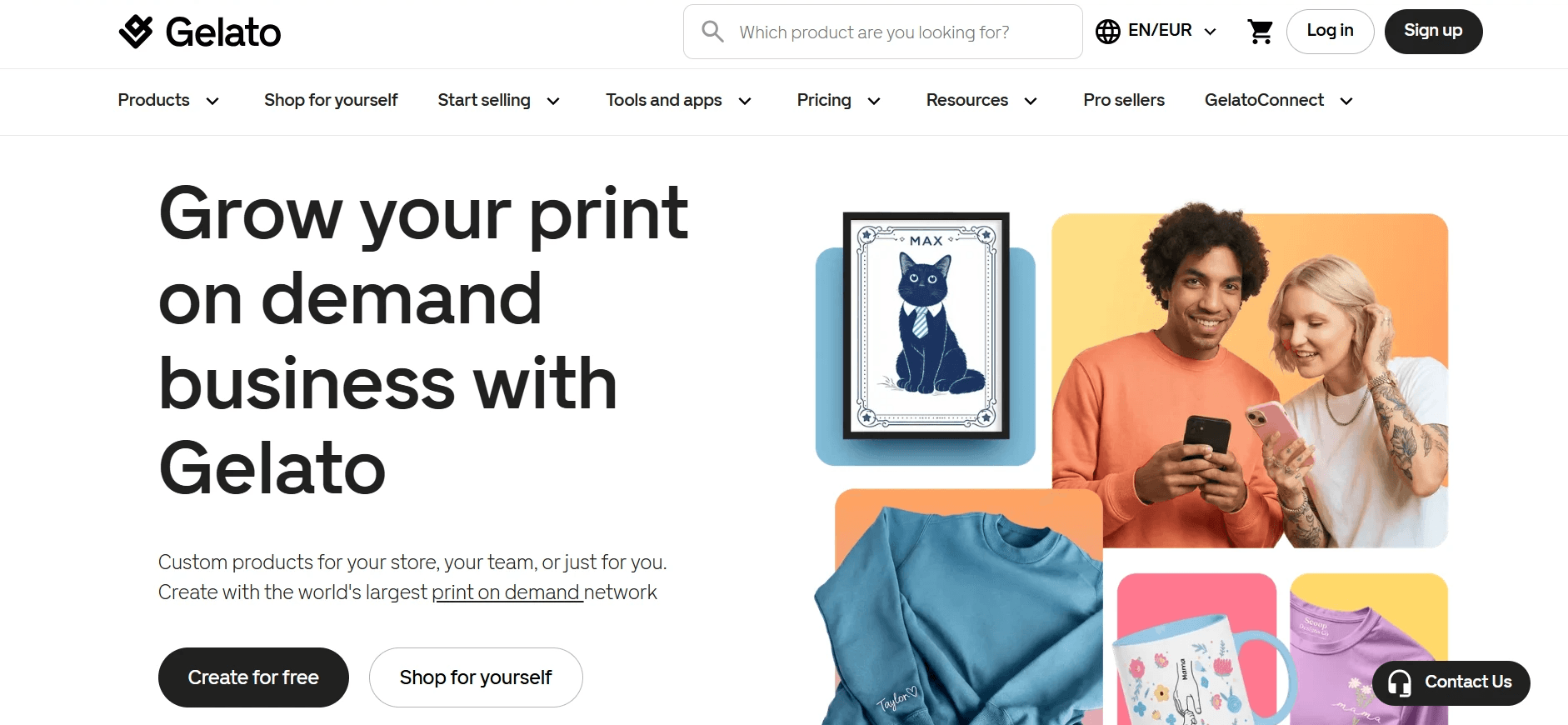
Gelato produces items locally across a wide network of countries, a geographic fulfillment strategy that reduces international shipping times and cuts carbon footprint, as noted in Printify’s November trend analysis. For sellers whose customers are spread across Europe, Asia, and North America, that local production network is a genuine margin driver: shorter shipping distances mean lower landed cost and faster delivery without paying for expedited service. The trade-off is catalog depth on specialty items, which lags behind Printify, and pricing transparency at checkout can still vary depending on which local partner fulfills the order.
5. Merch by Amazon – Best for Passive Income via Organic Marketplace Traffic
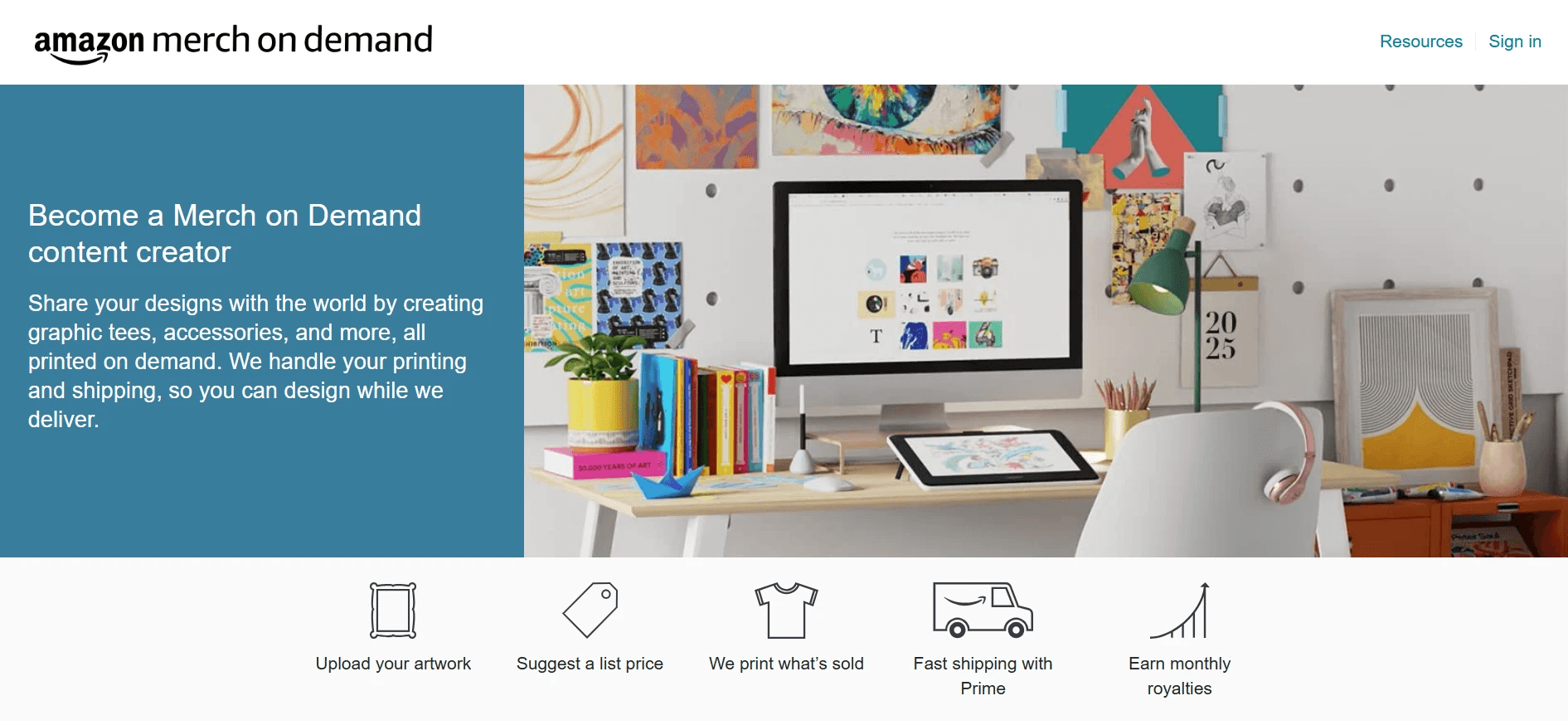
Merch by Amazon is the only platform on this list where you pay nothing upfront and earn royalties on organic Amazon search traffic without running ads or managing a storefront. For sellers whose designs have broad commercial appeal, that passive distribution is hard to replicate elsewhere. The hard trade-off is control: Amazon sets the retail price, runs its own promotional discount events, and sellers across passive income communities have documented firsthand how those platform-driven sales erode per-unit royalties to near zero during promotional periods. Tier-based access also means new sellers wait months before scaling their catalog.
6. Redbubble – Best for Artist-Focused Marketplace with Built-In Audience
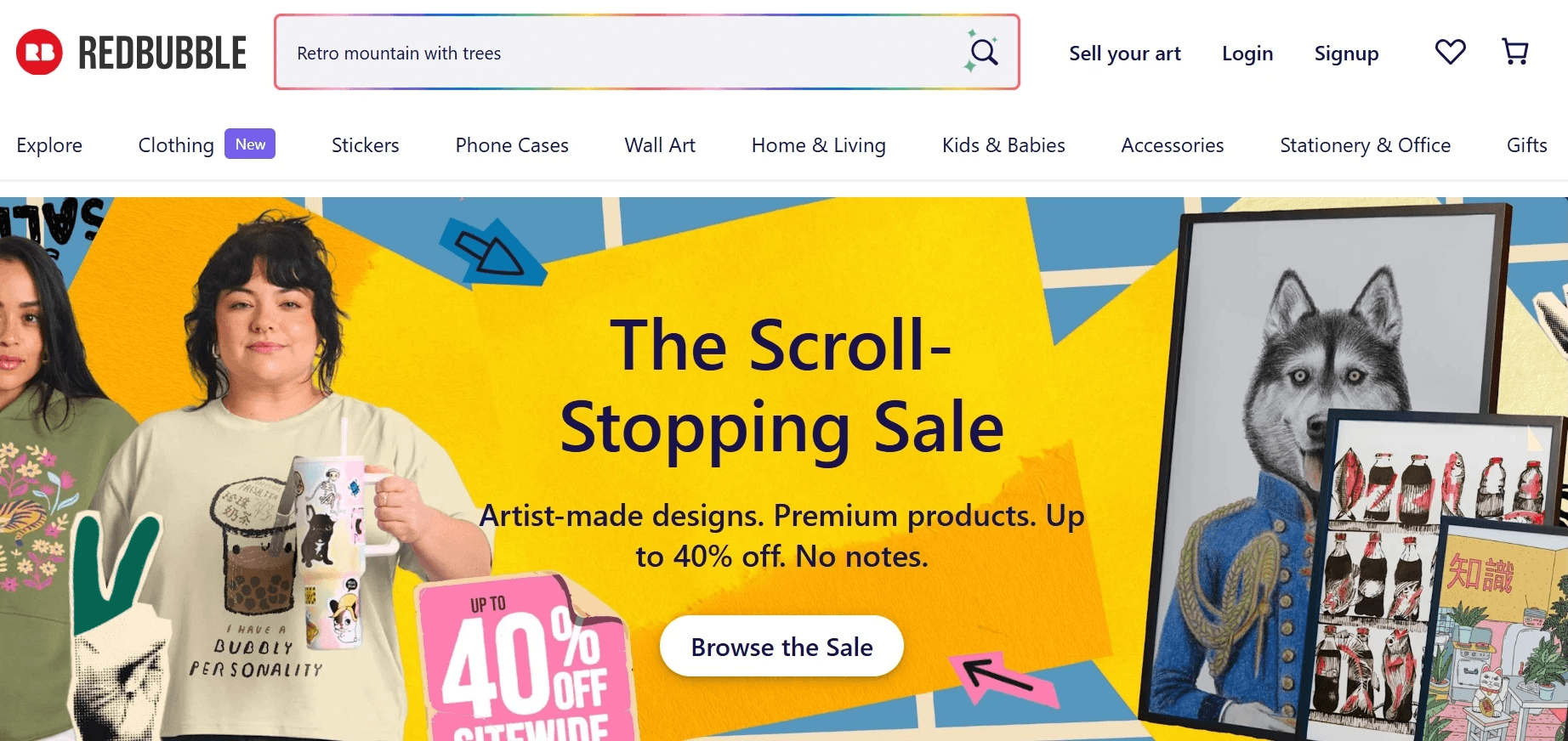
Redbubble gives independent artists a storefront with zero setup cost and a built-in browsing audience, which makes it a reasonable starting point for creators testing whether a design concept sells before investing in a dedicated store. The structural limitation is margin: Redbubble controls the base price, and sellers set a markup percentage on top. When the platform runs sitewide discounts, that markup compresses against a base price the seller cannot move. Sellers across print-on-demand communities have described checkout totals for buyers that include platform fees layered in ways that make the artist’s effective royalty unpredictable month to month.
7. Teepublic – Best for Simple Royalty Earnings on Apparel and Accessories
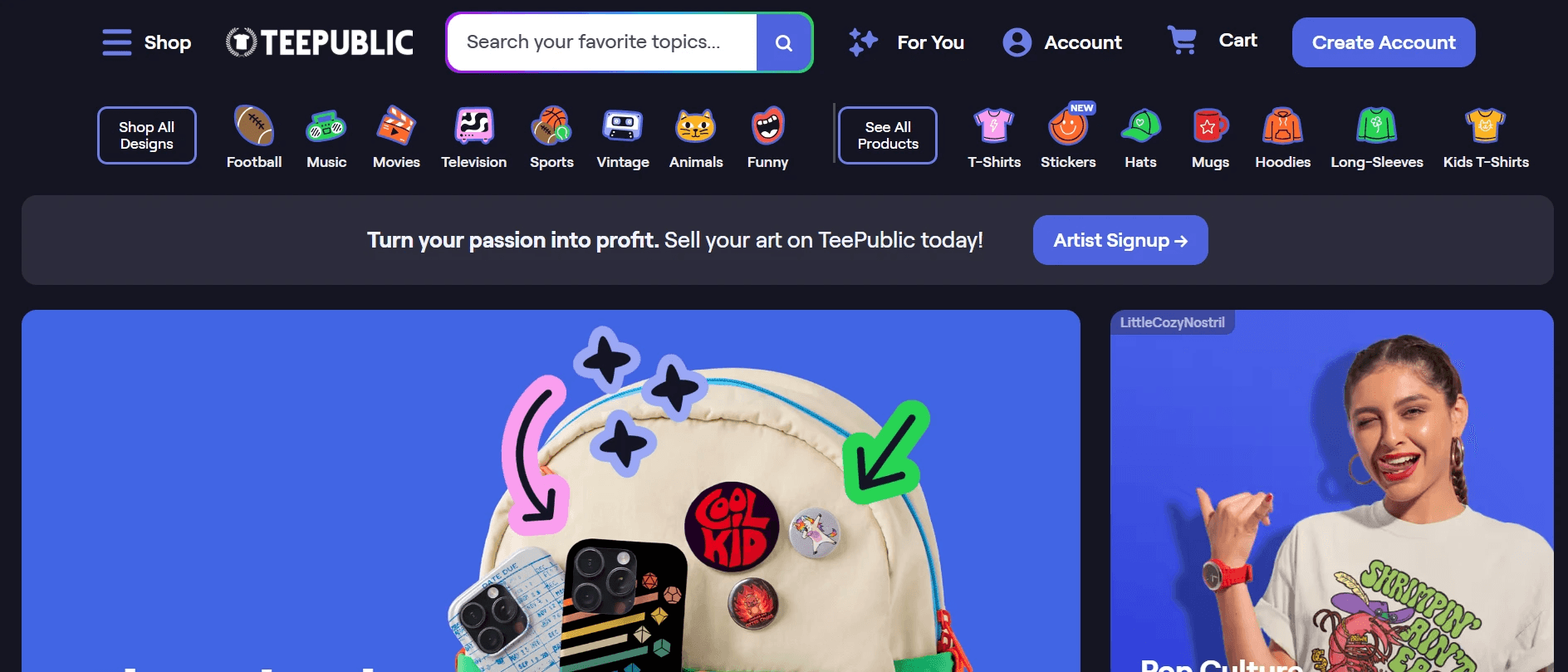
Teepublic simplifies the seller experience to its minimum: upload a design, set it live, earn a fixed royalty per sale. There are no integrations to configure, no fulfillment decisions to make, and no subscription fees. That simplicity is the point. The limitation is the same one that affects all royalty-based marketplaces: the platform controls pricing, and promotional sale events, which Teepublic runs frequently, drop the per-unit royalty to a fraction of the standard rate. Sellers who want predictable per-unit earnings will find the model frustrating during those windows.
8. CustomCat – Best for US-Based Sellers Needing Fast Domestic Fulfillment

CustomCat uses proprietary Digisoft printing technology and US-based fulfillment to deliver fast turnaround times on apparel orders, making it a strong fit for Shopify sellers who prioritize domestic speed over catalog breadth. The platform’s per-unit pricing is competitive for DTG apparel, and the fulfillment speed is a real differentiator for sellers whose customers expect quick delivery. The trade-off is that CustomCat’s catalog skews heavily toward apparel, so sellers who need home goods, wall art, or accessories alongside shirts will hit catalog gaps quickly.
9. Apliiq – Best for Private-Label Streetwear and Premium Branded Apparel
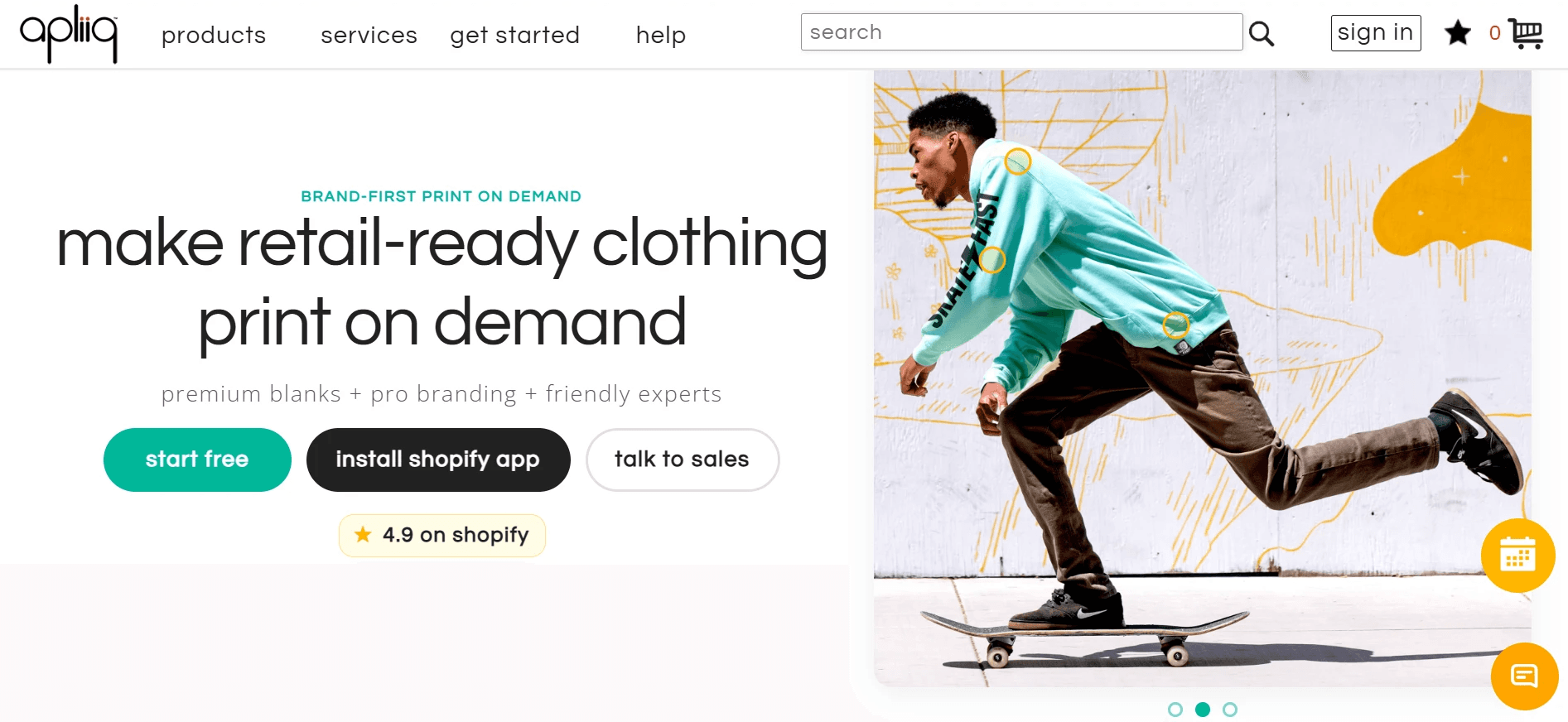
Apliiq is purpose-built for brands that want private-label details: woven labels, custom patches, inside-neck prints, and branded packaging that makes a garment feel like a finished product rather than a printed blank. For small streetwear brands, that level of customization is hard to source elsewhere at low order quantities. The honest trade-off is cost: per-unit prices run meaningfully higher than standard DTG platforms, and conversations across apparel and streetwear seller communities show that sellers consistently debate whether the branding premium justifies the margin hit at small volumes. It earns its place on a shortlist only when brand differentiation at the garment level is a deliberate strategy.
10. Art of Where – Best for High-Quality Niche Products with Canadian Craftsmanship
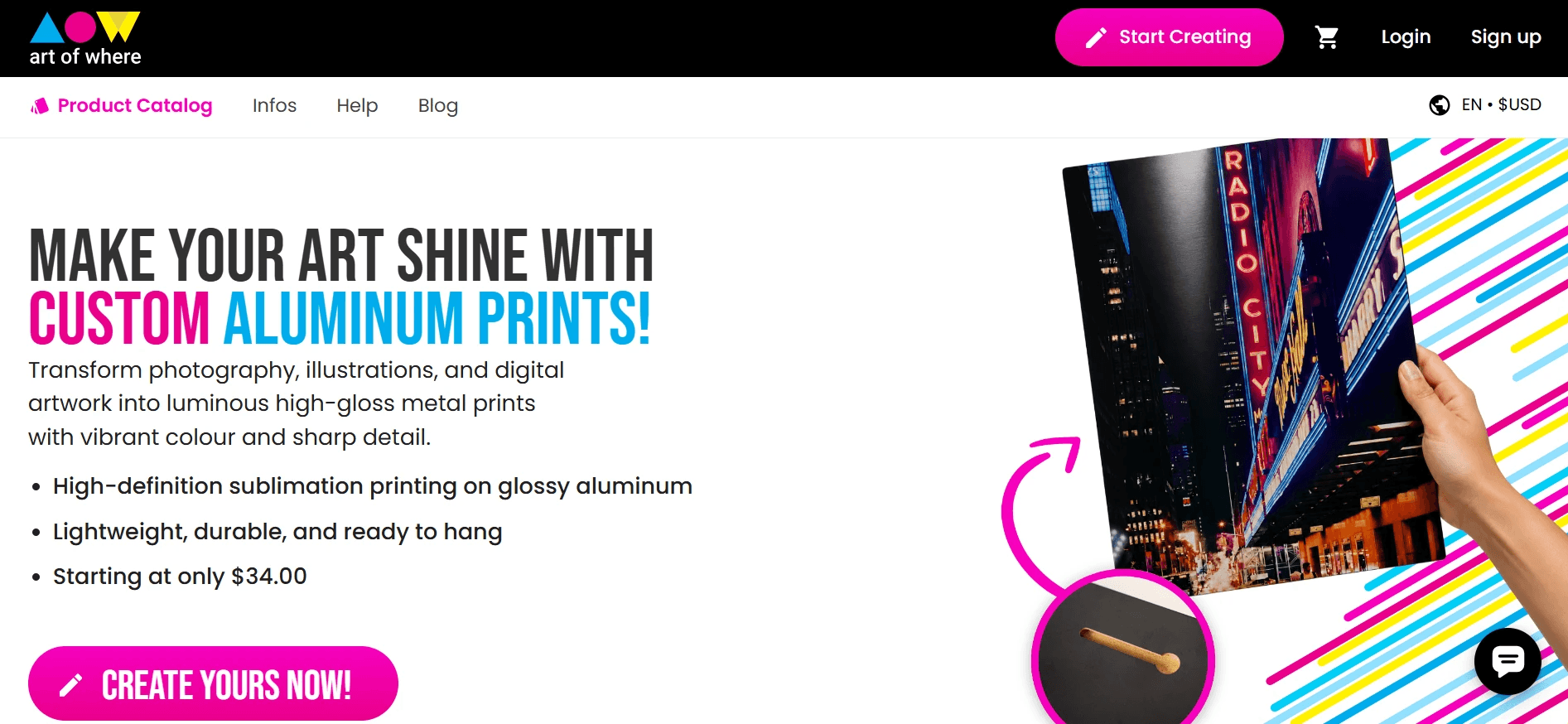
Art of Where focuses on niche, high-quality products including fabric by the yard, scarves, leggings, and cut-and-sew items that most POD platforms do not carry. The Canadian production base means quality control is consistent and the craftsmanship on textile products is strong. The trade-off for US-based sellers is shipping time and cost: orders crossing the border add days and duties that compress margin on lower-priced items. It belongs on the shortlist for sellers whose product line requires textile quality that standard DTG apparel platforms cannot match.
11. Spreadshirt – Best for European Sellers and Marketplace Exposure

Spreadshirt operates both a fulfillment platform and a consumer marketplace, which gives sellers two revenue channels from a single account. European production facilities make it a practical choice for sellers with a significant EU customer base, where local fulfillment reduces shipping cost and delivery time. The limitation for US-centric sellers is that the platform’s marketplace traffic skews European, and the design tool, while functional, is less polished than Printful’s or Printify’s. Sellers who need strong US domestic fulfillment speed will find better options elsewhere on this list.
12. Fourthwall – Best for Creators Monetizing an Existing Social Audience
Fourthwall bundles storefront, checkout, and POD fulfillment into one platform built for creators with an existing audience on YouTube, Twitch, or social media. The integration with creator monetization tools, including memberships and digital products alongside physical merch, makes it a different offering from a standard POD platform. The trade-off is that Fourthwall’s value compounds only when you already have an audience driving traffic. Without that, it is a capable but undifferentiated storefront with no organic discovery advantage.
13. Zazzle – Best for Fully Customizable Products Sold to End Consumers
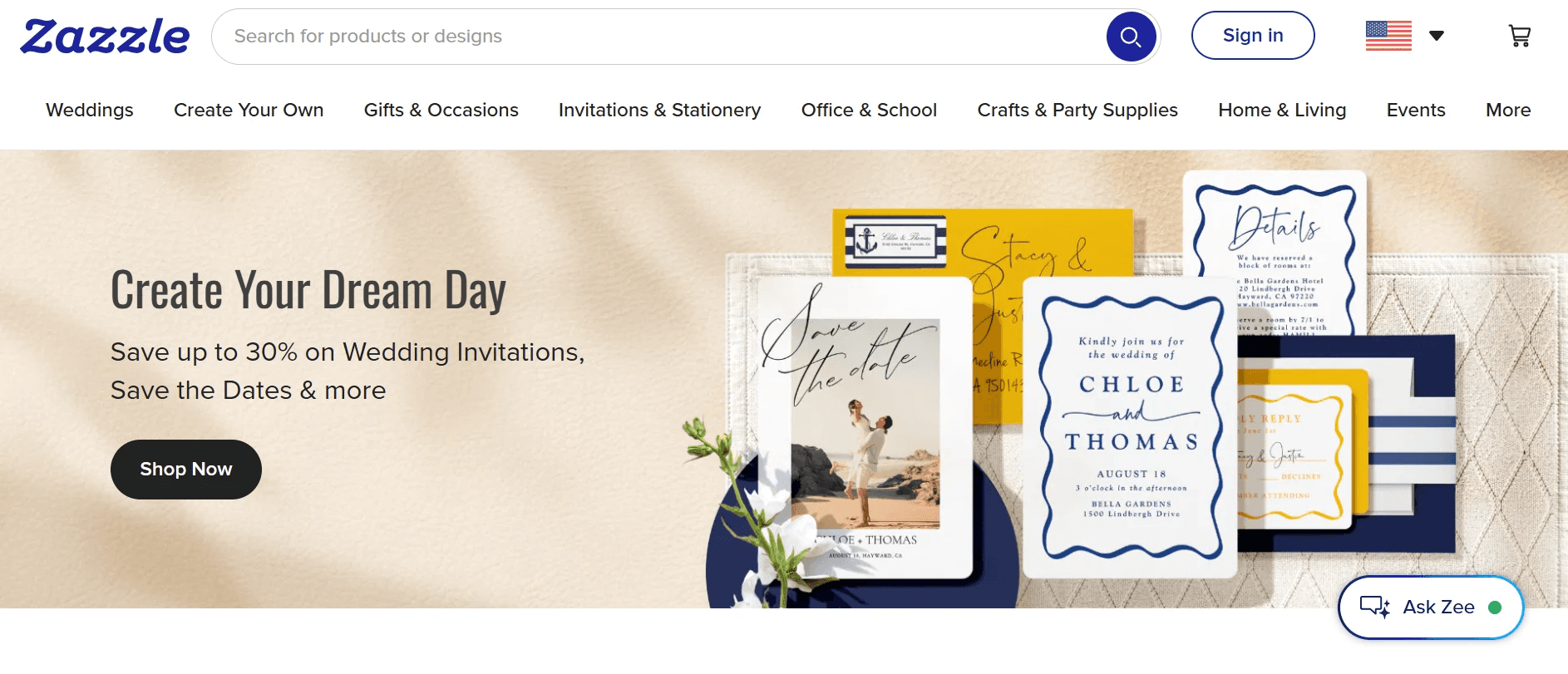
Zazzle’s model lets end consumers personalize products at the point of purchase, which makes it a strong fit for sellers whose designs function as templates rather than finished artwork. Wedding stationery, event merchandise, and personalized gifts perform well in that model. The structural limitation for sellers focused on apparel margin is that Zazzle’s pricing is set with the consumer customization experience in mind, not optimized for wholesale or bulk economics. Sellers running team or group apparel orders will find the per-unit cost and the checkout experience misaligned with their needs.
14. Merchize – Best for All-in-One POD with US Production and Home Goods

Merchize combines US-based apparel production with a broader catalog that includes home goods, making it a practical choice for sellers who want to expand beyond shirts without managing multiple platform relationships. The all-in-one positioning reduces operational complexity. The trade-off is that Merchize is a newer entrant relative to Printful or Printify, and its brand recognition with end consumers is lower, which matters if you are selling on a marketplace rather than a dedicated storefront where your own brand carries the weight.
15. Podbase – Best for Tech Accessories Like Phone Cases and Laptop Sleeves in Europe
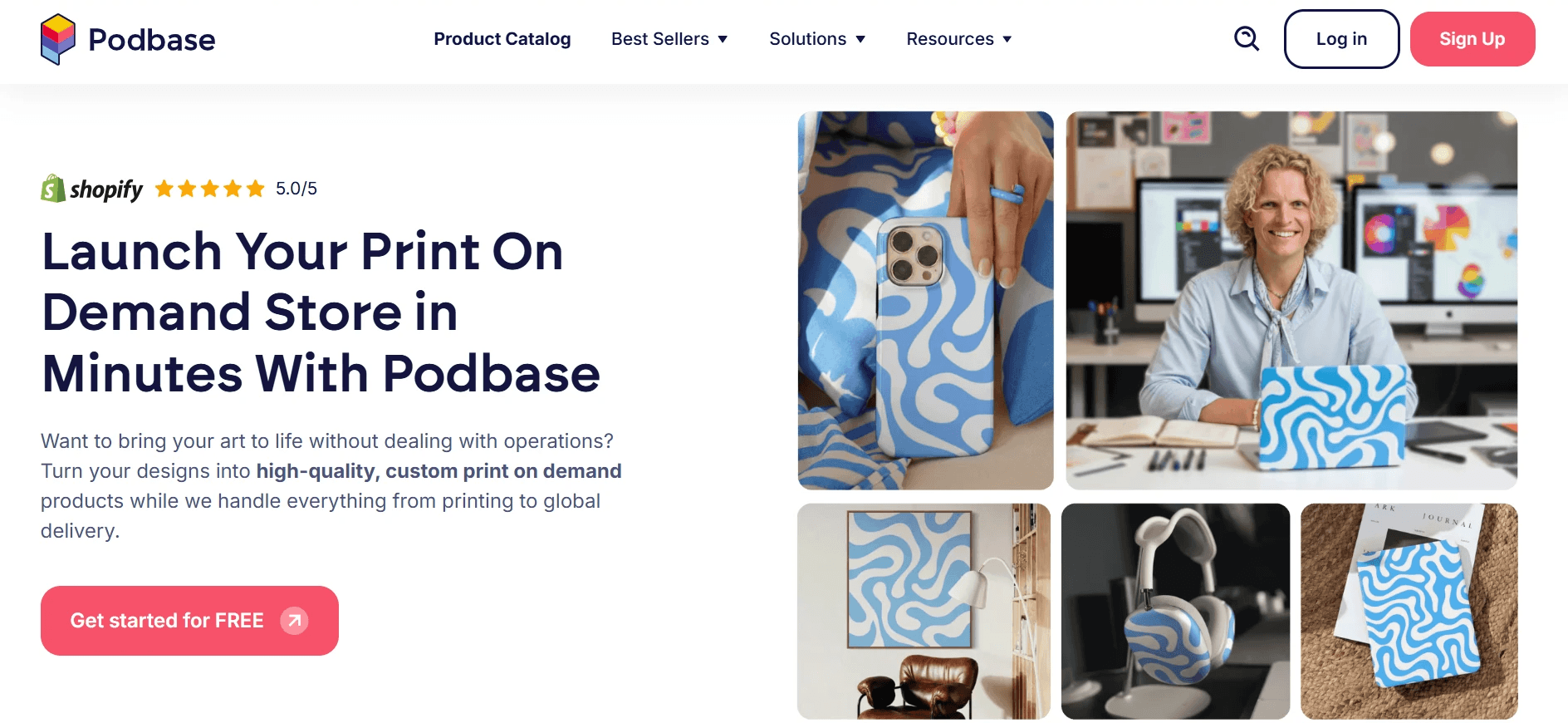
Podbase specializes in tech accessories, phone cases, laptop sleeves, and tablet covers, with production centered in Europe. For sellers whose catalog is accessory-first rather than apparel-first, Podbase fills a gap that most POD platforms handle poorly. The limitation is obvious: if apparel is your primary product, Podbase is a complement. European production means US sellers face the same cross-border shipping dynamics as Art of Where, so it belongs on a shortlist only when the product category fits.
16. Printshop by Designhill – Best for Designers Wanting a Marketplace Plus Custom Orders
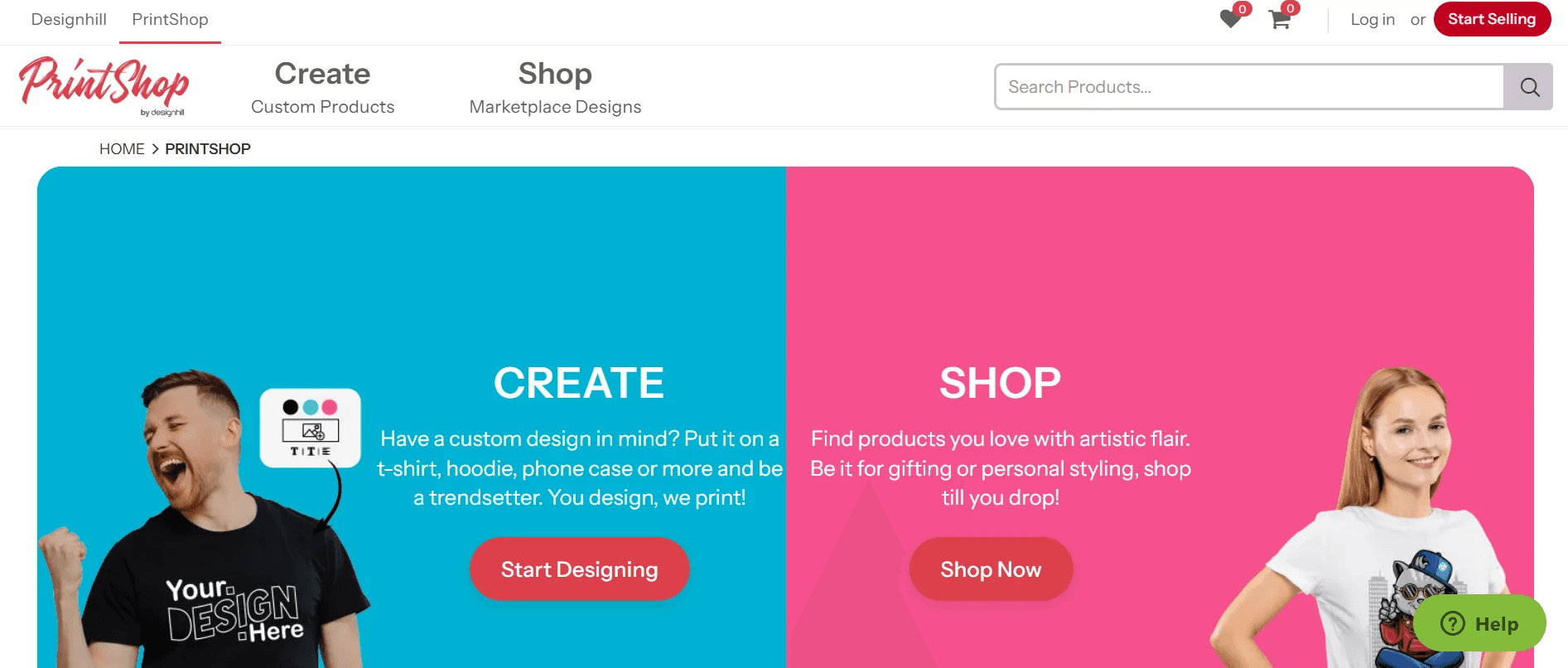
Printshop by Designhill gives designers access to both a marketplace for passive sales and a custom order channel for client work, which is a useful combination for freelance designers who want recurring passive income alongside project-based revenue. The trade-off is platform maturity: Printshop’s marketplace traffic volume is smaller than Redbubble’s or Zazzle’s, and the custom order workflow requires more active management than a fully automated POD setup. It suits designers who are already active in the Designhill ecosystem more than those starting from scratch.
17. Vistaprint – Best for Small Businesses Needing Branded Print Collateral Alongside Apparel
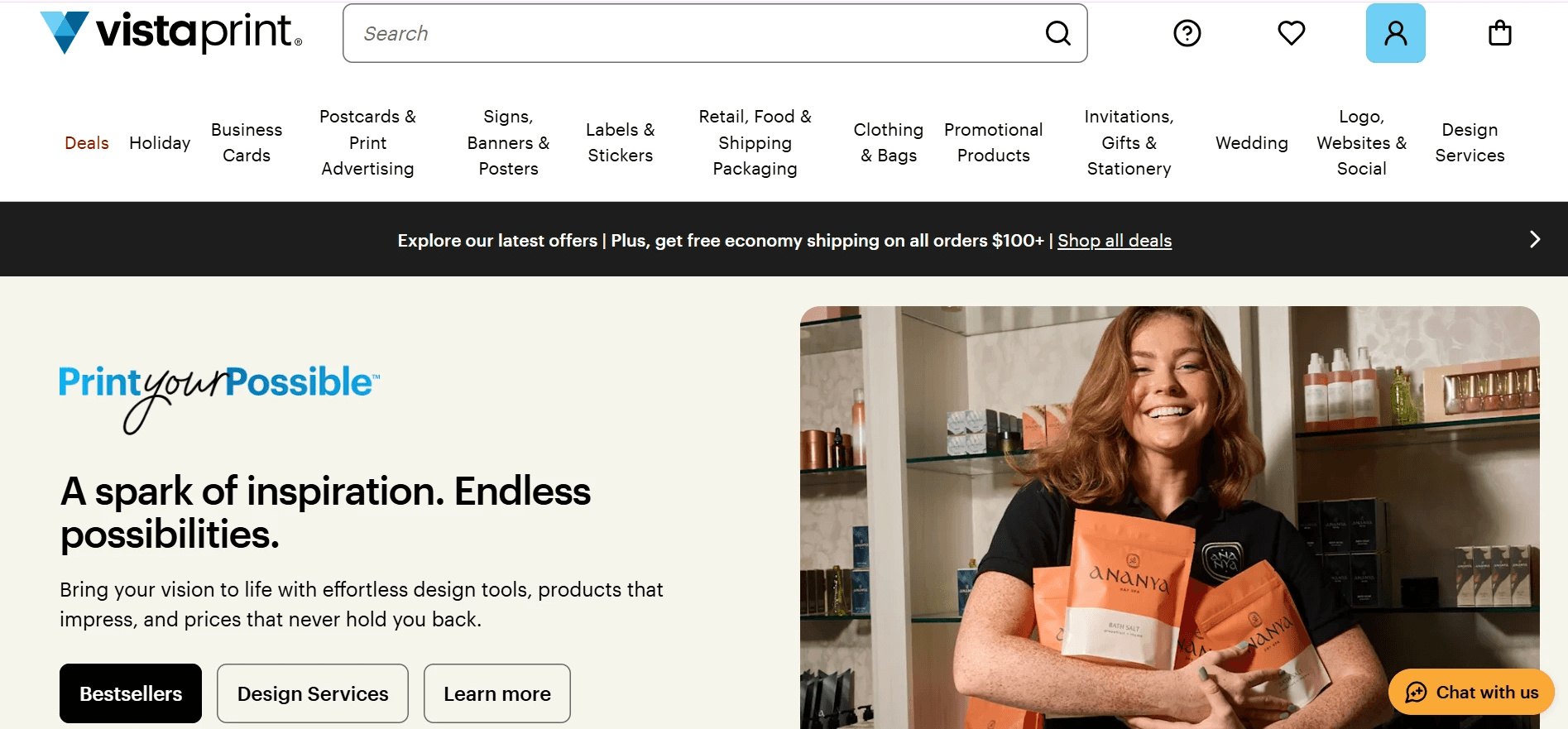
Vistaprint’s strength is breadth across print collateral: business cards, banners, signage, and branded promotional items alongside basic apparel. For small businesses that want a single vendor relationship for both office print needs and occasional branded shirts, the convenience is real. The limitation is that Vistaprint is not a POD-native platform, and its apparel pricing and customization depth do not compete with dedicated custom apparel platforms on a per-unit basis. It belongs on this list for the buyer whose primary need is collateral and whose apparel order is secondary.
18. Tapstitch – Best for Budget-Conscious Sellers Prioritizing Fabric Wash Options
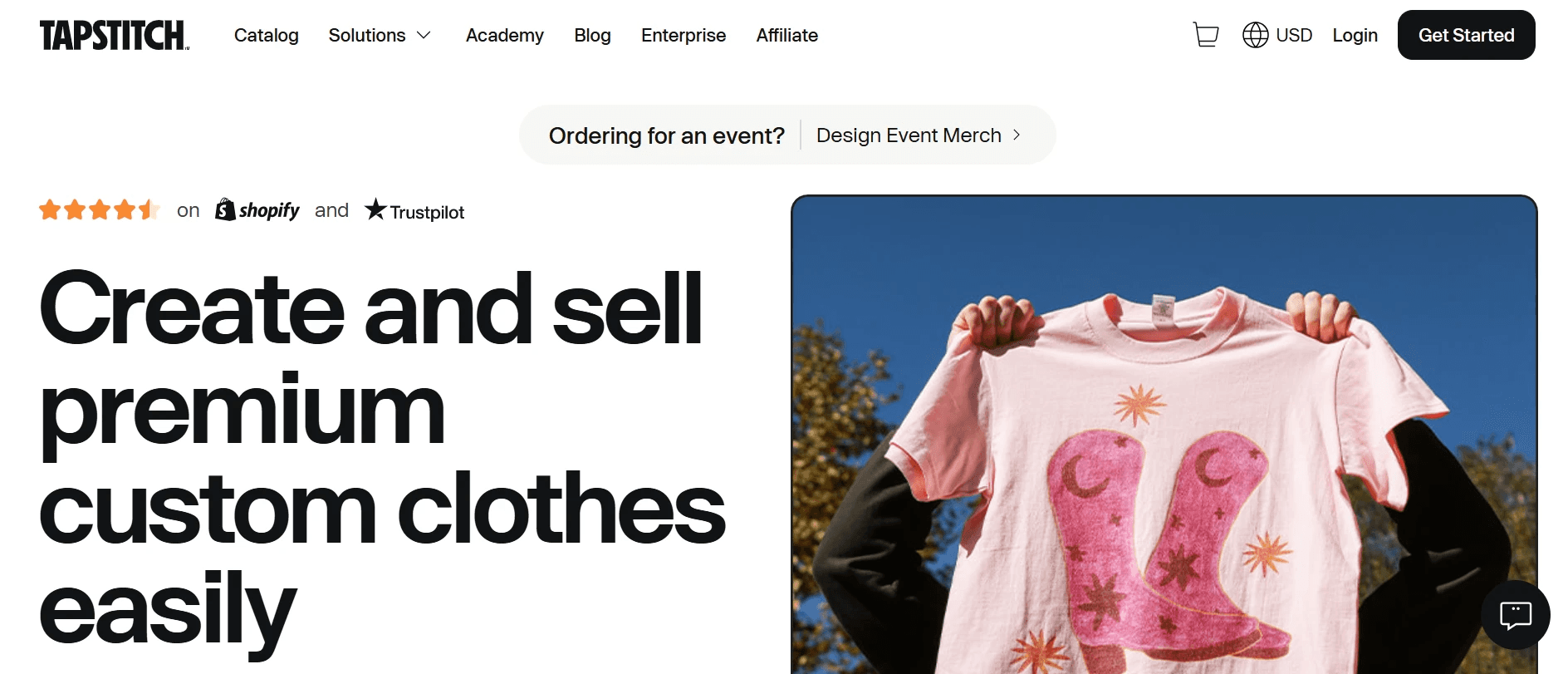
Tapstitch positions itself around garment quality at accessible price points, with a focus on fabric options and wash treatments that give sellers more control over how the finished product looks and feels over time. For budget-conscious sellers who want to differentiate on garment quality rather than print complexity, that focus is a genuine differentiator. The trade-off is catalog breadth and platform maturity: Tapstitch carries fewer product categories than the major platforms, and its integration options are more limited, which adds friction for sellers running multi-channel storefronts.
Related Reading
- Best Printer For T-shirt Printing
- Spreadshirt Alternative
- Gooten Alternative
- Gotprint Vs Vistaprint
- Print Aura Alternatives
How to Choose the Right Print Aura Alternative for Your Situation (Without Regretting the Switch)
Picking the wrong platform costs you margin on every order you place from that day forward. The right call depends on matching your buyer type to the platform built for it, then running the actual numbers to see what staying or switching is worth over time. Both of those steps are covered here.

Match the Platform to Your Buyer Type Before You Touch a Feature List
Your buyer profile determines everything. High-volume sellers tend to benefit most from platforms with broad network scale, international sellers often prioritize local fulfillment footprints, and speed-first US sellers generally favor domestically based production for fast turnaround. Small-group and team buyers ordering sub-100 units with a fixed budget sit in a completely different category, and the platforms built for 500-order-per-month Shopify stores will price them accordingly. If your use case is quarterly team shirts, a fundraiser run, or a one-time event order, the feature sets that matter to a scaling ecommerce seller are noise. Filter by buyer type first; then run the numbers.
How to Calculate Your Real Savings When Switching Print-on-Demand Platforms
A $3 difference in all-in cost per shirt sounds minor. Across a typical year of repeat orders, that per-shirt gap compounds into hundreds of dollars you either kept or surrendered. Per-order savings repeat on every order you place for as long as you stay on that platform.
This is also why platform inertia is a recurring, self-inflicted loss. The psychological friction buyers feel about switching POD platforms, fear of migration cost, design reformatting, and store disruption, is usually less expensive than staying. Hidden fees compound on every order, and the cumulative margin bleed of a fee-stacked platform outpaces any one-time switching cost within months.
Our market understanding is that profit margins on custom apparel depend on full landed cost per unit, including printing, shipping, and platform fees, not the base price alone. The compounding math only works in your favor when the quote you see is the quote you pay.
Run Every Shortlisted Platform Through the True Cost Index
The platforms worth shortlisting are the ones that can answer “Yes” to every question below.
Platform Comparison Checklist: Questions to Ask Before You Switch
Use this checklist on every platform you shortlist. A platform that cannot answer “Yes” to all five is hiding cost somewhere.
| Question | Pass (Yes) | Fail (No) | |
| 1 | Does the quote page show shirt + print + shipping as a single all-in number before checkout? | Price matches quote at checkout | Price rises at checkout |
| 2 | Are setup fees and screen charges disclosed before you build the order? | Fees listed upfront | Fees appear at end |
| 3 | Is there a subscription required to reach the advertised per-unit price? | No subscription needed | Must pay monthly fee |
| 4 | Does the platform own or directly control its print facilities (vs. routing to third parties)? | In-house or disclosed partner | Aggregator with variable quality |
| 5 | Is there a stated reprint or quality-guarantee policy? | Written policy exists | No stated policy |
If a platform passes all five, it earns a place on your final shortlist. If it fails two or more, the hidden costs will likely surface after your first real order ships.
Related Reading
- Fourthwall Alternative
- Teelaunch Vs Printify
- Printify Vs Gelato
- Gelato Alternatives
- Society6 Alternatives
Next steps
If your margin keeps shrinking even after switching to a “cheaper” platform, the path forward starts with recognizing that the base price is a decoy. The only number that controls your actual cost is the all-in total, shirt plus print plus shipping plus every fee, shown before you commit. Start with our cheap custom t-shirt printing.
The checkout abandonment crisis built into most POD platforms’ pricing architecture means a fee-stacking provider bleeds your revenue on both sides of the transaction, yours and your customers’. Platform inertia compounds that damage, because hidden fees repeat on every single order, and the cumulative margin bleed outpaces any one-time switching cost within months. Together, those two realities point to one action: get a verified all-in quote before you place anything.
Start with ooShirts, where shirt cost, printing, and free shipping are combined into one number before you enter a payment detail. Pull a live quote for your actual order size, compare it to what any other shortlisted platform shows at checkout, and the gap will tell you everything the base-price comparison never could.
Frequently Asked Questions
Why are sellers leaving Print Aura for other platforms?
Most sellers leave because of a cost structure that only reveals itself after real orders ship, per-order fees, shipping costs, and other charges compound on top of the quoted base price and erode margins more than expected. Fulfillment inconsistency is the other major driver, with reported delays and limited scaling capabilities that frustrate sellers as their businesses grow.
Is Print Aura’s customer support actually a problem?
Yes, a 2024 review by Ecommerce Platforms specifically flags customer support quality as a trust-eroding factor on Print Aura. The pattern that surfaces is a seller tolerating one delayed order, then a second, then filing a support request and waiting, with the friction compounding over time.
How do I avoid hidden fees when comparing print-on-demand platforms?
The only useful comparison metric is the all-in price, shirt plus print plus shipping plus every fee, shown before you commit. A platform with a lower base price can easily end up more expensive than a higher-quoted competitor once setup charges and shipping surcharges are stacked on at checkout.
Does it matter which print-on-demand platform I use if I’m ordering for a nonprofit or a one-time group event?
Platform fit matters a lot for these situations, especially because one-time group orders often involve shifting headcounts, hard deadlines, and no room for fulfillment delays. The post describes a buyer organizing shirts for a surprise birthday party who needed her order count adjusted late in the process and the order rushed, a scenario where phone support and a guaranteed delivery date made the difference between success and failure.
How does Printful compare to Print Aura for brand consistency on reorders?
Printful operates its own fulfillment centers across the US and Europe with direct quality control, which makes it more defensible than Print Aura for programs where a color-match miss on a reorder is a real problem. The trade-off is that Printful’s per-unit costs run higher than most alternatives, with no subscription tier that meaningfully closes that gap for low-volume buyers.
Leave a Reply