
Last updated: August 31, 2026
Spreadshirt was built for passive sellers, not event organizers. Here is how to find the platform that actually matches what you need: a confirmed quantity, a real price, and a ship date you can plan around.
The common assumption among event and group organizers is that every custom t-shirt printer forces you to over-order to meet a minimum and hides shipping or setup fees until the very last checkout step, so the only way to know the real cost is to go all the way through the cart. That assumption is the source of the confusion. The real problem is structural.
Spreadshirt was built for passive sellers who upload designs and wait for strangers to buy, one shirt at a time, shipped to one stranger at a time. That architecture has nothing to do with what an event organizer actually needs: a confirmed quantity, a locked-in per-shirt price, and a ship date you can write on a calendar. See our cheap custom t-shirt printing solutions for how this works in practice.

According to the Spreadshirt Help Center (2024), “the delivery times given here are estimates,” and the actual window depends on variables only revealed at checkout. For a school club treasurer ordering 48 shirts for a Friday event, “estimate” is the most dangerous word in the sentence. The same Help Center confirms that shipping costs are not disclosed upfront either; the full cost only appears “after you have added products to your basket.” You cannot get a real delivery commitment before you commit to the order.
For a school club treasurer ordering 48 shirts for a Friday event, “estimate” is the most dangerous word in the sentence.
Royalty-based pricing separates the base cost from the markup, shipping, and platform fees by design. The number you see on a product page is not the number you pay. For event organizers budgeting per head, that gap between listed price and checkout total is where group budgets collapse, usually the night before the order needs to go in. That is the pain point ooShirts was built around. The live quote shows the all-inclusive price: shirt, printing, and free shipping together, with free setup included. The number on screen is the number charged.
Key takeaways
- Spreadshirt and most alternatives on these lists were built for passive sellers earning royalties, not for organizers who need shirts in hand before a deadline.
- Marketplace platforms (Redbubble, TeePublic, Amazon Merch) drive their own traffic but give you zero control over production timelines or delivery dates, which makes them the wrong tool for event orders.
- Storefront platforms like Fourthwall and Spring were designed for creators monetizing an audience, not for a school club treasurer ordering 48 shirts once.
- Print-on-demand fulfillment partners (Printful, Printify, Gelato) connect cleanly to Shopify or Etsy but still price-shift at checkout: base cost, print fee, and shipping land as three separate line items.
- Checkout-screen sticker shock is structural, not accidental: most platforms surface the real per-shirt cost only after you’ve uploaded your design, chosen your sizes, and clicked through to the final screen.
- Three questions cut through every feature matrix faster than any side-by-side comparison: Does it ship by your deadline? Is the price shown the price you pay? Can you order a small quantity?
- ooShirts closes that gap with live quotes that show the exact price, shirt, printing, and shipping combined, before you commit to anything, with no hidden fees added at checkout.
The Most Important Choice Before You Pick Any Alternative – Marketplace vs. Your Own Storefront vs. Dedicated Printer
Picking the wrong platform type can leave you empty-handed the week before your event, with no shirts and no realistic fallback. The common assumption is that every custom t-shirt printer forces you to over-order to meet a minimum and hides shipping or setup fees until the very last checkout step, so the only way to know the real cost is to go all the way through the cart. Understanding why that belief is only partially true, and where it breaks down entirely, starts with recognizing that not all platforms are even built to serve the same kind of buyer.
The 15 platforms on this list belong to three structurally different categories. Each one serves a completely different kind of buyer. Understand the difference before you evaluate a single vendor.

The Three Platform Categories Every Spreadshirt Alternative Falls Into (And Why They Don’t Mix)
The first category is passive marketplaces: platforms that bring their own traffic, surface your designs to shoppers, and pay you a royalty on each sale. The second is storefront fulfillment backends: platforms that handle production and shipping per order, but only after you’ve built your own store and driven your own customers to it. The third is dedicated custom printers: you place a specific order, shirts are produced as a batch, and everything ships directly to you by a confirmed date.
These categories are not interchangeable. Choosing the wrong one is a structural mismatch that no amount of good reviews or low base prices can fix.
Passive Marketplaces – Platform Drives Traffic, You Collect Royalties, But You Never Hold the Shirts
Spreadshirt itself is a marketplace. Sellers upload designs, the platform handles discovery, production, and fulfillment, and the seller collects a royalty on each transaction. That trade makes sense for a designer who wants passive income from a back-catalog of artwork. It makes zero sense for an event organizer who needs a confirmed batch of shirts in hand by a specific date. No marketplace model ships a confirmed batch to a single address on a guaranteed date.
Storefront Fulfillment Backends – You Own the Brand, You Drive the Traffic, You Wait on Per-Order Production
Both Printful and Printify operate as fulfillment backends that integrate with a seller’s own storefront. Products are printed and shipped one at a time as orders arrive.
Best Marketplace Alternatives to Spreadshirt (Built-In Traffic, No Website Needed)
The best marketplace alternatives to Spreadshirt for passive income are Redbubble, TeePublic, Amazon Merch on Demand, and Zazzle. Each platform drives its own buyer traffic, handles printing and shipping, and pays you a royalty on every completed sale. You upload a design, set your margin, and the platform does the rest. That model works beautifully for independent artists and designers. It works poorly for anyone who needs a fixed quantity of shirts in hand by a specific event date.
Before you spend a week uploading designs to any of these platforms, know which category you belong to. Royalties on marketplace platforms vary by platform and product type, and the margin you keep is often a modest share of the retail price, according to the Redbubble Help Centre (2024). That trade-off makes sense when you have zero marketing spend and zero fulfillment overhead. It makes no sense when you need a fixed batch of shirts for a company picnic by a hard deadline.
1. ooShirts – Best for Budget-Conscious Bulk Orders Without a Storefront
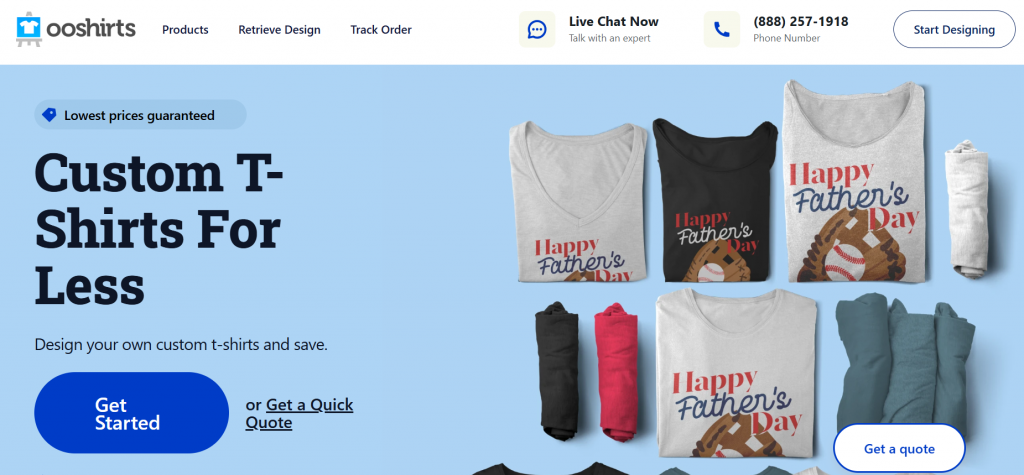
ooShirts is not a marketplace and does not belong in the passive-royalty category. It earns the top slot here because it directly solves the two structural problems event organizers face most: hidden checkout costs and unconfirmed ship dates. Every quoted price covers shirt, printing, free setup, and free standard shipping, with no additional line items added at checkout.
The pricing is all-inclusive and transparent from the first quote, which matters most when you are comparing options before committing budget. ooShirts backs orders with guaranteed delivery dates, fast turnaround times, a quality guarantee, a price match guarantee, and customer support seven days a week. The catalog spans 100+ shirt styles, and there is no minimum order for DTG printing, and screen printing services are available for larger runs.
You order a specific quantity, see the all-in price upfront, and receive shirts shipped to your door on the date you need them. No storefront, no royalty split, no guessing at your total cost.
100+ shirt styles, no storefront needed
2. Merch by Amazon – Best for Tapping Into Massive Built-In Buyer Traffic
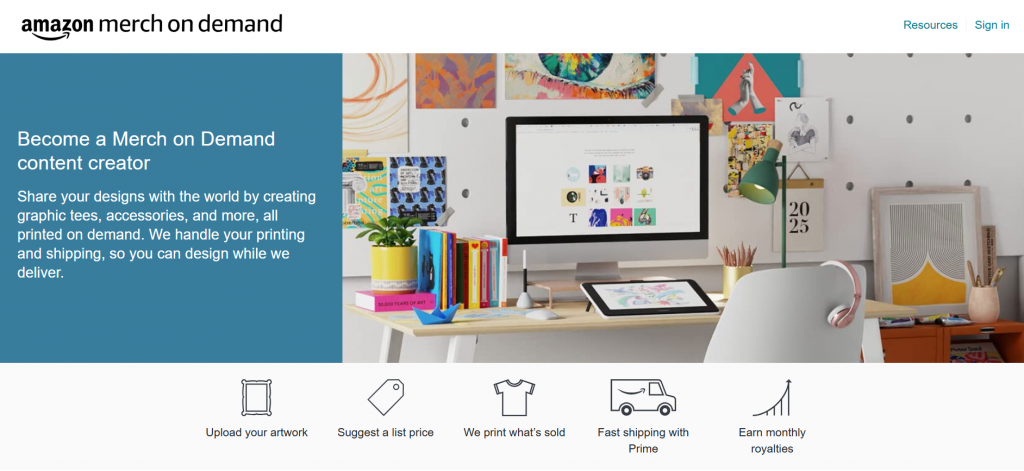
Amazon Merch on Demand gives designers access to the world’s largest shopping audience without building a store, but the application process is a real barrier. Based on what seller communities consistently report, wait times stretch from several weeks to several months, and new accounts start with tight upload limits that restrict earning potential early on. The trade-off is real: the traffic pool is unmatched, but you may wait a long time before you can use it.
3. Redbubble – Best for Artists Wanting a Diverse Product Catalog Beyond Apparel
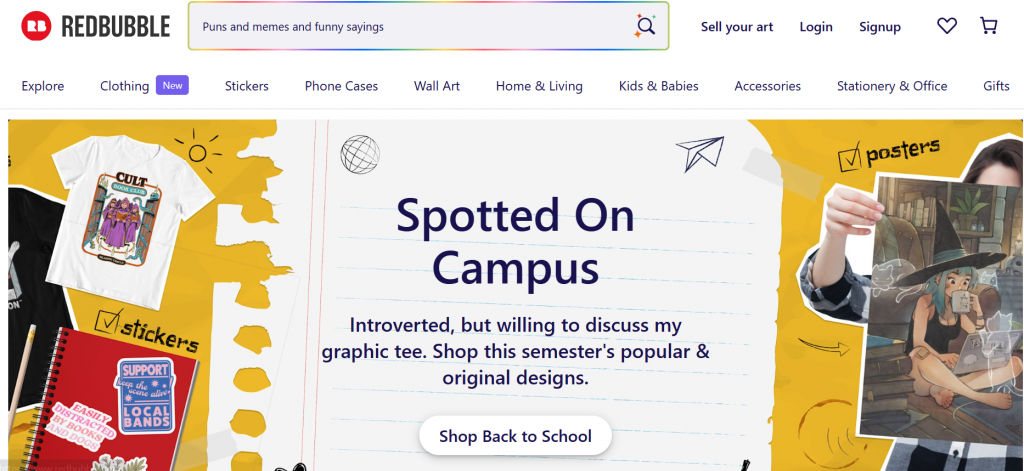
Redbubble is the closest direct marketplace competitor to Spreadshirt’s passive-seller model. According to the Redbubble Help Centre, artists set their own margin above the base price and earn royalties only on successfully shipped orders, handing off all printing, shipping, and customer service to the platform. Redbubble has introduced artist account tiers that affect how fees and margins are calculated; the Redbubble Blog covers the details, which are worth reviewing before building a strategy around a specific royalty figure. The product catalog extends well beyond apparel into wall art, stickers, and home goods, which broadens earning potential for artists with diverse design libraries. Account standing can be revoked without warning, so treat it as one income stream, not your only one.
4. TeePublic – Best for Designers Who Want Hands-Off Passive Sales With Zero Customer Support
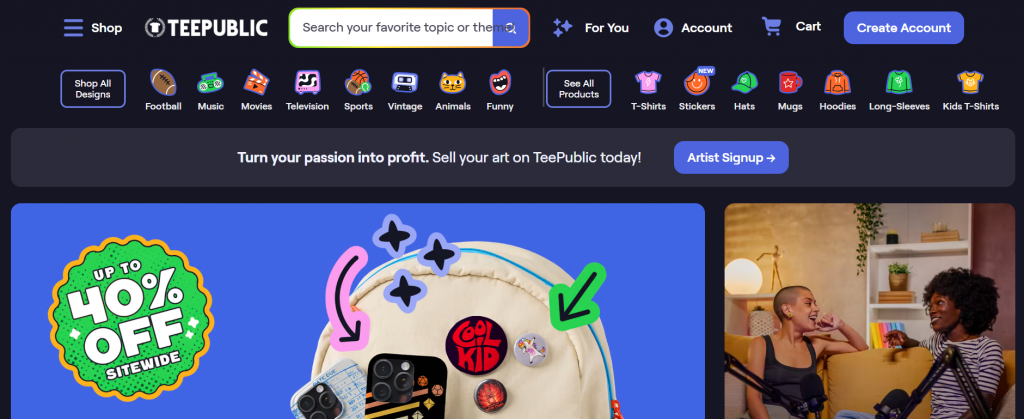
TeePublic, owned by the same parent company as Redbubble, runs on the same passive logic: upload designs, earn royalties, handle nothing else. The platform manages fulfillment and customer service entirely, making it genuinely hands-off for designers who want to earn from an existing catalog without ongoing effort. Royalty rates sit at the lower end of the marketplace range, so volume matters. Sellers with large, niche-targeted design libraries report meaningful passive earnings over time; sellers with a handful of generic designs typically see very little.
Marketplace platforms are purpose-built for designers who want to earn passively from an existing audience. If that is not your model, if you need shirts in hand by a specific date, at a price you can confirm before you commit, you are in the wrong category entirely. The next section covers a different track: creator storefronts that give you your own branded shop and more pricing control, without requiring you to build a full e-commerce stack from scratch.
Best Storefront and Creator Platform Alternatives to Spreadshirt (Your Own Branded Shop)
Creator storefronts solve a real problem: they sit between the passivity of a marketplace and the complexity of a full e-commerce build. Platforms like Fourthwall and Spring give independent creators branded shops, direct social integrations, and zero upfront cost. That sounds like the perfect middle ground, until you look at who these platforms were actually designed to serve.
Pros and cons at a glance
| ✓ Pros | ✗ Cons |
| Branded shops with direct social integrations | No confirmed batch shipped to single address by fixed date |
| Zero upfront cost for creators | Economics assume ongoing content, not one-time transactions |
| Handles fulfillment and payments in the background | Per-unit pricing balloons with platform commissions and fulfillment markups |
| Native integrations for in-app social selling | Shipping add-ons inflate final cost after time already lost |
Fourthwall is built specifically for video creators, streamers, and independent artists, handling fulfillment and payments in the background so creators can focus on their audience rather than logistics. Spring is optimized for social commerce, with native integrations that let a TikTok influencer sell directly inside the app without redirecting fans to a separate store. These are genuinely well-designed tools for their intended user.
The category breaks down in two distinct directions. The first is the deadline problem. A group organizer who needs 40 shirts at a single address by a fixed date is a fundamentally different buyer than a YouTuber with 50,000 subscribers drip-selling hoodies to fans.
The second is the subscription-model problem. Creators who sell a one-time complete course, a standalone product drop, or a single branded launch run into a quiet wall on platforms structured around recurring monthly relationships: the storefront’s economics assume ongoing content, not a clean, one-time transaction. When organizers and one-time sellers discover that per-unit pricing on storefront platforms balloons with platform commissions, fulfillment markups, and shipping add-ons, they have already lost time and margin they could not afford.
ooShirts addresses both failure points directly. Its all-inclusive live quote shows the exact final price, shirt, DTG printing, and free standard shipping with no setup fees, before a single design decision is made, so the true cost is visible while you are still comparing and deciding. Nearly half of online shoppers abandon carts specifically because extra costs appeared only at the final checkout step; all-inclusive upfront quoting eliminates that failure point entirely for group organizers managing a hard-deadline budget. ooShirts also backs every order with a price match guarantee, guaranteed delivery dates, and customer support seven days a week, so the accountability structure that creator storefronts deliberately offload to the platform is instead owned end-to-end by ooShirts.
Nearly half of shoppers abandon carts over hidden fees
That structure also scales beyond the single-event use case. Organizations sourcing consistent, repeatable uniform or branded merchandise as headcount grows across departments or office locations benefit from the same model: no minimums on DTG orders, 100+ shirt styles, and pricing that stays all-inclusive as quantities change across runs. Likewise, teams ordering branded company swag and onboarding kits, the kind that make new hires feel welcomed and culturally aligned from day one, need a supplier whose quote on day one is the invoice on day thirty. ooShirts is built for exactly that predictability.
1. ooShirts – Best for Lowest-Cost Branded Apparel with No Hidden Fees
ooShirts is the right pick when your priority is cost certainty over passive royalty income. Its all-inclusive live quote covers shirt, DTG printing, and free shipping with no setup fees added at checkout, and a price match guarantee backs that pricing, so the true final price is visible while you are still shopping. Fast turnaround times, guaranteed delivery dates, and a quality guarantee mean the accountability that creator storefronts offload to third-party logistics stays with ooShirts throughout. The trade-off is clear: ooShirts is built for one-time or repeat group orders, event runs, onboarding kits, and department uniforms, not for creators who want a persistent storefront their audience can browse and buy from independently on an ongoing basis.
2. Printful – Best for Scaling a Fully Branded Print-on-Demand Storefront
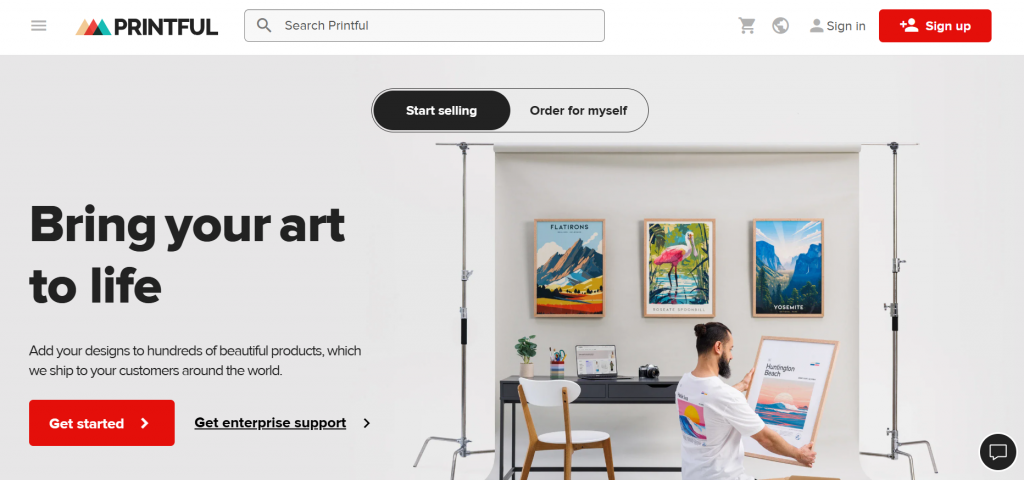
Printful lets creators and entrepreneurs build a white-label storefront that integrates directly with Shopify, Etsy, WooCommerce, and more, handling printing, packing, and shipping automatically. It’s the right pick when you want full brand control and a wide product catalog without holding inventory. The key tradeoff is that base product costs are higher than bulk printers, so per-unit margins require careful pricing strategy.
3. Spring (formerly Teespring) – Best for Creators Who Want a Built-In Audience Marketplace
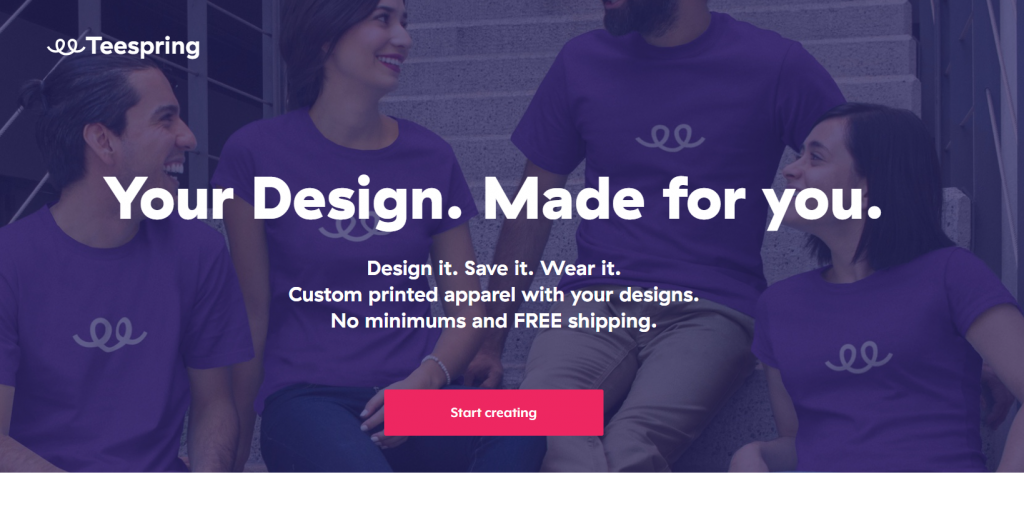
Spring is purpose-built for content creators and influencers who want to launch a merch store without managing logistics. It offers a built-in buyer marketplace alongside direct storefront links, making it easier to get early sales without driving all your own traffic. The significant limitation is lower profit margins due to Spring’s commission structure, and less brand customization compared to self-hosted alternatives.
4. Big Cartel – Best for Independent Artists Who Want a Simple Self-Owned Shop
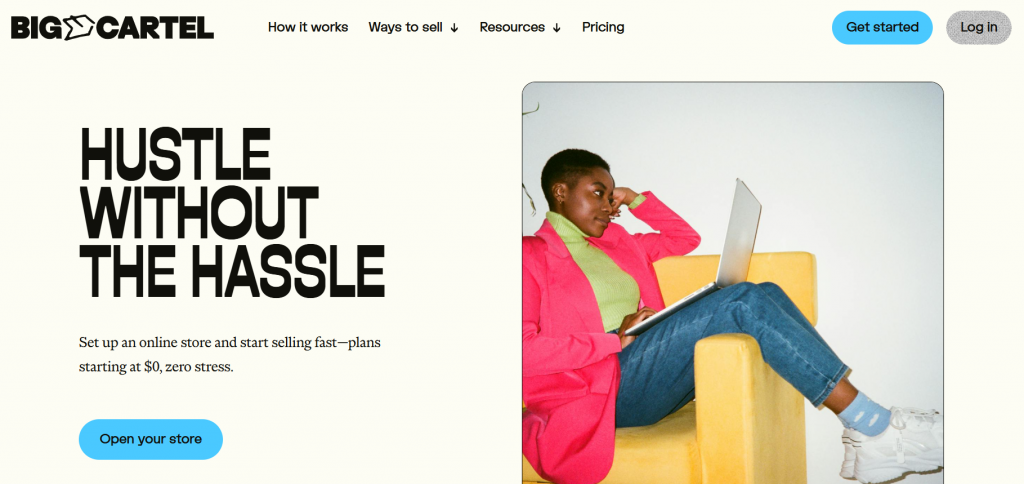
Big Cartel is a lightweight storefront platform designed specifically for independent artists and makers who want full ownership of their shop without marketplace competition. It’s ideal when you can drive your own traffic and want to avoid Etsy-style crowding. The free plan supports up to five products, making it a low-risk starting point. The tradeoff is limited built-in discovery: you must bring your own audience.
5. Bandzoogle Merch Table Lite – Best Commission-Free Storefront for Musicians
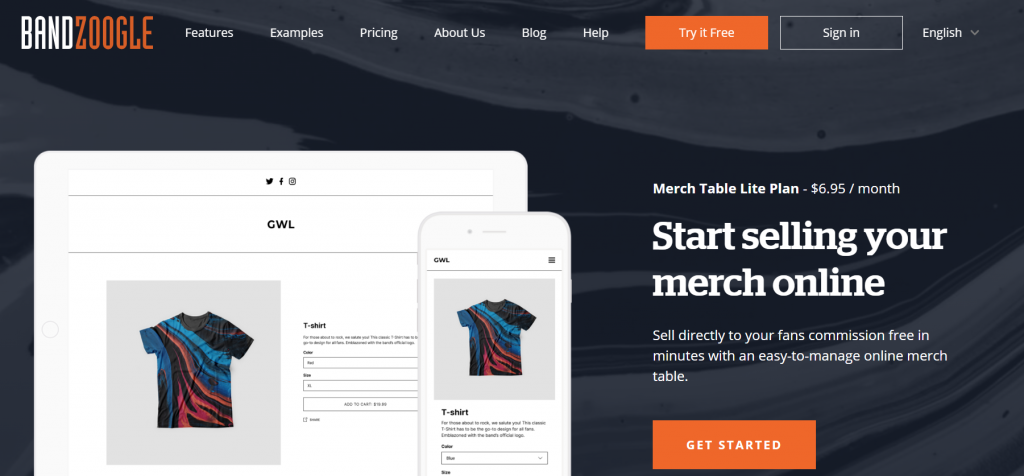
Bandzoogle’s Merch Table Lite plan gives musicians a customizable, commission-free online merch storefront without requiring a full website build. It integrates with Printful for print-on-demand fulfillment and lets artists keep 100% of sales revenue. It’s the right pick for bands and solo artists who want a branded shop fast. The limitation is its niche focus: it’s optimized for musicians, not general creators or businesses.
6. Fourthwall – Best for YouTubers and Streamers Wanting a Highly Customizable Creator Shop
Fourthwall is a creator storefront platform praised for its deep visual customization options, letting streamers and YouTubers build a shop that feels uniquely on-brand. It supports physical merch, digital products, and memberships in one place. It’s the right Spreadshirt alternative when brand aesthetics and fan engagement matter as much as product variety. The tradeoff is that it’s best suited to creators with an existing online following rather than cold-start sellers.
Best Print-on-Demand Fulfillment Partners to Connect to Shopify, Etsy, or WooCommerce
The best print-on-demand fulfillment partners for Shopify, Etsy, and WooCommerce stores are Printful, Printify, Gelato, and SPOD. Each connects directly to your storefront and handles production and shipping automatically, but they make very different trade-offs across price, quality consistency, production speed, and geographic reach. Picking on base cost alone is the single most common mistake store owners make, and it tends to surface only after the first wave of customer complaints arrives.
Before the item-by-item breakdown, one structural fact: all four platforms require a connected storefront to place any order at all. The no-minimum-order benefit they advertise applies to e-commerce sellers fulfilling individual customer purchases, not to a team captain ordering 23 shirts for a charity 5K. If you need shirts shipped directly to you by a fixed date, you are in a different category entirely, and the section below this one covers that.
1. ooShirts – Best Spreadshirt Alternative for Budget-Conscious Bulk Orders
Unlike the fulfillment backends below, ooShirts operates as a dedicated custom printer rather than a storefront integration. That distinction matters for one specific buyer: the organizer or group captain who needs shirts in hand by a guaranteed delivery date and wants a live all-inclusive quote covering shirt, printing, and free shipping before committing. No storefront required, no minimum order on DTG printing, and all-inclusive transparent pricing that shows you exactly what you pay, shirt, print, and delivery, before you place the order. That matters most when a buyer is comparing prices and needs a number they can trust without discovering hidden fees at checkout.
This is also where ooShirts is purpose-built for nonprofit groups and community organizers. Affordable custom t-shirt printing for a charity 5K, a school fundraiser, or a volunteer crew means every dollar saved on per-shirt cost goes back to the cause. With a price match guarantee, 7-days-a-week customer support, a quality guarantee, and screen printing services alongside DTG across the same 100+ shirt styles, ooShirts covers the range of order types that fall outside what a Shopify-connected POD backend can handle.
2. Printful – Best for Premium Quality and Direct Shopify Integration
Printful runs its own in-house fulfillment facilities, which is what makes it the most hands-off option in this category. Across the market, that vertical control produces more consistent print quality than a network-based model, a meaningful advantage when getting a good-looking, quality print at a reasonable price across every batch is non-negotiable for brand reputation. It comes with premium branding features including custom packing slips and tear-away tags that matter when you are building a recognizable brand.
That said, store owners who connect Printful to Shopify quickly run into a real workflow friction point: managing your store means switching constantly between two separate dashboards, and that back-and-forth adds up to a clunky, manual process that compounds as your catalog grows. Printful’s base costs run noticeably higher than Printify’s, which compresses margins on high-volume designs. It is the right call when quality consistency and brand presentation outweigh per-unit savings, and the wrong call when you are trying to maximize profit on a competitive, price-sensitive catalog.
3. Printify – Best for Catalog Depth and Competitive Base Pricing
Printify functions as a marketplace of global third-party print providers, which means you can shop across suppliers and route each product to the most cost-effective option. This model is purpose-built for sellers who want to maximize profit margins by comparing base costs across the network. The practical downside is quality variance: because different providers handle different orders, getting consistent print quality across multiple orders requires active provider vetting, and sellers who treat provider selection as a one-time setup task tend to discover this through customer complaints rather than before them.
The dashboard management challenge compounds here too. Printify adds its own layer between your storefront and the provider network, which means more manual switching and less visibility when something goes wrong mid-production. Printify rewards sellers who do the homework upfront; it punishes those who do not.
4. Gelato – Best Spreadshirt Alternative for International Sellers Prioritizing Local Fulfillment
Gelato’s core advantage is geographic: the platform prints locally across a wide network of countries, which cuts international delivery times significantly, often down to a few days in major markets. For an Etsy seller whose buyers are split across the US, Germany, and Australia, that local fulfillment model is the difference between a repeat customer and a refund request.
Expanding a POD brand internationally, say, from the UK into the US, introduces a challenge that is less obvious until you hit it: local fulfillment partners need to have the right equipment, including flatbed printers capable of matching the print quality your existing customers already expect. Gelato’s network is purpose-built for speed and carbon reduction rather than maximum product variety, which means catalog depth and provider-level equipment control are real constraints. It is the strongest pick for international-first stores where delivery speed is the primary retention lever, and a less compelling choice for sellers whose audience is concentrated in a single country or whose designs demand equipment-specific consistency.
—
All four fulfillment backends above are purpose-built for store owners who drive their own traffic and can absorb the occasional quality variance across a long-running catalog. The next section covers a different category that most POD comparison lists bury or skip entirely: dedicated custom printers built for groups, events, and bulk orders where a guaranteed delivery date and a locked-in all-inclusive price matter far more than royalty rates or marketplace rankings.
Related Reading
- Threadless Alternatives
- Best Printer for T-Shirt Printing
- Gotprint Vs Vistaprint
- Gooten Alternative
- Print Aura Alternatives
The 8 Best Spreadshirt Alternatives for Groups, Events, and Bulk Custom Orders – Including the One Category Most Lists Ignore
Checkout-screen sticker shock is the most reliable budget killer in custom apparel. You click through six screens, upload your design, pick your sizes, and then the real number appears: base shirt, print fee, setup charge, shipping, and suddenly the per-shirt cost is 40% higher than the product page implied. For a school club treasurer or a 5K race director working with a fixed budget, that is the moment the whole order falls apart.
That pain is exactly what separates the eight platforms below from every marketplace and fulfillment backend covered earlier in this list. These are dedicated custom printers and specialty platforms built around a single promise: you know the full price before you commit, and the shirts arrive at one address by a confirmed date.
1. ooShirts – Best for Budget-Conscious Groups and Bulk Custom Orders
The structural advantage here is all-inclusive transparent pricing: according to ooShirts’ DTG service page (March 2026), every quoted price covers the shirt, full-color printing, free setup, and free standard shipping to the contiguous US, with nothing added at checkout. There is also no minimum order quantity, meaning a church group of 11 can order exactly 11 shirts. For a group organizer who has been burned by checkout surprises before, that combination of cost certainty and any-quantity ordering is genuinely rare in this category.
2. CustomInk – Best for Team and Event Orders with Guided Design Support
CustomInk’s strongest argument is reassurance. The platform offers a polished design lab, human design review, and group-ordering tools that make it easy to collect sizes and payments from multiple people in one place. The trade-off is price: CustomInk’s all-in cost on a typical 50-shirt one-color order runs substantially higher than budget-focused dedicated printers, and its rush fee is percentage-based, which disproportionately punishes the organizer who started late. Pick CustomInk when the process support is worth the premium; look elsewhere when the budget is the binding constraint.
3. RushOrderTees – Best When Your Deadline Is the Priority
RushOrderTees built its entire operation around production speed. Same-day and next-day production options are available for orders placed before daily cutoff times, making it the only dedicated custom printer in this list with a published same-day production SLA. A 5K race director who confirmed registration numbers four days before the event is the exact buyer this platform was designed for. If missing the deadline makes the order worthless, the speed premium is worth paying. If your event is two weeks out, standard production timelines from a lower-cost printer will almost always be the smarter financial call.
4. Printful – Best for Creators Who Want to Sell Custom Apparel Online
Printful is an e-commerce fulfillment backend, not a bulk group-order platform. It connects to Shopify, Etsy, and WooCommerce stores and fulfills single units as customers buy them. That model is excellent for a content creator selling merch to a global audience. It is a poor fit for a group organizer who needs 30 shirts shipped to one address by Friday, because Printful’s fulfillment model is optimized for individual unit throughput, not consolidated deadline-driven bulk runs. If you do not already have an e-commerce store and an audience to drive traffic to it, Printful adds complexity without solving your actual problem.
5. Customnia – Best for Same-Day NYC Local Pickup and One-Off Prints
Customnia serves a hyper-specific need: same-day or next-day local pickup in New York City for small runs or single prints. Outside the New York metro area, Customnia’s advantage disappears entirely. It is not a scalable solution for groups spread across multiple cities, but for the right buyer in the right zip code, it solves a problem no online-only printer can match.
6. Threadless Artist Shops – Best for Independent Designers Building a Brand
Threadless Artist Shops gives independent designers a branded page, a built-in community of buyers, and a royalty on every sale, without requiring the designer to manage inventory or fulfillment. It is a poor fit for event organizers because there is no mechanism for ordering a confirmed quantity of shirts to a single address by a specific date. If your goal is passive design income rather than outfitting a group, Threadless belongs on your shortlist. If your goal is shirts in hand by Saturday, it does not.
7. Printify – Best for High-Volume Sellers Who Want to Compare Print Providers
Printify gives store owners access to a network of global print providers, letting you shop around for the best base cost and maximize margin per unit. For a group organizer, the network model introduces a hard-to-manage variable: different providers have different production timelines, quality standards, and shipping speeds, and you do not control which facility fulfills your order. Printify rewards sellers who have time to test and optimize; it adds uncertainty for organizers who need a predictable outcome on a single deadline-driven run.
8. TeePublic – Best for Artists Who Want Passive Sales Without Running a Store
TeePublic is a passive marketplace where artists upload designs and earn royalties when buyers find and purchase them organically. For a designer who wants zero operational overhead and is comfortable with lower per-unit margins in exchange for built-in traffic, it is a clean, low-effort option. For an event organizer, it is the wrong tool entirely: no bulk ordering mechanism, no guaranteed delivery date, no way to confirm a quantity for a specific group.
The organizer who lands on a POD platform expecting a simple bulk quote typically does not discover the true cost until the checkout screen, a friction point Baymard Institute research links directly to nearly half of all cart abandonments. ooShirts eliminates that pain with a live, all-inclusive quote tool that surfaces the exact per-shirt price before you have committed a single design decision. According to ooShirts’ DTG service page, that structure runs significantly below what comparable custom printers charge, enabled by efficient production and direct manufacturer partnerships.
Related Reading
- Fourthwall Alternative
- Society6 Alternatives
- Teelaunch Vs Printify
- Printify Vs Gelato
- Gelato Alternatives
How to Choose the Right Spreadshirt Alternative for Your Specific Use Case
That pricing gap is the last variable worth tracking before the real decision begins. The question is whether a platform was ever built for what you actually need. Three questions settle that faster than any side-by-side comparison, ruling out entire categories before a single vendor name enters the conversation.
Start here:

- Do you need shirts delivered to one address by a fixed date?
- Are you ordering a specific quantity for a specific group?
- Do you need to know the full price before you commit a single design decision?
If you answered yes to any of those, you have already disqualified two of the three major platform categories without looking at a single feature list. Print-on-demand fulfillment backends require you to build and market your own storefront before a single shirt ships.
Passive marketplaces route individual orders to individual buyers, not a batch of 30 to one gym. Neither category is broken. They are built for a different job.
The confusion is understandable. Most platform comparison guides treat “custom shirts” as a single category, then rank vendors on royalty rates and catalog depth. That framing works for a creator building passive merch income. It fails completely for a team captain who needs 24 jerseys at the school gym by Friday.
Use-Case Mismatch – Why POD Fulfillment Backends Fail Group Organizers
The Shopify-plus-Printful path is genuinely powerful for the right seller. It is the wrong tool for a deadline-driven group order. Shopify’s own 2026 guidance frames the core decision as whether you are driving traffic to your own store versus relying on a platform’s built-in audience, treating these as fundamentally different go-to-market paths requiring different platform choices. A fulfillment backend does not ship a batch of matching shirts to one address on a guaranteed date. It fulfills individual orders as they come in through your store.
Organizers who have gone down this road describe the same wall: they sign up for a POD integration expecting to place a group order, then realize the backend cannot function without a connected storefront. Based on our understanding of Printful and Printify production windows, average fulfillment runs several business days, and that clock does not start until your store is live and the order is placed. For a reunion happening in ten days, that math does not work.
The Order Freedom Score – Three Criteria That Separate True Group-Order Platforms
Three criteria separate the platforms that can actually deliver from those that just look like they can.
Pricing transparency is the first filter. Can you see the all-in price, including shirt, printing, and shipping, before you finalize your design?
The Spreadshirt Alternative Decision Checklist
Before evaluating a single vendor, answer these three questions. Each ‘No’ eliminates an entire platform category.
| Question | If YES → | If NO → |
| Do you need shirts delivered to one address by a fixed date? | Dedicated custom printer (e.g., ooShirts, RushOrderTees) | Marketplace or storefront OK |
| Are you ordering a confirmed quantity for a specific group? | Dedicated custom printer | Fulfillment backend or marketplace OK |
| Do you need to see the all-in price before committing? | Dedicated custom printer with live quoting | Any category may work |
| Do you need ongoing sales to an audience you own or build? | Storefront fulfillment backend (e.g., Printful, Printify) | Marketplace or dedicated printer OK |
If you answered YES to the first three questions, skip ahead to the dedicated custom printers section. Every other platform on this list was built for a different buyer.
Next steps
If your event budget keeps getting ambushed at the checkout screen, the path forward starts with a printer that shows the all-in number before you commit to anything.
Spreadshirt’s architecture gates shipping costs and delivery windows behind checkout by design, which means the price you see on the product page is never the price you pay. And as the dedicated custom printer comparison made clear, fulfillment backends like Printful and Printify advertise no minimums, but those benefits apply only to e-commerce sellers with connected storefronts, not to a group captain ordering a confirmed batch for a fixed date. Those two structural realities point to the same next step: a dedicated custom printer that publishes an all-inclusive live quote covering shirt, print, setup, and shipping before you finalize a single design decision.
Start with ooShirts for cheap custom t-shirt printing. Enter your quantity and garment, and the live quote returns the exact per-shirt price with free setup and free standard shipping included, nothing added at checkout. From there, you upload your design, confirm your sizes, and place the order against a guaranteed delivery date.
Frequently Asked Questions
I need shirts for an event, can I get a confirmed price and delivery date before I commit?
Yes, with ooShirts you can. The live quote shows the all-inclusive price, shirt, printing, free setup, and free standard shipping, before you finalize any design, and every order is backed by a guaranteed delivery date. That combination of upfront cost certainty and a confirmed ship date is exactly what marketplace platforms like Spreadshirt cannot offer, since their shipping windows are estimates only revealed at checkout.
What’s the best option for an artist who just wants to earn passive income from their designs?
For pure passive royalty income, the post points to Redbubble and TeePublic as the strongest marketplace options, both handle printing, shipping, and customer service entirely so artists can earn from an existing design catalog without ongoing effort. That said, both platforms have trade-offs: Redbubble has introduced account tiers that affect margins, and TeePublic royalty rates sit at the lower end of the marketplace range, so volume matters.
Is Merch by Amazon worth it for reaching more buyers?
Amazon Merch on Demand gives designers access to the world’s largest shopping audience without building a store, but the application process is a real barrier, seller communities consistently report wait times from several weeks to several months, and new accounts start with tight upload limits that restrict early earning potential. The traffic pool is unmatched, but you may wait a long time before you can actually use it.
What’s the best Spreadshirt alternative for company swag, onboarding kits, or team uniforms?
ooShirts is built for exactly that use case. Its all-inclusive live quote covers shirt, printing, free setup, and free standard shipping with no fees added at checkout, and a price match guarantee backs that pricing, so the quote you see while comparing options is the invoice you receive. With no minimums on DTG orders, 100+ shirt styles, guaranteed delivery dates, and customer support seven days a week, it handles repeatable corporate and team orders without the hidden-cost surprises that collapse group budgets.
How are creator storefronts like Fourthwall or Spring different from just using a marketplace?
Creator storefronts give you a branded shop with direct social integrations and handle fulfillment in the background, whereas marketplaces drive their own buyer traffic and pay you a royalty on each sale made to strangers. The catch with storefronts is that their economics assume ongoing content and a recurring audience, organizers or one-time sellers often discover that per-unit pricing balloons with platform commissions, fulfillment markups, and shipping add-ons only after they’ve already lost time and margin.
Leave a Reply